PakAlumni Worldwide: The Global Social Network
Iran's Chabahar vs Pakistan's Gwadar
Chabahar port in Iran is only about 100 miles from Gwadar port in Pakistan. Both are natural deep sea ports in the Arabian sea.
Gwadar port's planned capacity when it is completed will be 300 to 400 million tons of cargo annually. It is comparable to the capacity of all of India's ports combined annual capacity of 500 million tons of cargo today. It is far larger than the 10-12 million tons cargo handling capacity planned for Chabahar.
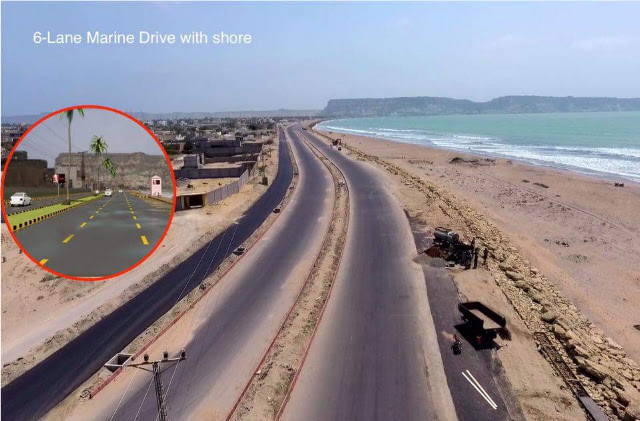
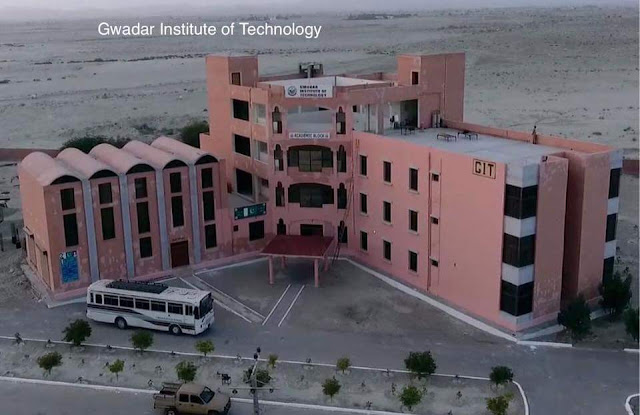
To put Gwadar's scale in perspective, let's compare it with the largest US port of Long Beach which handles 80 million tons of cargo, about a quarter of what Gwadar will handle upon completion of the project. Gawadar port will be capable of handling the world's largest container ships and massive oil tankers.

Gawadar port is being built in Pakistan by the Chinese as part of the ambitious $46 billion China-Pakistan Economic Corridor (CPEC) that will eventually serve as Hong Kong West for growing Chinese trade with the Middle East and Europe. CPEC will also enable Pakistan to bypass Afghanistan to trade with Central Asia through China across China's borders with Tajikistan, Kyrgyzstan and Kazakhstan.
Chabahar is ostensibly an Indian effort to build a port in Iran to bypass Pakistan for India's trade with landlocked Afghanistan and other Central Asian states. Prime Minister Modi has committed $500 million investment in Chabahar, a tiny fraction of the Chinese commitment for Gwadar. A trilateral agreement was recently signed in Tehran by Indian Prime Minister Modi, Iranian President Rouhani and Afghan President Ghani.
Trade with Afghanistan through Afghan-Iran border in the West will probably remain a pipe dream given that 1) most of Afghan population lives in east and south close to the border with Pakistan and 2) Afghanistan has very poor infrastructure making it very difficult to move cargo across land from west to east and south of the country.
Pakistan suspects that India's real objective in Iran is to locate its intelligence agents under the cover of Chabahar port construction workers to sabotage China-Pakistan Economic Corridor (CPEC) and support Baloch insurgency to destabilize Pakistan. These suspicions were strengthened when Indian spy Kulbhushan Yadav, operating under the fake name Husain Mubarak Patel, was arrested in Balochistan in March this year. Yadav confessed he was operating as an undercover RAW agent from his base in Chabahar, Iran.
If Iran does nothing to stop Indian covert activities from its soil against Pakistan, Iran-Pakistan relations could suffer irreparable harm. Efforts to sabotage CPEC will not please China either, and the Chinese are far more important to Iran as trading partners than India. This should give pause to hardline anti-Pakistan sectarian elements in Tehran.
https://www.youtube.com/watch?v=BsYDpMY35U8
Related Links:
Haq's Musings
Gwadar as Hong Kong West
China-Pakistan Industrial Corridor
Indian Spy Kulbhushan Yadav's Confession
Ex Indian Spy Documents RAW Successes Against Pakistan
Saleem Safi of GeoTV on Gwadar
Pakistan FDI Soaring with Chinese Money for CPEC
 |
| Gwadar Extends into Deep Sea with East & West Bays |
 |
| Eastern Half of Gwadar Port |
Gwadar port's planned capacity when it is completed will be 300 to 400 million tons of cargo annually. It is comparable to the capacity of all of India's ports combined annual capacity of 500 million tons of cargo today. It is far larger than the 10-12 million tons cargo handling capacity planned for Chabahar.
 |
| Completed Gwadar Berths & Cranes |
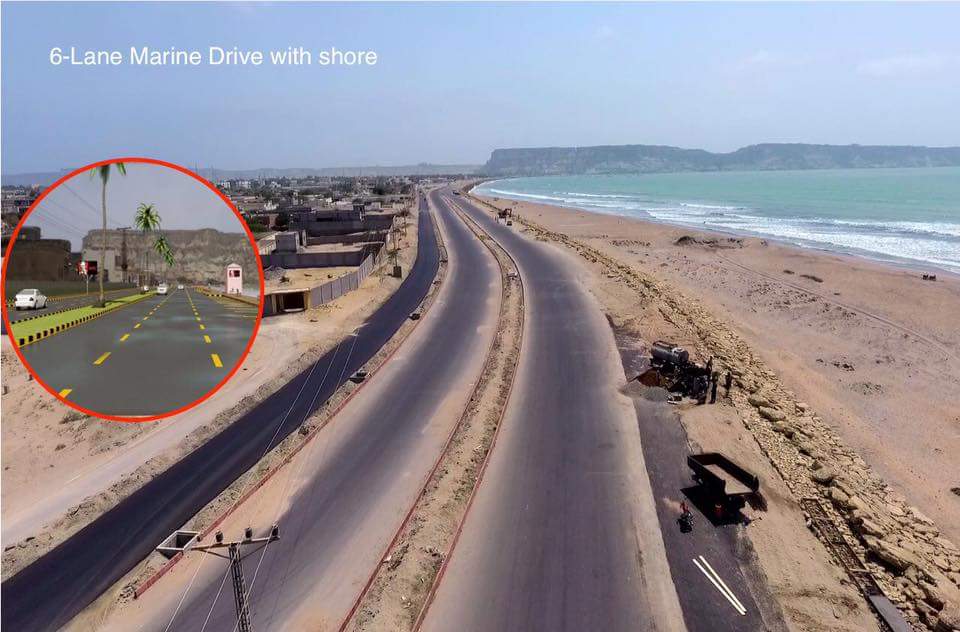

To put Gwadar's scale in perspective, let's compare it with the largest US port of Long Beach which handles 80 million tons of cargo, about a quarter of what Gwadar will handle upon completion of the project. Gawadar port will be capable of handling the world's largest container ships and massive oil tankers.

Gawadar port is being built in Pakistan by the Chinese as part of the ambitious $46 billion China-Pakistan Economic Corridor (CPEC) that will eventually serve as Hong Kong West for growing Chinese trade with the Middle East and Europe. CPEC will also enable Pakistan to bypass Afghanistan to trade with Central Asia through China across China's borders with Tajikistan, Kyrgyzstan and Kazakhstan.
 |
| Gwadar Port Authority Building |
Chabahar is ostensibly an Indian effort to build a port in Iran to bypass Pakistan for India's trade with landlocked Afghanistan and other Central Asian states. Prime Minister Modi has committed $500 million investment in Chabahar, a tiny fraction of the Chinese commitment for Gwadar. A trilateral agreement was recently signed in Tehran by Indian Prime Minister Modi, Iranian President Rouhani and Afghan President Ghani.
Trade with Afghanistan through Afghan-Iran border in the West will probably remain a pipe dream given that 1) most of Afghan population lives in east and south close to the border with Pakistan and 2) Afghanistan has very poor infrastructure making it very difficult to move cargo across land from west to east and south of the country.
 |
| Big Chinese Ship Docked at Gwadar |
Pakistan suspects that India's real objective in Iran is to locate its intelligence agents under the cover of Chabahar port construction workers to sabotage China-Pakistan Economic Corridor (CPEC) and support Baloch insurgency to destabilize Pakistan. These suspicions were strengthened when Indian spy Kulbhushan Yadav, operating under the fake name Husain Mubarak Patel, was arrested in Balochistan in March this year. Yadav confessed he was operating as an undercover RAW agent from his base in Chabahar, Iran.
If Iran does nothing to stop Indian covert activities from its soil against Pakistan, Iran-Pakistan relations could suffer irreparable harm. Efforts to sabotage CPEC will not please China either, and the Chinese are far more important to Iran as trading partners than India. This should give pause to hardline anti-Pakistan sectarian elements in Tehran.
https://www.youtube.com/watch?v=BsYDpMY35U8
Related Links:
Haq's Musings
Gwadar as Hong Kong West
China-Pakistan Industrial Corridor
Indian Spy Kulbhushan Yadav's Confession
Ex Indian Spy Documents RAW Successes Against Pakistan
Saleem Safi of GeoTV on Gwadar
Pakistan FDI Soaring with Chinese Money for CPEC
Riaz Haq
Pakistan plans to join the INSTC as Russia backs a Gwadar Port connection. Islamabad and Moscow also plan to sign an economic cooperation program through 2030 to boost trade and resolve payment issues.
https://profit.pakistantoday.com.pk/2026/06/09/pakistan-eyes-instc-...
Pakistan is preparing to join the International North-South Transport Corridor (INSTC), while Russia has expressed support for integrating the trade route with Gwadar Port as the two countries work toward expanding economic and strategic cooperation under a framework extending to 2030.
The development was highlighted by Federal Minister for Energy Sardar Awais Ahmed Khan Leghari during a webinar titled “Pakistan-Russia Bilateral Relationship at the Cusp of Shifting Global Order,” where he outlined the growing momentum in ties between Islamabad and Moscow.
Leghari said both countries have agreed to sign the Program of Economic Cooperation between the Russian Federation and Pakistan for the Period until 2030, aimed at boosting trade and addressing longstanding challenges, including payment and settlement mechanisms.
-----------
Geopolitics of the International North-South Transport Corridor (INSTC)
https://www.geopoliticalmonitor.com/geopolitics-of-the-internationa...
BACKGROUNDERS - September 10, 2024
By Zachary Fillingham
The INSTC as it is imagined is nothing less than a geopolitical game-changer: a 7,200-km trade corridor linking St. Petersburg to Mumbai, one that wires India into the trade circuits of Central Asia and enables Russia to reach new and lucrative markets in the Global South via the Persian Gulf.
For India, the INSTC represents a homegrown alternative to China’s Belt and Road, a new avenue into European markets, a fount of cheap coal and oil from Russia, and an insurance policy should there ever be a falling out with the West. For Russia, it offers an escape from the vice of Western sanctions and a promise of privileged position in the trade flows of tomorrow. For Iran and Azerbaijan, the INSTC is an opportunity to extract developmental and trade concessions from the project’s primary backers. And for the BRICS, the INSTC is a chance to flex the bloc’s muscles by actualizing a project that reroutes trade flows beyond the reach of US sanctions.
This is the vision of the INSTC. The reality, however, is entirely different, as the project has been largely stalled for over 20 years, now requiring significant investments to fill rail gaps and expand terminal capacity in the Caspian Sea legs. Moreover, US sanctions continue to hang like a sword over the project, sapping its momentum.
This backgrounder will assess these risks while examining the interests and regional geopolitics behind the INSTC trade corridor.
—————
India’s Role and Interests
The first and arguably most important of the main INSTC backers is India, which has long viewed the trade corridor as indispensable for strengthening its trade ties with Central Asia, a region that is rich in hydrocarbons and highly geopolitically significant. Critically, however, these trade links must be forged without the involvement of New Delhi’s arch-rival, Pakistan. The permanently fraught status of India-Pakistan relations explains why the first leg of the INSTC is maritime rather than over land. The INSTC’s linking up at Chabahar Portis another geopolitically loaded decision, as it allows for Indian access to the critical Afghanistan market via a new Iranian rail link from Chabahar to Zahedan. Any advance in trade relations between India and Afghanistan reduces the latter’s historical economic
Jun 9
Riaz Haq
Is the US attacking Chabahar?
Yes, the United States military is actively conducting airstrikes against targets in the Iranian port city of Chabahar. The assault represents a major geographic expansion of the ongoing U.S.–Iran conflict beyond the narrow confines of the Strait of Hormuz, shifting operations directly out onto Iran’s southeastern Indian Ocean coast.The attacks in Chabahar are part of a wider, heavy multi-day bombing campaign and naval blockade ordered by President Donald Trump. U.S. Central Command (CENTCOM) states that the operations are designed to degrade Iranian capabilities used to threaten commercial shipping.Target Profile and Damage in ChabaharMaritime Traffic Control Tower: The primary target in Chabahar was the city's marine observation and traffic control center. Local authorities confirmed the structure suffered significant damage and sent thick plumes of smoke over the harbor.Port Infrastructure Status: Despite damage to the control tower and two docking facilities, Iranian officials state that the core cargo sectors (Shahed Beheshti and Shahed Kalantari ports) remain structurally functional for shipping.Daylight Assaults: Notably, the U.S. military broke its pattern of purely overnight raids to launch rare daytime airstrikes directly against Chabahar's maritime infrastructure.
on Wednesday
Riaz Haq
USA Destroyed India Built Chabahar Port in Iran - its Deliberate Attack by Trump Army
https://www.youtube.com/live/hc4Q0Aw5P1Y?is=A0PPIRDZH-gqJXSZ
on Friday