PakAlumni Worldwide: The Global Social Network
Development Boom in Pakistan's Thar Desert
Thar, one of the least developed regions of Pakistan, is seeing unprecedented development activity in energy and infrastructure projects. New roads, airports and buildings are being built along with coal mines and power plants. There are construction workers and machinery visible everywhere in the desert. Along with renewed hopes for the region and its people, development boom is also raising concerns about the environment and its impact on the residents.
|
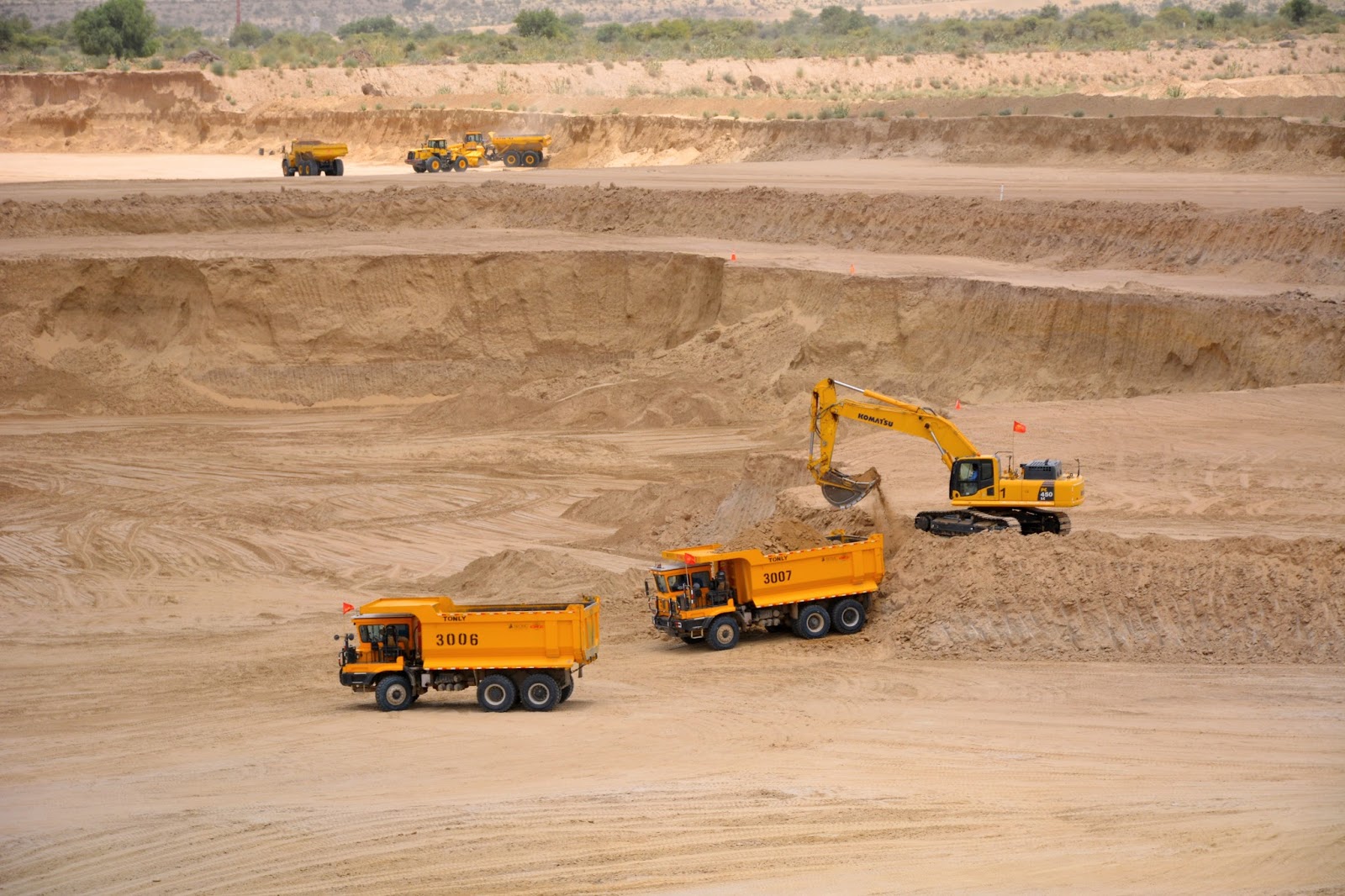
Thar Development Projects:
The Tharparker District or simply the Thar Desert is located in the southeastern province of Sindh. It is receiving a lot of attention because the desert sands hide an estimated 175 billion tons of coal underneath.
In December 2015, China agreed to invest $1.2 billion to develop Thar coal and establish a 660 MW coal-fired power plant.
The coal deposits are divided into 12 blocks, each containing approximately 2 billion tons. In the first phase the Sindh provincial government has allocated block II to Pakistan's Sindh Engro Coal Mining Company (SECMC) to excavate 1.57 billion tons of coal and build a 660 megawatt power plant. The plant is expected to provide power to the Pakistani national grid by June 2019. Later expansion to produce 1,320 MW of power is also planned.
Muhammad Makki, a doctoral student at the University of Queensland in Australia, recently visited the region. Makki saw "signs of a resource boom already animating the dull landscape of the region – roads, airports, site offices, power lines, guest houses and rising real estate price are evident".
Thar Population:
The region has a population of 1.6 million. Most of the residents are cattle herders. Majority of them are Hindus. The area is home to 7 million cows, goats, sheep and camel. It provides more than half of the milk, meat and leather requirement of the province. Many residents live in poverty. They are vulnerable to recurring droughts. About a quarter of them live where the coal mines are being developed, according to a report in The Wire.
 |
| Hindu Woman Truck Driver in Thar, Pakistan. Source: Reuters |
Some of them are now being employed in development projects. Makki saw an underground coal gasification pilot project near the town of Islamkot where "workers sourced from local communities rested their heads after long-hour shifts".
 |
| Hindu Woman Truck Driver in Thar, Pakistan. Source: Reuters |
In the first phase, Sindh Engro Coal Mining Company (SECMC) is relocating 5 villages that are located in block II. SECMC is paying villagers for their homes and agricultural land.
SECMC’s chief executive officer, Shamsuddin Ahmed Shaikh, says his company "will construct model towns with all basic facilities including schools, healthcare, drinking water and filter plants and also allocate land for livestock grazing,” according to thethirdpole.net He says that the company is paying villagers above market prices for their land – Rs. 185,000 ($ 1,900) per acre.
Impact to Date:
Islamabad-based Pakistani economist Dr. Pervez Tahir recently visited and found that "the impact of the road, augmented by mobile connectivity, is multidimensional" Here's an excerpt of what he wrote in The Express Tribune:
"Walking long distances has given way to motorbikes and overloaded buses have taken the place of kekras, the rickety shuttle truck-bus of the World War II vintage. Children suffering from malnutrition and other ailments are reported directly to the media as well as the hospital in Mithi on mobile phones. The high numbers of the suffering children had always existed; only the media was late in discovering these cases. The media attention did bring politicians and bureaucrats to the region, facilitated of course by the road. The hospital in Mithi is now much better staffed and well-stocked with medicines. It is now a thriving town with a good number of schools and a college. Even an English-medium private school was in evidence. A sub-campus of a university is also coming up. Locals complained about the lack of girls schools, especially at the post-primary level. This is a sign of growing awareness. There was also frustration that the locals are not given the party tickets for the National and Provincial assembly seats. Mobile connectivity and the road have linked the famous craftswomen of Thar with the main markets much more effectively. At a community meeting in Islam Kot, women were quoting prices that broadly corresponded with the prices charged in Karachi’s Zeb un Nisa Street."
Summary:
Thar development boom is part of Pakistan's efforts to solve its energy crisis as part of China-Pakistan Economic Corridor (CPEC) projects. It is stimulating a lot of economic activity in Tharparker region that will impact the local population and the environment. Sindh government and the companies working there claim that they are trying to maximize benefits for the region and the country while mitigating any problems associated with it. It's important that they live up to their claims.
Here's a video report by Amar Guriro:
Pakistan’s coal expansion brings misery to villagers in Thar desert from thethirdpole on Vimeo.
Related Links:
China-Pakistan Economic Corridor
Abundant, Cheap Coal Electricity For Pakistan
Mobile Connectivity in Pakistan
Pakistan Sees Robust Growth in Consumption of Energy, Cement and Steel
Politcal Stability Returns to Pakistan
Auto and Cement Demand Growth in Pakistan
Pakistan's Red Hot Air Travel Market
China-Pakistan Economic Corridor FDI
Riaz Haq
118 households in Tharparkar, 22 in Ghotki receive solar home system Kits
As part of the ‘Roshan Ghar – Roshan Sindh’ initiative, 118 eligible households in District Tharparkar and 22 in District Ghotki have been provided with solar home system kits.
https://www.app.com.pk/sindh/118-households-in-tharparkar-22-in-gho...
SUKKUR, Jun 17 (APP): As part of the ‘Roshan Ghar – Roshan Sindh’ initiative, 118 eligible households in District Tharparkar and 22 in District Ghotki have been provided with solar home system kits.
Distribution ceremonies were held in Taluka Mithi and Mirpur Mathelo on Wednesday.
These activities are being carried out under the Solar Home System (On-grid/Off-grid) Project, which is financially supported by the Government of Sindh’s Energy Department and being implemented by the Sindh Rural Support Organization (SRSO).
The objective of the Solar Home System Project is to provide reliable, affordable, and sustainable energy solutions through on-grid and off-grid solar technology to 275,000 households across 30 districts of Sindh, selected through a transparent process.
In this phase, solar home system kits were distributed to eligible beneficiaries after a transparent verification and validation process. All beneficiaries underwent prior survey, verification, and approval in accordance with the eligibility criteria set by the Government of Sindh’s Solar Energy Programme.
Prior to distribution, beneficiaries were given awareness training on the proper installation, use, and maintenance of solar home systems to ensure they derive maximum benefit from the facility and that the longevity and sustainability of the provided equipment is ensured.
Oct 6
Riaz Haq
Oct 8
Riaz Haq
Pakistan is actively constructing and expanding rainwater harvesting ponds, reservoirs, and mini-dams across its arid and desert regions—such as the Cholistan Desert and Thal Desert in Punjab and the Thar Desert in Sindh—to combat acute water scarcity, support livestock, and revive local groundwater.
Key Desert Water Projects & Initiatives
• Thal Desert 1,000 Ponds Project: Approved for Punjab's Thal Desert, this major initiative involves constructing 1,000 large rainwater harvesting ponds. Modern designs utilize specialized membranes to prevent precious water from seeping away into porous desert sand.
• Cholistan Desert Reservoirs & Tobas: Managed in part by the Pakistan Council of Research in Water Resources (PCRWR) and organizations like SAP-PK, a network of traditional and engineered reservoirs (tobas and kunds) spans over 26,000 square kilometers, collecting seasonal rainfall to sustain nomadic and semi-nomadic communities.
• Thar Desert Rainwater Harvesting: Working alongside groups like the Sukaar Foundation and Water Aid Pakistan, local communities in the Thar Desert capture monsoon rainfall to bridge severe drinking water gaps, where even small percentages of annual rainfall collection can dramatically shift household security.
• Hisaar Foundation's "Million Ponds Tabdeeli" Campaign: A nationwide push focused on building small-to-large low-cost retention ponds (ranging from 20,000 to 50,000 liters) through public-private partnerships to benefit drought-prone and impoverished rural districts.
on Sunday