PakAlumni Worldwide: The Global Social Network
Development Boom in Pakistan's Thar Desert
Thar, one of the least developed regions of Pakistan, is seeing unprecedented development activity in energy and infrastructure projects. New roads, airports and buildings are being built along with coal mines and power plants. There are construction workers and machinery visible everywhere in the desert. Along with renewed hopes for the region and its people, development boom is also raising concerns about the environment and its impact on the residents.
|
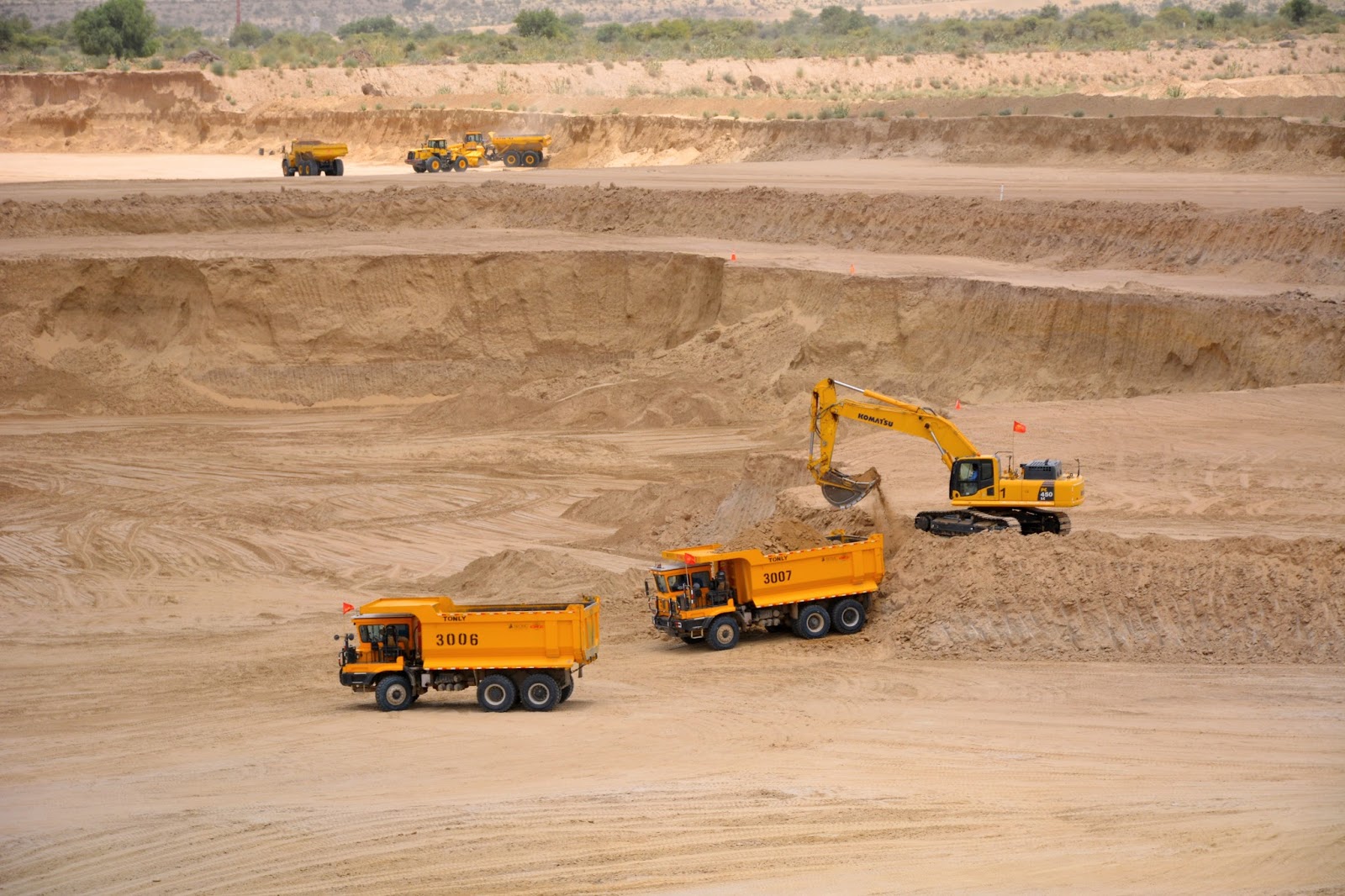
Thar Development Projects:
The Tharparker District or simply the Thar Desert is located in the southeastern province of Sindh. It is receiving a lot of attention because the desert sands hide an estimated 175 billion tons of coal underneath.
In December 2015, China agreed to invest $1.2 billion to develop Thar coal and establish a 660 MW coal-fired power plant.
The coal deposits are divided into 12 blocks, each containing approximately 2 billion tons. In the first phase the Sindh provincial government has allocated block II to Pakistan's Sindh Engro Coal Mining Company (SECMC) to excavate 1.57 billion tons of coal and build a 660 megawatt power plant. The plant is expected to provide power to the Pakistani national grid by June 2019. Later expansion to produce 1,320 MW of power is also planned.
Muhammad Makki, a doctoral student at the University of Queensland in Australia, recently visited the region. Makki saw "signs of a resource boom already animating the dull landscape of the region – roads, airports, site offices, power lines, guest houses and rising real estate price are evident".
Thar Population:
The region has a population of 1.6 million. Most of the residents are cattle herders. Majority of them are Hindus. The area is home to 7 million cows, goats, sheep and camel. It provides more than half of the milk, meat and leather requirement of the province. Many residents live in poverty. They are vulnerable to recurring droughts. About a quarter of them live where the coal mines are being developed, according to a report in The Wire.
 |
| Hindu Woman Truck Driver in Thar, Pakistan. Source: Reuters |
Some of them are now being employed in development projects. Makki saw an underground coal gasification pilot project near the town of Islamkot where "workers sourced from local communities rested their heads after long-hour shifts".
 |
| Hindu Woman Truck Driver in Thar, Pakistan. Source: Reuters |
In the first phase, Sindh Engro Coal Mining Company (SECMC) is relocating 5 villages that are located in block II. SECMC is paying villagers for their homes and agricultural land.
SECMC’s chief executive officer, Shamsuddin Ahmed Shaikh, says his company "will construct model towns with all basic facilities including schools, healthcare, drinking water and filter plants and also allocate land for livestock grazing,” according to thethirdpole.net He says that the company is paying villagers above market prices for their land – Rs. 185,000 ($ 1,900) per acre.
Impact to Date:
Islamabad-based Pakistani economist Dr. Pervez Tahir recently visited and found that "the impact of the road, augmented by mobile connectivity, is multidimensional" Here's an excerpt of what he wrote in The Express Tribune:
"Walking long distances has given way to motorbikes and overloaded buses have taken the place of kekras, the rickety shuttle truck-bus of the World War II vintage. Children suffering from malnutrition and other ailments are reported directly to the media as well as the hospital in Mithi on mobile phones. The high numbers of the suffering children had always existed; only the media was late in discovering these cases. The media attention did bring politicians and bureaucrats to the region, facilitated of course by the road. The hospital in Mithi is now much better staffed and well-stocked with medicines. It is now a thriving town with a good number of schools and a college. Even an English-medium private school was in evidence. A sub-campus of a university is also coming up. Locals complained about the lack of girls schools, especially at the post-primary level. This is a sign of growing awareness. There was also frustration that the locals are not given the party tickets for the National and Provincial assembly seats. Mobile connectivity and the road have linked the famous craftswomen of Thar with the main markets much more effectively. At a community meeting in Islam Kot, women were quoting prices that broadly corresponded with the prices charged in Karachi’s Zeb un Nisa Street."
Summary:
Thar development boom is part of Pakistan's efforts to solve its energy crisis as part of China-Pakistan Economic Corridor (CPEC) projects. It is stimulating a lot of economic activity in Tharparker region that will impact the local population and the environment. Sindh government and the companies working there claim that they are trying to maximize benefits for the region and the country while mitigating any problems associated with it. It's important that they live up to their claims.
Here's a video report by Amar Guriro:
Pakistan’s coal expansion brings misery to villagers in Thar desert from thethirdpole on Vimeo.
Related Links:
China-Pakistan Economic Corridor
Abundant, Cheap Coal Electricity For Pakistan
Mobile Connectivity in Pakistan
Pakistan Sees Robust Growth in Consumption of Energy, Cement and Steel
Politcal Stability Returns to Pakistan
Auto and Cement Demand Growth in Pakistan
Pakistan's Red Hot Air Travel Market
China-Pakistan Economic Corridor FDI
Riaz Haq
The women of Rator village in Pakistan’s province of Sindh celebrated a harvest this year. This was no ordinary harvest, and was five years in the making, requiring a huge amount of labour to nurture fruit trees in a water-scarce region. But any harvest in the desert areas of Umerkot district is special. This is a desert area, with little water available, and what little is available, is brackish.
The journey began in 2015 when 10 women planted 50 fruit berry (Jujube) trees grafted with indigenous wild berries. They received garden management trainings by Sami Foundation — a local civil society organisation — with the support of ActionAid-Pakistan and the Ariz Zone Research Institute (AZRI) Umerkot.
Each of the women is in charge of five trees. They spend two hours on every alternate day, watering the plants, weeding out grass and placing organic fertiliser
https://www.dawn.com/news/1536581
---------
https://www.thenews.com.pk/print/222313-Kitchen-gardens-in-Thar-pro...
HYDERABAD: Women in the Thar Desert are picking the first harvest of vegetables that they had cultivated in their fenced communal kitchen gardens before the rains. The vegetables that have yielded in less than two months are tinda (round gourd) and guar (cluster bean), the most favourable food for the community often faced with food insecurity.
Other vegetable plants and edible leaves that usually grow after rains have also sprouted in the gardens, keeping the village women happy. Under the indigenous nutrition programme, initiated by a local Rural Development Association (RDA) in 13 villages of Tehsils Islamkot and Diplo of Tharparkar District, these women feel secured in terms of having safe food at their doorsteps.
They do not use any chemical inputs to grow food, and since the land is fertile and consumes little water, the gardeners continue the inspiring practice of planting kitchen gardens during winter as well.
Women in groups have prepared larger plots inside their fenced courtyards to cultivate vegetables and edibles leaves as well as trees to fight against the prolonged dry spells and delayed rains. The recent rains have already recharged water wells for domestic purposes and irrigating the small fields inside homes.
This nutrition-sensitive initiative intends to address the endemic issue of malnutrition in the district, which has been recognised as the topmost cause of high incidents of infant and maternal mortality in recent studies conducted by government and other humanitarian organisations.
The communities are already aware of sustainable use of water, which is the most essential, expensive and very scarce commodity in the desert. The people of this region encounter frequent dryness for many months, and pay a heavy price of the impacts of extreme weather conditions in the form of malnutrition, death, and hunger.
Muhammad Siddiq leading the RDA said the association gave technical assistance for land preparation, building protective fencing, and procurement of materials, watering equipment and seasonal vegetable seeds.
May 4, 2020
Riaz Haq
In pictures: Thar desert turns fertile after rainfall
https://www.dawn.com/news/1504992/in-pictures-thar-desert-turns-fer...
It has been nearly seven years since the residents of Sindh’s Thar desert saw a decent amount of rainfall, but this year has been different.
This year’s rains have transformed the harsh landscape and its inhabitants. Farmers are tilling their land, planting seeds, and for the first time in years, expecting a good harvest. The transformation of the desert landscape has attracted tourists from all over Pakistan to marvel at the grass-lined roadways that were, until recently, just drab sand and stone.
The desert is home to many varieties of indigenous trees, herbs, and grasses. It is the latter that provides feed for more than 6 million livestock.
A month and a half ago, heavy winds accompanied by soaring temperature hit the region. People migrated towards the barrage areas more than 200 kilometres away with their cattle. Now, all that has changed. In the deep desert, dunes have been covered by a greenish coverlet, trees have doubled and tripled their leaves, and the grass is growing with unrestrained enthusiasm.
Khaku, who lives in the village of Dhorio, was weeding out grass from his land. He was thankful for the rain, and said that he had invested Rs20,000 on his land, and intended to work for the next three months until the harvest in the last week of November.
His family – he has seven children – seemed to be as enthusiastic as he was, working from sunrise to sunset. Every family member plays a role in cultivating the desert land.
When drought hits the people and animals face an acute shortage of fodder and cereal crops, as well as water scarcity. These lead to premature births among livestock, and the malnutrition rate increases among children under 5 years of age. Pregnant and lactating women do not get proper amount of food. People are forced to migrate towards the areas where barrages have been built to find fodder and water for their cattle.
This year may be a year of hope, but nothing is certain, warns Bharumal Amrani, a folklorist and environmental expert.
“Nothing can be said finally until the harvest. This time Thar has received enough rains, but there are other climatic challenges that may cause low yield.”
Recent attacks by grasshoppers are an issue and have the potential to cause a huge loss.
Local farmers like Nehal, though, are optimistic. He had been taking on labour work during the lean period to manage household expenses. But, after the rains, his family has returned to the land.
“I invested Rs30,000 last year, but due to rainfall, we got fodder only for two months and couldn’t manage to repay the loan we had taken. This year, we welcomed a good shower, and we hope this would give us a way to fulfill our household needs until the next rains,” he said.
Despite the amount of rains, there is an issue about their timing.
“Due to climate change there has been a delay in the monsoon, the desert received the first spell of rain almost a month late, and that may badly affect the harvest,” says Aakash Hamirani, a youth activist.
Nevertheless, the people are happy, blessing their fortune this year, and hoping it marks a change from the last few years of lean rainfall.
Header photo by Manoj Genani
May 4, 2020
Riaz Haq
Shanghai Electric distributes food
https://www.thenews.com.pk/print/661986-shanghai-electric-distribut...
Shanghai Electric Group, the world's leading manufacturer and supplier of power generation and industrial equipment, has been providing regular food supplies to households living in villages located around its coal mining plant and power plant in Thar, a statement said on Thursday.
As the COVID-19 pandemic has affected the lives of millions of people globally, the worst-hit are the underprivileged, who are now also faced with the looming threat of food shortages, it added.
In Pakistan too, this is one of the major causes of concern for the authorities, especially in remote areas of Thar in Sindh.
Sino Sindh Resource (Pvt) Ltd and Shanghai Electric Engineering Consulting Company, with its branch office in Karachi, carried out the third stage of the provision of food supplies to around 800 households in villages located in area where the Thar Block-1 Integrated Coal Mine-Power project is located.
May 22, 2020
Riaz Haq
Migration, small towns and social
transformations in Pakistan
ARIF HASAN
https://journals.sagepub.com/doi/pdf/10.1177/0956247809356180
Although Mithi was established as a settlement some 500 years ago, its
population in 1998 was only 19,524. However, today it has a population
of more than 50,000.(44) The reason for this increase is that in 1992,
Mithi was declared the headquarters of the newly created desert district
of Tharparkar. This was as a result of pressure from its politicians, who
justified such the move on the basis of an increase in population and
on the difficulties of travelling to Mirpurkhas, the district headquarters
before Tharparkar district was created. Mithi’s population also increased
because of road building projects, which have linked the town with the
other desert settlements and the irrigated areas of the Indus plains. As a
result, jobs have been created and a large number of businesses and desert
tourism have developed.
Because of the wars with India, as a result of which large areas of
Tharparkar were occupied by Pakistan in 1965 and by India in 1971, the
old Hindu-dominated caste and feudal system collapsed, with the result
that the artisanal castes were freed from serfdom. Since they, unlike
the peasants and herdsmen, possessed skills that were required by the
urban economy, many of them became economically well-off and have
subsequently become doctors, lawyers and NGO activists who are involved
in the political and development affairs of Mithi. The breakdown of the
old feudal system has also meant that families are now free to migrate to
Mithi from the rural areas. Recurring drought (the result of the collapse
of the old feudal system of resource management) has caused famine, and
rural families are heavily indebted; jobs in the urban areas are a way of
repaying debts. Migration to Mithi has also been triggered by the desire
of rural families (now freed from serfdom), especially the artisanal castes,
to educate their children and have better civic facilities, particularly for
the education of girls, which are not available in rural areas. There have
been instances where entire clans have migrated en masse to Mithi for
these reasons.(
Jul 23, 2020
Riaz Haq
Monsoon in #Pakistan: Bane for farmers, boon for animal herders. Heavy rain has hit standing crops & #vegetables plants nurseries hard, but animal herders in #Thar desert are happy as more rains mean more fodder for #livestock and better livelihood. #Sindh https://www.thenews.com.pk/print/706310-monster-rains-a-bane-for-pl...
According to reports pouring in from different parts of the province, including Sanghar, Matiari, Tando Allahyar, Tando Muhammad Khan, Hyderabad, Jamshoro, Dadu, Thatta, Sujawal, Badin, Mirpurkhas, Umarkot, and Tharparkar districts, heavy rains have flooded the fields of cotton crop at the time of its harvesting, as farmers were busy picking in many areas.
In others parts nurseries of onion, tomato, and late variety of chilli, ready to be planted, have also come under rainwater, causing uncertainty among growers.
The farmers had already prepared their pieces of land for plantation of abovementioned veggies, but the record showers disrupted their plans.
Mir Zafarullah Talpur, a grower in Tando Jan Muhammad, sharing his observations, said the farmers in Kunri, Umerkot, Dighri, Naukot, Samaro and Jhudho had lost their fine quality chilli due to heavy rains. “An up to 12-hour long continuous rainfall inundated the crops over a wide area,” he observed.
Gulab Shah, a grower from Keti Bunder coastal area, said the rain had been pouring since the last 24 hours, causing damages to standing crops of Paan (Betel leaves), tomato, banana, cucumber, and chilli. “Artificial drains made for saline water are not taking flood water. In some places these drains are seen overflowing, further threatening crops,” he said.
The chilli in coastal areas has its different season compared to main chilli zones like Kunri.
Haroon Memon, a chilli grower of Kunri, Umerkot district said the farmers were preparing to start harvesting of early sown chilli expected to start on September 15, 2020.
The crop standing on hundreds of acres in the area has come under rainwater.
“There is no exact data of crop damages, because neither concerned government departments nor growers’ bodies have the capacity to assess the situation,” Memon said adding however the losses were likely to be huge in chilli and cotton crops in these areas, where entire farmland was under water.
Noor Hussain Khoso, another farmer from Badin, said cotton and chilli were sensitive crops, which have come under water and might be lost within a few days in case water did not recede.
“Mostly there is no drainage system in any agriculture area to save the crops. Some influential landlords have arranged dewatering machines to save their crops, but many other farmers, who are unable to drain the water out of fields, fear big losses,” Khoso said.
Some farmers said it was too late to rent dewatering machines because the new rain spell was due within a few days, as reported by National Disaster Management Authority (NDMA).
Manzoor Kalhoro, who manages four nurseries of valuable fruit, ornamental plants and forest species in Deh Narejani, Hyderabad city suburbs, said the devastation rained on them.
“It is not only Hyderabad, there are reports from Mirpurkhas where nurseries have come under water,” he added.
A large number of people are in the plant nursery business. They are using pumping machines to drain rainwater to save the saplings, but at the same time are bracing for losses. There are several sensitive plants which cannot survive in stagnant water for many days.
Muhammad Siddiq of Mithi, Tharparkar called the rain a boon for the desert areas, where farmers and herder families seem happy, believing rain might benefit the early sown crops and green pastures.
There are reports that breaches in irrigation tributaries have also caused flooding of crops.
Aug 29, 2020
Riaz Haq
#Pakistan to lay 105 Km new #railway track to transport Thar #coal to be ready by June 2022 with the initial capacity of carrying 3.80 million tons/year (MTPA) of coal from Thar coal mine. By 2025 it will transport 10.80 million tons/year. #Sindh #energy https://nation.com.pk/24-Aug-2020/govt-decides-to-lay-new-railway-t...
The project will require around 1600 Acres of land and it will be operational by June 2022 with the initial capacity of carrying 3.80 MTPA coal from Thar coal mine. By 2025 it will have the capacity to transport 10.80 MTPA coal, the source said. The cost of laying of 105-kilometer long new railway line from Thar coal mines to Chhor station on Hyderabad-Mirpurekhas, Khokhropar section of Pakistan railway is around Rs24.50 billion, cost of rolling stock is Rs65 billion, O&M cost is Rs4 billion and cost of improvement of the existing 149 KM track from Hyderabad to new Chhor station is Rs3.8 billion. The source said that rail transportation of coal from Thar mines is the most feasible and three times cheaper option as compared to road transportation. The project will help saving foreign exchange reserves of $432 million per annum which can increase up to $1.2 billion per annum at ultimate mine capacity. Moreover the transportation by rail will protect the road infrastructure from damage and will save the environment.
Sep 11, 2020
Riaz Haq
#Pakistan will produce #gas and #diesel from Thar #coal. Engro, Fauji and Fatima #Fertilizer to initiate the feasibility study collectively on turning the Thar coal into synthetic gas and then equal to natural gas to produce fertilizer. #energy #food https://www.thenews.com.pk/print/732026-pakistan-will-produce-gas-a...
"We want to initiate two projects; one on Coal to Gas (CTG) and the other one on Coal to Liquid (CTL) and to this effect we have asked Engro Fertilizer, Fauji Fertilizer and Fatima Fertilizer to initiate the feasibility study collectively on turning the Thar coal into synthetic gas and then equal to natural gas. The three players want to use the synthetic gas as fuel for production of fertilizer."
He said that the local gas reserves were fast depleting and the cost of RLNG, the imported product, was too high that hovers around $9-10 per MMBTU on an average. If the said projects are materialized, then it will be no less than a game changer.
“Earlier, the three said companies had separately conducted feasibility studies on turning Thar coal into synthetic gas, but they found that it would cost them at a higher side. Now we have again asked them to collectively initiate the feasibility study on the proposed project and we are hopeful this time the result will be positive.” The government will also initiate the project to turn the Thar coal into diesel (liquid).
Qasim said that 75 percent fertilizer was produced in China through synthetic gas as fuel produced from the coal reserves. He also mentioned that according to the standard conversion rates, the Thar Lignite Coal resources are equivalent to around 50 billion tons of oil, which is more than the combined oil resources of Saudi Arabia and Iran. In terms of gas reserves, these are around 68 times the present resources of natural gas in Pakistan.
It is pertinent to mention that Shenhua Ningxia Coal Industry Group, a subsidiary of China’s biggest coal producer, the Shenhua Group, has already successfully installed the project to convert coal into oil in the northwestern Chinese region of Ningxia, the biggest plant of its kind in the world.
The coal-to-liquid (CTL) project, which has an annual production capacity of 4 million tons of oil, was built by the Shenhua Ningxia Coal Industry Group, a subsidiary of China’s biggest coal producer, the Shenhua Group.
Pakistan’s monthly diesel requirement stands at an average 600,000 tonnes according to which annual need stands at 7.2 million tons and the project to make Thar coal liquid (diesel) will also help reduce the import bill of diesel.
The SAPM on mineral development said that the government has planned not to increase the power generation of more than 10,000 MW through Thar coal because of the global warming phenomena, but will increase its focus on power generation through renewable resources as well as hydro generation. He disclosed the Lucky Power Plant of 660MW is being installed at Port Qasim, which will utilize the Thar coal and to this effect a railway line will be laid down from Thar coalfield to New Chhore from where it will be connected to the railway station line that will take Thar coal to Port Qasim. He also disclosed that the railway line of 105 kilometers will be laid down by the private sector on BOT (build, operate and transfer) basis. Similarly the second power plant of 660MW based on Thar coal is being installed at Jamshoro.
Oct 20, 2020
Riaz Haq
Sindh CM Murad inaugurates Kalidas Dam in Nagarparkar
https://profit.pakistantoday.com.pk/2020/10/28/cm-murad-inaugurates...
Addressing the inauguration ceremony, Murad Ali Shah said, “The dam has a storage capacity up to 1,012.3 acre feet while its height is 13 feet. It was constructed at the catchment area of Karoonjhar Mountains that are feasible for small dams. The dam has been constructed at a cost of Rs333 million.”
Shah said that the provincial government has completed the construction of 23 small dams, while the plan for building more 26 dams has also been finalised.
“After the construction these dams, approximately 80,000 acres of land will be made fertile.”
The chief minister said that the people of Nagarparkar and its suburban villages will get clean drinking water after the construction of Kalidas Dam.
“The mountainous region of Karoonjhar is 400 square kilometres wide and it receives an average of 13-inch rain during the monsoon season which provides a total of 111,000 acre feet of water. Kalidas Dam will reduce the water scarcity in the Nagarparkar area,” he added.
Nov 2, 2020
Riaz Haq
Sindh has become the only province to possess as many as 50 operational small dams that aim to meet the water needs of far-flung areas. As many as 31 new dams are under construction while some eight area are under the tendering process, it is learnt.
https://www.pakistantoday.com.pk/2018/09/12/sindh-becomes-only-prov...
According to the Small Dams Organization chief engineer, the Sindh government had launched a number of small dams, with a total cost of Rs 12,211 million, to contain water crisis in the districts. Various potential sites were identified for small water reservoirs, particularly along the Kirthar mountain on the western side of the province, he added.
“There are strong opportunities to store rainwater in natural catchments of the Kirthar hills which can be used for cultivation, livestock and human consumption on sustainable basis,” he said, adding that the Kirthar mountain range, shared by Balochistan and Sindh, extends southward for about 300km from the Mula River in east-central Balochistan to the Cape Muari, west of Karachi on the Arabian Sea.
The chief engineer said the areas identified for small dams include upper Kohistan, lower Kohistan, central Kohistan, Nagarparkar and Khairpur.
Advisor to Chief Minister on Information and Archives, Anti-Corruption and Law Barrister Murtaza Wahab told Pakistan Today that total of 50 small dams have so far been completed out of which 28 dams are completed under the province’s Annual Development Plan (ADP) while 22 dams are under the federally-funded Public Sector Development Programme (PSDP).
Barrister Wahab said that the number of total proposed dams stands at 122 and the provincial government is committed to accomplish all the dams at the earliest so as to end the prevalent water crisis in the province. Among these, he added, some 12 dams are located in Nagarparkar–Mithi, while 14 dams in Kohistan-I Dadu and 24 dams in Kohistan-II Jamshoro range.
Under the ADP schemes, the dams which have been completed include Ranpur bund, Mulji, Bhodesar Tank, Khararo Bund, Tobirio Tank, Lakhy-Jo-Wandio, Salari, Makhi, Rani Kot, Bandhani-I, Taki, Maliriri, Mohan, Ashoro Kuch, Suku, Koteri, Thado-II, Langheji, Nai-Mango, Kalu-1, Jharando, Sari, Malir Memon Goth Weir, Kataro, Meer Chakar, Mole Nadi, German Dhoro and Ranpathani. Whereas small dams under PSDP include Naryasar, Ghartiari, Gordhro Bhatiani, Jhinjsar, Lakar Khadio, Khuwara in Nagarparkar-Mithi, Shori, Kukrani, Bandhani-II, Khurbi, Ding Dhoro, Buri in Kohistan-I Dadu and Mullan, Bazkhando, Gaddap, Khand Dhoro, Ullar-Rahuja, Upper Mole, German Dhoro, Ranpathani, Liyari and Watan Wari.
Moreover, the advisor said that 12 small dams that are underway under PSDP included Surachand Bund, Chanida Dam, Rinmalsar, Adhigham in Nagarparkar-Mithi, Hassan Jo Kun, Malir Bukhshan, Sukhan in Kohistan-II Jamshoro and LarhaNai, AikrsoNai, UkhariNai, KiniriNai and WariwaroNai.
Nov 2, 2020
Riaz Haq
STBE top positions go to Thari students
https://www.thenews.com.pk/print/741097-stbe-top-positions-go-to-th...
SUKKUR: Ten STBE top positions have gone to Thari students, who made history in the annual technical board examination in Sindh. The Thari students of Thar Associate Engineers Program (TAEP), supported by Engro Powergen Thar Limited, have clutched all the 10 top positions and graduated from Technical Training School, Daharki.
The youth from one of the most deprived districts of Pakistan, Tharparkar, improved their record consecutively in the third and final year by marking an unparalleled achievement in the Sindh Board of Technical Education (SBTE). The results were declared recently.
Last year, TAEP fellows grabbed nine out of the top 10 positions, while in the first year they secured seven out of top 10 positions, including the top seven positions. The TAEP is fully sponsored by Engro Powergen Thar Limited (EPTL), where a batch of 30 students was studying at a three-year technical diploma-holding program at Technical Training Centre (TTC), Daharki. According to the SBTE results, the first position was secured by Suhel Kumar from Naukot with 83.66pc marks, second by Laleet Kumar of Mithi with 82.56pc marks, third by Teerath Shivani of Mithi with 82.06pc marks, fourth by Uttam Harji Mal from Diplo with 81.24pc marks, fifth by Naresh Nathu Ram from Islamkot with 80.90pc marks, sixth by Shankar Lal Paru Mal of Mithi with 80.85pc marks, seventh by Dhanesh Kumar Bharo Mal of Mithi and Tarachand Debo of Chachro with 80.42pc marks, eighth by Partab Singh Kessar with 80.34pc marks, ninth by Ayaz Amir with 80.17pc marks and 10th by Roshan Kumar Guloo by securing 79.04pc marks. In continuous efforts for a prosperous Thar and to create a skilled workforce, the Thar Foundation is facilitating a three-year Diploma of Associate Engineering (DAE) program for eligible Thari candidates on 100pc scholarship by EPTL. The objective of this program was to prepare candidates for technical employment opportunities at Thar Coal and future projects.
Congratulating the entire batch of TAEP, Chief Executive Officer (CEO) of the Engro Energy Limited (EEL) Ahsan Zafar Syed said that hardworking Thari students continually improved over the period of three academic years and made history by securing all the 10 positions. He said Thari fellows’ relentless hard work has once again proved that if resources are invested in meritorious and deserving students, they shall produce incredible results. The EPTL CEO, Syed Manzoor Zaidi, said it is a milestone achieved by Thari students proving that the land of Thar has great potential for hard-working youth. “We will continue to support talented youth of Tharparkar who want to realize better socio-economic opportunities by exploring avenues of higher learning,” said Zaidi. The Thar Foundation CEO, Syed Abul Fazal Rizvi, said the results and the pride they have brought to their families and people of Tharparkar was without any doubt a gratifying achievement. The students were provided guidance throughout and an opportunity to fulfill their dreams. “Meritorious selection was the hallmark of the TAEP program, through which selected students came from families with poor segment of socioeconomic status,” he added.
Nov 10, 2020
Riaz Haq
Tending orchards in Thar desert — without flowing water
A farmer is using clay pitchers to irrigate his orchard and crops, using 70 per cent less water than conventional methods.
https://www.dawn.com/news/1571967
Most of the inhabitants of the Thar desert can grow crops only after a downpour has transformed the arid land into lush greenery. But Allahrakhio Khoso, a 60-year-old farmer, does not need to wait for rain.
In the city of Nagarparkar, in the shadow of the Karoonjhar mountains, Khoso has made an orchard in the desert a reality by using matkas or pitchers — an everyday object more commonly found in the home than in the field.
After eight years, Khoso has 400 berry trees, 70 lemon trees, three mango trees and four pomegranate trees. He grows vegetables such as okra, bitter melon, onions, chilies and tinda (a type of squash), as well as watermelon, on his land in the district of Tharparkar.
Khoso can grow berries, lemons, mangoes, pomegranates, watermelon and vegetables. — Photo by Zulfiqar Khoso
In pitcher irrigation, a large clay pot with a wide bottom and narrow top is buried in the ground and filled with water. The water is slowly released into the surrounding soil and absorbed by the roots of nearby plants, minimising the amount of precious liquid lost to evaporation.
In pitcher irrigation, a large clay pot is buried in the ground near a plant and filled with water. — Photo by Zulfiqar Khoso
Water in the desert
Rich in coal but poor in water, Thar is the largest desert zone in the province of Sindh. Its residents depend on rainfall; most people fetch their daily water from wells and store rainwater in water tanks. In summer, many wells run dry and groundwater becomes brackish.
To this day, some wells are dug without modern machinery. Recently four workers dieddigging a well when the walls fell in on them.
Water is so important a commodity that it even features in marriage negotiations; before a proposal is accepted, the parents of a bride will ask the groom’s family how close the nearest well is. In greetings, people also ask about sweet water wells.
Nevertheless, living in the desert does not mean thirst and poverty are inevitable.
How does pitcher irrigation work?
"Many years back, one of my friends came to visit our village and he discussed pitcher irrigation," said Khoso. "I got the idea and started working on it. In the beginning, it was quite hard but now it looks very simple. I thought that if I could make my farm green without rainwater, then I should go for it."
Khoso has made an orchard in the desert a reality. — Photo by Zulfiqar Khoso
To install a new pitcher, Khoso first makes a small hole in the bottom of a pitcher. He puts a rope through the hole, then buries the pitcher, packing mud and sand tightly around it. This leaves only the mouth of the pitcher exposed, which Khoso fills with water. The water seeps through the porous clay and soaks through the rope into the sand, where it is absorbed by the roots of the crops he has planted close by. As well as natural fertilisers, Khoso uses mud from Virawah, a city near Nagarparkar where there is an ancient lake.
Each pitcher is two to three feet wide and holds 10 litres of water, which will irrigate the soil for 15 to 20 days. New pitchers are better for irrigation because they are more porous and, once in place, will last three years. Khoso fetches water roughly every 10 days — there is a well on his farm, and another nearby.
For trees, Khoso uses one pitcher per plant; sometimes two pitchers for mango trees, planting trees 25 feet (7.6 metres) apart. The amount of water needed depends on the crop, with trees requiring more pitchers. Khoso now has 400 pitchers irrigating his orchard.
Nov 25, 2020
Riaz Haq
Growing moringa to cure malnutrition in Sindh
https://www.thenews.com.pk/print/773297-growing-moringa-to-cure-mal...
Plant nursery managers in Sindh have started to understand the growing demand and importance of moringa (oleifera) tree, because of its nutritional and medicinal value.
Nursery managers collect moringa seeds from neighbourhood trees and also buy from the local markets. Hundreds of plants are readily available for sale at the nurseries to meet the rising demand from the locals.
Alisher Hajano, associated with the government's social forestry department, near the famous Mayani forest, Hyderabad said, “It is only recently that this tree got popularity at a larger scale.”
Each nursery at the highway grows as much as 10,000 to 50,000 plants of moringa for contributing to annual tree plantation drives. Many people mostly use leaves and pods as organic food.
Hajano receives a number of people from different areas demanding two-five kilogram of fresh leaves to cure some ailments. He doesn’t own mature trees himself, and procures the product from neighbouring villages.
Moringa leaves are dried by these people at room temperature, to later use for curing some diseases. “I know many entrepreneurs in the neighbouring villages, who sell moringa fresh and dried leaves, powder and roots, which they prepare at homes and farms. They also consume fresh and dried leaves, pods and roots themselves as an organic vegetable,” he said.
In the past, people preferred planting neem and other varieties of fruit trees at home and workplaces, but now they prefer moringa trees because of its various uses.
Moringa tree saplings are available at almost all private nurseries for Rs20-80 each, depending on size and health.
Various government and non-governmental organisations have taken initiatives to tackle malnutrition via community-based management of acute malnutrition (CMAM). However, very few long-term interventions have been noted that are linked to building the capacity of local communities, especially in the areas of cropping, plantations and livelihood mechanisms.
After realising the importance of moringa in eradicating malnutrition, many organisations have taken different steps to promote this magical tree on a larger scale, while also disbursing knowledge and awareness about its usage as food and for curing health problems.
A report of Sindh Agriculture University (SAU) Tandojam shows that they had initiated a project in Tharparkar district, to address the issue of malnutrition. The university had planted 5,000 moringa trees with 500 households, believing in its nutritious value for both humans and livestock.
Residents of Thar Desert, due to inherent structural poverty, poor socioeconomic indicators and limited livelihood options, suffer from chronic food insecurity. Moringa tree is considered the best substitute to provide necessary nutrition to children under five, and pregnant and lactating mothers.
The report said that 5,000 mature trees would be sufficient not only for the communities’ own consumption, but also for their livestock. Apart from this, parts of the tree could be used to treat various diseases.
Muhammad Siddiq, leading Rural Development Association (RDA) in Mithi, Tharparkar district claims to have planted 5,600 moringa saplings in different areas of the desert. Some plants cultivated in 2017, have now matured and people have access to fresh leaves and pods to use as vegetables.
“It is a fast growing tree and the desert area is suitable for its plantation. It has also been proved one of the best solutions to tackle malnutrition on a sustainable basis,” he said.
There are more species of moringa, but oleifera is said to be more effective with medicinal properties. The tree is highly rich in nutrients, which are required by children under the age of five and pregnant and lactating mothers.
Jan 30, 2021
Riaz Haq
Pakistan's warm waters have long been a refuge for millions of birds that migrate from Siberia to avoid the stinging winter every year. However, the numbers of migratory birds have fallen drastically in recent years due to massive hunting by hunters both local and foreign.
https://www.dailysabah.com/environment/2019/02/11/pakistan-migrator...
But the poor birds have found a new wetland – safe from the threat of hunting – at least for now. Gorano Dam has a man-made reservoir in the remote Thar Desert, filled with saline water pumped out due to a massive coal mining exercise in the region and for power generation.
Located in the Gorano area of the Tharparkar district – some 347 kilometers from Karachi – and sprawling over 1,500 acres, the site is attracting a large number of birds that feed on fish, said a report by the International Union for Conservation of Nature (IUCN) after a recent ecological survey.
Some species, the report said, have even started nesting on the partly submerged tree tops.
"Due to climate change, the health of Pakistan's wetlands has deteriorated in recent years. In these circumstances, the popping up of a new water reservoir is a welcoming sign," Mahmood Akhtar Cheema, the country representative of the IUCN, told Anadolu Agency (AA).
According to the IUCN's ecological survey, he said, Gorano Dam was relatively safe for migratory birds due to its low level of salinity compared to the country's other wetlands. He said, however, the ecological survey had still suggested further steps to provide a better environment for the migratory birds.
Every year over a million birds cover a grueling distance of 4,500 kilometers to migrate from Siberia in search of moderate waters to spend the harsh winters, according to conservation groups, but Cheema said "a scientific study is required to estimate the exact numbers."
Their ultimate destination is India, but they make stopovers at various lakes and water reservoirs in Pakistan, mainly in the southern Sindh province. These birds include houbara bustards, cranes, teals, pintails, mallards, geese, spoon bills, waders, and pelicans.
Feb 18, 2021
Riaz Haq
ish-farming – aqua-culture
in the heart of the desert
https://www.tharfoundation.org/sdg/
Followed by the successful Bio-saline agriculture at Thar Block II, the Thar Foundation has initiated breeding fish in the man-made Gorano Reservoir, where brackish and saline ground water extracted from the depth of 180 m, containing 5000 ppm is stored.
About 7 species of fish including Morakhi (Mrigal Carp), Rohu (Labea Rohita), Theli, Kuriro, Gulfam, African Catfish, and Dangri (Barramundi) are being raised in the project. Around 100,000 small fishes of these species were released, as seeds, at the outset of the project which have now been grown into fully mature fish. The fish raised at Gorano are purely organic with no artificial chemical used at any point of breeding and has been declared fit for human consumption by medical laboratories. The extension plan has already been launched under “Desert Fisheries Initiative” in collaboration with Livestock and Fisheries Department, Government of Sindh where 200,000 seeds have been released in May 2019. In the first year, 12,000 KGs of fish catch was cultivated. The fish catch is distributed to local villages free of cost every year. The fish farmed at the reservoir will be used as a source of livelihood as well as nutrition for the local population specially the students of Thar Foundation schools.
Feb 18, 2021
Riaz Haq
Cause for Celebration: Coal-Fired Plant Provides #Power, #Economic Boost to #Pakistan. The plant uses Thar coal with state-of-the-art #environmental control systems, including electrostatic precipitator. #Sindh #Thar #technology. #electricity https://www.powermag.com/cause-for-celebration-plant-provides-power...
The Engro Powergen Thar Ltd. power station is transforming a desert region that has long sought reliable electricity to support its economy, create jobs, utilize an abundant natural resource, and help solve an energy crisis.
The importance of a coal-fired power plant to an entire region, and to a country, was highlighted in Pakistan earlier this year. It’s not often that government officials and the general public come together to celebrate an energy project, but in this case, there was plenty of excitement about how the Engro Powergen Thar Ltd. (EPTL) facility is enabling Pakistan to take advantage of its natural resources, and provide economic opportunities and support for a harsh desert region considered a difficult place to live.
The EPTL plant utilizes Thar coal—which the country has in abundance in the Tharparkar region—to generate electricity. Officials say it will make Pakistan, a country that has faced electricity shortfalls for years, more energy secure, and provide a viable solution to an ongoing energy crisis.
The realization that the country’s reserves of lignite coal can be used in a domestic power plant prompted a three-day festival in March, and has led Pakistani officials to call the EPTL facility transformational for the country’s future. It’s among the many reasons POWER has chosen EPTL as a Top Plant in the coal-fired category.
“The proof of concept that electricity can be produced from Thar coal has been demonstrated successfully by EPTL, [and] it is the first plant to utilize this lignite coal for production of electricity,” said Syed Manzoor Hussain Zaidi, CEO of EPTL.
State-of-the-Art Equipment
The EPTL plant, located about 280 miles southeast of Karachi in the Sindh province of Pakistan, is what Pakistani officials call a first-of-its-kind mine mouth power plant, using indigenous Thar coal—the first power generation facility to do so. It is equipped with two 330-MW circulating fluidized bed boilers, along with an innovative three (steam-cooled) cyclones arrangement, with once reheat, two cylinders, two flow exhausting, single-axial and condensing steam turbine generators. The plant has what operators consider state-of-the-art environmental control systems, including electrostatic precipitator technology, which helps the plant meet the International Finance Corp.’s (IFC’s)—a subsidiary of World Bank—emissions guidelines.
The plant’s equipment and other facilities have been designed to function safely and smoothly in a harsh desert environment—for example, ambient temperatures as high as 50C (122F), with excessive dust. The plant also has a laboratory equipped with state-of-the-art equipment to ensure that the quality of coal being utilized meets the design specifications and safety requirements.
Officials said that advanced control strategies such as a robust distributed control system (DCS) have been implemented to ensure EPTL is a fully automated plant. Despite the variable coal quality from the mine, which is a big challenge for the plant, control loops have been optimized to ensure efficient operation. Officials said that alarm rationalization was recently performed as per the International Society of Automation (ISA) 18.2 standard; after which, the recurring alarms were reduced by 99% and alarms per operator per hour are less than 12.
Aug 2, 2021
Riaz Haq
Thar Energy’s 330MW Thar Coal-based project nears completion under CPEC
The plant will supply electricity to the national grid
https://www.samaa.tv/news/pakistan/2021/10/thar-energys-330mw-thar-...
In Sindh, the 330-megawatt Thar Energy Limited Power Project Block-II is being completed under China-Pakistan Economic Corridor or CPEC.
According to an official, the power plant would supply electricity to the national grid under a 30-year power purchase agreement.
According to APP news agency, the power plant is a 330MW mine-mouth lignite-fired power project being built by Thar Energy, which is owned by the Hub Power Company or Hubco, China Machinery Engineering Corporation or CMEC and Fauji Fertilizer Company or FFC.
Similarly, two more coal-fired power plants, Engro Thar Block II power plant and Thal Nova, are also being developed in Thar Block II.
Engro’s Thar Block II power plant is a coal-fired power station in Sindh’s Tharparkar district. It was Pakistan’s first power plant to use the indigenous coal reserves of Thar.
The 660MW power plant, which was part of CPEC, was developed by Engro Powergen Thar or EPTL, a joint venture of Engro Powergen or EPL, CMEC, Habib Bank, and Liberty Mills. Construction on the Engro Thar Block II power plant commenced in April 2016. Trial operations at the plant began in July 2018 while commercial operations began in July 2019.
The coal-fired power plant is located five kilometres away from Thar Block II near Thar coalfields. It consists of two 330MW units, which integrated circulating fluidised bed or CFB boilers, tandem compound steam turbine units, and generators. CFB is an ideal option for the low-calorific-value Thar lignite coal.
It helped to regulate the plant’s environmental footprint by reducing nitrogen oxide emissions and capturing sulphur oxides. The 20kV, 50Hz, three-phase intercooled generators featured a hydrogen-cooled rotor and stator core, as well as water-cooled rotor windings.
The power plant is also equipped with associated equipment and systems such as cyclones, air pre-heaters, and water walls. Sindh Engro Coal Mining Company or SECMC supplied nearly 3.8 million tons per annum of coal for the coal-fired power plant from a new opencast mine.
The SECMC is a joint venture by the government of Sindh and Engro Powergen. The joint venture was formed for extracting coal available at the seventh biggest coal mine site in the Thar Desert.
The new coal-fired power plant fed electricity to a 500kV double-circuit transmission line of the grid network between Thar and the Hesco grid station in Jamshoro. The estimated cost of the Engro Thar power plant was $995.4 million – funded by a syndicate led by China Development Bank with the support from China Export and Credit Insurance Corporation.
The syndicate included Habib Bank, United Bank, Bank Alfalah, National Bank Pakistan, Faysal Bank, Construction Bank of China, and Industrial and Commercial Bank of China.
ThalNova is a similar 330MW power plant being developed in the same block. The financial closing for the power plant was achieved in September 2020 and the commercial operations are scheduled to begin in 2022.
Oct 11, 2021
Riaz Haq
Pakistan’s Thar desert lignite coal boom gathers pace with SECMC mine hitting 10 Mt & SSRL mine starting up
https://im-mining.com/2021/12/31/pakistans-thar-desert-lignite-coal...
On December 17, 2021, Sindh Engro Coal Mining Company (SECMC) announced that it had successfully achieved the 10 Mt of coal production milestone. SECMC, one of the largest public-private partnerships in the energy sector in Pakistan, commenced commercial operations in July 2019 with an annual production capacity of 3.8 Mt. Over the past 2.5 years, SECMC has begun to transform the energy landscape of Pakistan by facilitating production of electricity using indigenous coal reserves. The coal feeds a 660MW coal fired power plant and the overall project is classed as a is classed as a China-Pakistan Economic Corridor (CPEC) priority implementation project.
SECMC is one of two main lignite coal mining operators in the country, and is located in in Block II of the Tharparkar (Thar) area in Sindh province of Pakistan. It is a joint venture between the Government of Sindh (GoS), Engro Energy Ltd (formerly Engro Powergen Limited) and its partners namely Thal Ltd (House of Habib), Habib Bank Ltd (HBL), Hub Power Company (HUBCO); and China Machinery Engineering Corporation (CMEC). The world class Huolinhe Open Pit Coal Mine in Inner Mongolia, China, a subsidiary of China’s State Power Investment Corporation, has also joined the SECMC board as strategic investor with preference shares’ subscription.
The other main mine in the country which is just going into production is operated by Sino Sindh Resources Ltd (SSRL) which is located in Block I of the same Thar region; it is also a CPEC project and is owned by Chinese group Shanghai Electric Power Company Ltd. It comprises a 7.8 Mt/y open-pit coal mine and installation of a 1,320MW coal-fired power plant (2 x 660MW). Mining work was set to be completed by end 2021 and the first unit of the power plant is due to start working from 2022 while the entire project is scheduled to be completed by 2023. SSRL has a large mining fleet comprised of 55 t MT86D Chinese wide body trucks from LGMG to be loaded by 28 Liebherr R 9100B hydraulic mining excavators, the largest single mine fleet of this model in the world.
The SECMC mine uses a large fleet of 130 Chinese 60 t TONLY TL875 wide body trucks for coal haulage which are loaded by 18 hydraulic excavators, mainly Komatsu PC1250 units. The record production has resulted in the generation of over 10,000 GwHs of electricity, contributing to the national grid. Besides, the company’s record production of coal and generation of electricity using Thar’s local reserves has benefitted the national economy by saving $210 million through import substitution during the same period.
Dec 31, 2021
Riaz Haq
Pakistan’s Thar desert lignite coal boom gathers pace with SECMC mine hitting 10 Mt & SSRL mine starting up
https://im-mining.com/2021/12/31/pakistans-thar-desert-lignite-coal...
During the course of operations, SECMC has maintained a stellar safety record following international and world-class benchmarks – a feat that has earned international acknowledgements from organizations such as British Safety Council. The Company has also adopted the United Nation’s Sustainable Development Goals (SDG) framework to deploy high-impact interventions prioritising education, health, economic growth and women empowerment amongst other areas.
SECMC has also contributed to uplifting the local community by generating employment opportunities for the local population and creating other economic avenues for the community. It is pertinent to mention that 80% of the employees in SECMC are locals from Sindh where the project has provided significant socio-economic benefit to the local Thari population.
“The 10 Mt coal production mark is a commendable achievement considering the constant fluctuation and vulnerability in international coal prices,” said Chief Executive Officer SECMC – Amir Iqbal. He added that Thar coal is the best resource to help the national economy in terms of easing out the pressure on the Current Account Deficit and also indigenise the current energy mix which is heavily reliant on imported fuels. Currently, the second phase of the SECMC mine is already under development which will increase SECMC’s production to 7.6 Mt per annum with a cumulative power generation of 1,320MW.
Talking about the subsequent phase III expansion project, Iqbal said that the estimated investment for phase III expansion is to be approximately $100 million which will enable Thar Block-II to achieve a sustainable supply of 12.2 Mt of coal annually over the next 30 years. SECMC is expected to complete this expansion by June 2023 and with this expansion coal price of SECMC mine is to be reduced to under $30/t – making it the cheapest fuel source in the country ensuring economic stability and energy security for the country. In addition, phase III expansion will also enable Pakistan to save $420 million per annum on the account of import substitution whilst also leading to a reduction of PKR74 billion in circular debt on an annual basis.
Dec 31, 2021
Riaz Haq
First HVDC transmission line tested with full load of 4,000MW
https://www.thenews.com.pk/print/878333-first-hvdc-transmission-lin...
Dubbed as flagship China Pakistan Economic Corridor (CPEC) project, 660kV Matiari-Lahore HVDC Line is the largest ever transmission sector project of the country in terms of its capacity as well as one of the longest in distance, connecting power generation units in the south with load centers upcountry.
“The HVDC line transcends a geographical length of about 900 km, marking the start of an era of long-distance power transmission in the country,” said an official of National Transmission and Despatch Company (NTDC).
“It is a unique project in the sense that it introduces HVDC technology for the first time in the national grid, enriching the technology mix of the grid.”
The official added that the trial operation was being carried out through NTDC transmission system.
“The Project has a design capacity of 4,000MW and will help evacuate power from cheaper Southern coal power plants and deliver it to load centers in the North of the country.”
Above all, the official said, the ongoing trial operation of the transmission line helped in contributing the record highest power transmitted on August 11, 2021 at 24,467 MW through the national grid.
“In 2020, peak load sustained by the national grid was 23,370MW for one day and in 2018 it was just 20,811 MW. With the launching of HVDC Matiari-Lahore Transmission Project, power dispersal capacity of the national grid has seen a massive jump of 4000mw in one go,” said an official.
He added that the ongoing trial operation marked one of the last steps in the completion of the project.
“In this last stage it will be trial-operated for a few days continuously at various power levels and under various configurations to test it in full running condition,” said the official.
Furthermore, the Capability Demonstration Test of the Project will also be performed during this period.
It is informed that the equipment debugging, station commissioning, and system commissioning up to the level of high power bipole testing of the project has already been completed, certified by both the Independent Engineer from Italy and Owner Engineer from Canada.
Despite Covid-19 pandemic, the overall work was completed by end of 2020. Earlier, the project was expected to be commissioned by March 2021 after going through trial run. However, after reaching an amicable solution, the contractor and NTDC agreed in writing to conduct trial run during peak load of summer months with COD in September 2021.
Jan 4, 2022
Riaz Haq
#Pakistan to burn more domestic #coal for #electricity. Work on 3rd phase of Thar Coal Block II mine is to begin this year at an estimated cost of $93 million. Annual production of lignite to grow from 3.8 million tons to 12.2 million tons by 2023. #CPEC https://asia.nikkei.com/Spotlight/Environment/Climate-Change/Pakist... Work on the third phase of the Thar Coal Block II mine expansion is set to begin this year at an estimated cost of $93 million, according to the Sindh Engro Coal Mining Company (SECMC), a public-private enterprise operating the mine since 2019 in the southeastern district of Tharparkar. The second phase of expansion is underway with the help of China Machinery Engineering Corp. and Chinese bank loans, in addition to local financing. The series of expansions will scale up the annual production of lignite from 3.8 million tons to 12.2 million tons by 2023. The output from the second phase of expansion will feed two 330 MW coal-fired power plants being built under the $50 billion China Pakistan Economic Corridor projects, part of Chinese President Xi Jinping's flagship Belt and Road Initiative. The power plants are expected to come on line this year. Lignite is brown coal with low calorific value due to high moisture and low carbon content. The expansion of the Thar coalfields is aimed at curbing coal imports to ease a staggering current-account deficit made worse by soaring international commodity prices and shipping costs. Pakistan's current-account deficit ballooned to an unprecedented $9.09 billion between July and December last year, as imports continued to outstrip exports during the post-COVID economic recovery. Pakistan had to seek a $3 billion loan and a deferred payment facility on the import of petroleum products from Saudi Arabia last year to stabilize forex reserves. In recent years, high volatility in international oil prices, soaring LNG prices and dwindling local gas reserves have spurred public-private spending, particularly Chinese investment, in Pakistan's coal power sector. Until now, four coal-fired power plants with 4.62 GW of total installed capacity have joined the grid, while another three plants with an aggregate capacity of 1.98 GW are expected to come online over the next two years -- all under CPEC. In addition, growing demand from cement factories banking on a global construction boom has tripled coal consumption over the last five years to 21.5 million tons per annum. Consequently, the share of coal in Pakistan's import bill for the year ended June 2021 shot to 24% from over 2% in previous years, according to data from the Pakistan Bureau of Statistics. Currently, only the power plant at Thar Coal Block II is running on indigenous coal. A spike in coal power generation is in line with global trends, where countries including China, the U.S. and India have turned to coal to meet heightened demand following the lifting of COVID-19 restrictions. ------------ Authorities contend that the expansion of Thar Coal Block II will reduce the price of indigenous coal from $60 to $27 per ton -- making it the country's cheapest power source and leading to annual savings of $420 million. Pakistan is currently importing coal at around $200 per ton. "We are compelled to use this cheap source of energy because we cannot keep using dollars to run power plants running on expensive furnace oil and RLNG (re-gasified liquefied natural gas)," Sindh Provincial Energy Minister Imtiaz Shaikh told Nikkei Asia. "We would like to mix 20% Thar coal [in power plants running] with imported coal. Then we will move towards converting coal to liquid and coal to gas." The cost of operating thermal plants has become punishing due to expensive fuel and the cost of diverting scarce freshwater, which leads to underutilization of the plants, said Omar Cheema, director of London-based renewable energy consultancy Vivantive.
Jan 24, 2022
Riaz Haq
Seeing the rural Sindh through the lens of ‘Guddu Pakistani’
His biggest accomplishment is to show the Sindh that needs to be seen and known
https://gulfnews.com/world/asia/pakistan/seeing-the-rural-sindh-thr...
Islamabad: Brimming with energy and colours, the landscape, culture and people of rural Sindh fascinate in a way that few places do.
Sindh feels like seeing life through a kaleidoscope when viewed from the lens of duEmmanuel Gud – the photographer who captures the heart and soul of the region, showing to the world that life in rural Sindh is not as dull and dusty as generally assumed.
“My photographs are changing the perception of Sindh, showing the vivacious culture, simple people and stunning architecture of my beautiful home region,” said Emmanuel Guddu in an interview with Gulf News. The 42-year-old freelance photographer hails from Sindh’s Mirpur Khas city, best known for its delicious mangoes.
Emmanuel, who is famously known as ‘Guddu Pakistani’ on social media, says that his biggest accomplishment is to show the Sindh that needs to be seen and known. “I can think of no greater honour nor privilege than knowing that I have lived a life, creating images, sharing the stories and struggles of the incredible people of Sindh, the culture of the beautiful land I call home,” he shared during the interview.
The photos sometimes are surprising not just for foreigners and residents of other regions of Pakistan but even the people of Sindh themselves as not many locals travel outside their hometowns, he says. Emmanuel calls himself the ‘Awara (wandering) photographer’. “Photographers are passionate people who are willing to go to any length to share their passion with people,” he believes.
What inspired him?
Born as a Catholic Christian, he belongs to the Kachhi Kolhi Hindu community in Sindh. He found his inspiration early from National Geographic magazines in which the pictures of the cultural and historic sites and vibrant communities moved him. “Those photos inspired me and I decided I will also show to the world the unique culture of my land.”
Personal life and photography career
Emmanuel, who is the eldest among his siblings, wasn’t able to continue education after 10th grade as he was expected to start working to support his family. Remembering the tough days, he shared that his father worked at the community church and his mother as a seamstress, struggling to put food on the table and raise the family. Later, the family sent Emmanuel to Lahore to become a priest at a church where his maternal uncle served as the priest. But that is not where he was meant to be.
Emmanuel’s professional photography career started in 2010 when he went to capture the impact of the 2010 floods, the worst in Pakistan’s history that submerged entire towns. “Some of the portraits of flood survivors in Sindh and the enormity of the floodwater that I captured went viral,” he shared. It was then that Emmanuel knew he had found something he wanted to passionately pursue: photography.
Stories behind the photographs
His brilliant and breathtaking photographs reveal that Pakistan’s province of Sindh is home to fascinating architecture and shrines, majestic deserts and lakes, rural tattooed women, exquisite pottery and handicrafts, mud and straw houses, unique traditional food and beautiful birds.
In one photograph taken in Tharparkar, a woman in her traditional, vivid red dress, is seen feeding her brilliant blue peacock. The image is among his favourite. “This photo captures the pure human-animal relation. This bond is strong in Sindh.”
Many of his pictures capture the rural women of Sindh, working in the farms and at their homes, in their bright traditional dresses, faces hidden behind the veils and wearing white bangles from wrist to the entire length of their arm. “Our women have tattoos on their faces, necks, hands and even on foot,” he shared. It is this unique rural culture and heritage that he aims to show through his photographs and videos.
Mar 26, 2022
Riaz Haq
Nai Gaj Dam is an embankment dam currently under construction on the Gaj River in the gorge area at the edge of Kirthar Mountains range at about 65 kilometres (40 mi) north-west of Dadu city in Dadu District, Sindh Province of Pakistan. When complete, its power station will have a 4.2 MW installed capacity. Consultant supervision by Techno Consult International (TCI) from Karachi, Pakistan.
https://en.wikipedia.org/wiki/Nai_Gaj_Dam
Construction of the dam started in May 2012. Initially planned to be completed in 3 years, the project has been heavily delayed, increasing its cost from an initial estimate of Rs17 Billon to a revised Rs 47.7 Billion in 2019, with a completion now expected in mid-2021. Around 51% of the construction work was completed as of 2018.
It is estimated that water will be supplied from Nai Gaj Dam to 28800 acres land in tehsil Johi and 300000 acres in other areas of Dadu District. Moreover, Nai Gaj Dam will supply 50 cusecs of water to the Lake Manchar for decreasing its pollution. Furthermore, the water will also be supplied from the dam to Kachho desert and area of Kohistan in Dadu District. PM Imran Khan vowed to complete the project and expressed concern over ineptitude of sindh
May 14, 2022
Riaz Haq
Tharparkar district — par kar means to cross over — is entirely desert, and belongs to a larger arid zone known as the Thar Desert that extends into India. In fact, only 15 percent of the Thar Desert is part of Pakistan.
https://www.aljazeera.com/features/longform/2022/6/19/the-mystifyin...
For centuries, the region had a life of its own, separate from the rest of the subcontinent and contingent on caste hierarchies and patterns of rainfall. For nearly a century, seasonal migration was the warp and weft of desert life: Thari people, traditionally farmers and herders, cultivated bajra (millet) during the rainy season, a hardy small-grained cereal integral to the local diet since prehistoric times. After the summer harvest, with the onset of the dry season, most Tharis — especially "lower-caste" Bheel, Kohli, and Meghwar communities — would migrate to the irrigated plains of Sindh to harvest wheat. Up until the 1970s, Tharis scarcely dealt in cash. For their labour in the wheat fields, they were provided protection by landlords, grazing grounds for livestock, and allowed to collect wheat stubble to feed animals when they returned home to await the summer rains.
This ebb and flow of life in Tharparkar was recorded by the social researcher Arif Hasan in 1987 but, even at the time of writing, he noted that this way of life was dissipating. Tharparkar has historically been a Hindu-majority region, but the creation of Pakistan and subsequent wars with India upended old religious and caste hierarchies.
The introduction of more lucrative “cash” crops such as sugarcane clashed with the longstanding patterns of migration. When drought struck in the 1980s, NGOs and social workers entered the fray and with them paved roads, market goods and the cash economy. Still, for the rest of Pakistan, Thar was largely seen as a brown blip on the national map, a faraway land of camels, exotic clothes, and malnourished babies. Until, that is, the early 2010s, when the state decided to begin digging up the vast reserves of lignite coal underneath the desert.
Suddenly, in the national imagination, the desert morphed from deadwood to golden goose. Banks, mobile shops and petrol stations sprouted up. The network of roads became wider and denser.
Professionals from other parts of Pakistan, even from China, moved in for coal-related employment. Guesthouses sprung up along the new roads, designed to look like traditional Thar housing: round white huts with peaked roofs made of thatch, known as chaunras. Long gone were the days of bajre ki roti and lassi — you can now order “Chinese biryani” at local restaurants.
As for Mithi, according to Hasan, it grew by 200 percent in just five years.
Visiting in 2017, he noted that steel for reinforced concrete construction was in short supply and because of deforestation, local timber was no longer available. Many Tharis migrated to Mithi and other urban centres because their ancestral lands were acquired by the state for its various development projects. Some moved to avail new opportunities, and others because, as the climate grew more erratic, the old agrarian way of life became increasingly untenable. Coal exploitation will only serve to exacerbate this last trend, observers have pointed out. Since 2014, when the first coal power project was inaugurated, people have protested against land acquisition, neo-colonisation, increased securitisation, water security, and ecological disruption.
Thar badlega Pakistan. For now, the first part of the state’s battle cry has come to pass. Thar will transform.
Jun 19, 2022
Riaz Haq
https://www.aljazeera.com/features/longform/2022/6/19/the-mystifyin...
Sonia was 17 when she took her own life, soon after sitting for her secondary school exams. She was bright and studious and loved poetry. She would painstakingly copy out her favourite Sindhi passages, tracing verses on lined paper torn from school notebooks. Those pages, rendered in a neat schoolgirlish hand, were pinned up on a wall in the family room. Next to them were letters that her sisters Geeta and Narmala, one older and one younger, wrote to her after her death.
There was a dust storm in Mithi the day I visited. Great gusts of wind ruffled the tops of thatched huts. Sonia’s father, a lanky man in a white kameez turned beige by the billowing sand, is quiet but affable. It happened in September 2021. The clock struck one, two, then three in the morning. The girls finished watching a movie on their brother’s mobile phone and went to bed. Fifteen minutes later, says the girls' father, he happened to wake up and found Sonia dead. She had hanged herself in one of the chaunras in the compound.
“We’re not the sort of family that hides things from each other,” he said, still grasping for an explanation.
Seventy percent of Tharis who died by suicide in 2020 were under the age of 30, according to data from the Sindh Mental Health Authority. More than half of those were teenagers. Bucking global patterns, more women and girls in the district died by suicide and, while Hindus constitute roughly 43 percent of its population, they accounted for 63 percent of deaths. Police data is slightly different but exhibits similar trends. The numbers aren’t disaggregated by caste, but local accounts indicate so-called "lower-caste" Hindus make up many of the deaths.
Sonia’s family are Meghwars, a caste historically associated with leather tanning. In the past half-century, as societal roles contingent on caste became less rigid in Tharparkar, Meghwars attained education at higher rates than other caste groups — so much so that by the early 2000s, according to Hasan, they constituted the majority of professionals in the district. Still, young Meghwars can’t fully shake off the burden of being Hindu and "lower-caste" — a double whammy in the Islamic Republic of Pakistan.
“The media makes it seem there are opportunities in Thar now, but it’s complicated,” said Akash, a 26-year-old Meghwar activist. “You have all these unemployed young people running around with degrees in electrical engineering, mining, petroleum and gas.” But even amid the ongoing bonanza of resource exploitation in Thar, most skilled and semi-skilled jobs appear to have been given to outsiders, leaving locals to become security guards, construction workers, and drivers. There is little else for them to do.
A few hundred metres up the dune from Sonia’s house lived Sajan, who also died by suicide. He was 17, like Sonia, and the eldest son in his family. For four years, since his father’s death, he worked at a garment factory in Karachi. Last August, he took leave from work and came to Mithi for a few days. On the fourth day, he announced his departure. He changed into a white cotton shalwar kameez, shaved his beard, combed his hair and bid farewell to everyone. Half an hour later, he was dead by the water pump.
Unlike Sonia’s father, who is quietly contemplative, Sajan’s mother’s grief has hardened into anger. “He’s blackened his father’s grave,” she said. “I have tensions too, but if I were to kill myself, I’d just burden the people I leave behind. All he’s left behind are his photos — what do we do with those, just look at them?”
Jun 19, 2022
Riaz Haq
A friendly desert - Newspaper - DAWN.COM
Opinion by Rajesh Kumar Goyal
Assistant Commissioner Karachi
https://www.dawn.com/news/1696453
THARPARKAR has always been portrayed as an underprivileged area with low socioeconomic indicators. Drought, water crisis, infant mortality, suicide cases, grievances of the locals against Thar coal, Gorano dam issues, displacement of indigenous people on account of industrialisation, lack of health and educational facilities, and much more like these have made headlines in national and international media from time to time.
My own experience, however, has been quite different and surprising since the day I was posted in Mithi. To me, Thar is a beautiful place.
The day I stepped in Mithi, I was fasci-nated and surprised to see such a neat and clean city with spacious roads, glittering streetlights, decent infrastructure and the amazing night-time view of Mithi city from Gadi Bhit.
The more I explored Mithi, the more I found it to be a beautiful, unique and amazing city. My prior impression, formed on the basis of media reports, stood shattered. It is the shattering of such illusions that has compelled me to share my personal experience of the area and its lovely and loving people.
The idea is to portray the brighter side of Tharparkar, which rarely gets the attention that it deserves. Tharparkar is not just a desert; it is a vegetative desert, meaning a friendly desert. Thari people, being extremely resilient, live in the lap of nature, eat natural, organic food, walk miles on foot, sleep early, wake up early and enjoy a satisfied and fulfilled life away from everything that defines urban life.
On the development side, Tharparkar is undergoing serious transformation. Thar coal has contributed a lot to its development, though there is still a long way to go. Its beautiful wide network of roads, comfortable rest houses, government as well as private health facilities, educational centres make it a far better district than many others across Sindh.
Its historical sites, such as Gori Temple, Bhodisar Mosque, Jain Temple, Karoonjhar Hills, Gadi Bhit, and, above all, its scenic natural beauty during the monsoon attract a large number of tourists from all over Pakistan who visit to explore Thar and its rich culture.
Mithi, the headquarters of Tharparkar, is an embodiment of tolerance, interfaith harmony and human compassion. The loving people of Mithi live together in peace and harmony regardless of their religious creed. All religious festivals are celebrated by both Muslim and Hindu communities.
Not visiting Tharparkar, especially during the monsoon when it is in full bloom, is like depriving oneself of a chance to enjoy the rich Thari culture, some real fun, and peace and relaxation that this beautiful place offers. Try it this monsoon!
Jul 18, 2022
Riaz Haq
#Monsoon rains in #Tharparkar in #Sindh, #Pakistan have created vast green pastures to help the local #economy that depends on livestock. Water ponds in the desert are filled to capacity, bringing a sigh a relief for the #drought-stricken population https://www.brecorder.com/news/40188619/2nd-half-of-monsoon-season-...
The second half of the monsoon season is likely to fetch less rains compared with the first half, said sources from Pakistan Meteorological Department.
The monsoon season starts from early July and continues until 15th of September in Pakistan every year. The PMD sources said about five to six hundred times more rains have been witnessed during the last 26 days, and there was virtually everyday rain in the country since July.
They said the ongoing spell of heavy rains is likely to continue until the first week of August, followed by a long interval in rains any further. However, they added in the same breath, the actual forecast would be issued by early August.
It may be noted that the areas within the country known for less rains have received heavy spells during the current monsoon season. Right from the South of Punjab to the upper Sindh, there was heavy rain for almost the whole of the month.
The PMD sources said heavy rains have wreaked havoc with the date orchards in Sindh as the crop was at the ripening stage and the farmers found themselves into a troublesome situation so far storage of the crop is concerned.
Traditionally, they said, the province of Sindh used to receive monsoon rains during the later part of the season, which got reversed this year and thus causing damage to the date crop. They said farmers in Sindh were busy in drying up dates nowadays before dispatching them to market.
However, rains are proved healthier to the rest of the seasonal crops including cotton, maize, rice, and sugarcane in the country. Also, they said sufficient rains in Tharparkar have led to mushroom growth of green pastures in the area, beneficial to the local economy. Besides, the water ponds are covered up to their storage capacity in the deserted areas, brining a sigh a relief to the local population.
According to the sources, the cotton crop has also faced less damage due to the fact that most of the plants were yet at the maturity stage. Chances of damage were high in case rains approach to the cotton growing areas in the second half of the season.
However, they feared various leaf relating diseases due to the high level of moisture in the air ahead. Same is true for the rice crop that was facing huge damage over the past few years due to traditional heavy rains during the second half of the monsoon season. So far as Balochistan is concerned, the sources said small dams have been overflowed due to heavy downpours, causing damage to the localities due to flashfloods.
Jul 31, 2022
Riaz Haq
Pakistan’s Thar desert lignite coal boom gathers pace with SECMC mine hitting 10 Mt & SSRL mine starting up
https://im-mining.com/2021/12/31/pakistans-thar-desert-lignite-coal...
On December 17, 2021, Sindh Engro Coal Mining Company (SECMC) announced that it had successfully achieved the 10 Mt of coal production milestone. SECMC, one of the largest public-private partnerships in the energy sector in Pakistan, commenced commercial operations in July 2019 with an annual production capacity of 3.8 Mt. Over the past 2.5 years, SECMC has begun to transform the energy landscape of Pakistan by facilitating production of electricity using indigenous coal reserves. The coal feeds a 660MW coal fired power plant and the overall project is classed as a is classed as a China-Pakistan Economic Corridor (CPEC) priority implementation project.
SECMC is one of two main lignite coal mining operators in the country, and is located in in Block II of the Tharparkar (Thar) area in Sindh province of Pakistan. It is a joint venture between the Government of Sindh (GoS), Engro Energy Ltd (formerly Engro Powergen Limited) and its partners namely Thal Ltd (House of Habib), Habib Bank Ltd (HBL), Hub Power Company (HUBCO); and China Machinery Engineering Corporation (CMEC). The world class Huolinhe Open Pit Coal Mine in Inner Mongolia, China, a subsidiary of China’s State Power Investment Corporation, has also joined the SECMC board as strategic investor with preference shares’ subscription.
The other main mine in the country which is just going into production is operated by Sino Sindh Resources Ltd (SSRL) which is located in Block I of the same Thar region; it is also a CPEC project and is owned by Chinese group Shanghai Electric Power Company Ltd. It comprises a 7.8 Mt/y open-pit coal mine and installation of a 1,320MW coal-fired power plant (2 x 660MW). Mining work was set to be completed by end 2021 and the first unit of the power plant is due to start working from 2022 while the entire project is scheduled to be completed by 2023. SSRL has a large mining fleet comprised of 55 t MT86D Chinese wide body trucks from LGMG to be loaded by 28 Liebherr R 9100B hydraulic mining excavators, the largest single mine fleet of this model in the world.
The SECMC mine uses a large fleet of 130 Chinese 60 t TONLY TL875 wide body trucks for coal haulage which are loaded by 18 hydraulic excavators, mainly Komatsu PC1250 units. The record production has resulted in the generation of over 10,000 GwHs of electricity, contributing to the national grid. Besides, the company’s record production of coal and generation of electricity using Thar’s local reserves has benefitted the national economy by saving $210 million through import substitution during the same period.
Aug 8, 2022
Riaz Haq
Pakistan’s Thar desert lignite coal boom gathers pace with SECMC mine hitting 10 Mt & SSRL mine starting up
https://im-mining.com/2021/12/31/pakistans-thar-desert-lignite-coal...
During the course of operations, SECMC has maintained a good safety record following international and world-class benchmarks – a feat that has earned international acknowledgements from organisations such as the British Safety Council. SECMC has also adopted the United Nation’s Sustainable Development Goals (SDG) framework to deploy high-impact interventions prioritising education, health, economic growth and women empowerment amongst other areas.
SECMC has also contributed to uplifting the local community by generating employment opportunities for the local population and creating other economic avenues for the community. It is pertinent to mention that 80% of the employees in SECMC are locals from Sindh where the project has provided significant socio-economic benefit to the local Thari population.
“The 10 Mt coal production mark is a commendable achievement considering the constant fluctuation and vulnerability in international coal prices,” said Chief Executive Officer SECMC – Amir Iqbal. He added that Thar coal is the best resource to help the national economy in terms of easing out the pressure on the Current Account Deficit and also indigenise the current energy mix which is heavily reliant on imported fuels. Currently, the second phase of the SECMC mine is already under development which will increase SECMC’s production to 7.6 Mt per annum with a cumulative power generation of 1,320MW.
Talking about the subsequent phase III expansion project, Iqbal said that the estimated investment for phase III expansion is to be approximately $100 million which will enable Thar Block-II to achieve a sustainable supply of 12.2 Mt of coal annually over the next 30 years. SECMC is expected to complete this expansion by June 2023 and with this expansion coal price of SECMC mine is to be reduced to under $30/t – making it the cheapest fuel source in the country ensuring economic stability and energy security for the country. In addition, phase III expansion will also enable Pakistan to save $420 million per annum on the account of import substitution whilst also leading to a reduction of PKR74 billion in circular debt on an annual basis.
Aug 8, 2022
Riaz Haq
MITHI: As many as 70 goats perished when lightning struck them in a village near Islamkot town during heavy rain that battered several parts of Tharparkar on Friday, though it redoubled joys of Tharis, whose very survival was dependent on rain.
https://www.dawn.com/news/1703753/third-spell-of-rain-lashes-lower-...
HYDERABAD: The new spell of rainfall forecasted to begin for the day began lashing lower Sindh late on Saturday night and continued for quite some time in Tharparkar, Hyderabad, Jamshoro, Badin, Thatta, Tando Mohammad Khan, Matiari and Tando Allahyar districts. Luckily, no loss of life was reported from any part of the province.
Rain started at around 9pm and continued for over 45 minutes in Hyderabad, Matiari and Tando Allahyar district, hub of sugar cane production in Sindh, where it would benefit cane crop but it might prove detrimental to cotton that was sensitive to rain.
Rain in the catchment area of Darawat Dam in Jamshoro district increased the dam’s level by 0.5 meter, raising it from 112.70 meter to 112.75 meter. The dam had achieved its maximum storage level due to heavy rainfall when its spillways started operating for the first time since the reservoirs’ completion a few days back.
12mm of rainfall was recorded in Hyderabad city’s meteorological office and 9mm at the airport office. After 45 minutes of rain another spell visited the city at around 12am which continued or around 20 minutes. Since July 14 to 25, a total of 308mm of rain had been recorded at Met city office and 246mm from July 4 to 25 at Met airport office.
Meanwhile, Sukkur barrage reached medium flood level at 6pm on Aug 6 with downstream discharge at 350,045 cusecs and upstream discharge at 381,015 cusecs. On Aug 7, Sukkur barrage downstream discharge remained 350,080 cusecs and upstream at 384,560 cusecs, according to officials.
Guddu barrage was now having low flood with 370,836 cusecs at its upstream and 343,990 cusecs discharge at 6pm on Saturday. Kotri barrage was having normal flows with its upstream discharge recorded at 196,855 cusecs and downstream at 187,780 cusecs at 6pm the same day. Flows have lately dropped in the river system at all barrages in Punjab.
Growers’ bodies are demanding waiver in recovery of taxes and loans from farmers in rain-hit areas in the province where widespread damage to crops was reported during the first spell of rain in July when 85pc date crop in Khairpur was washed away.
MITHI: As many as 70 goats perished when lightning struck them in a village near Islamkot town during heavy rain that battered several parts of Tharparkar on Friday, though it redoubled joys of Tharis, whose very survival was dependent on rain.
The rainfall in hilly areas of Nagarparkar was recorded at 45mm. It had started raining in Mithi, Chhachhro, Islamot, Dahli talukas late on Thursday night and continued on Friday.
The weather websites including Pakistan Meteorological Department forecast more intermittent heavy rainfall in Tharparkar and other parts of the province till Aug 15.
Aug 9, 2022
Riaz Haq
Are critically endangered Great Indian Bustards now migrating to Pakistan?
Environmental activists suggest the birds, one of India’s most critically endangered species, may have migrated due to their shrinking habitat in Desert National Park
https://www.thehindu.com/sci-tech/energy-and-environment/are-critic...
The recent sighting of three Great Indian Bustards (GIBs) deep in Pakistan’s Cholistan desert has given rise to speculation that the endangered birds might have flown across the international border from India’s Desert National Park (DNP). GIBs are critically endangered in Pakistan because of lack of protection and rampant hunting.
An Islamabad-based wildlife photographer, Syed Rizwan Mehboob, released pictures and a video of the GIBs after spotting them in southern Punjab province’s Cholistan game reserve earlier this month. Though Mr. Mehboob did not claim that the GIBs had arrived from India, environmental activists in Jaisalmer district have postulated that the birds might have migrated due to their shrinking habitat.
The conservationist, who had attended the Second International Symposium on Bustards in Peshawar in 1983, said it would be ideal for India and Pakistan to collaborate on conservation of GIBs by developing a protocol through diplomatic channels. Pakistan could be given a demonstrative example of India’s ex situ breeding project for GIBs in the DNP and encouraged to invite experts from UAE. “Cambridge-based BirdLife International can also be invited by the Indian government to take the lead and set examples in Pakistan,” Mr. Vardhan said.
Nov 18, 2022
Riaz Haq
Kitchen garden in a desert | WaterAid Pakistan
https://www.wateraid.org/pk/stories/kitchen-garden-in-a-desert
Tharparkar is the 18th largest desert in the world and is considered to be the only fertile desert. However, the limited period of rainfall in the area results in a shortage of water even for the basic needs. Hence, the inhabitants are not able to fully benefit of the fertility of the land. But the fertility has increased the beauty of the desert with naturally grown trees. The area becomes mesmerising in the rainy season that it attracts tourists mostly from the Sindh province and some from other provinces as well.
Dec 7, 2022
Riaz Haq
HOW ROADS CHANGED THARPARKAR
by Arif Hasan
https://www.dawn.com/news/1714144
The main recommendation of the 1987 report on drought and famine conditions in Thar, prepared by the author, was that the changes taking place in Thar could only be consolidated through increased mobility and linkages of Thar with the rest of Pakistan in general and Karachi and Hyderabad in particular.
It was felt that, if a road-building programme did not take place, the inequities in Thari society would increase, since those who could hire or possess four-wheel drives would be the main beneficiaries of Thar’s huge mineral and livestock potential.
For mobility and linkages to happen, a road-building programme had been recommended, which envisaged linking the four Thar taluka headquarters with one another and with the national road network. However, it was not till the Musharraf era (2000-08) that a road-building programme commenced.
The roads have made transportation cheaper and easier. The old six-wheeler kekra [World War II era American truck], which was slow and consumed enormous amounts of energy plying on the desert tracks, has been replaced by normal Bedford trucks, which are cheaper to run and can carry 250 maunds as opposed to 150 maunds carried by the kekras.
It is claimed by the transporters that, earlier, it used to take three hours from Mithi to Naukot, but now this has been reduced to one hour. They also claim that the cost of petrol/diesel and maintenance of vehicles have been reduced by 20 per cent.
With the building of the road network, trade and commerce has increased substantially. Thar’s agricultural produce now goes to distant markets — six to seven lorries per day carry onions from Nagarparkar to Lahore, and vegetables and fruit from other areas of Sindh and Punjab are now easily available in Thar.
Unlike the situation that prevailed 15 years ago, there are cattle markets in the taluka headquarters, so the Tharis do not have to make the long trek on foot to Juddo to sell their animals. Shops carrying industrially produced household food have multiplied and sell items such as baby diapers, something quite unimaginable before. Every hour an air-conditioned bus, complete with TV and Wi-Fi (owned mainly by Pakhtuns and people of Mianwali based in Karachi) leaves for or arrives in Mithi.
The number of taxis operating in Thar has increased from 150 to over 400, while the qingqis in Mithi have increased from over 150 to over 300 since 2013. These taxis carry passengers not only within Thar but to distant locations all over Pakistan, while the qingqis have almost completely replaced transport animals such as camels and bullocks.
Bank loans for the purchase of taxis are available, but to buy the qingqis and trucks, one can only borrow from the informal market. Interest rates against loans are high and vary depending on how much advance payment can be made by the borrower, or if property or land can be mortgaged against the loan. Spare parts and mechanics for the maintenance of the taxis and qingqis are locally available, which was not so in 2000 and, very often, the vehicles had to be taken to Umerkot for maintenance purposes.
Almost all these different types of vehicles have no insurance, since the owners find insurance rates far too expensive and prefer to put their trust in God. The qingqi and taxi owners have no association but are of the opinion that they desperately need one to negotiate with government agencies and fight against the bhatta [protection money] that the police extorts from them.
An association is also necessary to resist pressure from national transporters’ associations, who coerce the Thari transporters to call a strike on their advice. This was not an issue in the past, because the kekras, which the new vehicles replaced, were collectively owned by seths in Umerkot and Naukot. One truck driver pointed out that there was a desperate need for a driving school in Mithi, because people who were learning to drive were dangerous and caused a large number of animal deaths.
Dec 7, 2022
Riaz Haq
HOW ROADS CHANGED THARPARKAR
by Arif Hasan
https://www.dawn.com/news/1714144
The roads have also brought about a change in lifestyles and supported people in fulfilling their aspirations and needs. For instance, the kekras have been converted into water tankers; people can now actually order one by phone, to pick up water from Mithi and deliver it to the village. In many neighbourhoods, this is now the preferred source of potable water. The tanker is often shared by many families and this is encouraging the construction of individual underground water tanks.
Similarly, access to healthcare units, especially to the Civil Hospital in Mithi, has become a lot easier and faster, and has been of special importance in maternity-related cases. At a meeting of lady health workers (LHWs) attended by my colleagues and myself in 2011, the LHWs requested that they be given motorbikes now that roads had been built, as this would make their work easier. When told that their husbands and sons would not agree, one of them said that, earlier, they had not agreed to us working but now we work; so tomorrow we will also ride motorbikes.
A major change has also occurred in gender relations — males are less restrictive; there is an increase in education and hygiene; women can now move around without male escorts; women have more say in domestic affairs; and have learnt to talk and carry themselves with confidence, as they have got rid of fear. Before, they had to take permission to go to their parents’ house, but that is not so anymore in the majority of cases.
Clothes have also changed and, as one Thari woman put it, they now prefer to dress for ‘fashion’ as opposed to tradition. People have stopped using asli ghee [clarified butter] and taken to Dalda, and they no longer use bajra [millet] bread but purchase flour instead. As one old Thari put it: “Earlier, we would eat what we grew. Now, we sell what we grow and buy what we eat.”
In addition, weapons’ shops, the consumption of liquor, eating out and discussions on inter-caste marriages are increasing and becoming acceptable. Religious groups have also multiplied and have become the cause of considerable tension between different religions. There is also considerable questioning of the latter trend by a nascent civil society.
The number of shops has also increased — in Mithi there were 20 to 25 grocery shops in 2015, as opposed to seven or eight 10 years earlier. In some villages we visited, there were six to seven kiriana [grocery] shops, where only one or two existed in 1998. Earlier, their owners used to travel to Hyderabad to buy goods but, today, because of the road and mobile phone, they just order the items from Karachi and the transporter delivers them. The clients at the stores are both rural and urban.
Procurement of alternative energy sources like solar panels, easily accessible via the road network, has enabled Tharis to produce and consume goods that were previously scarce in the desert | White Star
Almost all the villages visited by me over the last decade and a half are still engaged in agriculture and herding. The majority of households do not own cattle or land and, although a minority, there are also villages where families do not have goats either.
Government jobs are preferred because of job security and because they add to the respectability of the person. However, the number of persons working in the public sector are negligible and are found only in better-off villages. The majority of households encountered do labour in the barrage areas or in the urban centres of Thar or Sindh.
Meghwar men also work in the garment industry in Karachi, where they save Rs 10-12,000 a month. These persons spend about four months getting trained in Karachi for the job. During this time, they receive no pay. The question is, can they be trained in Thar before they leave for Karachi? They also work as masons and building contractors in Thar’s expanding urban areas.
Dec 7, 2022
Riaz Haq
HOW ROADS CHANGED THARPARKAR
by Arif Hasan
https://www.dawn.com/news/1714144
Spread all over Thar, the Meghwar community is endowed with great artisanal skills. Embroidery and weaving are their two more significant skills. They produce carpets, shawls, blankets (khatta), kurtas, tablecloths, bedcovers and trinkets, which are in great demand. In fact, business is so good that many middlemen have opened outlets in Karachi, Lahore, Islamabad, Peshawar and a number of smaller towns in Sindh and the Punjab. Access to these markets was previously difficult but, with the building of roads, this has become much easier.
In addition, tourism has expanded in Thar and tens of thousands of people visit the area every year after the rains and for the many religious festivals that the desert celebrates. The expansion of NGOs and the roads, put together, have helped increase both international and elite domestic tourism. Businesses dealing in handicrafts claim that they can increase their market size if a proper tourism programme is initiated by the government or a private enterprise. Women, who are the most important producers of handicrafts, should logically be the main beneficiaries of such a programme.
Twenty to 25 carpentry workshops have started functioning in Thar over the past 10 years. The carpenters are from the rural areas of Thar, where they worked for the rural population, who paid them in grain. According to them, they have migrated from the traditional beygaar [unpaid labour] and caste culture and are now paid in cash, which has given them both social and economic mobility.
They have strong links with Karachi, since they import timber from there. They also use local Thari timber, but there is growing resistance to it, as the trees, especially the kandi [Prosopis cineraria], are fast disappearing. The carpenters say that if they are provided loans for buying power tools, they could easily increase their work, as the demand for carpentry is unmet.
The building of roads has also led to the establishment of petrol pumps, CNG [compressed natural gas] outlets, and maintenance services for vehicles. This has created a very large number of jobs and brought in money to the rural areas. In addition, building materials, especially burnt bricks that were imported from the barrage areas at considerable cost, have become cheaper by about 18 percent.
Roads have also helped in the increase of salt and china clay mining and there has been a growth in the number of enterprises in this sector. There is general consensus that this has also resulted in more jobs, especially for those villages that are next to the mines. The lives of the families who have benefitted from this growth in the job market have changed and the first investments they make is in the building of pakka houses, with steel channel and brick-tiled roofs. Another important investment is in motorbikes, which makes flexible and faster mobility possible. People have sold their camels and donkeys to buy motorbikes.
Dec 7, 2022
Riaz Haq
HOW ROADS CHANGED THARPARKAR
by Arif Hasan
https://www.dawn.com/news/1714144
However, a number of negative aspects were also discussed in village community meetings, especially in a 2011 visit. For household fuel, the population was still dependent on devi [mesquite] bushes. Many wanted gas cylinders and said that, with added income, they would be able to afford them.
Everyone complained of the disappearance or encroachment of gowcher [pasture] lands, because of government agencies or powerful individuals. Because the area is now connected by roads, land has become more expensive, which only the rich can buy to accommodate their enlarged families.
While people earn more, they also spend more, very often on things that they don’t really need. For instance, fresh milk is readily available in Tharparkar, but there is a growing preference for tetra pack milk and the use of mineral water is becoming increasingly popular — and to top it all, in weddings, baraats [wedding processions] no longer come in kekras, but in cars.
With the coming of roads, incidents of thefts have increased and the old method of investigating crime, by tracking footprints in the sand, is no longer feasible. No one abides by parking rules and regulations and so, although there are very few vehicles, traffic jams are not uncommon. Accidents involving cattle have increased substantially, and wildlife which was commonly seen while travelling on desert tracks is not visible anymore.
The coming of roads and the pressures of ‘modern life’ has also led to the establishment of a media sector, which is generating jobs in various taluka headquarters. Press clubs have developed where people can voice their concerns and show support or opposition to government policies. This is creating a more aware and politically involved population, and is providing news about Thar not only to Pakistan but also internationally, through channels such as the BBC [British Broadcasting Corporation] and VOA [Voice of America]. The more educated young Tharis are already working as journalists and reporters in the media industry and their number is growing.
One important trade that is seldom discussed, unless prompted, is related to wool and animal hair. An extensive discussion on it is available in the 1992 TRDP [Thardeep Rural Development Programme] evaluation and it was again touched upon by my colleague Mansoor Raza and myself in the bazaar in Islamkot.
It has been stated by middlemen in the trade that 10,000 maunds of wool are dispatched to the Karachi market every season and also to India. In Thar, this wool is used for making shawls. It is claimed that, if a mill for making thread from wool is set up in Thar, it would generate jobs and capital. But thread-making needs skill and training, so a training centre would be required. The cost of such a mill would be Rs 15 million and the process would also require non-saline water.
The roads have also impacted the agricultural sector. Animals can now be stall-fed with fodder from the barrage areas because of cheaper means of transport. Migration to the barrage lands in times of drought has become easier and trucks can also be used to transport animals. Because of the roads, men who migrated with their animals can also visit their families unlike before and, with the help of a mobile phone, can keep in touch with them. More than once it was mentioned that, because of the mobile phone, the mother could talk to her daughter who was married to a man in another village.
The building of roads and change in attitudes has encouraged the use of tractors for ploughing the land. This has damaged agricultural land and made it less productive, because tractor ploughing turns a much larger volume of soil than that done by an animal and, in Thar, only the top soil is productive. Tractor use is as expensive as using an animal (such as a camel) but it is much quicker, since it ploughs in less time.
Dec 7, 2022
Riaz Haq
HOW ROADS CHANGED THARPARKAR
by Arif Hasan
https://www.dawn.com/news/1714144
Climate change is also affecting agricultural production in Tharparkar. Rain patterns have already changed, and this is affecting cropping patterns and will eventually also affect the technology of production. Fertiliser and pesticide has also increased and, with the use of the tractor, it is also destroying friendly insects and the soil. With increasing urbanization, the land under cultivation is also decreasing.
Education
There is a growing desire among young people to give up farming, although their elders find it difficult to come to terms with this reality. But farming and herding has to be replaced by something. To that end, the younger generation feels that they need to be trained as electricians, plumbers and tailors, and learn how to use industrial machines. This, they feel, would equip them for work in the urban markets of Sindh and beyond.
In every village visited, education was a priority, but it was claimed that at most only 50 per cent of the village children go to school. One of the reasons given for such low attendance is that, in most cases, there were no female teachers and not enough male teachers. There was also a lack of sufficient classrooms.
With the building of roads, the villagers are now more willing to send their children to school, including girls, since schools are easier to access. In case there are no schools in the village, they are even willing to send their children to the school of the neighbouring village. This holds especially true for villages that do not have middle and high schools.
However, they do not want to send their girls for higher school education to Mithi if it means living in a hostel. Living with relatives is also becoming impossible, since extended family relations were “not what they used to be.” This is in marked contrast to what a number of villages had demanded in 1998, that the government establish hostel facilities for girls at the taluka headquarters. Maybe this change is because of increased insecurity, given the anarchy that exists in other parts of Sindh.
With the building of roads, better incomes and contacts with the urban centres of Sindh, a demand for private schools has also risen and a number of them are operating today. Private schools have never been discussed earlier and nor has there been, to the best of Thari intellectuals and activists, a demand for them. But the demand has increased and a number of private schools are operating today.
In the opinion of Dr Khatau Mal, a prominent Thari intellectual, Thar needs O and A Level schools, so as to produce an elite that is at par with the elite of Sindh’s urban areas, and which will help them get into important decision-making jobs in the province and at the centre. Dr Khatau gave the example of a similar process followed in the Punjab and KP [Khyber Pakhtunkhwa], which helped in poverty alleviation and in the creation of an involved middle class. The counter-argument to this is that, once educated, the middle class would prefer to live in Karachi, Hyderabad and Islamabad, and only come back to Thar when it’s time to die.
A number of Thari activists have also argued that the migration of the potential middle class from the rural to urban areas will be a loss to the village, because it is this middle class that is the voice of the village. If they migrate, then only the landlord and the poor peasant would remain.
Another question that was raised was that people migrate in search of better education and facilities, business opportunities and professional jobs — can they not be provided in Mithi?
It was also pointed out, naming names, that the children of many Tharis who had studied in Karachi and Hyderabad abandoned Thar. It was further said that some sort of major investment in industry was needed to create professional and high-end jobs in the desert, with priority of employment given to the residents of Thar.
Dec 7, 2022
Riaz Haq
HOW ROADS CHANGED THARPARKAR
by Arif Hasan
https://www.dawn.com/news/1714144
The old parts of the taluka headquarters in Tharparkar were segregated by caste. The lower castes, who cleaned the town and lifted the excreta, lived in the outskirts and wastewater and sewage was dumped in the depressions. Brick-paved open drains carried the sewage and wastewater to their disposal points. The neighbourhoods were clean simply because of the presence of a hereditary professional caste, whose job it was to keep them clean. This has changed to a great extent, because of large-scale rural-urban migration within Thar especially in the last 20 years.
With the building of roads and markets at some distance from the old neighbourhoods, new shopping areas, bus terminals, storage facilities and eating places have developed. With Tharparkar becoming a district in 1990, government and semi-government buildings, hotels, guest houses and government residential accommodation have also been built away from the old neighbourhoods. So one can say that, while the old town still exists, it is in a state of decay, and the new town, which has not been really built so far, is developing without a cohesive planning strategy.
The other visible change is the expansion of settlements on the periphery and within Mithi and Islamkot. Google Maps show that Mithi’s spread has increased by over 200 per cent since 2012 and there has also been considerable densification of the existing built form. The construction boom is so large that steel for reinforced concrete construction, when this note was first written in 2014, was short in supply. Contractors also claimed that local timber for traditional construction was no longer available due to deforestation.
The new settlements are established by enterprising individuals who occupy state land, subdivide it, and sell it to the migrants. Increasingly, however, groups of up to 50 households organise to occupy and settle land on the immediate periphery of the urban areas. Before moving on to the land, they find out about its status and make preparations of dealing with any problem that is likely to surface during the process of occupation.
The support of an influential in the process and the large number of persons involved in settling provide the necessary security from eviction. Once the settlement is established, they lobby with their elected representatives for a road link and electricity and promise their votes in return. These unplanned, randomly located settlements are an ecological disaster that will be a nightmare for future planners.
There is a need to document and direct this development so that the towns of Thar do not face the same problems as the towns of the rest of Sindh do today. For documentation purposes and planning, mid-level expertise is required and, hence, the establishment of a mapping and survey school and a polytechnic institute would be helpful.
Migrants give different reasons for migrating. One reason was that, in the village, the landlord made life difficult for them because, unlike their ancestors, they were not willing to do beygaar for them. Also, unlike conditions in the villages, they could do cash-paid work on a daily basis, educate their children, and become azaad [free]. All those spoken to had no intention of going back.
Excerpt reproduced with permission from Tharparkar: Drought, Development and Social Change by Arif Hasan, published in 2022 by Ushba Publishing International
Dec 7, 2022
Riaz Haq
NON-FICTION: THE DESERT TRANSFORMED
https://www.dawn.com/news/1724585
Tharparkar: Drought, Development, and Social Change
By Arif Hasan
Ushba, Karachi
ISBN: 978-9699154553
436pp.
In his new book Tharparkar: Drought, Development, and Social Change, architect and city planner Arif Hasan has captured — in the simple yet powerful writing style so familiar to his readers — his long association with this district of Sindh. The association stretches over decades, through his engagement in various projects, formal commissions by several institutions and informal baithaks [meetings] with Thari individuals and communities.
The book is structured clearly and presents facts, observations and analyses in a cohesive and convincing way. It is part academic article, part technical report and part travelogue and memoir. The book comprises three distinct sections, labelled ‘Drought’, ‘Development’ and ‘Social Change’.
The first section explores the conditions that led to the drought of 1987 and describes Hasan’s visits to Tharparkar to document the impacts of this phenomenon on local communities and economies.
Section Two details the Thar Rural Development Project (TRDP) — how it was formulated as a policy outcome of the 1987 drought, the socio-economic and spatial changes it proposed, and the interventions it (un)successfully brought about.
Section Three describes the more recent changes within Tharparkar as a result of new roads, increased tourism and the impacts of the Thar Coal project, and speculates what this spells for the future of Thar, not just as a physical region, but also as a culture, an imaginary and a policy deliverable for the government of Sindh.
In exploring the reasons behind Thar’s present conditions, Hasan mentions two specific disjunctures in the region’s social history: Partition, which violently ruptured the broader regional associations between families and communities; and the more recent Thar Coal project, which has brought about unprecedented disruption at multiple levels.
The coal project has caused both physical and spatial changes as well as social and domestic changes, such as forcing those displaced by coal-mining to move into a vivarium of cosmetic housing typologies — supposed to mimic authentic communities, but considered inappropriate by the villagers — built by the Sindh Engro Coal Mining Company (SECMC), which is a joint venture between the Sindh government and the Engro Corporation.
Hasan’s book creates a chronologically structured narrative that is personal as well as an attempt to provide an objective account of the changes that have taken place in Tharparkar. The author describes the physical features of 1980s’ Thar — its topography, water resources, vegetation and livestock economy — which sets up a basic understanding of the context for the lay reader to situate the socio-political implications of the climatic factors described ahead.
Today, this description reads like an archive of invaluable recollections: Hasan exoticises the Thar of that era, when the region was “another world” where “foxes and porcupines crossed the road” and “timings were determined by the stars and shadows cast by sunlight.” Perhaps it was these fond early memories that lured him to keep returning to Thar over the next three decades.
By being engaged in Thar for such a long time, Hasan was able to catch the earliest signs of how road and trade links to urban Sindh altered the cognitions and aspirations of the Thari communities, and how this reflected in the ways they started to dress, talk and conduct trade. He witnessed — first-hand, as well as through detailed conversations with locals — how the priorities of the Tharis started to shift: from a passionate attachment to tradition, to a curiosity for new technologies, products and services such as standardised education.
Dec 11, 2022
Riaz Haq
NON-FICTION: THE DESERT TRANSFORMED
https://www.dawn.com/news/1724585
Tharparkar: Drought, Development, and Social Change
By Arif Hasan
Book Review by Adam Abdullah
As the region’s economy started to integrate with that of wider Sindh during the 1980s and 1990s, a number of other visible changes also began taking place, notably in the spatial expansion of traditional markets and the upgrading of housing materials and structures within smaller towns.
Hence, Hasan emphasises how the 1987 famine should be attributed not only to episodic droughts but, more importantly, to these social, economic and demographic shifts in the lives of the desert dwellers, which compounded the effects of the drought to create famine-like conditions for particular populations.
He stresses how, traditionally, Thar and its population had been able to withstand severe climatic conditions by relying on embedded knowledges and practices, and by extending support through rural social networks that had only recently begun to dissociate as people began to “urbanise”, leaving communities vulnerable against sudden natural disasters.
A prominent strength of the book is the detailed appendices that make up its second half, providing data sources and terms of reference and agreements between the various agencies working in Thar, as well as route plans and schedules of field visits conducted by Hasan’s own team. These tables and diagrams set up a replicable methodology in terms of identifying data-generating organisations, the logistics of fieldwork and the kinds of secondary sources that could supplement similar fieldwork in the future.
The book also presents interesting ways to organise and methodise rural ethnography. Although this is not an explicitly stated aim, it provides the tools and a replicable audit trail that might be helpful for a new generation of scholars in urban and rural anthropology.
Despite not being formally structured as an ethnographic manual with memos, notes and active journaling, it gives rich insights into fieldwork, route-planning, active engagement and the contingencies of data collection that can be of immense value for new researchers, field workers, mappers and writers in economics, development studies and social policy, who may be planning to venture into rural Sindh.
However, there is at least one downside: the photographs included within are all black-and-white and of low contrast. This makes it difficult to appreciate visually the incredibly rich details of the mandirs [temples], communal practices and the desertscape, as well as the damaging impacts of the coal project.
Those of us fortunate enough to have visited Tharparkar at least once would fondly recall from hazy memory its desaturated greens, dusky browns and paling yellows; shaky mirages over the horizon; and the fading of thatch roof into sand dune. With black-and-white photographs, all of that chromatic bliss is left only to the memory — or imagination — of the reader.
Another minor shortcoming is that the appendices on demographic growth are cited directly from the Pakistan Bureau of Statistics in their original format. Perhaps processing these into visual graphs would have provided instantly readable snapshots of demographic trends of the particular decades under discussion.
Tharparkar’s changing region constitutes a critical moment in the urbanisation story of Sindh, in not just the changes to the province’s rural economies and socio-cognitive and lifestyle patterns, but also in the stories of the rapid growth of its secondary towns, peripheral urbanisation and spillover externalities, such as unregulated land use.
Researching Thar presents an opportunity for those planning our rural and urban policies to connect more deeply with the field, listen closely to stories from the ground and formulate not just more effective policy trajectories, but also contingency-based plans for unprecedented climatic or economic events that will keep surfacing as development propelled by coal extraction continues in this region.
Dec 11, 2022
Riaz Haq
NON-FICTION: THE DESERT TRANSFORMED
https://www.dawn.com/news/1724585
Tharparkar: Drought, Development, and Social Change
By Arif Hasan
Book Review by Adam Abdullah
For Hasan, Tharparkar demands a long-term policy commitment, requiring deep and persistent embeddedness in the field. Thar cannot be a one-time, grant-led, project-based solution and “the creation of new and viable social institutions” should underlie all attempts to develop Thar.
In this, Hasan posits a strong hope for the “communal” aspect of Tharparkar, that eventually Thari individuals and communities might be able to absorb and assimilate the new knowledge, technologies and lifestyle changes for the betterment of the region, and not to its further degradation.
He also hopes they would be able to hold off the onslaught of external entrepreneurs, investors and land developers who would wish to terraform the region into a cluster of monotonous housing schemes, bland commercial nuclei and generic leisure zones.
The reviewer is Associate Director, Karachi Urban Lab, and teaches Urban Studies at the Institute of Business Administration, Karachi. He tweets @a8junea
Published in Dawn, Books & Authors, December 4th, 2022
Dec 11, 2022
Riaz Haq
The Thar coal power project has started generating 1,320 MW on a trial basis and the electricity would soon become part of national grid, a senior official said on Sunday.
https://www.dawn.com/news/1725886/another-thar-coal-power-plant-sta...
“The test production of 1,320 MW has successfully been started,” Sindh Energy Minister Imtiaz Sheikh said in a statement issued on Sunday.
“This production plant is being run in cooperation with Shanghai Electric. The fresh production of power supply would soon be included in national grid. The power plants of Engro and Hub Power are already contribution 660 MW each in the national grid,” he said.
Only last week, the federal government had announced that the first unit of the Shanghai Electric’s coal-based power plant has been connected to the national grid.
The development was shared by Federal Minister for Power Khurram Dastgir Khan, who termed it the fruit of the China-Pakistan Economic Corridor (CPEC) initiative.
Dec 15, 2022
Riaz Haq
As Pakistan’s energy import bill touched an exorbitant $27 billion, Prime Minister (PM) Shehbaz Sharif underlined the need to explore indigenous resources including hydel, solar, air and coal to produce cheap electricity.
https://tribune.com.pk/story/2390979/cpec-fruit-1320mw-project-init...
Federal Minister for Power Khurram Dastgir Khan stated that a 1,320MW project has been initiated by the Shanghai Electric Group in Thar to use indigenous coal for electricity production.
“The plants have been connected to the national grid,” and that the initiative “was borne from the fruit of CPEC projects,” he observed.
Pakistan is suffering from the impact of the greenhouse effect, so green power generation is the trend. PM Sharif also revealed that the incumbent government has prepared a plan to generate 10,000MW of electricity through solar energy.
“We know that Pakistan is rich in solar and wind resources,” said Wang Haowei from Shanghai Electric, the Business Manager of the Zhang Jiakou Green Power Project. “The installed capacity of the project is 150 MW wind power, 30 MW photovoltaic power and 10 MW energy storage.”
Dec 15, 2022
Riaz Haq
IMF program in Pakistan undermines renewable energy roll-out - Bretton Woods Project
https://www.brettonwoodsproject.org/2022/04/imf-programme-in-pakist...
The unprecedented rise in solar photovoltaic (PV) installations in Pakistan’s off-grid and weak grid regions in recent years has been a windfall for vulnerable communities. Buoyed by the GOP’s decision to waive taxes on solar products in 2014, the growth reflects solar’s suitability for powering tube wells, water pumps and purification systems for drinking water and irrigation in remote and water-stressed areas. The primary beneficiaries of this boom have been poor farming communities – especially women – who have historically struggled with access to electricity and water. Solar technology, however, is still a largely import-based market, and growth is likely to be slowed with users unable to meet higher prices.
Dec 16, 2022
Riaz Haq
Chinese companies help in improving social sector
https://www.thenews.com.pk/print/1086783-chinese-companies-help-in-...
Islamabad: Chinese companies have enhanced their role in social development of Pakistan, while addressing the country’s economic and development issues. The companies are an integral part of CPEC. They are the torch bearer of this flagship project of BRI. They are not only helping Pakistan overcome its infrastructure problems but also investing in social development, skills, and environmental protection in Pakistan. All Chinese companies are investing in social development, but only a few have been selected for discussion, a report carried by Gwadar Pro. The Chinese companies not only helped to create thousands of jobs but also invested in building the capacity of hundreds of engineers and staff members.
According to available data, Huaneng Shandong Rui Group, which built the Sahiwal coal power invested in 622 employees for building their capacity and sharpen their skills. Further segregation of data shows that 245 engineers were trained following the need for required skills at plants. Port Qasim also contributed to building the capacity of engineers and staff members. Data shows that 2,600 employees benefited from the capacity-building and skill development opportunities offered by the Port Qasim plant. It trained 600 engineers and 2,000 general staff members.
It is a huge number, especially in the engineering category. It will help Pakistan; as Pakistan has a shortage of qualified and trained engineers. These companies also assisted Pakistan during floods and COVID-19. Second, the Chinese Overseas Port Holding Company (COPHC) is another Chines company, which is investing in social development. The major contribution of COPHC is in the sectors of education, waste management, environmental protection, and the provision of food.
Jul 7, 2023
Riaz Haq
Shifting sands: why the Thar desert on the borders of India and Pakistan is getting greener
https://geographical.co.uk/science-environment/sifting-sands-why-th...
Their research, published in the journal Earth’s Future, isn’t the first to suggest that climate change might be turning the Indian subcontinent’s northwest green. In 2017, scientists at the Center for Global Change Science at the Massachusetts Institute of Technology revealed that, since 2002, there has been a ‘revival’ of the Indian summer monsoon – a reversal of a 50-year dry period that brought relatively little rain to northern and central India. More rain, their study showed, was yet to come.
According to climatologist Bhupendra Goswami, by the end of the century we can expect to see a 150–200 per cent increase in mean rainfall in northwestern India. The findings are ‘counterintuitive’, he says; normally, there is an expectation that climate change will make wet areas wetter and dry areas drier. However, Goswami and his colleagues found that as rising greenhouse gas emissions continue to heat the planet, the Indian Ocean will warm unevenly, heating up faster in the west. It’s this imbalance, they explain, that is causing the monsoon to shift.
https://agupubs.onlinelibrary.wiley.com/doi/full/10.1029/2022EF003459
Sep 1, 2024
Riaz Haq
Climate Change and Potential Demise of the Indian Deserts
P. V. Rajesh, B. N. Goswami
First published: 31 July 2023
https://agupubs.onlinelibrary.wiley.com/doi/full/10.1029/2022EF003459
Abstract
In contrast to the “wet gets wetter and dry gets drier” paradigm, here, using observations and climate model simulations, we show that the mean rainfall over the semi-arid northwest parts of India and Pakistan has increased by 10%–50% during 1901–2015 and is expected to increase by 50%–200% under moderate greenhouse gas (GHG) scenarios. The GHG forcing primarily drives the westward expansion of the Indian summer monsoon rainfall (ISMR) and is facilitated by a westward expansion of the Indian Ocean (IO) warm pool. Mechanistically, the westward expansion of ISMR is a consequence of the episodic genesis over IO and the northward propagation of an expanded Inter-Tropical Convergence Zone on a sub-seasonal time scale. While an adaptation strategy to increased hydrological disasters is a must, harnessing the augmented rainfall would lead to a substantial boost in food productivity, bringing transformative changes in the socio-economic condition of people in the region.
Key Points
Global warming could potentially cause a westward expansion of the Indian monsoon
Rainfall in northwest India and Pakistan has increased and will continue to rise due to greenhouse gases
Increased monsoon rainfall can improve food productivity and socio-economic conditions in the region
Plain Language Summary
An apparent eastward shift of the Indian monsoon has led to the arid conditions in the west and north-west regions of India where monsoon was once active, and the Indus Valley civilizations thrived (5,300–3,300-year BP). A reversal of the process and a westward expansion of the present-day Indian monsoon would transform the west and north-west India to a humid “monsoonal” climate and provide food security to the expanding population of the country. The present study shows that the Indian monsoon is indeed expanding to the west with 10% decrease of mean rainfall in the northeast and 25% increase in the west and north-west during the historical period with a potential of 50%–100% increase in the north-west under SSP2–4.5. Harvesting the increased rainfall has the potential for significant increase in food productivity bringing in transformative changes in the socio-economic condition of people of the region.
Sep 1, 2024
Riaz Haq
Pakistan’s leading fertilizer manufacturer Fauji Fertilizer Company Limited (FFC) has signed the Front-End Engineering Design (FEED) agreement with a Chinese company, for what it termed as Pakistan’s first coal-to-fertilizer project under the China-Pakistan Economic Corridor (CPEC) 2.0 framework.
https://www.brecorder.com/news/amp/40422885
Pakistan advances $1.1 billion Thar coal-to-urea project to cut fertilizer imports | Arab News PK
https://www.arabnews.pk/node/2633799/pakistan
Thar lignite to be converted into urea under Pakistan’s flagship Coal-to-Fertilizer plan
Sindh administration says the initiative will create thousands of jobs, generate exports
Updated 20 February 2026
NAIMAT KHAN
February 20, 2026 16:24
ISLAMABAD: Pakistan has moved forward with a $1.12 billion coal-to-fertilizer project in the desert region of Thar, an official statement said on Friday, as it aims to use domestic coal to produce urea and reduce reliance on imported fertilizer and costly natural gas.
The initiative is part of Pakistan’s broader push to tap the vast coal reserves in Tharparkar district in southern Sindh province. Thar is home to one of the world’s largest untapped lignite coal deposits, discovered in the 1990s, and has in recent years become central to the country’s coal-based power generation expansion.
“This project is of immense importance not only for Sindh but for the entire country,” Shah said, according to the statement. “It will reduce reliance on imported fertilizer, create jobs, generate exports and add value to our indigenous coal resources.”
Pakistan traditionally produces urea using natural gas as feedstock. However, declining domestic gas reserves and rising liquefied natural gas (LNG) imports have increased production costs and placed pressure on foreign exchange reserves.
Under the Coal-to-Fertilizer (C2F) initiative, Thar coal will be converted into synthesis gas through a process known as coal gasification. The hydrogen extracted from that gas will then be used to produce ammonia, which is combined with carbon dioxide to manufacture urea.
The project is designed to produce around 717,000 tons of urea annually, with roughly half intended for domestic use and the remainder for export. Officials estimate annual export revenues of up to $260 million.
Once operational, the statement said, the project could create more than 3,500 direct jobs and about 7,000 indirect jobs, while generating royalties for the provincial government through coal extraction.
May 26
Riaz Haq
@SputnikInt
🇨🇳🇵🇰 China is powering Pakistan’s coal boom: Here’s what you need to know
Coal is now Pakistan's top source of electricity. In April 2026, it supplied 30% of the country's power – the highest ever. Why? Massive coal mining in the Thar desert, backed by Chinese investment under CPEC 2.0.
🔸More coal, less gas: Coal's share of Pakistan's electricity has more than doubled since 2018 (from under 10% to over 22% on average this year).
🔸Huge reserves: Thar holds 175 billion tonnes of coal – the 16th largest stash in the world. Experts say it could power 200,000 megawatts for a full century.
🔸China's investment: Nearly $1.9 billion through a joint mining venture. Six CPEC coal projects (totaling 3,300 MW) run purely on local Thar coal. Pakistan also wants to turn coal into liquid fuel, gas, and fertilizers.
🔸Climate downside: Water use for mining has created a salt lake and caused health problems. Pakistan is now asking China for a "just transition" – possibly retiring some coal plants early.
Can increased coal production help solve Pakistan’s energy security dilemma?
https://x.com/sputnikint/status/2060360763655757901?s=61&t=mgTx...
May 29
Riaz Haq
Sep 5
Riaz Haq
Pakistan expands Thar coal mine as US-Iran war deepens energy import risks
https://www.arabnews.pk/pakistan/pakistan-expands-thar-coal-mine-as...
Phase III raises Thar Block II mine capacity by 47 percent to 11.2 million tons annually
Additional coal will supply 660 MW Lucky plant as Pakistan seeks to reduce fuel imports
KARACHI: Pakistan on Monday inaugurated a major expansion of its Thar coal mine, increasing domestic fuel supplies for power generation as the Iran war disrupts regional energy markets and sharpens the country’s exposure to costly imports.
The third phase of the Thar Block II mine in the southern Sindh province increases annual production capacity by 47 percent, from 7.6 million to 11.2 million tons, according to the provincial government. The additional 3.6 million tons will supply the 660-megawatt Lucky Electric Power Company plant near Karachi, which has historically relied largely on imported coal.
The expansion comes as Pakistan, a net energy importer with limited foreign-exchange buffers, faces higher fuel costs amid the US-Iran war and disruption to energy supplies and shipping through the Strait of Hormuz. Replacing imported coal and other fuels with domestic resources has consequently become increasingly important to Islamabad’s energy-security strategy.
Pakistan has already significantly expanded the use of coal from Thar, a desert region bordering India that contains one of the world’s largest lignite deposits. Six power projects with combined capacity of 3,960 MW used Thar coal either wholly or partly in the last fiscal year, generating 16,447 gigawatt-hours of electricity and consuming 13.8 million tons of the local fuel, according to government data published last month.
“Today, we are saving $1.6 billion of foreign reserves in Pakistan because of Thar coal,” Bilawal Bhutto Zardari, chairman of the Pakistan Peoples Party that rules Sindh and a former foreign minister, said as he inaugurated the expansion.
The Sindh government said the Phase III project, completed entirely through self-financing, was expected to save another $220 million annually in foreign exchange and Rs15 billion ($53 million) a year in power-generation costs.
The additional production will allow more Thar coal to be supplied to Lucky Electric, whose 660 MW plant at Port Qasim near Karachi has traditionally run on imported coal. During the last fiscal year, Thar coal accounted for 33 percent of the plant’s coal use, with imported fuel making up the remaining 67 percent, according to official data.
Regular supplies of Thar coal to the Lucky plant began on Sept. 1, data shows, underscoring efforts to substitute imported coal at existing power stations rather than add new generation capacity.
Three power plants with combined capacity of 1,320 MW were already supplied entirely by the Block II mine before the latest expansion. The addition of Lucky means the mine can support plants with combined capacity of 1,980 MW, according to the Sindh government.
Pakistan began commercial power generation from Thar coal in 2019 after decades of attempts to exploit the desert’s vast lignite reserves. Four plants with a combined capacity of 2,640 MW were classified by the country’s power regulator as local-coal generators in the previous fiscal year, while another 4,620 MW of installed coal-fired capacity was categorized as relying on imported coal, according to the National Electric Power Regulatory Authority.
Bhutto Zardari said officials in Islamabad had once dismissed the resource as commercially unviable and called for its use to be expanded beyond electricity generation.
Pakistan in February advanced a $1.12 billion project to convert Thar lignite into urea, part of a broader effort to reduce dependence on imported fertilizer and natural gas.
Sindh Chief Minister Murad Ali Shah said authorities were also working on converting Thar coal into gas and aimed eventually to raise Block II’s annual mining capacity to 20 million tons.
Oct 5