PakAlumni Worldwide: The Global Social Network
Pakistan Ramps Up Nuclear Power to Boost Low-Carbon Electric Power
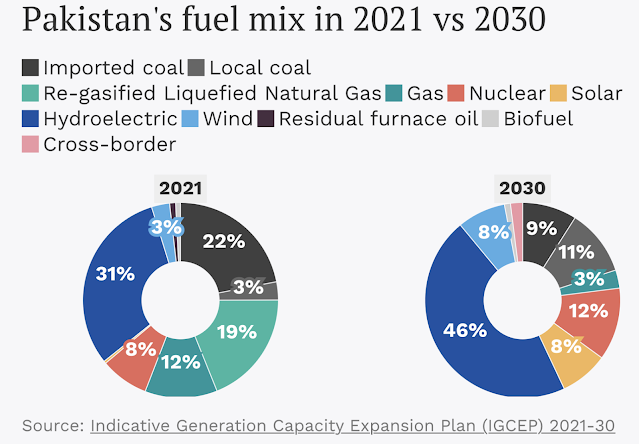
Construction of 1,100 MW nuclear power reactor K2 unit in Karachi has been completed by China National Nuclear Corporation, according to media reports. A similar reactor unit K3 will add another 1,100 MW of nuclear power to the grid, bringing the total nuclear power installed capacity of Pakistan to 3,630 MW (12% of total power) by 2022. Hualong One reactors being installed in Pakistan are based on improved Westinghouse AP1000 design which is far safer than Chernobyl and Fukushima plants. In addition, Pakistan is also generating 9,389 MW (about 28% of total power) of low-carbon hydroelectric power in response to rising concerns about climate change.
Karachi Nuclear Power Plant (KANUPP):
With the placement of the outer containment shell, K2 is now ready for containment and heat tests. It is scheduled to begin operations in 2020. It’s built using the Chinese HPR1000 technology, which features a dual containment design, with the outer containment providing additional protection for the primary containment.
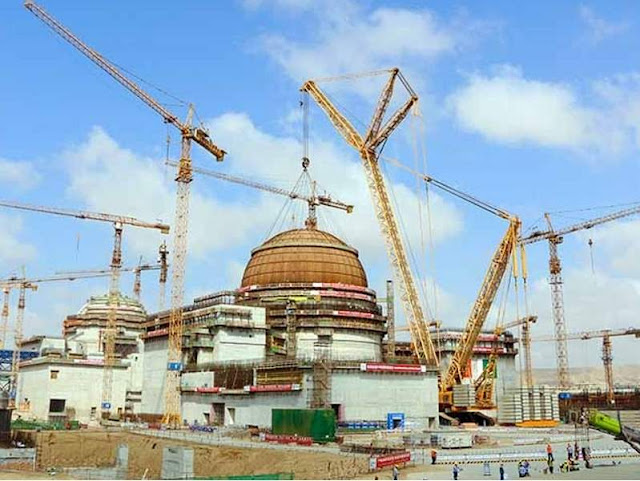 |
| Karachi Nuclear Power Plant K2 Unit Under Construction. Source: CNNC |
KANUPP is Pakistan's first nuclear power plant where construction started in 1966 in Karachi. The plant was connected to the national grid on 18 October 1972. KANUPP, a pressurized heavy water reactor of 137 MW gross capacity was constructed by Canadian General Electric under a turnkey contract. In 1976, vendor support for spare parts and fuel was withdrawn. The PAEC undertook the task of indigenously manufacturing the required spare parts and nuclear fuel on an emergency basis and, since 1980, KANUPP has successfully operated using fuel manufactured by the PAEC, according to International Atomic Energy Agency (IAEA). Here is an except of IAEA's 2018 report on nuclear power in Pakistan:
"Despite the keen interest of Pakistan in building additional nuclear plants, it took more than two decades before the second nuclear power plant started construction. This delay was due to Pakistan’s lack of access to international nuclear technology coupled with a lack of indigenous industrial infrastructure. The construction of Pakistan’s second nuclear plant, C-1, a pressurized water reactor (PWR), was made possible in 1993 with the help of the China National Nuclear Corporation (CNNC). The plant was connected to the national grid on 13 June 2000 and has a gross capacity of 325 MW. A third nuclear power plant, C-2, with 325 MW gross capacity started commercial operation on 18 May 2011. The fourth unit, C-3, started commercial operation on 6 December 2016. It has a gross capacity of 340 MW and a similar plant, C-4, sited beside C-3, was connected to the grid on 25 June 2017. The first concrete pours to mark the start of construction of Karachi Coastal Power Project, a project containing two nuclear units, K-2 and K-3 (1100 MW each), based on an improved PWR design, were 20 August 2015 and 31 May 2016, respectively."
 |
|
|
International Energy Agency:
International Energy Agency (IEA) has recently warned that "steep decline in nuclear power would threaten energy security and climate goals". "With nuclear power facing an uncertain future in many countries, the world risks a steep decline in its use in advanced economies that could result in billions of tonnes of additional carbon emissions", the IEA has said.
 |
| Pakistan Among 31 Countries Operating Nuclear Power Plants |
Nuclear is the second-largest low-carbon power source in the world today, accounting for 10% of global electricity generation. It is second only to hydropower at 16%, according to International Energy Agency (IEA). Pakistan nuclear plants are expected to generate 3,630 MW (12% of total power vs 10% global average) by 2022. Pakistan is also generating 9,389 MW (about 28% of total power vs 16% global average) of low-carbon hydroelectric power in response to rising concerns about climate change.
Nuclear Plant Safety Concerns:
Activists in Pakistan have raised serious concerns about potential risks from K2 and K3 plants to the population in Karachi. Are such concerns valid?
The worst nuclear disaster in the history of nuclear power generation was at Chernobyl in present day Ukraine. One of the key reasons was that the Chernobyl plant did not have the fortified containment structure common to most nuclear power plants elsewhere in the world. KANUPP K-2 and K-3 reactors have two containment shells: primary and secondary. It is noteworthy that Bhopal Union Carbide disaster was history's worst industrial disaster, far bigger in terms of human toll than the Chernobyl disaster.
China signed a technology transfer deal with the United States in 2006 that put the Westinghouse AP1000 reactor design at the “core” of its atomic energy program. Chinese reactor manufacturers also resolved to build advanced third-generation technology in their safety review after the 2011 Fukushima nuclear plant disaster.
Unlike Fukushima where underground emergency cooling system failed due to flooding, the Hualong One design stores water above the reactor that can be gravity-fed to keep it cool if the pumps fail in the event of meltdown. The Chinese HPR1000 reactors employ multiple redundant generators and cooling systems to lower meltdown risk.
Hydropower Generation:
The biggest and most important source of low-carbon energy in Pakistan is its hydroelectric power plants. Pakistan ranked third in the world by adding nearly 2,500 MW of hydropower in 2018, according to Hydropower Status Report 2019. China added the most capacity with the installation of 8,540 megawatts, followed by Brazil (3,866 MW), Pakistan (2,487 MW), Turkey (1,085 MW), Angola (668 MW), Tajikistan (605 MW), Ecuador (556 MW), India (535 MW), Norway (419 MW) and Canada (401 MW).
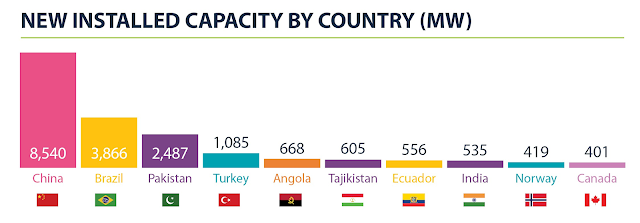 |
| New Installed Hydroelectric Power Capacity in 2018. Source: Hydroworld.com |
Pakistan's Water and Power Development Authority (WAPDA) says commissioning of the 108-MW Golen Gol 2, 1,410-MW Tarbela 4th Extension and 969-MW Neelum Jhelum hydropower projects in 2018 boosted its hydroelectric generating capacity of 9,389 MW, an increase of 36% in just one year, according to Hydro Review. Hydropower now makes up about 28% of the total installed capacity of 33,836 MW as of February, 2019. WAPDA reports contributing 25.63 billion units of hydroelectricity to the national grid during the year, “despite the fact that water flows in 2018 remained historically low.” This contribution “greatly helped the country in meeting electricity needs and lowering the electricity tariff for the consumers.”
 |
| Top 20 Countries by Newly Installed Hydropower Capacity. Source: IHA |
Pakistan has the potential to generate 59,000 MW of hydropower, according to studies conducted by the nation's Water and Power Development Authority (WAPDA). Currently, it's generating only 9,389 MW of hydroelectric power, about 16% of the estimated potential. Media reports indicate that China is prepared to finance and build another 40,000MW capacity as part of the development of the Northern Indus Cascade region which begins in Skardu in Gilgit-Baltistan and runs through to Tarbela, the site of Pakistan’s biggest dam, in Khyber-Pakhtunkhwa province.
Summary:
Construction of 1,100 MW nuclear power reactor K2 unit in Karachi has been completed by China National Nuclear Corporation, according to media reports. A similar reactor unit K3 will add another 1,100 MW of nuclear power to the grid, bringing the total nuclear power installed capacity of Pakistan to 3,630 MW (12% of total power) by 2022. Hualong One reactors being installed in Pakistan are based on improved Westinghouse AP1000 design which is far safer than Chernobyl and Fukushima plants. In addition, Pakistan is also generating 9,389 MW (about 28% of total power) of low-carbon hydroelectric power in response to rising concerns about climate change. One of the ways Pakistan can help reduce carbon emissions is by realizing its full nuclear and hydroelectric power potential by building more nuclear plants and dams. The development of the Northern Indus Cascade region to generate 40,000MW of hydropower is a significant part of this effort.
Related Links:
Haq's Musings
South Asia Investor Review
Nuclear Power in Pakistan
Recurring Cycles of Drought and Floods in Pakistan
Pakistan's Response to Climate Change
Massive Oil and Gas Discovery in Pakistan: Hype vs Reality
Renewable Energy for Pakistan
Digital BRI: China and Pakistan Building Fiber, 5G Networks
LNG Imports in Pakistan
Growing Water Scarcity in Pakistan
China-Pakistan Economic Corridor
Ownership of Appliances and Vehicles in Pakistan
CPEC Transforming Pakistan
Pakistan's $20 Billion Tourism Industry Boom
Riaz Haq's YouTube Channel
PakAlumni Social Network
Riaz Haq
Nuclear Power Generated in TeraWatt Hours —-Pakistan 21.7 terawatt hours. US tops with 823 TWh
Country Generated GWh Supplied Reactors Nuclear Share
United States 823,100 781,945 94 18.2%
China 450,900 417,518 57 4.7%
France 380,500 364,391 57 67.3%
Russia 215,700 202,104 37 17.8%
South Korea 188,800
Canada 85,500 81,156 19 13.4%
Japan 84,900
India 54,700 49,910 20 3.3%
Spain 54,600 52,129 7 19.9%
Sweden 50,600 48,697 6 29.1%
United Kingdom 40,600 37,295 9 12.3%
United Arab Emirates 40,600 36,504 4 21.8%
Finland 32,600 31,128 5 39.1%
Belgium 31,200 29,732 5 54.5%
https://worldpopulationreview.com/country-rankings/nuclear-power-by...
Oct 15, 2025
Riaz Haq
‘Pakistan produced record 21.7TWh nuclear energy in 2024’
https://www.dawn.com/news/1944409
• Yearly report on nuclear energy criticises Chashma-5 for high cost, precedence over renewable energy projects
• World Nuclear Industry Status Report says solar outshone nuclear in terms of efficiency, cost; reveals Pakistan’s renewable energy, including hydro, rose to 15.2GW from 14.2GW in 2023
ISLAMABAD: Pakistan’s net nuclear energy generation touched a record 21.7 terawatt-hours (TWh) in 2024, even though overall electricity costs and inefficiencies reached a systematic tipping point, forcing consumers to switch to renewables, particularly solar, said the World Nuclear Industry Status Report (WNISR) 2025.
“Pakistan operates six nuclear reactors with a combined (net) capacity of 3.3 gigawatts (GW). Nuclear electricity production has increased from 21.3TWh in 2023 to a new all-time high of 21.7TWh (net) in 2024,” it said, adding Pakistan started developing another 1200MW plant in December 2024 with Chinese support.
The share of electricity from nuclear power plants to the commercial grid increased from the 16.2pc peak in 2023 to a record 17pc in 2024, it said, adding all operating reactors were built by the China National Nuclear Corporation (CNNC). This includes two Hualong One reactors (Kanupp-2 and Kanupp-3) outside Karachi and four CNP-300 nuclear reactors in Chashma.
CNNC was also building another 1200-MW Hualong One reactor in Chashma (Unit 5). The agreement to build this reactor dates back to 2017, but it took over seven years to progress to the formal construction start, i.e. first pour of concrete for the base slab of the reactor building, which occurred on December 30, 2024. It is China’s only ongoing nuclear newbuild project abroad and represents the first non-Russian construction start anywhere in the world in the past five years.
In January this year, the National Electric Power Regulatory Authority published an estimated overnight cost of Rs966 billion ($3.4bn) for the Chashma-5 project and the total cost (including financing and other costs) of Rs1.125 trillion ($4 billion). The majority of the cost is planned to be covered by credit from China for the project to start production by 2030, the report said, adding the project had been criticised for its high cost of power, and shelving renewable energy projects to make way for it.
The report said India had 21 operational nuclear power reactors, with a total net generating capacity of 7.4GW, more than double that of Pakistan (3.3GW), and New Delhi planned to add another 100GW by 2047, a target unlikely to be met.
Renewables vs nuclear
Talking about global trends, the report said solar energy added hundreds of gigawatts globally while nuclear remained irrelevant in market development in 2024. “As storage passed a trigger point, there are first signs of a revolution behind the meter and low-income countries are starting to leapfrog,” it said.
In 2024, total investment in non-hydro renewable electricity capacity reached a record $728bn, 21 times the reported global investment in nuclear energy. “Solar and wind power capacities grew by 32 per cent and 11 per cent, respectively, resulting in 565GW of combined new capacity, over 100 times the 5.4 GW of net nuclear capacity addition. Global wind and solar facilities generated 70 per cent more electricity than nuclear plants”.
Not only this, as challenges of integrating nuclear power into the energy system remain, new energy technologies disrupt markets and systems. Photovoltaics directly produce electricity from solar radiation in harmless nanometre-thin semiconductor junctions, allowing for ongoing steep cost reductions and performance increases. This is complemented by similar advances in power electronics and batteries.
Oct 20, 2025
Riaz Haq
Chashma 5 safeguards agreement signed
The agreement was signed in Vienna by Pakistan Atomic Energy Commission Chairman Raja Ali Raza Anwar and IAEA Director General Rafael Mariano Grossi, following unanimous approval by the IAEA Board of Governors in March.
https://www.neimagazine.com/news/chashma-5-safeguards-agreement-sig...
Pakistan and the International Atomic Energy Agency (IAEA) have signed a safeguards agreement for the 1,200 MWe Chashma 5 (C-5) nuclear power plant. The agreement was signed at the IAEA headquarters in Vienna by Pakistan Atomic Energy Commission (PAEC) Chairman Dr Raja Ali Raza Anwar and IAEA Director General Rafael Mariano Grossi, on the sidelines of the 70th IAEA General Conference. This official signing follows unanimous approval of the safeguards by the IAEA Board of Governors in March.
The signing ceremony was witnessed by Shan Zhongde, Chairman of the China Atomic Energy Authority (CAEA), highlighting China’s central role in constructing the pressurised water reactor. The project has progressed rapidly—with its reactor building dome completed ahead of schedule—and is now scheduled for commissioning in 2028.
First concrete for the unit was poured in December 2024. A ceremonial launch attended by Chinese and Pakistani officials followed in early January 2025. The unit will have a HPR1000 (Hualong One) design, which features both active and passive safety systems and a double-shell containment structure. The project is being built by China National Nuclear Corporation (CNNC) and its subsidiary, CNNC China Zhongyuan Engineering Corp, under a cooperation agreement with the Pakistan Atomic Energy Commission (PAEC). The project is estimated to cost approximately $4.8bn, largely financed through Chinese credit.
Chashma 5 will be Pakistan’s largest nuclear plant. The cooperation agreement for the reactor, was signed with China in 2017. The groundbreaking ceremony took place in July 2023. The Chashma site at Mianwali in Punjab already hosts four operating Chinese-supplied CNP-300 PWRs. Pakistan currently operates six nuclear power units with a combined installed capacity of 3,530 Mwe. These plants have maintained an average capacity factor exceeding 90% with more than 100 reactor-years of operational experience.
In line with the IAEA’s statute, states accept safeguards through the conclusion of such agreements with the agency. Safeguards are implemented in the three states that are not party to the Non-Proliferation Treaty – India, Pakistan and Israel. They are based on item-specific agreements concluded with the Agency.
yesterday