PakAlumni Worldwide: The Global Social Network
Karachi's NED University Alum's Startup Has Raised $190 Million to Challenge ARM's Dominance
Silicon Valley based SiFive, a technology startup headed by NED University alumnus Dr. Naveed Sherwani, has raised $60 million in series E round, bringing the total raised to $190 million to date. This round is led by SK Hynix, joined by new investor Prosperity7 Ventures, with additional funding from existing investors, Sutter Hill Ventures, Western Digital Capital, Qualcomm Ventures, Intel Capital, Osage University Partners, and Spark Capital. The Silicon Valley company offers open-source RISC V processor core designs for custom and semi-custom chips used in a broad range of applications from smartphones and communications chips to IoT (Internet of Things), data centers and cloud computing. This market currently is dominated by proprietary Intel and Advanced RISC Machines (ARM) architectures. Availability of open-source processor architecture like RISC V has gained particular significance now because of the ongoing US-China technology war.
|
Dr. Naveed Sherwani |
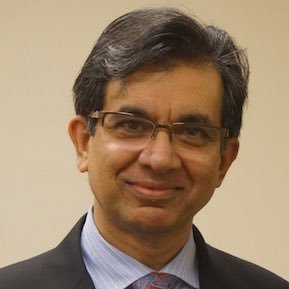
SiFive was originally founded by Andrew Waterman, Krste Asanovic and Yunsup Leethe of the University of California at Berkeley. Their team developed open-source instruction set architecture (ISA) for Reduced Instruction Set Computing V (RISC V). RISC V design is freely available under Berkeley Software Distribution (BSD) that was first introduced for Berkeley's open source UNIX operating system and open software tools. BSD license permits development of derivative intellectual property (IP) and products. It offers the advantage of having a large open-source community contribute to its continuous development and innovation.
ARM architecture is owned and controlled by ARM Holdings which charges license fees for its use. RISC V architecture, on the other hand, is available as open-source and royalty-free. While the use of RISC V specifications and instruction set architecture (ISA) can be used by companies for in-house designs royalty-free, SiFive sells is its core design and IP (intellectual property) based on this architecture. The company's IP Cores are the most widely deployed RISC-V cores in the world. SiFive Core IP is verified and delivered in Verilog for custom SoC (System on Chip) designs.
Availability of open-source processor architecture has gained significance because of the ongoing US-China technology war. RISC-V can be used freely by anyone in the world, and Chinese companies are particularly interested in it because it is a potential alternative to Intel and ARM. Kevin Wolf, former assistant secretary of the US Department of Commerce, said that technology that has been published for anyone to use is not regulated by the US Export Administration Regulations (EAR) and is not subject to the entity list, according to a report in SemiMedia.
In the midst of the US-China trade war, Dr. Naveed Sherwani sees a huge opportunity for SiFive business in China. He has been quoted in the media as saying: “We plan to expand the Chinese market significantly. The trade war has convinced China to build more chips inside China, and we have helped and benefited a lot. About 3-4 years ago, we realized that the trade war will be inevitable, so we decided to set up a completely independent company in China."
To seize this opportunity, Dr. Sherwani has set up Shanghai SaiFang Technology Company as an independent company in China. SiFive holds less than 20% of this company's shares. If SiFive is completely blocked by US government in the future, SiFive China can still serve Chinese customers. SiFive will release a 5G chip based on RISC-V architecture in the near future. Although these chips cannot be directly exported to China, the design can be transferred to SiFive China, and the local team is responsible for building chips in China, according to SemiMedia.
Dr. Naveed Sherwani is a serial entrepreneur with a bachelor's degree in electrical engineering from Karachi's NED Engineering University in 1983. He has a Ph.D. in computer engineering from University of Nebraska. He has taught at Western Michigan University and authored four books and over 100 papers. Sherwani headed Intel's ASIC division before starting Open Silicon, a fabless semiconductor company that offered turn-key custom ASIC solutions. He was the CEO of Peernova before joining SiFive as its chief executive officer.
NED University alumni Idris Kothari and Saeed Kazmi are among the early pioneering duo in the world of technology startups in Silicon Valley. Since 1980s, they have started, built and sold several technology companies, including VPNet, Silicon Design and VIA Technology. They are currently running Vertical Systems Inc. which has a development center in Pakistan.
Dr. Naveed Sherwani is one of the most successful entrepreneurs of Pakistani origin in Silicon Valley. His startups have solved real pain points faced by buyers of computer and communication chips. Naveed and his wife Sabahat Rafiq also volunteer time for and contribute to Silicon Valley community and support education in Pakistan. Other successful NED alumni in Silicon Valley include Raghib Husain (Cavium/Marvel), Safwan Shah (PayActiv), Ashraf Habibullah (CSI), Rehan Jalil (Securiti.ai) and Khalid Raza (Viptela). They all serve to inspire NEDians and Pakistanis everywhere.
Related Links:
Invest in Pakistan Summit in Silicon Valley
Intel Falling Behind in Semiconductor Technology
Pakistani-American VC Asad Jamal Invested Early in Baidu
Pakistani Students Win First Place in Stanford Design Contest
Pakistanis Win AI Family Challenge in Silicon Valley
Pakistani Gamer Wins ESPN E-sports Player of the Year Award
Pakistan's Expected Demographic Dividend
Pakistan's Research Output Growing Fastest in the World
AI Research at NED University Funded By Silicon Valley NEDians
Pakistan Hi-Tech Exports Exceed A Billion US Dollars in 2018
Rising College Enrollment in Pakistan
Pakistani Universities Listed Among Asia's Top 500 Jump From 16 to 23 in One Year
Pakistani Students Win Genetic Engineering Competition
Human Capital Growth in Pakistan
Riaz Haq
#Superpower status will depend on #semiconductor chips. #TSMC building world's largest $20 billion fab in #Taiwan to manufacture chips at dimensions of just 3 nanometers that'll power everything from latest iPhones to medical equipment to F-35 fighters. https://www.ft.com/content/44e28cad-55b7-4995-a5c5-6de6f9733747
This vast capital expenditure highlights the near-insatiable demand for computer chips, the dominance of Taiwanese chipmakers and the sophistication of modern manufacturing. TSMC’s chips power everything from Apple’s latest iPhones to medical equipment to F-35 warplanes, accounting for about 55 per cent of global semiconductor sales.
But the manufacture of semiconductors is becoming a geopolitical imperative, too. As part of its squeeze on China’s tech industry, the US has pressured TSMC to stop supplying Huawei, previously one of its biggest customers. China, which spends more on importing computer chips than oil, is developing a semiconductor industry to reduce dependence on overseas suppliers.
Sensing their own vulnerability, the US, Japan and the EU are also stepping up their efforts to develop indigenous semiconductor industries, as their carmakers and computer games companies wail about the lack of supply. Computer chips currently vie with vaccines as must-have resources for any nation state.
If military capability in previous centuries was built on breech-loading rifles, warships or atomic bombs, it may well depend in the 21st century on the smartest use of advanced chips. The centrality of TSMC to the global semiconductor industry is sometimes given as a reason why mainland China might yet invade Taiwan. But far bigger military and political considerations will determine Beijing’s course of action.
By any measure, TSMC is an extraordinary company which is reaping the benefits of out-investing its rivals. It has just announced that its capital spending will further increase to between $25bn and $28bn this year as it struggles to add capacity fast enough to match demand. During an earnings call last month, CC Wei, TSMC’s chief executive, said that surging sales of smartphones and high-performance computers and the adoption of 5G mobile technology were fuelling demand for the company’s leading-edge logic chips. “We believe that 5G is a multiyear megatrend that will enable a world where digital computation is increasingly ubiquitous,” he said.
Most other semiconductor companies have dropped out of the race to manufacture 3nm chips due to the stratospheric costs. It will now be hard for any rival to catch up with TSMC because of its vast capital spending, its technological expertise, its network of suppliers and its support from the Taiwanese government. Only Samsung of South Korea is visible in its rear-view mirror.
“What separates TSMC from other foundries is its appetite to take risks and its ability to execute. It is an incredible business model,” says Brett Simpson, a tech analyst at Arete, an independent research firm. “The market is heading for one dominant player and one subscale player that is hanging in there and executing very well.”
The bigger concern for TSMC is the geopolitical tension between the US and China. With two fabrication plants in China, one in the US state of Washington and another planned in Arizona, TSMC has been hedging its bets. But like many other companies in a fast-polarising world, it is being forced to choose.
Shelley Rigger, a professor at Davidson College in North Carolina and author of Why Taiwan Matters, says that US pressure on China is only reinforcing Beijing’s determination to become self-sufficient in semiconductor manufacturing: “China has infinite money to throw at a problem like this and no scruples about doing what needs to be done.”
Taiwan has long feared that the world could divide into Chinese-dominated red supply chains and US-focused blue supply chains, jeopardising relations with either its biggest trading partner or its main strategic ally. The island’s room for manoeuvre is becoming as thin as TSMC’s wafers.
Feb 25, 2021
Riaz Haq
The rocky road ahead for Pakistan’s start-up ecosystem | fDi Intelligence – Your source for foreign direct investment information - fDiIntelligence.com
https://www.fdiintelligence.com/content/feature/the-rocky-road-ahea...
Alex Irwin-Hunt
February 22, 2023
Based out of the NED University of Engineering and Technology, NIC Karachi is funded by Pakistan’s national technology fund, Ignite, and operated by LMKT, a private tech company which runs two other NICs in the cities of Hyderabad and Peshawar.
Atif Khan, the chairman and CEO of LMKT, says the philosophy behind the incubation centres “was not to create unicorns”, but to act as digital skills development centres: “We are training and grooming a lot of talent in the country.”
NIC Karachi has already incubated more than 250 start-ups, such as ride-hailing app Bykea and London-based proptech platform Gridizen. Kamran Mahmood, the CEO of Gridizen, who recently returned to Pakistan to join NIC Karachi, says he has found it even easier to meet decision makers at large companies in Pakistan than the UK.
“[NIC Karachi] is doing an excellent job of internationalising and progressing the start-up scene in the country,” he says. Data Darbar figures show that Karachi-based start-ups attracted $236.7m of funding in 2022, equivalent to two-thirds of Pakistan's total and almost double the previous year. The financial capital is followed by Lahore ($69.2m) and Islamabad ($41.6m).
-------------------------
In July 2022, Pakistan’s fledgling start-up scene was dealt a major blow. Airlift, a fast delivery start-up that had raised $85m barely a year earlier, said it would permanently close operations due to the “devastating impact” of worsening economic conditions.
“This has been an extremely taxing decision that impacts a large set of stakeholders and an emerging technology ecosystem,” Airlift wrote in a statement. Start-up failures are common in more mature markets, and seen as an integral part of the innovation and disruption process. But the collapse of a company hoped to be Pakistan’s first ‘unicorn’, or start-up valued at above $1bn, rattled the country’s nascent tech scene.
Several advisors, investors and entrepreneurs tell fDi that Airlift’s failure has caused Pakistani start-up founders and investors to shift their focus away from pursuing “hyper-growth” to building more “sustainable” business models.
Similar to the caution permeating the global tech and venture capital (VC) industry, start-up funding in Pakistan has dropped considerably. Start-ups in Pakistan raised just over $15m in the final quarter of 2022, the worst volumes since the first quarter of 2020 and 79% lower than the same period a year earlier, according to Data Darbar, which tracks the Pakistani start-up scene.
“Given the global slowdown and Pakistan’s macroeconomic and political challenges, things are tough right now and will likely remain so in 2023,” says Aatif Awan, the founder of early stage venture fund Indus Valley Capital, which is focused on Pakistan and had invested in Airlift.
Several acute challenges currently facing the country — including dwindling foreign exchange reserves, security issues, blackouts and severe flood risks — are causing many young Pakistanis to leave. Despite significant obstacles, those involved in Pakistan’s ecosystem believe that the country’s demographics and rapidly digitalising economy make it an untapped opportunity with potential for long-term growth.
Democratising technology
When Shamim Rajani co-founded her software development business Genetech Solutions in Pakistan’s commercial capital Karachi back in 2004, she remembers a “lot of stubbornness” from the government and local corporates towards the IT sector.
“Pakistan wasn’t [even] ready for women CEOs in the tech sector then,” remarks Ms Rajani, adding that she had to look for global clients in countries like the US. “Saying these words today, I don’t even believe it myself.”
Feb 22, 2023
Riaz Haq
on Friday