PakAlumni Worldwide: The Global Social Network
Is CPEC Development Focus Shifting From Gwadar to Karachi?
China has agreed to invest $3.5 billion in Karachi, according to Pakistani and Chinese officials. In a separate announcement earlier, Saudi Arabia said it is moving its planned $10 billion petrochemical complex from Gwadar to Karachi. These announcements have triggered speculation that the focus of development of China Pakistan Economic Corridor (CPEC) is moving from Gwadar to Karachi.
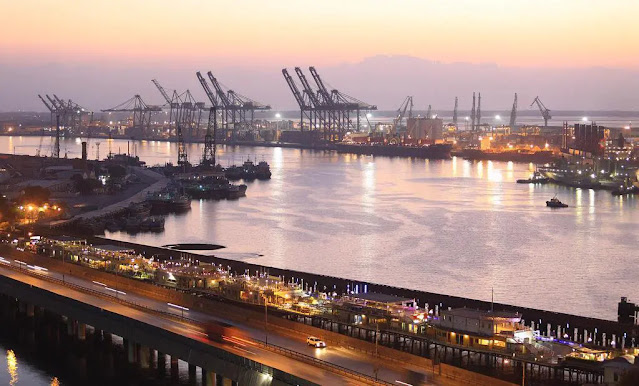 |
| Karachi Port, Pakistan |
The Karachi project dubbed "Karachi Coastal Comprehensive Development Zone project" or KCCDZ includes additional new berths to Karachi port, development of a new fisheries port and a 640-hectare special economic zone near the port. The project also envisages building a harbor bridge connecting the port with the nearby Manora islands, according to Nikkei Asia.
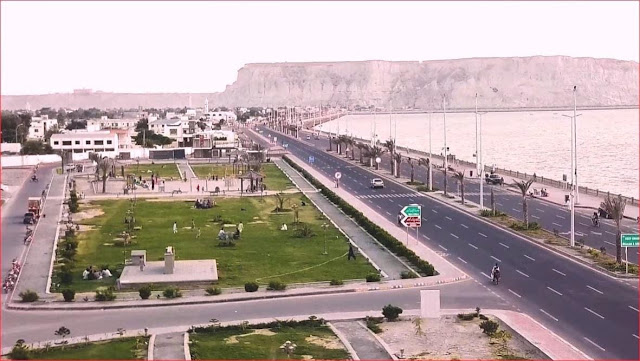 |
| Gwadar Port City |
Saudi decision to shift the $10 billion petrochemical plant from Gwadar to Karachi was triggered by the fact that there is no oil pipeline nor a rail line planned to support it at Gwadar. Karachi already has well-developed roads, rails, telecommunications and pipeline infrastructure for connectivity with the rest of the country.
 |
|
|
There are 10 submarine cables currently connecting or planned to connect Pakistan with the world: TransWorld1, Africa1 (2023), 2Africa (2023), AAE1, PEACE, SeaMeWe3, SeaMeWe4, SeaMeWe5, SeaMeWe6 (2025) and IMEWE. PEACE cable has two landing stations in Pakistan: Karachi and Gwadar. SeaMeWe stands for Southeast Asia Middle East Western Europe, while IMEWE is India Middle East Western Europe and AAE1 Asia Africa Europe 1. PEACE cable is the latest. It is a privately owned submarine cable that originates in Karachi, Pakistan and runs underwater all the way to Marseilles, France via multiple points in the continent of Africa.
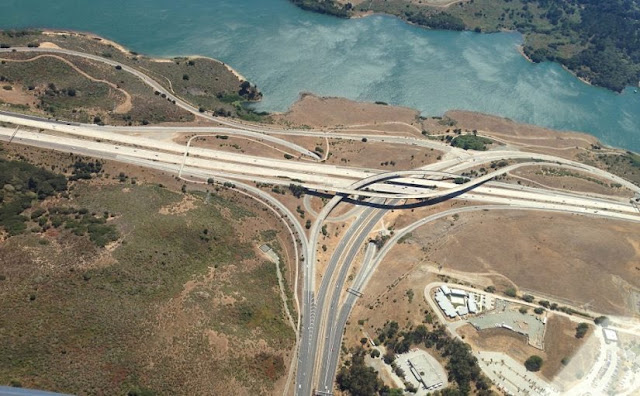 |
| Gwadar East Bay Expressway, Pakistan |
China already has a lot invested in Gwadar. Krzysztof Iwanek, head of the Asia Research Center at Warsaw's War Studies University, told Nikkei that the challenges of developing a major port in an underdeveloped area like Gwadar must have been factored in by China from the outset. "[I]t may be assumed that Chinese involvement in Gwadar may be at least partially strategic. Karachi, in turn, is Pakistan's most important port, and, hence, Chinese involvement there may be of purely economic nature," Iwanek said.
My own view is that Gwadar remains very important to China for strategic reasons. Gwadar sits very close to the strategic Strait of Hormuz that is used by tankers carrying the bulk of China's and the world's energy imports. Karachi is the fastest and most economical route to making CPEC operational but it does not diminish the long-term importance of Gwadar for China.
Related Links:
Haq's Musings
South Asia Investor Review
Pakistanis Happier Than Neighbors
Quaid-e-Azam Mohammad Ali Jinnah's Vision
Karachi Safety Ranking Rising
Gangs of Karachi
Gangster Politicians of Karachi
Karachi is World's Fastest Growing Megacity
Karachi's Human Development Index
Pakistan Rising or Failing: Reality vs Perception
Pakistan's Trillion Dollar Economy Among top 25
CPEC Myths and Facts
Riaz Haq
China’s large-scale investment near Karachi is set to transform the region into a real estate hotspot. The $3 billion Karachi Coastal Development Zone, a $1 billion medical city in Dhabeji, and a 1,500-acre industrial park at Pakistan Steel Mills are part of the broader CPEC vision.
These developments promise to reshape Pakistan’s property market, attract global investors, and drive long-term value in areas like Port Qasim, Bin Qasim, and Korangi Creek.
Read more: https://www.graana.com/blog/chinas-upcoming-city-near-karachi-a-pot...
--------------
KARACHI: The federal and Sindh governments have joined hands to work together on a much-ambitious $3.1 billion project aimed at reclaiming land near Machar Colony for coastal developments, including four new berths and a fishing port with a world-class fisheries export processing zone.
At a meeting held at the CM House on Thursday, Chief Minister Syed Murad Ali Shah and Federal Maritime Affairs Minister Junaid Anwar agreed to collaborate on a series of ambitious projects, including the Karachi Coastal Comprehensive Development Zone (KCCDZ).
The KCCDZ, initiated by the maritime ministry in 2021 and included in the China-Pakistan Economic Corridor, is expected to generate significant employment opportunities, with the feasibility study already complete and implementation planned in three phases across 687 acres.
https://www.dawn.com/news/amp/1914258
Jun 26, 2025
Riaz Haq
Trade volume handled by Pakistani ports in FY 2025:
Karachi Port: 54 million tons
Port Qasim: 34 million tons
Gwadar Port: 500,000 tons
Total Cargo all ports: 88.5 million tons
Pakistan’s biggest port hits record 54 million tons in FY25, boosting trade prospects
https://www.arabnews.com/node/2606658/pakistan
Karachi Port Trust says witnessed cargo handling growth of 4.45 percent in FY25 compared to fiscal year 2023-24
Port handled 1,093 container ships, 218 bulk carriers and 452 liquid bulk ship tankers in last fiscal year
------------
Partial data: From July 2024 to March 2025, Port Qasim Authority handled 33.8 million tonnes of cargo. This represents a 1.6% decrease compared to the previous year.
Daily figures: For various dates in 2025, there are records of daily cargo volumes handled at the port.
Contextual information:
Karachi Port, another major Pakistani port, recorded a total handling of 54 million tons in FY25.
Jul 4, 2025
Riaz Haq
Karachi leverages Iran war, wins a year's worth of transshipment in 24 days
Pakistan's discount on port charges also helps draw transshipment from global lines
https://asia.nikkei.com/spotlight/iran-tensions/karachi-leverages-i...
Pakistan's Karachi port is witnessing a sharp rise in transshipment cargo due to disruption in the Strait of Hormuz, which has prompted carriers to reroute, while Islamabad's discounts on port charges are also helping global shipping lines call at the port on the Arabian Sea.
"At Karachi Port, around 8,300 containers were handled [for transshipment] in the entire year of 2025, while in just the past 24 days, cargo equivalent to 8,313 containers has been handled," Muhammad Junaid Anwar Chaudhry, federal minister for maritime affairs, told Nikkei Asia in a written statement on Friday.
Shipping lines began offloading cargo in Karachi because services to Dubai, Salalah and other Gulf ports have been disrupted by the Hormuz crisis. Iran has effectively closed down the waterway since March 2, after attacks by the U.S. and Israel.
Experts said the primary driver of the surge in cargo is the conflict in the Middle East, which has rendered traditional Gulf hubs like Dubai's Jebel Ali port non-operational.
"As a result, carriers have been forced to reroute traffic through alternative ports, and Karachi has benefited from its proximity," Naafey Sardar, assistant professor of economics at U.S.-based St. Olaf College, told Nikkei. "The increase in traffic will translate into higher revenue through port charges and other fees."
The sudden surge in cargo handling was also backed by existing foreign marine companies.
Ali Asad, who runs a trade consultancy business in Karachi, said global port operators such as Hong Kong-based Hutchison Ports and global shipping lines such as Maersk and COSCO maintain established operations in Pakistan. "These commercial linkages were already in place. As soon as this crisis struck, they were able to make use of existing mechanisms and effectively divert shipments to Pakistan instead of needing to start from scratch," he told Nikkei.
Asad added that there was existing space at Pakistan's port terminals to accommodate more transshipments. "The closure of its border with Afghanistan has practically paused transit trade in Pakistan," he said, explaining why such space is now available.
Another factor attracting transshipment demand has been the government's decision to offer 60% discounts on port charges, effective from March 18.
"A fiscal package slashing port dues by up to 60% [provided] an irresistible cost incentive for shipping lines to reroute through Karachi," Aqdas Afzal, an economist who has advised Gulf Cooperation Council governments on finance, told Nikkei.
To maintain this momentum of high cargo volume in the long term, experts argue that Pakistan needs supportive policy decisions.
"The shift can only become permanent if such recent financial incentives are embedded into a stable, long-term policy framework, maintaining cost competitiveness," Afzal said.
Asad, the trade consultant, said the most significant long-term benefit from the transshipment surge is the improvement of Pakistan's image as a potential major trade hub. "It demonstrates Pakistan's ability to handle international cargo reliably, helping position it as a viable alternative to established Gulf hubs."
Saleem Lalani, a senior finance professional who has worked in the Gulf, however, expressed skepticism on any large increase in long-term cargo handling at Karachi port.
"Ports are part of a multimodal logistics infrastructure that includes container berths, warehousing and integration with train and trucking transportation," he said.
"Any increase in terminal or seaport capacity requires significant investment in expanding capacity across the logistics and shipping value chain," he added, hinting that Islamabad's budgetary constraints would hinder such investment from materializing effectively.
1 hour ago