PakAlumni Worldwide: The Global Social Network
Is CPEC Development Focus Shifting From Gwadar to Karachi?
China has agreed to invest $3.5 billion in Karachi, according to Pakistani and Chinese officials. In a separate announcement earlier, Saudi Arabia said it is moving its planned $10 billion petrochemical complex from Gwadar to Karachi. These announcements have triggered speculation that the focus of development of China Pakistan Economic Corridor (CPEC) is moving from Gwadar to Karachi.
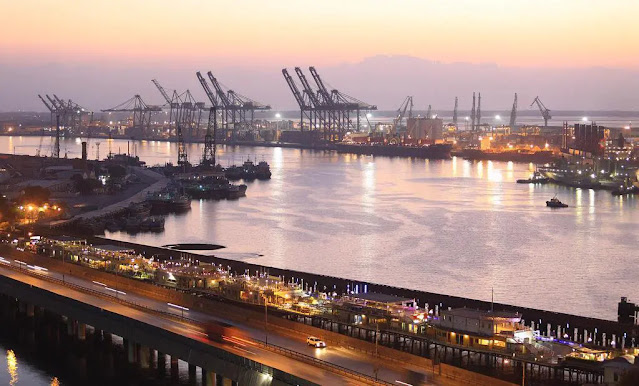 |
| Karachi Port, Pakistan |
The Karachi project dubbed "Karachi Coastal Comprehensive Development Zone project" or KCCDZ includes additional new berths to Karachi port, development of a new fisheries port and a 640-hectare special economic zone near the port. The project also envisages building a harbor bridge connecting the port with the nearby Manora islands, according to Nikkei Asia.
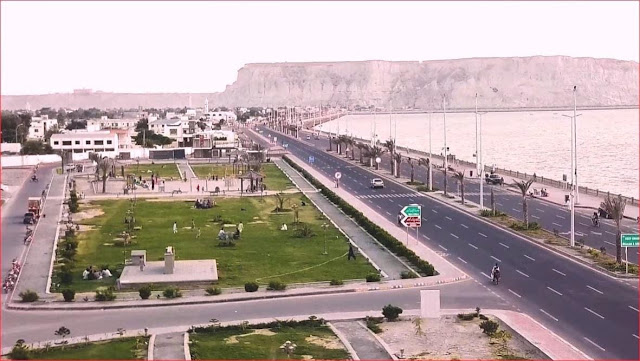 |
| Gwadar Port City |
Saudi decision to shift the $10 billion petrochemical plant from Gwadar to Karachi was triggered by the fact that there is no oil pipeline nor a rail line planned to support it at Gwadar. Karachi already has well-developed roads, rails, telecommunications and pipeline infrastructure for connectivity with the rest of the country.
 |
|
|
There are 10 submarine cables currently connecting or planned to connect Pakistan with the world: TransWorld1, Africa1 (2023), 2Africa (2023), AAE1, PEACE, SeaMeWe3, SeaMeWe4, SeaMeWe5, SeaMeWe6 (2025) and IMEWE. PEACE cable has two landing stations in Pakistan: Karachi and Gwadar. SeaMeWe stands for Southeast Asia Middle East Western Europe, while IMEWE is India Middle East Western Europe and AAE1 Asia Africa Europe 1. PEACE cable is the latest. It is a privately owned submarine cable that originates in Karachi, Pakistan and runs underwater all the way to Marseilles, France via multiple points in the continent of Africa.
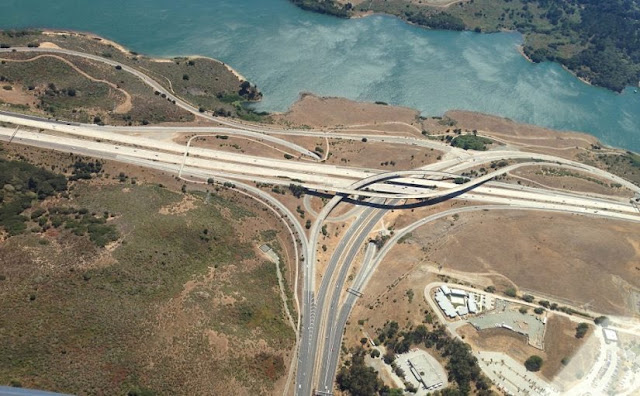 |
| Gwadar East Bay Expressway, Pakistan |
China already has a lot invested in Gwadar. Krzysztof Iwanek, head of the Asia Research Center at Warsaw's War Studies University, told Nikkei that the challenges of developing a major port in an underdeveloped area like Gwadar must have been factored in by China from the outset. "[I]t may be assumed that Chinese involvement in Gwadar may be at least partially strategic. Karachi, in turn, is Pakistan's most important port, and, hence, Chinese involvement there may be of purely economic nature," Iwanek said.
My own view is that Gwadar remains very important to China for strategic reasons. Gwadar sits very close to the strategic Strait of Hormuz that is used by tankers carrying the bulk of China's and the world's energy imports. Karachi is the fastest and most economical route to making CPEC operational but it does not diminish the long-term importance of Gwadar for China.
Related Links:
Haq's Musings
South Asia Investor Review
Pakistanis Happier Than Neighbors
Quaid-e-Azam Mohammad Ali Jinnah's Vision
Karachi Safety Ranking Rising
Gangs of Karachi
Gangster Politicians of Karachi
Karachi is World's Fastest Growing Megacity
Karachi's Human Development Index
Pakistan Rising or Failing: Reality vs Perception
Pakistan's Trillion Dollar Economy Among top 25
CPEC Myths and Facts
Riaz Haq
Thar Energy’s 330MW Thar Coal-based project nears completion under CPEC
The plant will supply electricity to the national grid
https://www.samaa.tv/news/pakistan/2021/10/thar-energys-330mw-thar-...
In Sindh, the 330-megawatt Thar Energy Limited Power Project Block-II is being completed under China-Pakistan Economic Corridor or CPEC.
According to an official, the power plant would supply electricity to the national grid under a 30-year power purchase agreement.
According to APP news agency, the power plant is a 330MW mine-mouth lignite-fired power project being built by Thar Energy, which is owned by the Hub Power Company or Hubco, China Machinery Engineering Corporation or CMEC and Fauji Fertilizer Company or FFC.
Similarly, two more coal-fired power plants, Engro Thar Block II power plant and Thal Nova, are also being developed in Thar Block II.
Engro’s Thar Block II power plant is a coal-fired power station in Sindh’s Tharparkar district. It was Pakistan’s first power plant to use the indigenous coal reserves of Thar.
The 660MW power plant, which was part of CPEC, was developed by Engro Powergen Thar or EPTL, a joint venture of Engro Powergen or EPL, CMEC, Habib Bank, and Liberty Mills. Construction on the Engro Thar Block II power plant commenced in April 2016. Trial operations at the plant began in July 2018 while commercial operations began in July 2019.
The coal-fired power plant is located five kilometres away from Thar Block II near Thar coalfields. It consists of two 330MW units, which integrated circulating fluidised bed or CFB boilers, tandem compound steam turbine units, and generators. CFB is an ideal option for the low-calorific-value Thar lignite coal.
It helped to regulate the plant’s environmental footprint by reducing nitrogen oxide emissions and capturing sulphur oxides. The 20kV, 50Hz, three-phase intercooled generators featured a hydrogen-cooled rotor and stator core, as well as water-cooled rotor windings.
The power plant is also equipped with associated equipment and systems such as cyclones, air pre-heaters, and water walls. Sindh Engro Coal Mining Company or SECMC supplied nearly 3.8 million tons per annum of coal for the coal-fired power plant from a new opencast mine.
The SECMC is a joint venture by the government of Sindh and Engro Powergen. The joint venture was formed for extracting coal available at the seventh biggest coal mine site in the Thar Desert.
The new coal-fired power plant fed electricity to a 500kV double-circuit transmission line of the grid network between Thar and the Hesco grid station in Jamshoro. The estimated cost of the Engro Thar power plant was $995.4 million – funded by a syndicate led by China Development Bank with the support from China Export and Credit Insurance Corporation.
The syndicate included Habib Bank, United Bank, Bank Alfalah, National Bank Pakistan, Faysal Bank, Construction Bank of China, and Industrial and Commercial Bank of China.
ThalNova is a similar 330MW power plant being developed in the same block. The financial closing for the power plant was achieved in September 2020 and the commercial operations are scheduled to begin in 2022.
Oct 11, 2021
Riaz Haq
#Pakistan minister Ali Zaidi denies #Chinese economic corridor (#cpec) projects shifting from #Gwadar to #Karachi amid worsening security. “Rather, the corridor project is moving into Karachi in addition to Gwadar and is expanding its framework”
https://www.arabnews.com/node/1947621/world
A top Pakistani official has said that a proposed $3.5 billion coastal development project in the port city of Karachi is part of the China-Pakistan Economic Corridor, denying that the focus of the multibillion-dollar project was being shifted from Gwadar to Karachi.
Gwadar, in the southwestern province of Balochistan, is the crown jewel of China’s more than $60 billion CPEC investment in Belt and Road Initiative projects in Pakistan. The plan was to turn Gwadar into a trans-shipment hub and megaport to be built alongside special economic zones from which export-focused industries would ship goods worldwide. A web of energy pipelines, roads and rail links would connect Gwadar to China’s western regions.
However, growing insecurity and a rise in attacks by militants in Balochistan has rattled China, which has publicly demanded that Pakistan improve security for Chinese workers. Nine Chinese were killed this year in northwest Pakistan in an attack on a bus carrying them to a construction site. In a separate attack, a convoy of Chinese officials was targeted by a suicide bomber in Gwadar.
Thus, the announcement last month by Pakistan and China to include the Karachi Coastal Comprehensive Development Zone in the CPEC framework unleashed frantic speculation that the corridor project was being moved from the deep-sea port in the volatile Balochistan province.
“CPEC is not moving from Gwadar to Karachi,” Syed Ali Zaidi, the country’s maritime minister, told Arab News in an exclusive interview on Monday. “Rather, the corridor project is moving into Karachi in addition to Gwadar and is expanding its framework, which is great for us.”
“It (CPEC) is going to develop a whole new district in Karachi, which is going to be a state-of-the-art district equipped with technology and all modern infrastructure,” he said.
Elaborating on the financing plan for the project, he said that the $3.5 billion Chinese investment was not a loan or a grant, but the project was a partnership between a Chinese state-owned enterprise and the Karachi Port Trust, which owned the land.
“$3.5 billion will be invested to develop infrastructure where the KPT and (the Chinese) investor both will make money,” Zaidi said. “Instead of a loan or a grant, we have decided to do a win-win project, which means that people who are investing will also make some returns.”
The maritime minister said that the project would add four more berths to the targeted coastal area, providing greater depth to Pakistan’s expanding maritime sector and creating space for cruise ships to dock.
“We will build four berths maybe for cruise ships, and if we build for cruise ships there may be some hotels around it and this all has to be backed by real estate development,” he said. “But the real estate development is not the primary objective; the primary objective (is) to fix our marine environment and, on the top of it, build state-of-the-art modern infrastructure.”
A state-of-the-art fishing port would also be built, Zaidi said, along with a world-class fisheries export processing zone.
“A water treatment plant at the mouth of Lyari River would be built to improve marine ecosystem and reduce pollution in the Arabian Sea,” the minister said.
Zaidi said that the coastal development plan would also benefit the poor slum of Machar Colony in the area, mostly inhabited by the Bengali and Burmese communities: “We have decided to make 20,000 to 25,000 apartments in accordance with Prime Minister Imran Khan’s vision to promote low-cost housing to give respectable living (conditions) to our people.”
Oct 17, 2021
Riaz Haq
Karachi coastal project under CPEC to boost economy: officials - Pakistan Today
https://www.pakistantoday.com.pk/2021/11/15/karachi-coastal-project...
ISLAMABAD: The recent inclusion of the Karachi Coastal Comprehensive Development Zone (KCCDZ) project in the China-Pakistan Economic Corridor (CPEC) will boost Pakistan’s economy and enhance industrial and development cooperation between Pakistan and China, said experts and officials.
The decision to include the project in Karachi into the CPEC was made at the CPEC’s recent 10th Joint Cooperation Committee Meeting.
Covering a total area of about 930 hectares, of which 640 hectares are reclaimed, the environment-friendly KCCDZ envisages four new berths for the Karachi Port Trust (KPT), according to a statement from the Ministry of Maritime Affairs of Pakistan.
The mega project, being built with an expected investment of $3.5 billion, will also house a state-of-the-art fishing port, with a world-class fisheries export processing zone to boost the country’s trade potential, said the ministry.
It will also drastically improve the marine ecosystem and reduce pollution with the establishment of a water treatment plant, the ministry said.
Terming the project a game-changer for Pakistan, Prime Minister Imran Khan recently said the coastal development project will bring Karachi on a par with developed port cities of the world.
The project will present opportunities for investors, he said on Twitter, adding that it will also help clean up marine habitats for fishermen and develop 20,000 low-income housing units.
The KCCDZ is the first of its kind under the CPEC, which reflects the commitment of Pakistan and China to forge high-quality cooperation to improve people’s livelihoods, Minister for Maritime Affairs Ali Haider Zaidi told Xinhua.
“As all-weather strategic cooperative partners, China and Pakistan are stepping up cooperation in various sectors, giving impetus to the growth of bilateral relations, economic and social development of the two countries,” the minister said.
Speaking to Xinhua, Syed Hasan Javed, director of Chinese Studies, School of Social Sciences and Humanities at the National University of Science and Technology in Islamabad, said the KCCDZ is a 21st-century modern project replete with the latest technologies, town planning, urban infrastructure, municipal amenities and environment-friendly marine development.
“It will take Pakistan’s economy to the next level of prosperity by attracting foreign direct investment, generating employment and revenue, boosting exports and promoting regional and global connectivity,” Javed said.
Nov 16, 2021
Riaz Haq
Pakistan has seen a decline in direct investment from China. According to the State Bank of Pakistan, the central bank, Chinese FDI in the quarter that ended in September was just $76.9 million compared to $154.9 million in the same quarter last year.
https://asia.nikkei.com/Spotlight/Asia-Insight/China-Pakistan-Belt-...
FDI in the fiscal year that ended in June was also markedly down. Excluding fiscal 2019, which included a general election, the inflow totaled $757 million -- the least seen since 2015. In most years, Chinese FDI is 30-50% of the total, so the downward turn is a warning light for the economy.
The Chinese slowdown is also evident in Pakistan's trade figures. United Nations' data shows that China's exports to Pakistan have been declining since a $15 billion peak in 2017. There is a clear downward trend in manufactured goods and materials; iron and steel -- both crucial to infrastructure development -- fell steadily by 40% overall between 2016 and 2020.
----
The discord is not new, but generally kept behind closed doors. China's displeasure has, however, occasionally been leaked.
Around early 2019, Yao Jing, the Chinese ambassador, met in Quetta with officials from the Balochistan provincial government. Although it was never officially confirmed, he was extremely critical. "You people are not taking seriously the delays in the issuance of permission to a Chinese company to start working on a coal-fired power plant in Gwadar," he said.
Such rifts between the two sides have become more evident, and led to reduced Chinese investment and exports to Pakistan.
Islamabad is alarmed by the costliness of Chinese projects. Tabish Gauhar, Pakistan's special assistant to the prime minister on power and petroleum, stated in cabinet in August that a CPEC power project is 25% more expensive than the international norm.
"The Chinese ambassador has complained to me that you have destroyed CPEC, and that no work was done in the past three years," Saleem Mandviwalla, chairman of Senate Standing Committee on Planning and Development, said at a September committee meeting after Chinese diplomats and officials defended the 135 Chinese companies operating in Pakistan.
"China has become more cautious in general and with regard to Pakistan," James M. Dorsey, a senior fellow at the S. Rajaratnam School of International Studies in Singapore told Nikkei. "As many investors do, they look more at the return on investment than they did before."
Dorsey believes the turning point for China came in early 2020 with the COVID-19 pandemic and continuing trade disputes. He believed another significant reason to be the growing number of foreign governments failing to keep up with repayments.
Other factors may be playing into the slowdown, power generation being a good example. With its new plants online, Pakistan's installed capacity has reached almost 40,000 megawatts while peak electricity demand is 25,000 MW.
----------------------
China and Pakistan remain bonded by their perception of India as a common enemy. China wants a friendly neighbor to its south, while Pakistan seeks the blessing of a global power that is not transactional like the U.S.
Can Pakistan re-energize Chinese interest and investment? One Pakistani official believes not.
"With the end of the early harvest phase of CPEC, China-led infrastructure development has peaked in Pakistan," a government official told Nikkei on condition of anonymity.
"CPEC is not over yet, but in the remaining nine years, we can't expect to see even a fraction of the infrastructure development that took place between 2015 and 2020," he said.
Nov 30, 2021
Riaz Haq
Pakistan to Boost Shipping Fleet to Tackle Global Logistics Crisis. #Pakistan has over 1,000 Km coastline & 3 major ports, including #Karachi. It's close to #Africa, #MiddleEast, #Arab Gulf oil. Pak NSC has a fleet of 11 ships, wants to buy another 4 ships https://www.maritimeprofessional.com/news/pakistan-boost-shipping-f...
https://www.maritimeprofessional.com/news/pakistan-boost-shipping-f...
Pakistan is working to boost the capacity of its shipping fleet to draw on its strategic geographical position and help tackle the effects of a global supply chain crisis, the country’s maritime minister told Reuters.
Pakistan has a coastline of over 1,000 kilometers (621 miles) and three major ports, including Karachi. It is two days sailing time from destinations in Africa and the Middle East and its western shoreline is close to the Strait of Hormuz oil chokepoint.
A surge in demand for retail goods from people stuck at home under pandemic-related lockdowns and logjams impacting the supply of container ships and boxes to transport cargo have led to bottlenecks around the globe, which are set to continue into 2022.
Pakistan's Federal Minister of Maritime Affairs Ali Haider Zaidi said the country is in negotiations "through a public private mechanism to create joint ventures to expand into container shipping".
"The supply chain problems are faced by everyone and Pakistan is also affected. There are issues everywhere and this is one of the ways we are trying to deal with this longer term," he said on a visit to London.
The state-controlled Pakistan National Shipping Corporation has a fleet of 11 ships including oil tankers and dry bulkers and has issued a tender for another four ships, Zaidi said.
Pakistan would initially charter space on container ships "and test the market before we start discussion on how many (container ships) we acquire," he added.
Pakistan was also seeking to develop as a port hub for landlocked central Asian countries, Zaidi said, and that it was vital critical supplies reached neighboring Afghanistan after the Taliban's victory in August.
"The world and the financial superpowers cannot and should not abandon Afghanistan. If they do, it will be a catastrophic humanitarian (crisis)," he said. "It is our moral obligation to help them."
U.N. agency UNCTAD said in November smaller countries are expected to feel the most impact from the higher costs of importing goods.
Dec 14, 2021
Riaz Haq
Pakistan's Gwadar Port Protests Should Be a Wake-Up Call for Islamabad
by Arif Rafiq
https://foreignpolicy.com/2021/12/14/pakistan-gwadar-port-protests-...
Rather than transforming this isolated Pakistani city, China’s Belt and Road Initiative has only created great expectations and even greater disappointment. Ultimately, the responsibility for this failure lies on the Pakistani state, which adopted a fundamentally flawed strategy ill-suited for Gwadar, built on a series of assumptions that have been proven to be incorrect.
For starters, Pakistan assumed that Gwadar was absolutely vital to Chinese interests, especially in helping Beijing overcome its reliance on energy imported via the Malacca Strait. But as a 2020 U.S. Naval War College study makes clear, Chinese analysts generally see a Pakistan-based overland energy pipeline to Xinjiang as economically unviable. And there is even some pushback in China’s strategic community on whether it really faces a “Malacca dilemma.”
These perspectives rarely make it into Pakistan’s domestic discourse on China. One reason for this is that Pakistan lacks independent China experts, despite its close strategic partnership with China. Most Pakistani commentators—some of whom are paid by Beijing—stick to the official script. It’s no wonder Pakistani officials are then left blindsided when Beijing’s policy priorities and risk appetite shift.
A second reason: Pakistan—like Djibouti, Kenya, and Sri Lanka—assumed that China’s Shenzhen or Shekou model is not only replicable but also plug and play. This discounts the fundamentally different natures of the Chinese and Pakistani states. China is an authoritarian, hierarchical, developmental state. Pakistan is a semi-democratic, disaggregated rentier state marred by criminality and incompetence from the top down.
The Pakistani state simply lacks the will to create value in the global economy. It is largely focused on extracting from its populace and foreign donors. And it dithers on any sort of policy reform. In the case of Gwadar, it took years for Islamabad to simply pass into law tax exemptions for the port and free zone that are key to attracting foreign direct investment there.
Third, Pakistan’s trickle-down strategy for Gwadar is inappropriate for Balochistan. To begin with, there’s been little economic growth in Gwadar to actually trickle down to locals. And the province, which is Pakistan’s poorest but also home to its oldest and largest natural gas field, has been hit by multiple secessionist insurgencies since Pakistan’s founding, driven in part by resource nationalism. Separatist terrorist groups have also targeted Pakistani nationals from other provinces, including teachers, deemed as “settlers.”
But insensitive claims of an imminent influx of Chinese nationals, including by a luxury real estate developer in 2017, intensified Baloch fears they would be displaced by outside capital and labor in Gwadar. Those specific fears may be unfounded. But instead of an influx of foreign residents, Gwadar is seeing a surge in fishing trawlers from the neighboring Sindh province and China, whose massive hauls are destroying local incomes.
The original plan for Gwadar under CPEC did contain some admirable social sector projects. For example, China has funded the expansion of a middle school and established an emergency medical center in Gwadar. But these are just drops in the bucket for an area with a population close to 100,000 in 2017. Major projects—including a vocational training center, medical hospital, and desalination plant—have either been delayed, scaled down, or dropped. Given Balochistan’s fraught history with Pakistan’s central government, Islamabad should have front-loaded projects that would have provided basic services, especially clean water.
Dec 15, 2021
Riaz Haq
Pakistan's Gwadar Port Protests Should Be a Wake-Up Call for Islamabad
by Arif Rafiq
https://foreignpolicy.com/2021/12/14/pakistan-gwadar-port-protests-...
Fourth, Islamabad structured its plans for Gwadar based on an incorrect assessment of the city’s natural advantages. It has envisioned Gwadar as a “gateway port” serving the hinterland of Pakistan, Afghanistan, other countries in Central Asia, and Xinjiang. But given its isolated location, Gwadar stacks up poorly in terms of cost and efficiency when compared to regional competitors, including Pakistan’s own Karachi and Qasim ports.
The Gwadar port, however, can be dredged to a depth of 20 meters, making it a potentially viable location for transshipment—allowing very large, cost-efficient vessels to offload cargo to be loaded on to smaller ships servicing shallower regional ports. Indeed, the consulting firm that developed the original master plan for the port assessed that transit trade with the Central Asian republics via Gwadar had “little potential” but that there were decent prospects in the longer term for transshipment.
Finally, Pakistan’s top-down political model in Gwadar doesn’t work. Protests in 2018 by fishermen against an expressway that cut off their access to the sea made clear that locals were afterthoughts in the design of key infrastructure projects. Gwadar’s fishermen once again taking to the streets indicates a failure of the political process to address their needs. They simply do not trust the government.
Last week, in a Twitter Spaces discussion, Balochistan Provincial Minister Zahoor Buledi noted that he had held five or six meetings with protest leader Maulana Hidayat ur Rehman Baloch of the Jamaat-e-Islami party. But the maulana (an honorific given to Islamic clerics) and other participants in the session felt promises made to them would not be fulfilled once the protests stopped and media cameras went away and suggested that some corrupt officials were acting in connivance with various “mafias.”
The reflex of the Pakistani state—particularly in Balochistan, where enforced disappearances by security forces are rampant—is to respond to large-scale protests and unrest with intimidation and, sometimes, violent coercion. Given New Delhi’s hand in the Baloch insurgency, which has conducted high-profile attacks in Gwadar in recent years, the opportunistic, heavy coverage of the protests by state-aligned “private” Indian news outlets also triggers the anxieties of the Pakistani security services. But these protests are simply an organic reaction by Gwadar’s people to the endangerment of their livelihoods and the failure of their own state to respond to their basic needs.
The cries of Gwadar protestors should serve as a wake-up call for Islamabad. While terrorist attacks, including a 2019 assault on Gwadar’s only major hotel, serve to deter foreign investment, a heavy security crackdown will only further alienate locals and compound the problem. Islamabad needs to break out of the cycle of violence by developing a new strategy to win the peace in Balochistan.
That strategy should include several specific elements. For one, Islamabad and the Balochistan provincial government need to develop a political framework to include locals in the developmental design process, city governance, and security services. They should also fast-track large-scale desalination projects to better address local water demand. The current water strategy centers on dams—an unreliable source of water for an area hit by drought.
To counter Baloch fears of resource plundering, CPEC needs a strong redistributive policy for southern Balochistan. Islamabad and the provincial Balochistan government in Quetta city should create a wealth fund for natives of Gwadar and the Makran coastal region, providing them with an annual basic income sourced from royalties on energy and mining industries and taxes on luxury real estate and tourism.
Dec 15, 2021
Riaz Haq
#Gwadar Update from #China COPHC Chairman Zhang Baozhong: “Gwadar will become the logistics hub in this region within 5 years” Gwadar Free Zone Manager Dadaullah Yousuf said 46 enterprises have so far been registered for #investment in the free zone. #CPEC https://tribune.com.pk/story/2336706/gwadar-heads-to-a-promising-2022
“I will grow up to become a doctor. I want to travel around the world and show them what we are capable of,” declared Habiba Qadir, a student of China-Pakistan Gwadar Faqeer Middle School, in an interview with the China Economic Net.
The China-Pakistan Economic Corridor (CPEC) reached an important milestone on November 13, 2016 with the first shipment of trade cargo from Gwadar Port to international destinations.
Five years on, Gwadar Port has entered 2022 with hope, determination and achievement.
“For those who have visited it before, they do realise that there has been a lot of development here,” Gwadar Port Authority Chairman Naseer Khan Kashani pointed out while reviewing the five-year journey of Gwadar Port.
Reaching to a bigger world
Gwadar has made huge progress when it comes to port operation and port economy.
“According to our plan, Gwadar will become the logistics hub in this region within five years,” China Overseas Port Holding Company (COPHC) Chairman Zhang Baozhong said confidently.
There had been no single commercial shipping line connecting Gwadar Port for the past 10 years, and the port merely relied on government-diverted cargo with huge subsidised road transport, noted Baozhong.
But things have changed since COPHC took over the port and infrastructure improved, especially when Afghan transit cargo started going through Gwadar Port on January 14, 2020.
In spite of the negative Covid-19 pandemic impact on business development, more than 100,000 tonnes of Afghan cargo have been handled at the port.
“LPG (liquefied petroleum gas) ships and bulk cargo vessels can be seen coming frequently,” he underlined.
All these activities not only generated a lot of business opportunities for Pakistani stevedoring companies, transporters, customer clearance and many others, but also helped stabilise supply to Afghanistan and other landlocked countries in Central Asia.
Talking about Gwadar Free Zone, the first modern industrial park in Pakistan, Gwadar Free Zone Manager Dadaullah Yousuf said that until now 46 enterprises have been registered for investment in the free zone, mainly covering logistics, warehousing, halal food processing, agriculture, textile, etc.
Right now, Gwadar Free Zone phase-1 has been successfully completed, while work on the much larger phase-2, covering an area of 2,221 acres, has been started.
“More and more investors are showing keen interest in investing here,” Baozhong said.
Development benefits local community
The development of the economy relies a lot on people, and it also empowers people to lead a better life. Education, first of all, is the foundation.
China-Pakistan Gwadar Faqeer Middle School, donated by China Foundation for Peace and Development, has been in operation for five years with the sponsorship of COPHC.
Now, this school is one of the best in Gwadar. More than 700 boys and girls are attending the school to receive education.
Naseem Ahmad, descendant of land donator and teacher at China-Pakistan Gwadar Faqeer Middle School, told the China Economic Net that after the school had been made, the locals got more development programmes, and real estate and businesses have increased.
“We can say that this school has contributed as an integral part of our area.”
Port boosting local employment
“Almost 80% of our workers are locals,” Muhammad Saleem Butt, Head of Gwadar Port Operations GITL, told the China Economic Net.
“Actually almost 90% of our local staff was only capable of, maybe, the watchman job when they first came here,” noted Zing, Office Manager of China Business Centre in Gwadar, adding that there were not too many schools nor technical agencies in the city.
Jan 2, 2022
Riaz Haq
With 80 buses, Karachi's Green Line becomes fully operational
https://www.dawn.com/news/1668824
A new and unknown world of mass transit opened up for Karachiites as the Green Line bus service became fully operational on Monday. As many as 80 buses could be spotted moving towards Surjani Town from Numaish and the other way around from 7am till 10pm.
Venturing inside the entrance, you find yourself heading downstairs to a two-level basement. The first level had the ticketing area.
For now one can get tickets in two ways one of which is going to the ticketing booth and pay Rs55 for a ticket for whether you are travelling to the station ahead or to all 22 stations. But another better and economical way is to buy a Rs100 card which can be topped up. As you reach a station to get off, the machines there will deduct your fare as per kilometre of your travelling.
Later, there will be more options for buying tickets.
“You will also have the option of buying tickets through vending machines, which we will be made functional in a week or so. And within two to three months there will also be point of sale or POS machines attached to the vending machines as these can charge you through your credit or debit cards,” Abdul Aziz, the senior manager (bus operation and intelligence transport system) of the Sindh Infrastructure Development Company Ltd (SIDCL), explained to Dawn.
He said that they had tried to replicate UK’s bus system here.
Telling more about the vending machines at the bus stations here, he said that they are state-of-the-art machines bought from Turkey, which can also accept currency notes.
“The vending machines, when fully operational, will issue tickets as well as top-up cards, which will help lessen human interaction in a Covid environment. Still, the less tech savvy can go to the ticketing booth,” he said.
“There will also be another option of topping up your bus cards through your mobile app, which is also going to begin in a couple of months. Your card will carry a unique ID number that you can enter to top up through your credit or debit card, Easypaisa, etc, right from the comfort of your home,” he added.
Non-fare revenue
He also spoke about minimising government subsidy here. “For this we have worked on non-fare revenue, too. The government can earn from bus fares and from non-fare ways as well such as advertisements. For that we have kept digital marketing inside the buses as well as printed ads,” he said.
Meanwhile, going another level down, you can catch your bus, which stops at the station only for two to three minutes.
But that doesn’t mean that you need to hurry as there is no chance of you ever missing your bus. One bus leaves, and another comes in within three minutes of its leaving.
Getting on the bus from Numaish, which for now is an end as well as start of route station, you notice that there are not many people leaving from there and the buses are heading off quite empty.
“That’s because the pattern is such that most people come towards their business or work area in the morning. Most markets and offices happen to be in the Saddar area and so people are travelling this direction. The rush to the way back home will pick up in the afternoon,” Mr Aziz pointed out.
He also said that SIDCL has a central command and control centre in the Garden area. “Currently, we are doing an origin and destination survey also. In about one or two months we will have data about how many travellers are using our buses and travelling from where. After that we may even revise the bus timings,” he said.
He also shared that for park and ride, they will also be opening up parking spaces from Station 2, which is the KDA Flats station to Station 9, which is the U.P. Morr Station.
“That was you can come, park your vehicle and get on the bus. This is also known as ‘last mile connectivity’,” he said.
Jan 12, 2022
Riaz Haq
#Freight #train service launched to link #Karachi container terminal with rest of #Pakistan. A 3.7km, high-tech train track laid at the Hutchison Ports Pakistan connecting the facility to the rest of the country. #Railway - DAWN.COM
https://www.dawn.com/news/1671360
Several terminals for freight service planned: Swati
• Says Railways will become profitable within six months
KARACHI: The huge and powerful dark green locomotive attached to a long line of big and small freight containers awaited the inauguration ceremony to be off on its way at the Hutchison Ports Pakistan, also known as the South Asia Pakistan Terminal, on Monday.
Then as soon as the ribbon was cut, it honked loudly while making the slouching guests sit up straight in their chairs as it chugged away on its new ballastless tracks. Expected to take away the traffic congestion caused by container trucks on roads and highways here, this freight train will reach its destination, Lahore, in up to four days.
The freight train service also coincides with the commissioning of a 3.7km, high-tech train track laid at the Hutchison Ports Pakistan connecting the facility to the rest of the country in a seamless manner through Pakistan Railway’s extensive network spread throughout the country.
This new track laid within the terminal comprised three rail sidings of 700 metres each alongside a crippled wagon sliding. The tracks are embedded in concrete and are ballastless, which is a better, albeit a more expensive option than the traditional sleeper/ballast design used in Pakistan. Switching between the tracks and signalling is carried out using a computer-based interlocking system, eliminating the need for manual switching. As many as three freight trains can be handled simultaneously using rubber-tyred gantry cranes with a quick turnaround. Another track can also be added.
Captain Syed Rashid Jamil, general manager and head of business unit at Hutchison Ports Pakistan, said that with the commencement of the freight train service, they were expanding their contribution towards Pakistan’s trade. “We are extending our physical gates to somewhere in Multan, Sialkot and Lahore as the containers will be discharged from the ships and put on a train that will deliver them to the customers at their factory gates,” he said.
----
“Karachi needs to be an international standard business hub. Pakistan’s entire business, its industry, its trade all come from here. It only needs good governance to transform this city and this country,” he said.
The federal minister announced they needed to work at connecting Port Qasim Authority with this freight train service too. “We should also be transporting coal and oil via railway,” he said.
Sindh Governor Imran Ismail said port cities across the world were responsible for their country’s prosperity and Karachi was a port city.
Earlier, Pakistan had its flag-carrier PIA, Railways and Pakistan Steel Mills to be proud of, the governor said, “but now PIA is running losses, the Pakistan Railways is running losses and the Steel Mills happen to be a burden on the exchequer. It is so because our country fell in the wrong hands”.
“But now we have people like Railways Minister Swati and Minister for Maritime Affairs like Ali Zaidi, who are powerful pillars. They are doers. [PM] Imran Khan has chosen the best people in his cabinet. We were labelled as incompetent in our first year of governance but we kept working with the uplift of economy as our main focus despite the Covid-19 pandemic and now Imran Khan is the first prime minister in years to have completed the longest term in office,” he said.
PSO, Railways ink MoU
In a related development, Pakistan State Oil (PSO) signed a Memorandum of Understanding (MoU) with Pakistan Railways for the supply of POL products, transportation and other businesses.
Jan 25, 2022
Riaz Haq
#China, #Pakistan agree to enhance pragmatic ties in #agriculture, #economy and #trade, #finance and information #technology. Joint statement by #Chinese FM Wang Yi & Pak FM Shah Mahmood Qureshi in #Islamabad. #OICInPakistan #OIC #CPEC https://www.devdiscourse.com/article/international/1972202-china-pa...
During the meeting ahead of the Organization of Islamic Cooperation (OIC) on Tuesday, Wang said that China is willing to work with Pakistan to further synergize their development strategies, conduct systematic exchanges on governance experience and improve long-term cooperation plans. Noting that the Pakistan-China relations are at their best in history, Qureshi described that Pakistani Prime Minister Imran Khan's recent visit to China was very successful, and the leaders of the two countries have reached a large number of important consensus, Xinhua News Agency reported.
The Pakistan-China friendship is the cornerstone of Pakistan's foreign policy, he said, adding that as all-weather strategic partners, Pakistan and China have stood together through thick and thin, helped and supported each other, as well as stood firmly together at critical moments. The Pakistani side stands ready to work with China to implement the consensus reached between the leaders of the two countries, and expand practical cooperation in various fields including agriculture, economy and trade, finance and information technology, Qureshi said while calling for increased investment from China to help push Pakistan's industrialization process, Chinese news agency said.
It further reported that Wang said that the Pakistan-China All-Weather Strategic Cooperative Partnership is unique and time-tested, and the two countries have become good neighbours, good friends, good partners and good brothers who trust each other. The traditional friendship between China and Pakistan is rock-solid, which is a precious treasure for both sides, he added. China hopes that Pakistan will get more deeply involved in China's new development landscape with a further convergence of interests, Wang said.
China is willing to expand imports from Pakistan and support Chinese enterprises in investing in Pakistan, so as to help Pakistan enhance its capacity of independent development. Qureshi welcomed Wang who had come over to attend the 48th session of the Council of Foreign Ministers of the Organization of Islamic Cooperation (OIC), saying that the first time participation by a Chinese foreign minister in the meeting is of historical significance, which shows China's support for Pakistan and that China attaches great importance to Islamic countries.
As an OIC founding member, Pakistan is willing to push the OIC to deepen its friendly ties with China, he said, according to Xinhua News Agency. Wang arrived in the Pakistani capital on Monday to attend the 48th session of the Council of Foreign Ministers of the Organization of Islamic Cooperation. (ANI)
Mar 22, 2022
Riaz Haq
In a bid to upgrade their economic ties, Saudi Arabia and Pakistan are mulling a long-term investment strategy. The kingdom is encouraging major Saudi companies to expand their business internationally and offering government help and resources through the National Companies Promotion Program (NCPP) if they are not currently active abroad.
Read more: https://www.al-monitor.com/originals/2022/04/saudi-arabia-pakistan-...
Meeting on the sidelines of the Tashkent International Investment Forum last week, the chairman of Pakistan’s Board of Investment (BOI) and minister of state, Azfar Ahsan, and the Saudi Minister for Investment, Khalid Al-Falih, discussed options for promoting bilateral investment.
According to the official statement issued by Pakistan’s investment board, “It was agreed that shovel-ready projects, including the expansion project of Pakistan Refinery, will be evaluated by the Saudi government.”
In 2019, the kingdom had announced plans for a $10 billion oil refinery at Gwadar port, but logistics issues hampered the project. A 600-km oil pipeline connecting Gwadar to the main oil hub, Karachi, would be needed to make the Saudi investment worthwhile, and — according to the feasibility report prepared by Aramco — the transportation of processed oil from Gwadar would be too expensive even then.
This time, Saudi Aramco will be kicking off “preferred projects” in Pakistan’s oil refinery sector, and the expansion of a decades-old refinery in Karachi is most likely. Next, Saudi investors will receive some exceptional incentives in special economic zones in Pakistan. According to the BOI chairman, several proactive measures have been taken to facilitate investment.
“Saudi Arabia and Pakistan are historically close allies," Mohammed Alhamed, president of the Saudi Elite Group, told Al-Monitor, "and Riyadh’s investment comes to make Pakistan’s economic development stable and strong.”
Agriculture, mining, renewable energy, food processing, refineries, petrochemicals and information technology have been identified as potential areas of investment. Proposing a joint BOI-NCPP team for finalizing projects in Pakistan, Falih also suggested that the Pakistani side visit the kingdom and market investment projects both from the public and private sectors.
Alhamed said, “The Saudi investments in Pakistan today are an example of a power, security and economic partnership which will lead to shared prosperity, regional stability and mutual respect based on long term-investment, strategic and social ties.”
Despite a gradual increase to around $2.181 billion in 2020, low bilateral trade volume still remains a major shortcoming in Saudi-Pakistan relations. However, nearly 2.5 million Pakistani expats live in the kingdom, which is still Islamabad’s largest source of remittances.
Without strong bilateral economic connections, the Saudi-Pakistan relationship is incomplete. Even though it was once described as “probably one of the closest relationships between any two countries” by the former head of Saudi intelligence, Prince Turki bin Faisal, it has been affected by regional issues in recent years.
Pakistan adopted a neutral stance in the Yemen war and refused to send any troops in response to the kingdom’s request in 2015, as it was trying to balance Saudi Arabia and Iran.
Then in August 2019, India abrogated Article 370 and ended the special status of the disputed part of Kashmir valley in its control. As one of the three claimants in the Kashmir issue, Pakistan felt that the cause was not highlighted by the Saudi-led Organization of Islamic Cooperation (OIC), of which it is a founding member since 1969.
Next, in November 2019, Qatar, Turkey, Iran, Pakistan and Malaysia organized an Islamic summit in Kuala Lumpur without Saudi Arabia, which feared a rival bloc of Muslim countries outside the OIC, which it heads. Pakistan’s Prime Minister Imran Khan had planned to attend the event but backed out at the last minute due to Riyadh’s insistence.
Apr 4, 2022
Riaz Haq
Gwadar airport to be operational by December
$246 million greenfield Gwadar International Airport (NGIA) being built at an area of 4,300 acres
https://tribune.com.pk/story/2360858/gwadar-airport-to-be-operation...
QUETTA:
The test flight from new Gwadar International Airport would be started from December this year as the construction work on site has been expedited, an official of Gwadar Development Authority said on Thursday.
The new $246 million greenfield Gwadar International Airport (NGIA) being built at an area of 4,300 acres would be made operational before the deadline which was September 2023, the official said.
The government has also expanded the 50-bed Pak-China Friendship Hospital Gwadar to 150 beds state-of-the-art medical centre in order to ensure best health care facilities for the people of Gwadar.
The authority would ensure state-of-the-art free medical facility to the inhabitants of the port city of Gwadar from January next year, he said.
The officials were making all-out efforts to expedite the infrastructure and development projects for its timely completion.
The GDA said the authority has expedited the implementation of old town rehabilitation plan of Gawadar to provide best infrastructure and provide every facility to the masses of the port city. With the support of federal government, the project worth Rs3.3 billion for old town rehabilitation of Gwadar was in full swing to develop the city on modern lines to end the sense of deprivation among the people of the area, he addd.
The federal government would be funding 67 per cent of the total cost while Balochistan government would bear the remaining cost for the old town rehabilitation under the Gwadar development plan.
Under the plan, water drainage, supply and distribution of utility projects would be completed soon, besides ensuring the supply of clean drinking water to the dwellers.
The official said the water supply issue in Gwadar would be resolved in the short period of three months as desalination plant is also in progress to cater to the need of whole city.
The authorities have been directed to strictly adhere to Gwadar Master Plan while carrying out development and other public welfare projects in the city.
Jun 11, 2022
Riaz Haq
The 19.49-km expressway inaugurated on Friday is aimed to meet the urgent need of the locals and promote sustainable development in Pakistan's Gwadar.
https://english.news.cn/20220605/702d5b891f1147cdb95b088673ecf2f1/c...
GWADAR, Pakistan, June 5 (Xinhua) -- The inauguration ceremony of the China-aided Eastbay Expressway of Gwadar port was held on Friday in Gwadar city of Pakistan's southwest Balochistan province.
As an important early harvest project under the China-Pakistan Economic Corridor (CPEC), the 19.49-km expressway was officially started in 2017 by the China Communications Construction Company, with an aim to meet the urgent need of the locals in Gwadar and promote the sustainable development of the area.
Addressing the ceremony, Pakistani Prime Minister Shahbaz Sharif thanked China for the grant and said that China has built a very high-quality expressway which links the port to the coastal highway ahead.
It will enhance connectivity and help the transportation of goods from the port all the way to the country's southern port city of Karachi in the future, said the prime minister.
"Pakistan is determined to speed up the development of Gwadar," Sharif said, adding that China has donated solar panels to thousands of families in Gwadar, aided the construction of a hospital and other livelihood infrastructures, and will fund a desalination plant.
On the same occasion, Pang Chunxue, charge d'affaires of the Chinese Embassy to Pakistan, said China attaches great importance to people's livelihood in Gwadar, and is willing to continue promoting the development of Gwadar's healthcare, education, vocational and technical personnel training and other livelihood fields.
Pang said the construction of the expressway aims to benefit the local people, and the concerns of local fishermen were fully considered in the design and construction.
China will strive to continue to help solve local people's problems such as shortage of electricity and fresh water, and promote the construction of a smart, green and modern Gwadar Port, so that local people can share the high-quality development of the CPEC, Pang said.
"It is our joint efforts that ensured the successful delivery of this CPEC project in Gwadar."
"When the New Gwadar International Airport is completed in the future, it will work with the Eastbay Expressway to promote Gwadar as a regional transportation hub and create a better life for the local people," Pang added. ■
Jun 11, 2022
Riaz Haq
StartUpBlink Report 2022: #Startup Ecosystem of #Karachi is ranked at number 291 globally, and shows a negative momentum decreasing -5 spots since 2021. Karachi also ranks at number 1 in #Pakistan, and 10 in #SouthAsia. #technology #Entrepreneurship https://www.startupblink.com/startup-ecosystem/karachi-pk
Karachi is an ideal place to locate for Ecommerce & Retail, Transportation and Marketing & Sales startups. As the most popular industries in Karachi, there is a sample of 12 Ecommerce & Retail startups in Karachi, 10 Transportation startups in Karachi, and 8 Marketing & Sales startups in Karachi, on the StartupBlink Map.
On the StartupBlink Global Startup Ecosystem Map there is also a sample of 53 startups in Karachi, no accelerators in Karachi, no coworking spaces in Karachi, no organizations in Karachi and no leaders in Karachi.
StartupBlink ranks the startup ecosystems of 100 countries and 1,000 cities. Download our latest Global Ecosystem Report.
------------------
Karachi has been ranked among South Asia’s top ten start-up-friendly cities by the startup ecosystem rating website, Startup Blink, in its 2022 report.
Pakistan’s port city has broken India’s monopoly on the list by jumping up four ranks within a year to join the top ten cities.
While the other 9 cities are all in India, Karachi has reportedly surpassed Pakistan’s top city, Lahore, this year, as well as other cities that are considered to have startup-friendly environments.
However, on a global level, Karachi’s ranking has dropped by five places and is now at number 291.
Meanwhile, Lahore fell 48 places to the 305th rank internationally this year. Islamabad was ranked third in Pakistan and dropped one rank to 438th on the global list.
Overall, Pakistan’s ranking as a favorable environment for startups decreased by two places and it stood 76th globally.
It was also ranked second in South Asia and fourth among the Central Asia Regional Economics Corporation (CAREC) countries.
The report detailed that successful start-ups and digitization are of prime importance in Pakistan’s economic development.
Digital entrepreneurship and investment in startups got a boost in Pakistan during the pandemic, and startups were supported by improvements in broadband coverage and digital infrastructure, and a new framework for digital payments. Local IT companies also received tax incentives and exemptions through Special Technology Zones.
Pakistan has come a long way to strengthen its legal framework to promote digitization, according to the report, but still needs clarification on taxes and incentives for local investment.
The country’s climate of political chaos hinders the creation of stable policies and an environment of trust to actually strengthen its startup ecosystem, Start Blinkup detailed. Apart from this, increasing capital demand for emerging startups and the supply of experienced manpower are also causing concern.
To meet these needs, it is necessary for Pakistan to increase the capacity of the startup ecosystem to provide qualified and trained manpower amid the growing demand for capital for emerging start-ups.
Aug 7, 2022
Riaz Haq
Pakistan and East Africa Connecting Europe (PEACE) cable, a 96 TBPS (terabits per second), 15,000 km long submarine cable, is now ready for service. PEACE is a privately owned submarine cable that originates in Karachi, Pakistan and runs underwater all the way to Marseilles, France via multiple points in the continent of Africa. This brings to 10 the total number of submarine cables currently connecting or planned to connect Pakistan with the world: TransWorld1, Africa1 (2023), 2Africa (2023), AAE1, PEACE, SeaMeWe3, SeaMeWe4, SeaMeWe5, SeaMeWe6 (2025) and IMEWE. PEACE cable has two landing stations in Pakistan: Karachi and Gwadar. SeaMeWe stands for Southeast Asia Middle East Western Europe, while IMEWE is India Middle East Western Europe and AAE1 Asia Africa Europe 1.
https://www.riazhaq.com/2022/08/peace-cable-pakistans-tenth-high.html
Aug 23, 2022
Riaz Haq
Oman offer to build Gwadar railway conjures Pakistan port's past - Nikkei Asia
https://asia.nikkei.com/Spotlight/Belt-and-Road/Oman-offer-to-build...
ISLAMABAD -- A company from Oman is looking to invest in a train line that would link the Pakistani port town of Gwadar -- envisioned as a key stop on China's Belt and Road infrastructure network -- with Pakistan's main railway system.
The proposed multibillion-dollar project could go a long way toward resolving the seafront city's lack of rail connectivity. It also conjures up the past of Gwadar, which was part of Oman for 175 years. But at the same time, Pakistan's turbulent political situation is casting doubt on the prospects for pushing the plan forward and realizing the port's potential.
Earlier this month, officials from Anvwar Asian Investments, an Omani project financing firm, met with officials of Pakistan's Board of Investment and expressed interest in building a 1,087-kilometer railway between Gwadar and Jacobabad in central Pakistan. The investment would be worth $2.3 billion, and the Omani side says it is ready to provide an immediate tranche of $500 million as initial financing, according to the BOI.
Many see the plan as fitting, given the history that binds Gwadar with Oman -- about 450 km away, across the mouth of the Gulf of Oman.
In 1783, the ruler of what was then Kalat State -- now Balochistan -- gifted Gwadar to Oman's Taimur Sultan, a defeated prince on the run, who later mounted a comeback and reigned as sultan in Muscat. Gwadar remained part of Oman until roughly a decade after Pakistan's inception, when Islamabad purchased it in 1958 with British help.
Many of Gwadar's older residents still have Omani nationality as well.
Nasir Sohrabi, president of the Rural Community Development Council in Gwadar, said Oman has been the primary overseas destination for the people of Gwadar, even after the town became part of Pakistan. "Plenty of people from Gwadar live in Oman and do business or work as employees in many sectors, including the army," he told Nikkei Asia.
Oman is well-regarded among many locals. Sohrabi added that when Gwadar suffered severe power shortages in 2001, Oman's then-ruler, Sultan Qaboos, gave the city 45 power generators.
"This is one instance of the people of Gwadar having a special bond with Oman," Sohrabi said.
The railway investment offer, if it comes to fruition, would significantly ease access to Gwadar and its Chinese-built and operated port, part of the $50 billion China-Pakistan Economic Corridor.
Despite being in the middle of BRI activity in Pakistan, no train lines run to Gwadar, and uncertainty shrouds plans for other railway upgrades under CPEC. Plans call for improving tracks between Peshawar and Karachi, the latter of which is about 600 km from Gwadar. But this project, known as Main Line-1 or ML-1, appears at risk of being shelved due to a disagreement on costs between Islamabad and Beijing, according to local reports in April.
"China wanted ML-1 to have a price tag of $9 billion, which Pakistan reduced to $6.8 billion," an official who deals with the planning of federal projects in Pakistan told Nikkei Asia on condition of anonymity, as he is not authorized to talk to the media.
The official added that Islamabad wants loans at a lower rate than what Beijing is prepared to offer.
Sohrabi stressed that Gwadar can never be a successful major port without a strong railway network.
"Currently, the cargo which is unloaded at Gwadar Port is transported by road to Karachi [and] from there it's shipped to other parts of the country via rail," he said. "If this is the case, then it makes more sense to unload cargo directly at Karachi Port instead of Gwadar."
Aug 24, 2022
Riaz Haq
Oman offer to build Gwadar railway conjures Pakistan port's past - Nikkei Asia
https://asia.nikkei.com/Spotlight/Belt-and-Road/Oman-offer-to-build...
"Currently, the cargo which is unloaded at Gwadar Port is transported by road to Karachi [and] from there it's shipped to other parts of the country via rail," he said. "If this is the case, then it makes more sense to unload cargo directly at Karachi Port instead of Gwadar."
Some see the Omani offer to develop Gwadar's infrastructure as a quid pro quo effort to support CPEC. China is investing in an industrial park in Oman's Duqm, a port town about 1,000 km south of the Strait of Hormuz, a key shipping lane.
Yet, Oman's Anvwar Asian Investments is not the only one interested in building a railway link for Gwadar.
"A Singaporean company, Pathfinder, has expressed its interest to invest $5 billion to develop a high-speed rail network from Gwadar to Hub," a town in Balochistan, Saeed Ahmed Sarparah, chairman of the Balochistan Board of Investment and Trade, told Nikkei. He added that the Singaporean offer is undergoing an assessment by the federal government.
Neither the Omani company nor the Singaporean one had responded to requests for comment as of publication time.
Some are skeptical about the chances of moving forward with such a high-stakes, long-term endeavor given the persistent political instability in Pakistan. The coalition government of Prime Minister Shehbaz Sharif is locked in a power struggle with the man he replaced, Imran Khan, amid an economic crisis. Khan now faces terrorism charges. And investments in Balochistan, whether by China or a Canadian gold miner, have become targets of separatists.
Aslam Bhootani, a member of the National Assembly representing Gwadar, told Nikkei he was unaware of the rail investment offers as he had "not been taken into confidence yet."
But Bhootani said, "I do not see how Oman and Singaporean companies can benefit from investing in the rail network of Gwadar at such a turbulent time."
Aug 24, 2022
Riaz Haq
More than 150,000 people visited the 17th Karachi International Book Fair in just two days and organisers of the event expect at least 400,000 people to take the trip to the five-day expo that ends on December 12.
https://gulfnews.com/world/asia/pakistan/pakistan-five-day-internat...
The Pakistan Publishers and Booksellers Association (PPBA) has organised the annual exhibition at the Karachi Expo Centre that is open from 9am to 10pm daily.
Some 40 foreign publishing houses from 17 countries and over 130 noted publishers from Pakistan are participating in the event by setting up 330 book stalls.
According to the event organisers, the annual exhibition serves as a platform to let book publishers and retailers around the world share with each other the latest trends, technological improvements, and innovations introduced to upgrade the publishing industry.
Sindh Education and Culture Minister, Syed Sardar Ali Shah, said such events provided the opportunity to teach the new generation to stay away from violent and gory video games played on smartphones and reconnect with their native culture that stands for peace and security for everyone.
He conceded that the number of book readers had sharply gone down over the last several years due to excessive reliance on digital means of communication but still books play an important role in the lives of coming generations.
He advised the PPBA to organise fairs in other cities including in Hyderabad, Sukkur, Mirpurkhas, and Larkana as the authorities would provide all help in this regard.
The provincial government aims to expand the network of public libraries to small towns and in the first phase the number of libraries was being increased in Karachi.
The retired bureaucrat and former lawmaker, Mehtab Akbar Rashdi, said that the recent pandemic had provided an opportunity for many people in the world to reconnect with the hobby of book reading.
PPBA Chairman, Aziz Khalid, appealed to the government to lessen the duty on paper and also introduce incentives for local paper producers for promoting the Pakistani publishing industry which had been facing a challenging situation due to economic woes.
Haroon Aziz, a first-year college student, said it was an amazing sight for him that the Karachi Expo Centre, which just a month back had hosted an international arms expo was now exhibiting thousands of books under one roof.
He said the books displayed at the expo would be highly helpful in his studies in addition to encouraging him to adopt the reading habit in his leisure time.
Dec 10, 2022
Riaz Haq
The rocky road ahead for Pakistan’s start-up ecosystem | fDi Intelligence – Your source for foreign direct investment information - fDiIntelligence.com
https://www.fdiintelligence.com/content/feature/the-rocky-road-ahea...
Alex Irwin-Hunt
February 22, 2023
Based out of the NED University of Engineering and Technology, NIC Karachi is funded by Pakistan’s national technology fund, Ignite, and operated by LMKT, a private tech company which runs two other NICs in the cities of Hyderabad and Peshawar.
Atif Khan, the chairman and CEO of LMKT, says the philosophy behind the incubation centres “was not to create unicorns”, but to act as digital skills development centres: “We are training and grooming a lot of talent in the country.”
NIC Karachi has already incubated more than 250 start-ups, such as ride-hailing app Bykea and London-based proptech platform Gridizen. Kamran Mahmood, the CEO of Gridizen, who recently returned to Pakistan to join NIC Karachi, says he has found it even easier to meet decision makers at large companies in Pakistan than the UK.
“[NIC Karachi] is doing an excellent job of internationalising and progressing the start-up scene in the country,” he says. Data Darbar figures show that Karachi-based start-ups attracted $236.7m of funding in 2022, equivalent to two-thirds of Pakistan's total and almost double the previous year. The financial capital is followed by Lahore ($69.2m) and Islamabad ($41.6m).
-------------------------
In July 2022, Pakistan’s fledgling start-up scene was dealt a major blow. Airlift, a fast delivery start-up that had raised $85m barely a year earlier, said it would permanently close operations due to the “devastating impact” of worsening economic conditions.
“This has been an extremely taxing decision that impacts a large set of stakeholders and an emerging technology ecosystem,” Airlift wrote in a statement. Start-up failures are common in more mature markets, and seen as an integral part of the innovation and disruption process. But the collapse of a company hoped to be Pakistan’s first ‘unicorn’, or start-up valued at above $1bn, rattled the country’s nascent tech scene.
Several advisors, investors and entrepreneurs tell fDi that Airlift’s failure has caused Pakistani start-up founders and investors to shift their focus away from pursuing “hyper-growth” to building more “sustainable” business models.
Similar to the caution permeating the global tech and venture capital (VC) industry, start-up funding in Pakistan has dropped considerably. Start-ups in Pakistan raised just over $15m in the final quarter of 2022, the worst volumes since the first quarter of 2020 and 79% lower than the same period a year earlier, according to Data Darbar, which tracks the Pakistani start-up scene.
“Given the global slowdown and Pakistan’s macroeconomic and political challenges, things are tough right now and will likely remain so in 2023,” says Aatif Awan, the founder of early stage venture fund Indus Valley Capital, which is focused on Pakistan and had invested in Airlift.
Several acute challenges currently facing the country — including dwindling foreign exchange reserves, security issues, blackouts and severe flood risks — are causing many young Pakistanis to leave. Despite significant obstacles, those involved in Pakistan’s ecosystem believe that the country’s demographics and rapidly digitalising economy make it an untapped opportunity with potential for long-term growth.
Democratising technology
When Shamim Rajani co-founded her software development business Genetech Solutions in Pakistan’s commercial capital Karachi back in 2004, she remembers a “lot of stubbornness” from the government and local corporates towards the IT sector.
“Pakistan wasn’t [even] ready for women CEOs in the tech sector then,” remarks Ms Rajani, adding that she had to look for global clients in countries like the US. “Saying these words today, I don’t even believe it myself.”
Feb 22, 2023
Riaz Haq
‘Gwadar to have university soon’
https://www.thenews.com.pk/print/1044324-gwadar-to-have-university-...
Islamabad : The great news for the youth of Gwadar is that 500 acres of land have been acquired for the establishment of the University of Gwadar, the ground-breaking ceremony of which is expected soon may this month or next one. Gwadar University will be affiliated with Shanghai Maritime University and a Maritime Centre of Excellence will also be built in it. Moreover, a lot of money is being allocated to the CPEC project for the development of Gwadar.
The largest development project spearheaded by China in Pakistan ever since 2015 is known as the game changer, China Pakistan Economic Corridor (CPEC). Quite fortunately, it started from Gwadar seaport, the deepest sea area in the world located on the Arabian Sea in the South of Gwadar District of Baluchistan. People of Pakistan, especially from the undeveloped province of Balochistan, had attached a lot of hope to it, rightfully so, because Chinese companies had begun the development work on Gwadar city and seaport as early as November 2016.
The development of Gwadar and Baluchistan, however, kick started serious problems for India and its lobbies in America and Iran. For this reason alone, their intelligence agencies planned to sabotage the CPEC project.
As per reports, there have been 12 attacks on officers and other personnel working on Chinese projects so far, in which many Chinese have been killed and injured. Among these attacks, the most notable were the bombing of the Quetta Serena Hotel that targeted the ambassador of China; the attack on the Dasu Dam in which more than six Chinese residents were killed, and the suicide bomb attack of a Baloch woman on the Chinese teachers of the Karachi University Confucius Centre.
The CPEC projects include the construction of 8,000 km of roads from the coastal area of Gwadar to connect the entire district with Balochistan and Sindh.
The most important issue in Gwadar is the electricity supply. So far, the electricity is supplied through the Iran-Turbat transmission line, which is 17 megawatts. However, the 100-MW power project from Iran will be completed this year. Rupees 50.2 billion have been spent on this project and 3,600 solar panels have been distributed to remote areas. As many as 10,000 more panels will be distributed. The 300-MW power plant coal project is to be completed by 2025. All this development work is being done by a Chinese company through CPEC projects.
The limited nature of water resources is another overwhelming issue in the area. Chinese company started work in this regards costing around Rs11 billion through which the issue is being expected to be resolved. The 100 per cent of funds have been allocated to the provincial government for border markets in Gabad, Mand and Chirhi. They will be connected to the M-8 Coastal Highway.
M-8 Section (Awaran) will connect Gwadar Port with the North through the Eastern, Central and Western alignments of CPEC. Gwadar will be connected to the North through the east, central and west alignments of CPEC routes. In the health sector, Pakistan China Friendship Hospital (PCFH) Gwadar, a 70-bed hospital, is functioning here in Gwadar. However, in phase 2, this hospital will be handed over to Indus Hospital and another 100 beds will be provided.
Besides this, as per reports, some 2,000 boat engines have been distributed to fishermen of Gwadar in December 2022. On the other hand, the illegal trawling of Sindh fishermen in Gwadar is a major controversy. However, after the 18th Amendment, this has become a provincial issue.
Mar 1, 2023
Riaz Haq
From #Karachi with love: exploring #Pakistan’s annual #flower show run by Pak #Horticulture Society at Karachi Boat Club: Big-headed yellow marigolds; purple & white stocks & annual carnations displayed with a distinctive style.
https://www.ft.com/content/862f41d1-1b47-4e17-91b8-54fbaaceb427
I have just been exploring links forged by flowers in dry south Pakistan. I was there on separate business, my life-long object of study, Alexander the Great. In 326-325BC he conquered his way down the Indus river valley, but he never planted a garden. He banned a curved fruit that was new to the Greeks and was thought to be upsetting his soldiers’ stomachs. It was probably a banana. Obedient to Alexander I never eat bananas.
Between lectures on his legend and localised study of his campaign, I have explored aspects of their setting, all new to me, and noticed how joined-up gardening links us to Pakistan. I was set on my path by a tree.
In the exclusive Karachi Boat Club, a fine old tree surveys the lawn, beautifully groomed for the members’ benefit. On its trunk a notice proclaims: “I have closely witnessed the evolutions of the upper middle classes of this metropolis for more than a century.”
If trees could talk, what would the plane trees in Berkeley Square be telling us about changes in London’s high society?
“Music and the playing of military bands,” the tree’s notice continues, “reminds me of the RAJ ERA when such parties were most prominent.” The tree is a bodhi tree, like the one under which the Buddha is said to have attained enlightenment.
Seeking sociological enlightenment, I looked at the gardening round the club’s lawn. Postcolonial petunias; big-headed yellow marigolds; purple and white stocks and annual carnations were displayed with a distinctive style: single plants of each had been planted in a painted clay pot, and then the pots were massed by the dozen to make lines and curves.
In the paved courtyard of the Gymkhana club in Hyderabad, plants in individual pots are banked up into a circular centrepiece which is a blaze of colour. I watched while the club’s gardeners took each pot to a tap in order to water it. At home I sometimes plant a spare petunia in a single pot, but it never reaches such a diameter. I need to give it some Pakistani care.
Admiring these bright variations on mere flowerbeds, I widened my social survey. I went to a popular gathering, the Pakistan Annual Flower Show, run by the Horticulture Society of Pakistan. As it began in the first spring of Pakistan’s existence, this year is its 75th anniversary. For three days, visitors flocked to Seaview and the AK Khan park, which commemorates Abdul Karim Khan, a founding genius of the show in 1948.
What a delight to see plants in profusion, packing individual nurseries’ tents and spilling out on to the grass while a military band played favourite Pakistani tunes. The show occupies a space that measures up to the Royal Hospital site of London’s Chelsea Show and the crowds are as dense as on any of Chelsea’s days. So much is on sale throughout, from excellent foliage plants to roses, including a superb flat-petalled crimson and a prizewinning red with white streaks called Double Delight.
Nurseries have joyful banners on their tents: “we do rockeries and manures” or “we are the Blossoming Nursery for rented plants”. Orange awnings brighten the scene, lit with those mainstays of Pakistani staging, lines of bare lightbulbs.
----------
Much of the audience was middle class: how have flowers’ uses evolved elsewhere in society? Outside Karachi I was securely escorted to a great evening occasion, a Friday celebration at the famous shrine in the westerly town of Sehwan. It is the resting place of the 13th-century Sufi saint, Lal Shahbaz Qalandar, and is a place of pilgrimage from far and wide.
Inside, red-robed dancers twirled to the beat of hand drums before thousands of packed spectators, entranced by the music and the rhythms, boys and men in the front, girls and women in the side chapels.
Mar 18, 2023
Riaz Haq
AD Ports Group inks MoU to develop Karachi Port
https://www.seatrade-maritime.com/ports/ad-ports-group-inks-mou-dev...
Abu Dhabi’s AD Ports Group has reached an agreement with Pakistan to develop and enhance port projects in the country, after a senior UAE delegation visited Karachi.
Peter Shaw-Smith | May 19, 2023
“The UAE aims to foster economic growth in Pakistan by signing an MoU with the Karachi Port Trust (KPT),” AD Ports Group said. “The MoU paves the way for enhancing bilateral cooperation and increasing efforts in the development, expansion, and digitalisation of port projects within Pakistan.”
AD Ports Group said the collaboration encompasses a wide range of initiatives and projects aimed at enhancing port infrastructure, optimising operational efficiencies, and embracing digitalisation. The group will leverage its technical expertise to conduct feasibility studies and analysis, to ensure commercial success of the project.
Related: AD Ports Group expands dry bulk fleet, moves into tankers
“We aim to leverage our group’s extensive experience and capabilities to transform Karachi Port’s Container Terminal into a premier hub for transshipment as well as imported and exported cargo,” said Captain Mohamed Juma Al Shamisi, CEO and Managing Director of AD Ports Group.
“In line with [the UAE’s] economic diversification, we anticipate that this collaboration will propel Karachi Port towards becoming a global hub of global trade and reinforce its significance as a key player in the trade and maritime industries, further stimulating economic prosperity in the region.”
"This partnership with AD Ports Group is a significant milestone for Karachi Port Trust. By combining our strengths and expertise, we are poised to unlock unprecedented growth opportunities for our port and the wider trade community,” said Syed Syedain Raza Zaidi, Chairman Karachi Port Trust.
“Together, we will work towards transforming Karachi Port into a world-class maritime hub that can effectively meet the demands of the evolving global trade landscape."
AD Ports Group’s move into Pakistan is not the UAE’s first foray into Pakistan. DP World has been operating Qasim International Container Terminal (QICT) for several years.
“The Muhammad Bin Qasim Port Project is the one of the largest port privatisation projects in Pakistan and is a testament to the Government’s commitment to providing the international trade community with a world class port facility supported by the latest technologies and second to none efficiency,” it said.
Qasim International Container Terminal started operations in 1997. “Today the capacity of Terminal 1 and Terminal 2 is 1.38m teu. Over the last 25 years of operations the terminal has grown and now handles more than 650 vessels annually,” DP World said.
Hutchison Ports also operates in the Port of Karachi.
May 21, 2023
Riaz Haq
UAE offers to acquire Karachi Port terminals
According to the offer, the UAE company will pay $18 per cross berth royalty fee and $3.21 per square meter fee
https://tribune.com.pk/story/2422989/uae-offers-to-acquire-karachi-...
According to the offer made by the Abu Dhabi Ports Company of the UAE, Pakistan will get $50 million upfront price for the fixed equipment and infrastructure. According to the offer, the UAE company will pay $18 per cross berth royalty fee and $3.21 per square meter fee.
These terms are subject to the approval of the federal cabinet.
The Karachi Port Trust will get about $23 million to $24 million per annum at the current projected sea cargo traffic, according to a member of the cabinet committee that discussed the draft Operations, Maintenance, Investment and Development Agreement between the Karachi Port Trust (KPT) and Abu Dhabi Ports.
----
Berths 6 to 9 are being handed over to the UAE government firm for a period of “50 years from the commencement date, as may be extended in accordance with this Agreement”, according to the draft agreement.
Although the agreement mentions 50 year one terms, some of the cabinet members were of the view that Pakistan should give two terms of 25 years each.
Any dispute arising out of or in connection with this Agreement is proposed to be settled by arbitration in accordance with the rules of London Court of International Arbitration, by one or more arbitrators appointed in compliance with the rules, according to the draft agreement. The place and seat of arbitration will also be London, United Kingdom.
The Abu Dhabi Ports -- an affiliate of the Abu Dhabi Ports Group of the UAE-- will pay an upfront amount of $50 million within 45 working days. Pakistan will charge a $3.21 per square meter fee for containers per annum in respect to the area of site in occupation of the UA, according to the offer.
From the Commencement Date, the Abu Dhabi port will pay to KPT a royalty at the rate of $18 per cross berth revenue move, excluding sales tax. There will be indexation of five 5% after every three years. First indexation shall start after three years from the commencement date.
The UAE company has promised to make $100 million investment in five years in addition to paying Rs2 billion litigation charges.
The Abu Dhabi Port will have the right from time to time to revise its container handling charges. However, in case the increase in fee is more than 15%, the UAE government would seek the permission of the KP.
---
The KPT board has already ratified the commercial agreement for the approval of the Federal Government. The Framework Agreement was approved by the Cabinet on Tuesday, immediately after the cabinet committee recommendations without discussing it.
According to the draft of the Operations, Maintenance, Investment and Development Agreement, the UAE company will also have the right to be listed on a stock exchange in Pakistan and to issue and sell shares not exceeding 49%of its paid-up share capital to the public.
Pakistan will have the right to take over the terminals in the event of any national emergency or under supreme security conditions.
----
The UAE government will obtain Pakistan’s prior clearance before appointing any foreign national for working at the terminal. Pakistan will have the right to refuse clearance but purely because of security reasons.
Pakistan will also have the right to establish another container terminal facility at Karachi Port only when the aggregate container traffic at Karachi Port exceeds by more than 80% of five million TEUs and establish further terminals each time the aggregate annual container traffic at Karachi Port increases by 500,000 TEUs.
At any time such thresholds are reached, KPT shall first enter into good faith negotiations with the Dubai company to allow them to establish such additional terminal facility. If such discussions are not concluded within a period of two months, KPT can expand the port.
Jun 22, 2023
Riaz Haq
Why fears of a Chinese naval base at Pakistan’s Gwadar port are overblown
https://www.scmp.com/comment/opinion/article/3231705/why-fears-chin...
China’s continued investment in the port, despite its lacklustre performance, has raised suspicions that it is intended for use as a Chinese navy base
However, despite its strategic location, the port is not as attractive as the ones in Karachi and Ormara, nor does Islamabad seem interested in a permanent Chinese naval presence
By Riaz Khokhar
On August 14, a roadside bomb targeted a convoy carrying Chinese engineers in Gwadar, Pakistan. While none were injured, the continued presence of Chinese workers in Gwadar, despite recurring terrorist attacks, might puzzle casual observers.
By accepting Pakistan’s 40-year lease proposal for the Gwadar port’s construction and operation in 2013, Beijing also signed up to the inherent risks of working in Balochistan, a province marred by insurgency. The choice underscored a prioritisation of strategic interests over purely economic ones.
Despite Gwadar Port operating since 2008, it has seen minimal economic activity. While trade activity at Karachi Port and Port Qasim averaged 41 and 48 million tonnes respectively between 2020 and 2023, Gwadar Port reported under 100,000 tonnes.
This disparity, combined with persistent Chinese investment despite obvious risks, has bolstered the idea that Beijing may be helping Pakistan construct a larger naval facility at Gwadar for potential access and use by the Chinese navy.
In the early 2000s, Pakistan began reaching out to China to help build a naval base at Gwadar. By 2005, Pakistan’s naval chief had envisioned it as the nation’s third naval base, complementing the Karachi base and the Jinnah base at Ormara.
Gwadar is seen as a probable location for a Chinese naval base due to its strategic position near the Strait of Hormuz and ability to host large warships. It is anticipated that Chinese navy warships will dock at Gwadar for repairs and replenishment, as they have in Karachi in the past. This would address China’s ability to sustain a fleet in the Indian Ocean and may allow Beijing access to regional maritime data.
However, to what extent will this potential be realised? Key considerations include the nature of China’s intelligence operations concerning US naval activities and whether Pakistan would allow the Chinese navy permanent access to its bases.
Aug 21, 2023
Riaz Haq
Why fears of a Chinese naval base at Pakistan’s Gwadar port are overblown
https://www.scmp.com/comment/opinion/article/3231705/why-fears-chin...
Intelligence gathering by Chinese entities or navy personnel at such facilities is hardly new. US Navy Lieutenant Commander Joseph McGinnis’ research highlighted the Karachi and Jinnah naval bases as primary choices for the Chinese navy due to their “superior repair, logistics, and military facilities”. If China were to use Pakistan-based facilities for overseas operations, these two bases would be prioritised.
Besides, Pakistan hosts most of its naval assets – much of them Chinese-supplied – at the Karachi and Jinnah bases. Chinese technicians have been present at the former for years and are likely to be at the latter too, given the relocation of strategic assets there since 2011.
Beijing would probably have been gathering intel on US naval activities in the Persian Gulf through its assets and personnel at these bases. If the US had reservations, it would have exercised its leverage over Pakistan to address them.
Additionally, such surveillance is hardly unique. Chinese firms operating ports in over 50 countries similarly monitor naval operations, according to Isaac B. Kardon and Wendy Leutert in their 2022 International Security article, “Pier competitor: China’s power position in global ports”.
Pakistan is likely to accept this trade-off in return for Chinese naval transfers, given the constraints on obtaining military equipment from the US and Europe. Islamabad aims to increase its intelligence, surveillance and reconnaissance (ISR) capabilities not only against India but against terrorists, who have previously targeted Pakistan’s naval strategic assets.
The Pakistani cabinet’s recent nod towards renewing the Communications Interoperability and Security Memorandum of Agreement with the US after its 2020 expiration indicates Islamabad’s interest in US military tech integrated with ISR features. If China offers similar tech, it might understandably want access for regional data collection.
Yet, this is vastly different from the Chinese navy deploying surveillance ships directly on the Pakistani coast. Currently, the Chinese navy primarily utilises its Djibouti base for noncombat and anti-piracy missions near the Gulf of Aden and Red Sea, up to North Africa. Having a foothold in Pakistan’s southwestern shores would significantly aid operations extending to the Persian Gulf.
Aug 21, 2023
Riaz Haq
Why fears of a Chinese naval base at Pakistan’s Gwadar port are overblown
https://www.scmp.com/comment/opinion/article/3231705/why-fears-chin...
Islamabad has previously allowed port calls by the Chinese navy, including submarine visits. Pakistan’s chief of naval staff recently indicated an openness to more such visits, including from Chinese aircraft carriers.
Still, the primary role of the temporary deployment of Chinese navy personnel and warships on these bases has been to offer training to Pakistani navy officers and improve interoperability on Pakistan’s warships of Chinese origin. To date, the Chinese navy hasn’t established a consistent naval presence on Pakistani bases.
Pakistan would be wise to avoid granting the Chinese navy access to its bases for contingency operations, as this could one day translate into regional military actions or coercive diplomacy.
Instead, Islamabad seems to be leveraging the possibility of such port calls to secure support from the US. For example, the US has approved a US$450 million F-16 sustainment sale and supported an International Monetary Fund loan package.
There are two scenarios in which Pakistan might allow permanent Chinese navy deployments at its bases.
One, Washington’s support for Islamabad diminishes and punitive actions against Pakistan increase, coupled with amplified backing for India’s defence capabilities and potential military campaigns against Pakistan. In other words, unless Pakistan anticipates an irreversible breakdown in its strategic relationship with the US, it would be reluctant to permit a permanent Chinese naval presence.
Two, if China supersedes the US in economic, military and diplomatic dominance, and Pakistan secures guarantees from Beijing, then Pakistan’s expectation of US benefits or penalties may diminish, enabling more latitude in its decisions.
Riaz Khokhar is a research analyst on geopolitics and security of the Indo-Pacific region and a former Asia studies visiting fellow at East-West Center in Washington
Aug 21, 2023
Riaz Haq
Danish shipping giant Maersk has announced a significant $2 billion investment in Pakistan’s port and transport infrastructure over the next two years. This investment aims to contribute to the country’s infrastructure development and drive economic growth, according to a state-owned news agency.
https://www.globaltrademag.com/maersk-commits-2-billion-to-boost-pa...
As part of this initiative, Pakistan’s Minister for Maritime Affairs, Qaiser Ahmed Sheikh, is scheduled to visit Denmark this month to sign a Memorandum of Understanding (MoU) between Maersk Shipping Company and Karachi Port Trust.
This announcement follows the recent commitment by Abu Dhabi Ports Pakistan CEO, Khurram Aziz Khan, who unveiled a $250 million investment in Karachi Port over the next decade during a meeting with Prime Minister Shehbaz Sharif. Khan also outlined plans for a $130 million investment in a state-of-the-art multipurpose terminal, expected to be completed within two years. Enhancements to the container terminal facility at Karachi Port will include automated gates, an expanded berth, a crane rail track, and additional infrastructure upgrades.
Oct 3, 2024
Riaz Haq
https://www.bloomberg.com/news/articles/2024-10-15/funds-tread-back...
Pakistan's short-term local government bonds are set for their first annual inflow from foreign investors in five years, buoyed by high yields and a stable rupee in an improving macroeconomic environment.
—————-
UED5VWKGU65RTR4H4XEKN2RP3M.jpg
Funds Return to Pakistan Local Bills as Economy Stabilizes
bnnbloomberg.ca
(Bloomberg) -- Pakistan’s short-term local government bonds are set for their first annual inflow from foreign investors in five years, buoyed by high yields and a stable rupee in an improving macroeconomic environment.Net overseas inflows into Treasury bills rose to $875 million in 2024, according to State Bank of Pakistan’s latest data from Monday. That’s a turnaround from four straight years of outflows totaling $1.4 billion.Pakistan’s success in stabilizing its cash-strapped economy is bearing fruit, with investors more confident on its ability to pay debt, thanks largely to the International Monetary Fund’s support. The nation’s treasury bills yield about 16% to 17%, among the highest in Asia.“Investors see a stable currency and high rates that is attracting them to Pakistan,” said Suleman Rafiq Maniya, an independent wealth manager in Karachi. In a sign of the nation’s growing appeal, JPMorgan Chase & Co. led a group of foreign investors in a visit to the country last month. Finance Minister Muhammad Aurangzeb discussed fixed-income investment opportunities with the group, assuring them of the government’s support in facilitating their investment.
The nation’s foreign reserves have increased to the highest in more than two years after an approval by the IMF for a new $7 billion loan package last month.Pakistan’s other assets have performed as well. The benchmark stock index has risen 73% in the past 12 months, making it the world’s best performer. Dollar bonds have delivered returns of nearly 40% this year, according to data compiled by Bloomberg.The treasury bills are still a decent investment option while the upside for government bonds is limited, Clifford Lau, portfolio manager at William Blair Investment Management wrote in a note last week after visiting Pakistan.
Oct 21, 2024
Riaz Haq
DP World exploring investment opportunities - Business Recorder
https://www.brecorder.com/news/40329505
One of the key areas of interest for DP World is the development of a corridor between Karachi Port and Pipri, a project that could enhance connectivity and bolster Pakistan’s trade infrastructure.
During the visit, DP World officials expressed their appreciation for SIFC’s efforts to facilitate investments and conveyed their trust in Pakistan’s economic landscape.
Reaffirming their commitment, DP World highlighted its plans to pursue joint ventures within Pakistan’s logistics sector, seeking to uncover new avenues for collaboration and contribute to the country’s economic growth.
------------
https://www.seatrade-maritime.com/ports-logistics/dubai-and-pakista...
The agreements span the creation of a dedicated freight corridor between Karachi Port to the Pipri Marshalling Yard 45 km away, capital dredging of the navigation channel to Port Qasim and the potential development of an economic zone at Port Qasim to attract foreign direct investment.
In executing the projects, DP World will act on behalf of the Dubai Government, and state-run Pakistan Railways and Port Qasim Authority will act on behalf of the Pakistan Government.
DP World chairman and CEO Sultan Ahmed bin Sulayem, said: “Pakistan is a growing market, and an important trade corridor to Central Asia. We are proud to have contributed to its trading ability through our operations at Qasim International Container Terminal and are honoured to work with various Pakistani government organizations to develop new freight systems and with Port Qasim Authority to enhance port connectivity and investment.”
Oct 30, 2024
Riaz Haq
Maersk Commits $2 Billion to Boost Pakistan's Port and Transport Infrastructure - Global Trade Magazine
Danish shipping giant Maersk has announced a significant $2 billion investment in Pakistan’s port and transport infrastructure over the next two years. This investment aims to contribute to the country’s infrastructure development and drive economic growth, according to a state-owned news agency.
As part of this initiative, Pakistan’s Minister for Maritime Affairs, Qaiser Ahmed Sheikh, is scheduled to visit Denmark this month to sign a Memorandum of Understanding (MoU) between Maersk Shipping Company and Karachi Port Trust.
Qaiser Ahmed Sheikh emphasized that Karachi holds immense potential to increase exports, and the Ministry of Maritime Affairs is committed to creating a conducive environment for the business community to capitalize on this opportunity.
This announcement follows the recent commitment by Abu Dhabi Ports Pakistan CEO, Khurram Aziz Khan, who unveiled a $250 million investment in Karachi Port over the next decade during a meeting with Prime Minister Shehbaz Sharif. Khan also outlined plans for a $130 million investment in a state-of-the-art multipurpose terminal, expected to be completed within two years. Enhancements to the container terminal facility at Karachi Port will include automated gates, an expanded berth, a crane rail track, and additional infrastructure upgrades.
-----------
Oct 30, 2024
Riaz Haq
Karachi to Sukkur motorway construction to commence in 2025
https://arynews.tv/karachi-to-sukkur-motorway-construction-to-comme...
ISLAMABAD: Federal Minister for Communications, Aleem Khan, on Wednesday has announced that the construction of the Karachi-Sukkur Motorway will commence in 2025, ARY News reported.
Addressing a meeting in Islamabad, Aleem Khan said that the motorway will connect Karachi Port to Sukkur, providing a vital link between the country’s north and south.
According to Khan, the motorway’s construction will be undertaken through a public-private partnership, with the government inviting the Sindh government to participate in the project. If a partnership is not established, the federal government will bear the costs of the project.
He said that once completed, the Karachi-Sukkur Motorway is expected to generate a revenue of Rs. 3,000 billion over the next 25 years.
Earlier, the Sindh government and Centre agreed to construct the M6 Motorway on a separate track from Karachi to Sukkur, instead of initiating it from Hyderabad to Sukkur.
They also agreed to explore the possibility of building the motorway through a public-private partnership (PPP) or through a consortium to be formed by the Sindh and federal governments.
Jan 13, 2025
Riaz Haq
Pakistan’s Maritime Vision: Transforming Gwadar Into A Global Trade Hub – OpEd – Eurasia Review
by Dr Sahibzada Usman
https://www.eurasiareview.com/07032025-pakistans-maritime-vision-tr...
In order to make Pakistan a global maritime hub, the country is developing its major ports such as Karachi, Port Qasim and Gwadar on massive infrastructure development program. Presently, Pakistan’s ports are working at 50 per cent of their potential capacity, resulting into inefficiencies that are stifling further trade expansion. Pakistan’s investment in deep sea facilities, container terminals and modern logistics is aimed at bringing port capacity to maximum and improving its trade operations. To increase port efficiency, the government intends to make the port digitalized, automated, and have an improved cargo handling mechanism to house giant vessels of up to 20,000 containers.
Especially, Gwadar is the focus of these modernization efforts. Given this, Gwadar is set to become a regional transshipment hub for achieving regional trade needs in Asia, Middle East and Africa, as Gwadar is an important economic driver supported by the China Pakistan Economic Corridor (CPEC). Free zones, warehousing facility, integrated customs management system are some of the serious infrastructure upgrades the port is undergoing to facilitate seamless trade operations.
Being situated between Arabian Sea and having good access to global trade routes, Pakistan has the potential to become one of the regional trade powerhouses. And, for the government of Azerbaijan the maritime sector is identified as a key driver for economic growth and the country’s geographic advantage is to be used in order to create the trade connectivity with Central Asian Republics (CARs), Gulf States and beyond. Investment in modern transport corridors, rail networks and road infrastructure linking Gwadar with regional markets will allow Pakistan to become a gateway to trade around the world.
Moreover, Pakistan’s maritime vision is aimed at growing exports from $32 billion to $60 billion by using ports to maximum capacity. The country can reduce the related logistics costs, and improve port efficiency to give local exporters a competitive advantage that will create a more favorable ease of doing business and increase participation in international trade.
In order to sustain in the long term, attracting foreign direct investment (FDI) in maritime sector of Pakistan is essential. The government is planning policies to make Pakistan’s port infrastructure more investor friendly with increasing global interest in Pakistan’s port infrastructure. They encourage the development of Special Economic Zones (SEZs) near ports, tax incentives for shipping companies and public private partnership in logistics and maritime industries, for the purpose of economic growth.
Mar 8, 2025
Riaz Haq
Karachi to get new road for heavy traffic
https://timesofkarachi.pk/60700-karachi-to-get-new-road-parallel-to...
A new 25-kilometer road will be built parallel to the Lyari Expressway to facilitate heavy traffic movement in Karachi.
The project aims to allow trucks and trailers to pass through the corridor 24/7, reducing congestion in the city. According to reports, Exim Bank Korea has granted funds for the construction of this additional road.
A feasibility study for the project will be completed within eight months, after which the construction work will begin.
Last month, the Sindh government launched a crackdown on unfit commercial vehiclesfollowing a rise in fatal road accidents.
On the directives of Senior Minister Sharjeel Inam Memon, the Transport Department has directed authorities to take strict action against unfit vehicles operating across the province.
According to the department, many commercial vehicles in Sindh have fitness certificates issued by Motor Vehicle Inspectors (MVIs) from other provinces without proper physical inspection.
This loophole has allowed unsafe vehicles to operate on Sindh’s roads, increasing the risk of accidents.
Minister Memon stated that vehicles registered in other provinces but operating permanently in Sindh must now obtain fitness certificates from Sindh’s MVIs.
These certificates will include modern security features such as QR codes. Additionally, all commercial vehicle drivers must hold valid driving licenses.
At the time of issuing or renewing route permits, transporters will be required to present valid fitness certificates with QR codes to ensure compliance.
-------
First segment of Karachi’s Malir Expressway to be opened on Saturday - Pakistan - DAWN.COM
https://www.dawn.com/news/1883773
KARACHI: Sindh Chief Minister Syed Murad Ali Shah on Tuesday set Jan 11 as the final date for the inauguration of the first segment of the Malir Expressway project that runs from Korangi Causeway to Shah Faisal Colony.
This decision was taken during a high-level meeting chaired by CM at New Sindh Secretariat, where the project’s final progress was reviewed, said a press statement issued.
Only commercial vehicles, cars, jeeps and buses will be permitted on the expressway, while motorcycles and rickshaws are not allowed on the expressway.
The CM emphasised the importance of efficient traffic management and directed officials to promptly address any operational challenges to ensure the timely completion of ongoing works.
The meeting was informed that the first segment would feature a ramp to facilitate immediate traffic flow and would be complemented by a connecting flyover from Korangi, which is expected to be completed within two months.
The construction of the Jam Sadiq Interchange and road rehabilitation projects at the EBM and Shah Faisal Interchanges are progressing steadily. Encroachments at the Quaidabad Interchange have been cleared and construction is ongoing to enhance connectivity, the statement said.
The CM directed law enforcement agencies to deploy district and traffic police at key entry and exit points, including the Jam Sadiq, EBM and Shah Faisal interchanges.
The traffic police will patrol both sides of the expressway continuously in vehicles. Dedicated traffic police will be present on the expressway to ensure proper traffic flow.
To ensure smooth operations, the CM declared the stretch from Shah Faisal Interchange to the Shah Faisal Colony Bridge as a no-parking zone.
Spanning 40 kilometres, the expressway connects Korangi Creek Avenue to the M-9 Motorway near Kathore, offering a critical link for commuters and significantly reducing
Mar 17, 2025
Riaz Haq
Developing Pakistan
@developingpak
China to invest $3 billion in Karachi's modern port city project
A modern port city covering 1,600 acres will be established at Karachi Port, part of the $3 billion investment by China, #CPEC Business Center, Maritime City and Theme Park project.
A major breakthrough has been made for Pakistan's economy, where a plan has been prepared to establish a 1,600-acre "Port City" equipped with modern facilities at Karachi Port. China will directly invest $3 billion in this mega project.
#China Pakistan #Karachi #Sindh #PortCity
https://x.com/developingpak/status/1937472757081469276
-----------
China is significantly investing in Karachi's port and surrounding areas, particularly through the China-Pakistan Economic Corridor (CPEC). A major project involves a $3 billion investment to transform the Karachi Coastal Development Zone into a modern hub. Additionally, a separate $3.5 billion investment will focus on developing a mixed-use residential/commercial/seaport project on underutilized lands belonging to the Karachi Port Trust.
https://profit.pakistantoday.com.pk/2025/05/21/karachi-coastal-deve....
The Coastal Development Zone in Karachi is poised to become a model urban project featuring state-of-the-art facilities, backed by a $3 billion investment from China, Federal Minister for Planning, Development and Special Initiatives Ahsan Iqbal said.
Chairing a high-level meeting on the project, Ahsan Iqbal described the initiative as a milestone not just for Karachi’s economy but for the entire country.
The meeting included the Sindh Chief Minister, federal ministers for Maritime Affairs and Board of Investment, along with senior officials from relevant departments.
The discussions focused on the project’s progress, objectives, and a coordinated action plan. The minister highlighted that land reclamation from the sea will enable the construction of advanced infrastructure.
He instructed all departments to collaborate closely to ensure the timely implementation and completion of the Coastal Development Zone. Efforts are underway with the National Highway Authority (NHA) to develop solutions that ease the increasing pressure on Karachi Port.
Jun 24, 2025