PakAlumni Worldwide: The Global Social Network
Naya Pakistan Sehat Card: A Giant Step Toward Universal Healthcare
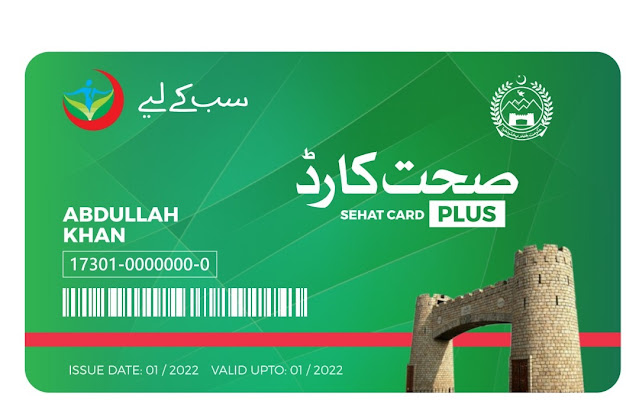
Prime Minister Imran Khan launched Sehat Card in Punjab, Pakistan 's largest province, on International Universal Healthcare Day 2021. This is essentially a government-funded health insurance program run by insurance companies to cover up to one million rupees worth of care each year at government certified public and private clinics and hospitals. It represents a major expansion of this program which was first introduced in Khyber-Pakhtunkhwa province. It is now available to residents of Khyber Pakhtunkhwa, Punjab, Balochistan, Gilgit Baltistan, Azad Kashmir, and Tharparkar district in Sindh under the Sehat Sahulat Program.
 |
| Universal Healthcare Map. Source: World Population Review |
Health Card:
Speaking at the launch event in Lahore, Prime Minister Imran Khan said, “This is a landmark. This is a defining moment towards our course to make Pakistan a welfare state.” “This is not (just) a health insurance (but) rather a health system. Now (the) private sector will build hospitals even in villages where the basic health units remain vacant as no doctor desires to be posted there. Now (the) private sector will come and (the) poorest of the poor will get free treatment,” he added.
 |
| Pakistan Sehat Card |
Sehat card was first introduced in Khyber Pakhtunkhwa (KP) by Taimur Jhagra, a former McKinsey consultant who now holds both the health and finance ministry portfolios in the province. Talking with The Telegraph newspaper reporters, he said: “It shows us we can do big things in this country in a short amount of time". He went on: “It's giving quality access to those that tend to be viewed by many as second class citizens and deserving of only second class facilities.”
The Sehat Card program will fund both public and private healthcare, Mr. Jhagra said. “We are not funding the private sector, we are funding health care for our citizens, wherever they want.,” he said. The Telegraph has spoken with patients using the program in KP. They say it has delivered them from the worry of medical debt, where serious illness often means having to sell land or livestock, or take out loans, to pay medical bills.
 |
| Monthly Usage of Sehat Card in KP. Source: Government of KP |
Sehat card is being widely used in Khyber Pakhtunkhwa province with a population of over 30 million. There is data available to understand how the program is being funded. Here's an excerpt of The Telegraph story on it: "Treatment is provided through approved public or private hospitals and the comparatively low cost of healthcare in Pakistan has meant the state-owned insurance provider has been able to provide cover at around £3 ($3.97) per head. The card is currently costing 22bn rupees (£93m or $123m) out of a total health budget in the province of 146bn rupees (£620m or $820m)"
The final hold-out in Pakistan is Sindh province with its nearly 50 million people. Prime Minister Imran Khan has urged Sindh's ruling party, the Pakistan Peoples Party (PPP), to launch Sehat Card and other social sector programs in Sindh as well.
 |
| Ehsaas Satisfaction Survey. Source: Gallup |
Ehsaas Social Welfare Program:
Ehsaas Program was established by Prime Minister Imran Khan in 2019. Aimed at helping the poor and the needy, it has several elements ranging from cash hand-outs and education to health and nutrition.
A recent survey conducted by Gallup Pakistan confirms that the program is very popular among the people. Nearly 3 out of 4 Pakistanis (76%) have a good opinion about the Ehsaas program. Nearly 9 in 10 (89%) Pakistanis who have received assistance from the program are satisfied with the amount of money received. 90% of Pakistanis believe that the program should be expanded to include more people, according to the survey.
Related Links:
South Asia Investor Review
Pakistan's Expected Demographic Dividend
Can Imran Khan Lead Pakistan to the Next Level?
The State of the Social Sector in Pakistan
Pakistan Child Health Indicators
Pakistan's Balance of Payments Crisis
Panama Leaks in Pakistan
Conspiracy Theories About Pakistan Elections"
PTI Triumphs Over Corrupt Dynastic Political Parties
Strikingly Similar Narratives of Donald Trump and Nawaz Sharif
Nawaz Sharif's Report Card
Riaz Haq's Youtube Channel
Riaz Haq
Healthcare Startups in Pakistan
(Showing 1-5 of 47)
With 31 funding rounds
https://magnitt.com/en-pk/startups/healthcare
Selected filters - headquartered: Pakistan, primary industry: Healthcare
Name Description Primary Industry Startup HQ Date Founded Number of Rounds
Dawaai
See Funding
Dawaai is Pakistan’s no.1 digital health platform. Starting as the only technology enabled digital pharmacy in the country, we are now on to disrupting healthcare in a big way and making it accessible to consumers
Healthcare
Pakistan
Dec 2012
6
MEDZnMORE
See Funding
We're digital healthcare innovators, dedicated towards improving your access to healthcare by solving problems associated with modern day pharmacies.
Healthcare
Pakistan
Sep 2020
2
medIQ Smart Healthcare
See Funding
medIQ Smart Healthcare is ‘Pakistan’s First Integrated Virtual Care Platform’ which provides on-demand healthcare services at the point of need. medIQ is connecting customers, health services providers and companies to put great care within everyone’s reach. medIQ through its holistic virtual care platform is making healthcare services ‘patient centred’ instead of hospital centred’. We are revolutionizing healthcare by moving away from brick and mortar health facilities and bringing healthcare to doorstep with convenience, customization and cost reduction.
Healthcare
Pakistan
Jul 2020
1
F
Find my Doctor
See Funding
-
Healthcare
Pakistan
Dec 2015
2
Healthwire
See Funding
Healthwire is on a mission to use technology to empower patients and improve healthcare outcomes.
Healthcare
Pakistan
Mar 2015
2
Want more data?
Mar 18, 2023
Riaz Haq
Pakistan’s New Middle Class
Neo Pei En, Phedra, Amit Ranjan
15 December 2022
https://www.isas.nus.edu.sg/papers/pakistans-new-middle-class/
New Middle Class
The new middle class is distinct from the old middle class. Its members work in mid-level positions, often in the private sector or have families making money through semi-skilled jobs in the Middle East or North America.[33] They rose mainly during Musharraf’s rule, whose economic reforms allowed many to join the middle class though his subsequent actions disillusioned them.[34] In 2008, more than 50 per cent of Pakistanis lived in towns of more than 5,000 people or more – this increasing urbanisation indicates most of the middle class could be found in urban areas.[35]
-----------------
This new middle class is also evolving as it uses social media to interact with the outside world more. It is “a global pioneer in digitally fuelled amplification of protests” and has the power to take down governments.[46] Currently, its identity is diversifying with the additional mix of freelancers and gig workers. The ease of accessing information with the rise of the internet contributed to the middle class’ increased connectivity with the world through digital means. This would, therefore, continue to have an effect on the Pakistani middle class. It may lead to new developments as protests are now initiated online and can reach more people instantaneously, which is a great way to swiftly gather a large following.
As is seen in many countries, including Pakistan, there is a global consensus that the rise of new information and technologies has changed the political arena.[47] With heightened access to the internet and unrestricted information, the middle class, particularly the youths, are likely to receive more information and be mobilised from such online platforms that would influence their political views. This can be seen from the throngs of middle-class youths that support Imran Khan’s Pakistan Tehreek-e-Insaf (PTI), who have been mobilised by the PTI through digital media both in the past and in the present.[48] The PTI’s ability to use social media platforms, broadcast videos and initiate blog postings have led them to successfully attract the viewership of the youths and the middle class. The evolution of the new middle class, which has also included increased access to the internet, combined with the political parties’ deft use of digital media, will change how political parties function in Pakistan in the long run.
Further, other factors, such as Imran’s populist politics, may have a part to play in galvanising apolitical youths.[49] With their contempt for politicians of the past and their corrupt ways, the new middle class and youths threw their support behind Imran for his promises to implement large-scale political change and his stand against status quo politics.[50] The effects of this support in pushing Imran back to being the leader of Pakistan remain to be seen. Given their fervent support for Imran and his politics, the middle class is likely to have a role to play if that happens.
Conclusion
Over the course of Pakistan’s history, the middle class has seen itself morphing, transiting from the old to one that now includes the new middle class. The new middle class appears to subscribe to a slightly different set of religious values and leadership compared to the old middle class. The identities and aspirations of the new middle class, along with their engagement in Pakistani civil society, may continue to change as they grow in size and influence. In the contemporary times, many in this new middle class viewed the old leaders as corrupt politicians who have damaged the country. In this regard, Imran’s pledge to fight corruption and his vow to create a Naya Pakistan (new Pakistan) are directly responding to the imperatives of the new middle class. As a result, a sizeable portion of the middle class supports him, which could trigger political changes and restore Imran to power.
May 29, 2023
Riaz Haq
AI Overview
15 million Pakistani families to get health card, contract ...
Pakistan's national health card, the Sehat Sahulat Program, aims for universal coverage, but its rollout in Sindh has been gradual, focusing on specific areas like Tharparkar initially, with current discussions and plans to expand it across the province, while Prime Minister Shehbaz Sharif recently relaunched it for Islamabad, AJK, and GB, emphasizing future integration in Sindh under provincial commitment. Beneficiaries get free, cashless treatment at empaneled hospitals for various ailments, but coverage details, like outpatient care or medication, can vary, requiring checking official sources for current status in Sindh.
Key Points for Sindh:
Partial Coverage: The program has covered areas like Tharparkar in Sindh, but full provincial implementation is pending.
Expansion Plans: Discussions are ongoing with the Sindh Chief Minister to extend the national program across the entire province.
Federal Relaunch: The recent relaunch by the PM focused on Islamabad, AJK, and GB, with future plans for Sindh mentioned.
How it Works (General):
Check Eligibility: Use your CNIC (Computerized National Identity Card) on the official website or via SMS (e.g., send CNIC to 8500).
Find a Hospital: Locate an empaneled hospital through the program website or helpline.
Get Treatment: Present your CNIC at the hospital's Sehat Card counter for cashless treatment.
What's Covered (Generally):
Hospitalization, surgeries, maternity, cardiac issues.
Some facilities (like specific tests, meds, or transport stipends) may be included in certain packages (e.g., Sehat Card Plus).
For Official Updates on Sindh:
Check the official PM Health Program website for the latest information on Sindh's inclusion and specific schemes.
8 hours ago