PakAlumni Worldwide: The Global Social Network
Pakistan EV Launches to Accelerate Clean Energy Transition
Pakistani automobile joint ventures with Chinese automakers BYD and Changan have recently launched several all-electric and plug-in hybrid models of automobiles in Pakistan. Earlier, Honda Atlas Cars Pakistan Limited announced plans to build a hybrid electric vehicles plant in the country. Other major brands like Toyota, Haval, and Hyundai are already offering similar models in the country. It all began with the 2019 electric vehicle policy approved by the government of Prime Minister Imran Khan to incentivize the electrification of the auto industry. Pakistan EV policy goal is to achieve 30% of new cars sales, 50% of new 2-wheeler and 3-wheeler sales and 30% of new truck sales by 2030. By 2040, the target is 90% of all new vehicle sales to be electric. The main incentive is the reduction of sales tax from 17% for internal combustion engine (ICE) vehicles to 1% for all-electric (EV) vehicles.
 |
| BYD EV. Source: CNBC |
 |
| Soaring Imports of Chinese Solar Panels in Pakistan. Source: Bloomberg |
Pakistan has contributed only 0.28% of the CO2 emissions but it is among the biggest victims of climate change. The US, Europe, India, China and Japan, the world's biggest polluters, must accept responsibility for the catastrophic floods in Pakistan and climate disasters elsewhere. A direct link of the disaster in Pakistan to climate change has been confirmed by a team of 26 scientists affiliated with World Weather Attribution, a research initiative that specializes in rapid studies of extreme events, according to the New York Times.
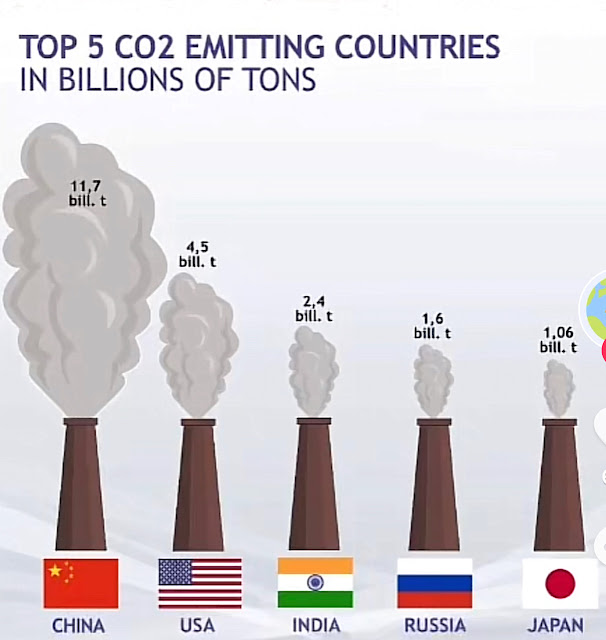 |
| Top 5 Current Polluters. Source: Our World in Data |
Currently, the biggest annual CO2 emitters are China, the US, India and Russia. Pakistan's annual CO2 emissions add up to just 235 million tons. On the other hand, China contributes 11.7 billion tons, the United States 4.5 billion tons, India 2.4 billion tons, Russia 1.6 billion tons and Japan 1.06 billion tons.
 |
| Pakistan's Annual CO2 Emission. Source: Our World in Data |
The United States has contributed 399 billion tons (25%) of CO2 emissions, the highest cumulative carbon emissions since the start of the Industrial Revolution in the late 18th century. The 28 countries of the European Union (EU28), including the United Kingdom, come in second with 353 billion tons of CO2 (22%), followed by China with 200 billion tons (12.7%).
Related Links:
Haq's Musings
South Asia Investor Review
Solar Power Boom in Pakistan
Pakistan Electric Vehicle Policy
Nuclear Power in Pakistan
Can Urban Forests Beat the Heat in Pakistani Cities
Pakistan's Response to Climate Change
IPP Contacts Bankrupting Pakistan
Renewable Energy for Pakistan
Net Metering in Pakistan
Pakistan's Digital Public Infrastructure Transforming Lives
My Family's Contribution to Climate Action
China-Pakistan Economic Corridor
Ownership of Appliances and Vehicles in Pakistan
CPEC Transforming Pakistan
Pakistan's $20 Billion Tourism Industry Boom
Riaz Haq's YouTube Channel
PakAlumni Social Network
Riaz Haq
Solar projects receive lowest-ever tariff bid
Bid of Rs11.2 per unit marks pivotal shift in renewable energy sector
https://tribune.com.pk/story/2489390/solar-projects-receive-lowest-...
KARACHI:
In a landmark development, K-Electric's (KE) 150-megawatt solar energy projects in Balochistan have achieved the country's lowest-ever tariff bid, setting a new industry benchmark and marking a pivotal shift in the renewable energy sector.
A bid of Rs11.2 per unit, revealed during a ceremony, underscores the trust in private sector-led initiatives, particularly in the context of Pakistan's ongoing economic challenges. Earlier, Bloomberg News highlighted KE's endeavours to nearly double Pakistan's solar capacity by adding 640MW of clean energy to its portfolio in the next two years.
It was revealed that the bidding process for those projects began in August and would conclude in September 2024. The portfolio, which includes 200MW of hybrid solar-wind generation, is also a critical component of KE's strategy to reduce reliance on expensive fossil fuels and lower the country's overall import bill.
The 640MW of projects, currently in the pipeline, have been divided into three tranches: 150MW solar projects in Balochistan, a 270MW project in Sindh and a 220MW site-neutral project that will be the first hybrid solar and wind energy venture. These projects are expected to significantly increase the share of renewable energy.
Pakistan has long been plagued by high electricity prices, driven by its dependence on costly fossil fuel imports. With monthly electricity bills having risen 155% since 2021, often surpassing rent costs for many families, the shift towards more affordable and sustainable energy sources is both urgent and necessary.
Currently, solar energy accounts for just 1% of the energy mix, with a total capacity of 630MW. Doubling this capacity could provide much-needed economic relief to consumers and help stabilise the energy sector.
The recent financial bid opening event in Karachi was attended by representatives from both international and local entities, including JCM Power Group and Hecate Global Renewables from North America, and Pakistani companies such as Atlas Power, Hub Power Holding Co and Sapphire Electric Co.
Aug 19, 2024
Riaz Haq
Can ride-hailing, logistics and delivery companies lead an EV revolution in Pakistan? - Business & Finance - Business Recorder
https://www.brecorder.com/news/40292113
TCS Private Limited, one of the largest logistics organizations in Pakistan, initiated a pilot project in December 2023 with 50 electric bikes in collaboration with the start-up ezBike. These bikes are equipped with 2KW batteries and have a range of up to 100 km, capable of carrying a 40 kg delivery box.
------------------
Pakistan is seeing a massive surge in intent and efforts when it comes to adopting electric vehicles (EV), but there are significant challenges – including logistical constraints – on the road ahead, say experts.
Surging fuel prices, record inflation, and an economic crisis in the backdrop of devastating floods and effects of climate change have all pushed consumers towards the ‘greener’ option. However, many still believe that it will take a lot more before EVs become a more common sight in Pakistan.
“EVs (four-wheel) or even electric bikes are mostly bought by the affluent, and these are their second vehicle, rarely used, mostly as a hobby,” said auto dealer Anjum Rizvi who has a showroom in Karachi’s Khalid Bin Waleed area.
“Most people are reluctant to buy EVs. It’s not because they don’t like them. They see it as an ‘experiment’ at the moment and in this time of high inflation, no one wants to experiment with money.”
While Pakistanis may need to wait before seeing EVs ply on the roads, the harm being caused by traditional vehicles will be irreversible.
Yasir Hussain of Climate Action Center – a group that creates awareness for climate change initiatives – said roughly, over 50% of Pakistan’s air pollution in urban areas comes from tailpipes. Reducing pollution due to mobility will be one of the major feats for a sustainable future.
Rizvi said positive user experiences will be the biggest reason behind people embracing EVs at an individual capacity.
“Government can play a role and more importantly, the bulk use of transport, such as ride-hailing and logistics companies, can play a role as they can overcome challenges comparatively easily as compared to individuals,” Rizvi said.
Experience so far
However, the picture in the industry setup tells a different story.
After interviewing at least half a dozen key players in the ride-hailing, delivery and logistics space, there are several hindrances in the adoption of EVs.
Hussain of Climate Action Center said electric motorcycles have been facing challenges in the ride-hailing segment because the passenger weight significantly reduces efficiency – the prime reason for adopting an electric bike.
Rafiq Malik, chief operating officer of Bykea, among the leading players in the space, corroborated this. He also mentioned that extra weight and speed significantly reduce range.
“The first wave of EVs generally isn’t well-suited for a bike-taxi business. Similar feedback comes from Gojek in Indonesia and Ola in India (once you remove the subsidies).”
Bykea conducted a pilot with electric bikes from January to June last year. However, they encountered significant challenges.
In an interview with Business Recorder, Malik stated the first challenge is the high price of electric bikes, which is on average 3-4 times higher than that of an ICE (Internal Combustion Engine) motorcycle.
The company also struggled with battery performance.
“We experienced performance uncertainty and noticed the battery performance deteriorating over time. Initially, we achieved 70 km per charge, which dropped to around 50 km per charge by the third or fourth month,” Malik said.
Another challenge they faced was electric bike maintenance.
“There is no repair ecosystem available, and drivers would have to return the bike to the vendor for minor repairs, leading to significant downtime and revenue loss.”
Aug 20, 2024
Riaz Haq
BEIJING, Apr 24 (APP): Pakistan, in its timely joining the global trend, is ramping up cooperation with international EV giants to amplify its own competence.
Last month, Automobile brand Huazi Green Energy, a joint Pakistan-China venture, announced the plan to display the first electric car in Islamabad this month, achieving yet another score in Pakistan’s EV endeavour.
https://www.app.com.pk/global/pakistan-catching-ride-on-global-ev-b...
In May, Chinese vehicle manufacturing company Huaihai in collaboration with its Pakistani partner announced that it is seeking to expand its existing business by investing $10 million in manufacturing electric vehicles, starting with two-wheeler and four-wheeler vehicles in Punjab.
Among the global players, China’s presence in the international EV market has become too prominent to be neglected. Among the global EV sales, 59% are contributed by China, which is also the world’s biggest EV producer, with 64% of global volume.
In the first half of this year, China’s EV brand BYD witnessed a record-breaking 95.8% increase y-o-y of cumulative sales, snapping global sales champion. Last month, the country rolled the 20 millionth EV vehicle off the assembly line, China Economic Net (CEN) reported on Wednesday.
Pakistan is not the only country that has set its eye on the biggest automaker in the world as international venerable auto brands are trying to snatch a share of China’s EV dividend.
Also last month, German automobile manufacturer Volkswagen invested $700 million in leading Chinese smart EV company XPENG, taking 4.99% of the latter’s shares. They also announced the joint development of two B-class battery electric vehicles (“BEV”) models for sale and collaboration on future EV platforms, software technologies and supply chains.
Following its subsidiary Audi’s move to join hands with China’s SAIC Motor to develop intelligent connected vehicles (ICVs), this was considered by some auto experts as a watershed moment for China’s auto sector to shift from technology import to export, which is expected to shape a new international divison of labor.
A number of Chinese companies such as BAIC, Changan, JAC Motors, Great Wall Motors, MG, FAW, and Chery Automobile have established their presence and even formed joint ventures in Pakistan, driving the EV industry in the country towards intelligence and electrification.
“While there is a long way to go for Pakistan to build the EV infrastructure, cut down EV prices, and produce parts locally, we have a lot to benefit from the technology transfer from global tycoons like China. On my visit to one of the EV manufacturing hubs in China, Yangtze River Delta, I was surprised to see that a new energy vehicle can be produced within four hours, with chips and software from Shanghai, batteries from Changzhou, Jiangsu Province, and integrated die-casting machine from Ningbo, Zhejiang Province. In the complete, highly-efficient supply chain, there are countless models for us to learn from”, a Lahore-based automobile seller said.
Aug 23, 2024
Riaz Haq
Budget 2024-25: Production of solar panels, inverters and batteries becomes cheaper - Must Read - Aaj English TV
https://english.aaj.tv/news/330365159/budget-2024-25-production-of-...
According to the finance bill, the government has eliminated all taxes on machinery and equipment used in the manufacturing of lithium-ion batteries, most of these were subjected to taxes ranging from 5% to 20%.
----------------------
Pakistan’s energy system strained by surge in solarization, battery tech
https://www.thenews.com.pk/print/1215486-pakistan-s-energy-system-s...
ISLAMABAD: The rapid solarization and advancements in battery technology are increasingly challenging Pakistan’s existing energy system.
The influx of over 7,000 megawatts of imported capacity, coupled with some industrialists and bulk consumers installing in-house plants of up to 1.5 megawatts, threatens to disrupt long-term agreements with Independent Power Producers (IPPs).
This situation is exacerbated by mounting frustration among power consumers, who are being burdened with substantial multi-billion-rupee capacity charges on their monthly bills.
The provincial governments, especially Punjab and Sindh’s distribution of solar panels to the public, will further pressurise the system, as they will now be drawing less from the grid and so the burden of capacity charges will increase and ultimately the tariff, which will further take away consumers from the grid power.
“Various bulk consumers have done aggressive solarization, even they installed capacity of up to 1.5 megawatts and have kept the grid at backup,” Chairman Nepra Waseem Mukhtar said while presiding over a public hearing on Wednesday adding, “It’s [solarization] a threat.”
The Nepra chairman said that this 7,000 MW imported solar capacity is not for only rooftops, bulk consumers are also installing their big capacities. He also tasked the CPPA with conducting a study on solar energy usage, mapping and submitting a report to Nepra.
Central Power Purchasing Agency (CPPA) while pleading the case on behalf of Discos reported that electricity consumption in June 2024 was 10 percent lower than the reference period consumption, while two percent less than last year.
Waseem Mukhtar said that the government has launched a study to determine if Pakistan requires additional power generation capacity. He emphasized the need for a logical approach to adding more electricity to the national grid. The study is also evaluating that Commercial Operating Dates (CoDs) for some plants may be postponed, he said, mentioning that the study will determine which plants can be retired early.
Sep 2, 2024
Riaz Haq
Indian reliance on Chinese imports is challenge for U.S. trade strategy - The Washington Post
https://www.washingtonpost.com/world/2024/09/02/india-china-manufac...
NEW DELHI — American businesses looking to reduce their reliance on China have increasingly been eyeing India in the past few years as a new manufacturing hub — and as a hedge against potential disruptions in Chinese supply chains caused by rising geopolitical tensions or another pandemic.
But as India has amped up its production of goods like smartphones, solar panels and medicine, the Indian economy itself has become even more dependent on Chinese imports, in particular for the components that go into these products, according to trade figures and economic analysts.
This dynamic serves as a reality check for U.S. policymakers, who have been urgently promoting efforts to diversify supply chains away from Chinese factories and “de-risk” the commercial relationship with China.
“Unless China stops being the third party from where components come in and we just assemble, that de-risking is not going to happen for any country coming in and producing in India,” said Sriparna Pathak, an associate professor at Jindal University focusing on India-China relations.
—————
To support the production of Indian textiles and garments, another important export industry, India has been ramping up imports of yarn and fabric from China. Even the automobile industry — considered a success story for both domestic and export sales — has been increasing its imports of vehicle parts and accessories from China.
As with electronics, India has made significant strides in producing solar panels but now relies even more on the Chinese solar cells that go in them.
After the United States restricted imports of Chinese solar panel material because of concerns about human rights and labor abuses, Indian exports of solar panels to the American market spiked in 2022, increasing in value by almost 150 percent, according to U.S. government trade figures. The next year saw an even sharper increase.
During that time, however, India sourced between half and all of its solar panel components — such as modules, cells, wafers and solar glass — from China between 2021 and 2023, according to a BloombergNEF report at the end of last year.
Senior Biden administration officials said it is not realistic to think that inputs from China can be excluded at this moment from American supply chains. “We have taken a more practical view that in order to effectively diversify, the first step is to get a foothold in the parts of this supply chain where you can diversify today. And then from there you can grow upstream,” said a senior administration official, speaking on the condition of anonymity to discuss sensitive strategies toward China.
Addressing the significant presence of Chinese components in Indian-made solar panels, the official said: “We recognize we are in the first inning of a long game, but we are at an inflection point in that there is now a clear recognition, not just in the U.S. and India but among friends and allies, that being overly reliant on one source for the clean-energy economy is not sustainable and requires a concerted effort to de-risk. But it’s going to take time.”
Sep 2, 2024
Riaz Haq
Electric vehicles will account for up to half of auto sales by 2030, BYD Pakistan says
https://finance.yahoo.com/news/electric-vehicles-account-half-auto-...
KARACHI (Reuters) - Up to 50% of all vehicles bought in Pakistan by 2030 will be electrified in some form in line with global targets, BYD Pakistan, a partnership between China's BYD and Pakistani car group Mega Motors, said.
Warren Buffett-backed Chinese electric vehicle giant BYD last month announced its entry into Pakistan, making the South Asian nation of 250 million people one of its newest markets.
The partnership has announced plans to open an assembly plant in early 2026, but will introduce vehicles for sale later this year, after launching three models in August.
"I see conversion to new energy vehicles NEV at up to 50%," Kamran Kamal, BYD's spokesperson in Pakistan, told Reuters in an interview at his office on Thursday. Kamal is also the CEO of Hub Power, which owns Mega Motors.
The target is an ambitious one for Pakistan's auto sector, which has been largely dominated by Japanese automakers Toyota, Honda and Suzuki, with vehicle sales hitting a 15-year low in the fiscal year to June.
Recently South Korea's KIA has begun challenging for market share along with Chinese companies Changan and MG, all of whom offer hybrid vehicles. BYD Pakistan is the first major new energy vehicle entrant in the Pakistani market.
Hybrid electric vehicle sales in Pakistan have more than doubled in the past year. While reaching 30% NEV adoption by 2030 is feasible, achieving 50% may be more challenging due to infrastructure hurdles, said Muhammad Abrar Polani, auto sector analyst at Arif Habib Limited.
Kamal said the challenge of charging infrastructure would be addressed by government plans to incentivise its construction.
Local media reported in August that standards for EV charging stations had been drafted by the power ministry, with the government considering offering them affordable electricity.
Kamal said BYD Pakistan is collaborating with two oil marketing companies to establish a charging infrastructure network and aims to establish 20 to 30 charging stations within the initial phases concurrent with the rollout of its cars.
BYD Pakistan will initially sell fully assembled vehicles, which are subject to higher import charges than vehicles shipped in parts and assembled locally.
"Our main focus is to have locally assembled cars on the roads as soon as possible," said Kamal, citing difficulties in importing and selling fully assembled units under Pakistan's current duty structure.
Kamran said BYD Pakistan is deciding on the size of a new plant, but details about the investment and partnership with power utility HUBCO will be disclosed later.
Sep 6, 2024
Riaz Haq
Beijing urges Chinese EV makers to avoid investments in countries like India and Turkey
https://www.scmp.com/business/china-business/article/3278236/beijin...
Chinese EV makers’ drive to go global hit a snag after Beijing urged them to avoid investing in countries like India and Turkey
Chinese electric-vehicle (EV) makers’ drive to go global hit a snag after Beijing urged them to avoid investing in countries like India and Turkey.
The Ministry of Commerce convened executives from more than a dozen electric car makers in July, under so-called “window guidance”, to discuss the risks of building plants abroad, according to Bloomberg.
Two industry officials with knowledge of the situation confirmed the meeting took place and said the ministry told carmakers to better protect their assets and technology as they ramp up their expansion overseas.
Do you have questions about the biggest topics and trends from around the world? Get the answers with SCMP Knowledge, our new platform of curated content with explainers, FAQs, analyses and infographics brought to you by our award-winning team.
In mainland China, authorities use window guidance to give verbal or written instructions to companies on government policy. Generally, companies that fail to comply with policy directions delivered via window guidance will not be punished in accordance with the country's rules and laws.
During the meeting, the EV makers were encouraged to focus on knock-down assembly lines - where key components are produced at home before being shipped overseas where they are assembled closer to the consumption markets - rather than setting up supply chains and large-scale facilities outside the mainland.
They were also told not to make any investments in countries like India and Turkey, the sources said.
The commerce ministry did not respond to queries by the Post on Thursday.
The sources said the guidance arose from policymakers' concerns about Beijing's rising tensions with certain countries where Chinese businesses and products could be boycotted by local authorities and consumers. In addition, government officials are worried about the risk of Chinese technology being stolen by foreign counterparts.
"The instructions [by the ministry] are interpreted as a warning to the companies since they are now actively looking to raise manufacturing capacity in markets such as Southeast Asia and some European countries," said Chen Jinzhu, the chief executive of Shanghai Mingliang Auto Service, a consultancy. "It may cause some of the companies to slow down their overseas plant building pace."
Chinese EV makers and vendors in the automotive supply chain are at the global vanguard because they have capitalised on core technologies for batteries, self-driving and in-car entertainment, according to David Xu Daquan, the China president of Bosch, the world's largest automotive supplier.
The mainland is also the world's largest EV market, where sales of pure electric and hybrid cars represented 65 per cent of the global total in the first half of this year, according to the China Passenger Car Association.
However, EV makers from BYD - the world's largest electric car maker - to start-up Hozon New Energy Automobile are running into trade barriers set up by developed economies.
In May, the White House quadrupled tariffs on Chinese-made EVs, which now stand at 100 per cent.
Last month, the European Union said additional duties of 9 to 36.3 per cent would be applied to EVs imported from China, 11 months after it launched an anti-subsidy investigation into battery-powered cars assembled on the mainland.
A number of companies from BYD to Great Wall Motors are aggressively expanding production abroad with plans to build electric cars in or close to consumption markets as a way of avoiding high tariffs.
Sep 12, 2024
Riaz Haq
Planned assembly plant in the country would mark carmaker’s first venture into south Asia as it expands globally
https://www.ft.com/content/bf1e6817-5313-4b6e-8e47-9e2960d30ecc
Chinese electric-car maker BYD’s expected expansion into Pakistan has raised hopes in the country that the Warren Buffett-backed company can help jump-start exports in the automotive manufacturing sector. Pakistan’s biggest private electricity producer Hub Power (Hubco) said last month that its subsidiary Mega Motor was entering a partnership with the Tesla rival to set up the country’s first electric vehicle assembly plant by 2026. BYD’s Pakistan plan would mark the company’s first venture into south Asia after being blocked in India by Prime Minister Narendra Modi’s government, which has restricted Chinese investment. Hubco’s chief executive Kamran Kamal said in an interview with the Financial Times that the ultimate goal was for Pakistan to start exporting vehicles from the plant near Karachi’s Port Qasim. “We have big ambitions to be the leading carmaker in this country by the end of the decade,” said Kamal. “For any industry in Pakistan to be competitive, they should be focused on the export market.” Pakistan’s finance minister Muhammad Aurangzeb said the government was encouraging BYD to export to markets in Africa and south Asia, including Bangladesh and Sri Lanka. Trade between India and Pakistan has been reduced since 2019 after a security crisis between the two countries. “We want that Pakistan becomes an export hub, period,” Aurangzeb said in a separate interview with the FT. “Korean brands are here, the Japanese brands have been here . . . but the reality is we haven’t been exporting.” BYD said details of its Pakistan plans had yet to be formally announced and declined to comment further. The company’s expansion into south Asia comes as it is also establishing factories in Turkey, Hungary, Thailand and Brazil. BYD has also been scouting locations for a new factory in Mexico. The carmaker is expanding its manufacturing footprint beyond China as countries impose increasing tariffs on Chinese exports, including on EVs, solar panels and wind turbines. Tu Le, founder of consultancy Sino Auto Insights, said the aggressive international expansion plans would help BYD export to fast-growing markets despite tariffs in the US and Europe. But he warned that BYD should not expect the same “unfettered growth” the company has enjoyed in China as it learns to manage factories in different countries. “Chinese companies are used to having a lot of control. What they are going to find is that due to labour laws, different work ethics, different cultures, they’re going to have a lot less control than they normally would,” he said. Recommended The Big Read The ambitions of China’s BYD stretch well beyond electric vehicles Hubco is a joint venture partner for a number of Chinese power projects established under the China-Pakistan Economic Corridor, a $60bn infrastructure network that is part of Beijing’s Belt and Road Initiative. The company has no prior experience manufacturing vehicles but it aims to use its extensive power generation network to set up EV charging infrastructure throughout the country of 240mn people, Kamal said. The exact size of the investment and the types of models that will be assembled in the Karachi plant “are being discussed”, he said. Hubco said it expected to sell 100,000 BYD plug-in hybrid and fully electric cars in Pakistan a year by 2030, representing about a quarter of total cars sold in Pakistan, according to the company’s estimates.
Sep 22, 2024
Riaz Haq
BYD’s reported plan for Pakistan plant signals growing cooperation amid CPEC upgrades
By Wang Yi
https://www.globaltimes.cn/page/202409/1320242.shtml
Pakistan's biggest private electricity producer Hub Power (Hubco), a joint venture partner for a number of Chinese power projects established under the CPEC, said that its subsidiary Mega Motor was entering a partnership with the Tesla rival to set up the country's first EV assembly plant by 2026, the Financial Times reported on Sunday.
Pakistan's Federal Minister for Finance and Revenue Muhammad Aurangzeb said the country is encouraging BYD to export to markets in Africa and South Asia, including Bangladesh and Sri Lanka, according to the report. "We want Pakistan to become an export hub," the official was quoted as saying.
As the global EV market continues to grow, BYD's planned facility in Pakistan not only marks a crucial business step for the company to increase its presence in the South Asian market, but also signals the strengthening industrial cooperation between China and Pakistan in the new-energy sector under the CPEC.
---
Pakistan's demand for new-energy vehicles (NEVs) is growing, especially against the backdrop of accelerated urbanization and heightened environmental awareness. The prospects of its NEV market are becoming increasingly attractive.
Pakistan targets an EV market share of 30 percent by 2030 and 90 percent by 2040 in total vehicle sales. The country offers lucrative investment opportunities for manufacturers, assemblers and suppliers, according to media reports.
If BYD implements its cooperation plan in Pakistan as reported, it will be well-positioned to tap the potential of this promising market, bolstered by a large young population and a growing middle class. Additionally, the company stands to benefit from Pakistan's ambition to promote green growth and expand exports to other economies across South Asia.
Meanwhile, BYD's entry into Pakistan's EV production sector is expected to greatly advance and strengthen the local EV industry. This move will enhance the automotive supply chain, stimulate growth in related sectors such as battery manufacturing and charging station infrastructure, create jobs and boost exports.
China and Pakistan's efforts to enhance their industrial chain and trade cooperation in new-energy sectors, particularly in EV manufacturing, hold significant importance for the continued development of the CPEC and regional economic integration.
---
China and Pakistan have recently agreed to enhance the CPEC by building an upgraded version that includes several corridors: the growth corridor, livelihood-enhancing corridor, innovation corridor, green corridor and open corridor. These initiatives are designed to align with new economic development needs and serve as new growth drivers for both economies.
A key focus of this upgraded CPEC is industrial cooperation, which holds significant potential for both nations. Pakistan's traditional industries are primarily labor- and resource-intensive. By leveraging China's capital and technologies, Pakistan can achieve industrial upgrading and accelerate its economic development. In June, the two countries signed four documents to strengthen industrial cooperation.
Among the above-mentioned corridors, the green corridor is particularly noteworthy due to its alignment with global trends of the green transition and Pakistan's national conditions. New-energy projects under this corridor can address Pakistan's energy demands.
Partnerships with China's leading EV manufacturing industry can enable Pakistan to enhance its manufacturing sector and boost exports. This collaboration has the potential to transform Pakistan's labor and resource advantages into sustainable economic growth.
The author is a reporter with the Global Times.
Sep 25, 2024
Riaz Haq
Competition for producing new energy vehicles (NEVs) has intensified as Sazgar Engineering Works Ltd (SEWL) plans to introduce the completely knocked down (CKD) model before Dec 31, 2025.
https://www.dawn.com/news/1860776
In a stock filing on Monday, SEWL said the board of directors had approved the plan, which includes the expansion of the existing paint shop, construction of new warehousing facilities, installation of a solar system of 4-megawatt and construction, erection, installation of new manufacturing facilities for the local assembly of NEVs subject to the approval of relevant government regulatory authorities.
The board also approved an estimated expansion cost of Rs4.5 billion, excluding land, which will be financed from the internal cash resources.
SEWL’s profit swelled by 697pc to Rs7.94bn in FY24 from Rs995m in FY23. Net sales rose to Rs57.6bn from Rs18bn.
The board also recommended a final cash dividend of Rs12 per share in addition to the interim already paid at Rs8 per share.
Besides Sazgar, Dewan Farooque Motors Ltd (DFML) last week said it had started production of EVs at its assembly plant after receiving approval from the Engineering Development Board (EDB).
China’s electric vehicle leader, BYD, has also announced plans to test the potential of EVs in Pakistan. Master Changan Motors Ltd has also launched its EV vehicles — Deepal L07 sedan and Deepal S07 SUV in Karachi — now available at the company’s 18 dealership network across 12 cities.
Sep 26, 2024
Riaz Haq
Electrification refers to the process of replacing technologies that use fossil fuels (coal, oil, and natural gas) with technologies that use electricity as a source of energy. Depending on the resources used to generate electricity, electrification can potentially reduce carbon dioxide (CO₂) emissions from the transportation, building, and industrial sectors, which account for 65 percent of all US greenhouse gas emissions. Addressing emissions from these sectors is critical to decarbonizing the economy and, ultimately, mitigating the impacts of climate change. This explainer reviews how electrification can reduce emissions; possibilities and potential challenges of electrification in the transportation, building, and industrial sectors; and policy options for encouraging electrification.
https://www.rff.org/publications/explainers/electrification-101/#:~....
Sep 27, 2024
Riaz Haq
Pakistan Is Only the Beginning of the Cheap Solar Revolution
By Ryan Cooper, managing editor at The American Prospect, and author of the book "How Are You Going to Pay for That?: Smart Answers to the Dumbest Question in Politics."
No need for expensive imported fuel when your energy is coming from the sun.
https://heatmap.news/economy/pakistan-solar
Pakistan imported a whopping 13 gigawatts of solar panels, mostly from China, in just the first half of 2024, mostly for rooftop installations for homes and businesses. That’s a mind-boggling amount of new solar for a country that only had about 50 gigawatts of installed generation capacity in total in 2023.
----------
Fuel imports are one of the largest expenses for even prosperous countries. For places like Pakistan, they are a punishing economic drain. Paying for vast amounts of imported coal, gas, and oil in scarce foreign currency is hard enough in good times, but it’s disastrous when one’s currency has depreciated by about 40% over two years.
Dirt cheap solar power could ameliorate or solve many of these problems at a stroke. Panels are now so cheap, even Pakistan can afford to import them by the millions — an expense, yes, but a one-time one. And while solar is inherently intermittent, and therefore not a solution to Pakistan’s reliability problems, batteries are also plummeting in price — down about 90% between 2010 and 2023 — and can help balance out supply. Cheaper batteries also mean cheaper EVs, with (as usual) Chinese models coming out at bewilderingly low prices. And because Pakistanis mostly drive motorcycles (often manufactured domestically) over relatively short distances, electrifying the personal vehicle fleet there will be far cheaper than in America or Europe; vastly smaller batteries require vastly simpler charging infrastructure.
If all goes well, this will free up vast amounts of economic capacity for Pakistan to invest in domestic development. Businesses will have stable, reliable power supplies that will justify more investment. Households will be able to upgrade their insulation, install heat pumps, and generally spend more on things other than energy. The government will be able to upgrade legacy transmission lines to accommodate solar production from the remaining hydro and nuclear plants.
Finally, of course, there is the climate benefit. Pakistan is one of the countries most threatened by climate change. Summer heat waves are bad and getting worse, to the point where murderous wet bulb events are increasingly likely. Catastrophic warming-fueled storms in 2022 caused the worst flooding in the country’s history, inundating about a third of Pakistan’s land area, killing nearly 2,000 people and causing billions of dollars in damages.
In short, a path to economic development will be opened. It is by no means guaranteed, but it will be a heck of a lot easier than trying to dig out from under the debt mountain of the collapsing coal-powered system. Look around the developing world and you’ll find there are a great many nations in similar situations.
Oct 1, 2024
Riaz Haq
Pakistan emerged as second-largest market for Chinese photovoltaic products | REVE News of the wind sector in Spain and in the world
https://www.evwind.es/2024/10/02/pakistan-emerged-as-second-largest...
Pakistan has emerged as a significant new market for Chinese photovoltaic (PV) companies, aligning with its path toward energy transformation.
According to statistics from the China Photovoltaic Industry Association (CPIA), in the first half of 2024, Asia overtook Europe as the largest export destination for PV products and Pakistan has become the second-largest market for module exports after Europe.
During the same period, China exported inverters worth a total of RMB 1.714 billion to Pakistan. In August alone, the total value of inverter exports to Pakistan reached 326 million yuan, showing a year-on-year surge of 429.04%. And shimmering blue panels now sit atop a vast array of factories, households, hospitals and mosques.
The surge in exports of photovoltaics and supporting products reflects the urgency of turning to new energy power generation in Pakistan, China Economic Net reported on Tuesday.
“Electricity prices continue to rise; thus, people are trying to find their own way out,” Abbas a Pakistani trader said at the Investment and Trade Forum for Cooperation between East and West China.
As of June 2023, the installed capacity of solar power in Pakistan stood at 630 megawatts, namely 1.4% of the overall installed power capacity, which has a huge room for improvement.
In terms of natural conditions, according to the World Bank’s Global Solar Atlas data, taking Balochistan with good lighting conditions as an example, the average annual total photovoltaic output power of a 1KW household photovoltaic system can reach 1990kWh (corresponding to approximately 1990h of sunlight), which is approximately 41% and 59% higher than New Delhi, India and Shandong Province, China, respectively; the Global Tilted Irradiance (GTI) can reach 2536.5KWh/square meter, which is approximately 36% and 61% higher than New Delhi, India and Shandong Province, China respectively.
In terms of policies, for the past few years, the Pakistani government has highly supported the development of renewable energy, setting a strategic goal of increasing the share of renewable energy and alternative energy in Pakistan’s electricity market to 20% by 2025 and to 30% by 2030.
The IGCEP2047 released by NEPRA showed that Pakistan’s PV installed capacity will achieve leapfrog growth in the next few years. It is expected that by 2030, the PV installed capacity will reach 12.8GW, and by 2047 it is expected to reach 26.9GW. According to calculations, in order to achieve the 2030/2047 goals, the average annual new PV installed capacity needs to reach 1.65/1.07GW respectively.
Businesses in Pakistan are racing to cover their factory rooftops with reasonably priced Chinese solar panels. “Every bit of space I have, even if it’s a few feet, I want it covered in solar panels,” said Khawaja Masood Akhtar, chief executive of Forward Sports, whose factory is one of the world’s largest makers of footballs. His company had already doubled the level of solar in its energy mix to 50% over the past two years. Akhtar is now ploughing a chunk of last year’s profits into importing another haul of panels from China to lift the share of solar supply to his operations to 80% by next April.
Oct 1, 2024
Riaz Haq
Pakistan ends power deals to save $1.48 billion, cut tariffs | Reuters
https://www.reuters.com/business/energy/pakistans-biggest-private-u...
Government to save 411 billion rupees
Negotiations with more power producers underway
IMF bailout talks influenced decision to revisit power deals
KARACHI, Oct 10 (Reuters) - Pakistan's government has ended power purchase contracts with five private companies, including one with the country's largest utility that should have been in place until 2027, to cut costs, officials said on Thursday.
The news confirms comment from Power Minister Awais Leghari to Reuters last month that the government was re-negotiating deals with independent power producers to lower electricity tariffs as households and businesses struggle to manage soaring energy costs.
"We studied these agreements and we decided what plants we need and what plants we don't need," Leghari told a news conference in Islamabad on Thursday, adding the termination of the take or pay agreements will save the nation nearly 411 billion rupees ($1.48 billion) in the coming years.
Take or pay is referred to as capacity payments in Pakistan where the government has to pay private companies irrespective of how much of the power they generate is transferred to its grid.
Negotiations have also begun with other power producers to revise their contracts, Leghari said, adding people would soon see the impact in their monthly bills.
"Our aim is to bring the tariff down," he said.
The need to revisit the deals was an issue in talks for a critical staff-level pact in July with the International Monetary Fund (IMF) for a $7-billion bailout.
Earlier on Thursday Prime Minister Shehbaz Sharif said Pakistan has agreed with five independent power producers to revisit purchase contracts. He said that would save the country 60 billion rupees a year.
Pakistan's biggest private utility, Hub Power Company Ltd (HPWR.PSX), opens new tab, also said the company agreed to prematurely end a contract with the government to buy power from a southwestern generation project.
In a note to the Pakistan Stock Exchange, it said the government had agreed to meet its commitments up to Oct. 1, instead of an initial date of March 2027, in an action taken "in the greater national interest".
Oct 10, 2024
Riaz Haq
Pakistan Aims to Slash Power Prices for EV Charging Stations
https://finance.yahoo.com/news/pakistan-aims-slash-power-prices-110...
(Bloomberg) -- Pakistan is looking to stimulate demand for electric vehicles by reducing power prices at charging stations, as the country attempts to kickstart the decarbonization of its transport sector.
The South Asian nation will create demand “by bringing down drastically the prices for new sectors including EVs,” Power Minister Awais Leghari said in an interview. The government is discussing a pricing structure and the incentive would apply to all charging and battery swapping stations for small cars, two-wheelers and three-wheelers, he added.
More than half a dozen auto companies, led by Chinese brands, have launched EV models in Pakistan this year. Chinese EV maker BYD’s local partner Hub signed an agreement with the country’s largest fuel retailer, Pakistan State Oil, this month to jointly establish an EV charging network across the nation.
Meanwhile, the country has seen a drop in electricity demand while prices have soared and the government has had to secure loans from the International Monetary Fund.
As part of the $7 billion loan requirements, the government is working on a flurry of reforms to restore the energy sector’s viability. The nation is in talks to revise purchase contracts with local power companies and reprofiling debt with Chinese lenders.
Prime Minister Shehbaz Sharif’s administration also wants to move away from the existing model of the government being the sole buyer of electricity, and create a wider market, Leghari said.
The independent market operator system will be functional by March and broader trade is expected to pick up within a year, he said.
Nov 18, 2024
Riaz Haq
Pakistan’s largest independent power producer expands into lithium mining, battery manufacturing
https://www.arabnews.com/node/2577791/pakistan
Hub Power Company’s subsidiary signed a collaboration agreement with Chinese EV giant BYD this year
Its lithium exploration is expected to further boost the manufacturing potential of Pakistan’s auto industry
ISLAMABAD: Pakistan’s largest independent power producer is set to enter lithium mining, battery manufacturing and electric vehicle (EV) production under Pakistan’s Special Investment Facilitation Council (SIFC), according to state media on Saturday.
Established in 1991, Hub Power Company (Hubco) has an installed generation capacity exceeding 3,500 megawatts and plans to diversify in other areas.
The planned initiatives, facilitated by the SIFC, a hybrid civil-military body established last year to assist foreign investors, aim to meet the country’s growing demand for batteries and electric vehicles.
A lithium exploration and battery production project is expected to reach completion in 12 to 18 months, meeting the rising demand for rechargeable batteries used in mobile phones, laptops and automobiles.
“Hub Power Company Limited’s exploration of lithium in Pakistan will further increase the manufacturing potential in the country’s auto industry,” Radio Pakistan reported.
“Work on establishing a manufacturing plant to produce electric vehicles in Pakistan is already underway, which will manufacture fifty thousand electric vehicles annually,” it added.
Earlier this year in June, Hubco’s subsidiary Mega Motor Company signed a collaboration agreement with Chinese EV giant BYD Auto Industry to assemble EVs in Pakistan.
Plans for the EV plant, with a projected annual production of 50,000 vehicles, include 30 to 40 percent allocated for export to markets in Australia and Africa.
HUBCO operates a diverse portfolio of power plants, including oil-fired, coal-based and hydropower facilities, and is also involved in coal mining.
Its new initiatives are expected to strengthen its market position, create employment opportunities and boost domestic capacity for battery production for electronic devices.
Dec 12, 2024
Riaz Haq
Pakistan rolling out a green carpet for global EV makers - Asia Times
https://asiatimes.com/2024/12/pakistan-rolling-out-a-green-carpet-f...
Pakistan’s New Energy Vehicle (NEV) policy targets 30% electric vehicle (EV) adoption for new vehicles by the end of 2030 and envisions a gradual transition to a zero-emission road fleet by 2060, positioning itself as an emerging player in the global EV market.
In January, China’s BYD partnered with Habibullah Khan to enter Pakistan’s market. Khan’s holding company, Mega Conglomerate, owns Hub Power Company, one of the largest independent power producers (IPPs) in the country. The announcement said the BYD vehicles would be imported rather than produced domestically.
An EV boomlet has followed. Pakistan’s Nishat Group announced its automobile division would debut an EV with South Korea’s Hyundai, while another private enterprise issued a statement committing a US$250 million investment in Pakistan’s EV market.
---------------
While US and UK EV makers face increasingly difficult situations in their home countries, local partnerships with Pakistan-based companies could make strategic sense.
“We’re offering a range of incentives, including tax breaks, subsidies, and investment in infrastructure development,” said Minister Leghari.
“We’re also establishing a one-stop shop for investors, providing them with all the necessary information and support to set up their businesses in Pakistan. Our goal is to create a level playing field for all investors, regardless of their country of origin,” he said.
While EV demand is stalling in some Western countries, it’s growing robustly in Pakistan. And Pakistan’s geographic location connects with South Asia, Central Asia and the Middle East, providing a gateway not just to Pakistan but to many other countries just starting to adopt EVs.
“Our goal is to create a competitive and business-friendly environment that encourages global automakers to set up their manufacturing facilities in Pakistan and export to regional markets,” Leghari said.
To promote EV manufacturing investment, the government is providing NEV-specific technology zones at reduced cost space, leasing options and green loans. Other financial incentives will include a 1% customs duty on NEV parts and 10% on complete NEV imports until 2027, along with sales tax exemptions for locally manufactured components.
Other incentives include a reduced goods and services tax rate of 1% for EVs, low electricity tariffs and an import duty of only 1% for charging equipment.
Leghari says his ministry is exploring more incentives, such as offering lower financing rates from the state bank to attract global automakers facing challenges in their home markets.
While the prospects for Pakistan’s EV market are promising, there are still several challenges and risks. Like elsewhere, one major hurdle is the lack of charging stations, which obviously is crucial for the widespread EV adoption.
Leghari said the government is promoting public-private partnerships to invest in the development of charging infrastructure. The ministry is also working on standardizing EV charging stations and providing incentives for their installation.
Dec 13, 2024
Riaz Haq
China’s ADM Group announces $250 million investment to set up EV manufacturing plant in Pakistan
https://www.arabnews.com/node/2587338/pakistan
ISLAMABAD: China’s ADM Group will invest $250 million to set up an electric vehicle manufacturing plant in Pakistan, state media reported on Wednesday, as Islamabad seeks for Beijing to collaborate in setting up industrial zones to manufacture electronic cars.
The government of Pakistan approved an ambitious National Electric Vehicles Policy (NEVP) in 2019 with the goal of electric vehicles comprising 30 percent of all passenger vehicle and heavy-duty truck sales by 2030, and an even more ambitious target of 90 percent by 2040. For two- and three-wheelers, as well as buses, the policy set a goal of achieving 50 percent of new sales by 2030 and 90 percent by 2040.
“Chinese Company ADM Group has announced an investment of two hundred and fifty million dollars to set up an EV manufacturing plant in Pakistan,” Radio Pakistan reported, saying the initiative was part of efforts by the Special Investment Facilitation Council set up last year to attract foreign investment.
“Transition to EVs is expected to cut fuel import costs, saving billions of dollars.”
Last year, ADM Group announced an investment of $350 million in Pakistan’s EV sector, saying it would establish more than 3,000 electric vehicle charging stations across the South Asian country.
Earlier this month, Pakistan said it would cut the power tariff for operators of electric vehicle charging stations by 45 percent as part of the ongoing reform of the energy sector designed to boost demand. The government is also planning to introduce financing schemes for e-bikes and the conversion of two- and three-wheeled petrol vehicles.
The cabinet on Jan. 15 approved a reduced tariff of 39.70 rupees ($0.14) per unit, down from 71.10 rupees previously, which will be in place within a month. The government expects an internal rate of return of more than 20 percent for investors in the sector.
According to a report submitted to the government by power ministry adviser Ammar Habib Khan and reported by Reuters, there are currently more than 30 million two- and three-wheeled vehicles in Pakistan, which consume more than $5 billion worth of petroleum annually.
The ministry plans to convert 1 million two-wheelers to electric bikes in a first phase, at an estimated net cost of 40,000 rupees per bike, according to the report, saving around $165 million in fuel import costs annually.
BYD Pakistan, a partnership between China’s BYD and Pakistani car group Mega Motors, told Reuters in September that up to 50 percent of all vehicles bought in Pakistan by 2030 will be electrified in some form in line with global targets.
Jan 25, 2025
Riaz Haq
Pakistan seeks Swedish green fund assistance
https://tribune.com.pk/story/2524076/pakistan-seeks-swedish-green-f...
Federal Minister for Power Awais Ahmed Khan Leghari has invited Sweden Green Fund to assist in conversion of Pakistan's small vehicles into electric technology by providing technical and financial assistance, which will support Pakistan's recent record reduction in tariffs for electric vehicle (EV) charging stations.
The minister put forward the proposal in a meeting with Swedish Ambassador Alexandra Berg Von Linde on Thursday.
Elaborating on the proposal for the conversion of existing fossil fuel vehicles, especially motorcycles, Leghari said that currently there were over 30 million motorcycles in Pakistan and people falling in that income group had a very good record of retiring loans.
He suggested that the Swedish and EU green fund could consider providing interest-free loans through Pakistani banks, which had put in place a very robust system. Highlighting the current energy mix and the importance of renewable energy, the power minister said that last year 55% of the overall electricity generation in Pakistan came from renewable energy.
"Pakistan is fully committed to promoting renewable energy and in this regard the Power Division is carefully chalking out policies to provide affordable and sustainable electricity to consumers," he stressed. Leghari pointed out that Pakistan was reviewing the Indicative Generation Capacity Expansion Plan (IGCEP) to ensure the integration of energy into the national grid on a least-cost basis in order to optimise the country's energy resources for maximum economic impact.
The ambassador said "seventy five years of diplomatic relations between Pakistan and Sweden were celebrated last year. This reflects the strength and depth of our bilateral ties."
She highlighted that Swedish firms operating in Pakistan were keen on securing green energy supply and Sweden was ready to share expertise and provide technological support. The textile sector of Pakistan, being a primary exporter to the European Union, was focusing on growing its global competitiveness in terms of renewable and sustainable energy, the ambassador said. She underscored Sweden's leadership in renewable energy as it produced 70% of energy from renewable resources, showcasing how economic development and green energy could coexist seamlessly.
Jan 25, 2025
Riaz Haq
Yadea Pakistan targets 20% EV market share by 2025
https://www.thenews.com.pk/print/1275355-yadea-pakistan-targets-20p...
LAHORE: Yadea, the world’s largest producer of electric two-wheelers, unveiled four innovative electric vehicle (EV) models on Wednesday, including the GT 30, as part of its ambitious plan to capture 20 per cent of the country’s EV market by 2025.
Speaking at the launch event, Managing Director of Yadea Pakistan Muhammad Salman highlighted the country’s potential for substantial growth in the EV sector. He attributed this to rising environmental awareness, escalating fuel prices and supportive government initiatives promoting green mobility. Industry projections indicate that the country’s EV market could grow by over 80 per cent by the end of next year, with two-wheelers leading the charge due to their affordability and practicality for urban commuting.
Jan 26, 2025
Riaz Haq
Wave Tech to Establish Pakistan's First Lithium Battery Manufacturing Plant
https://propakistani.pk/2025/01/28/wave-tech-to-establish-pakistans...
Wave Tech has announced its plan to set up Pakistan’s first-ever lithium battery manufacturing plant at the Malir Industrial Park (MIP) in Karachi, with a substantial Foreign Direct Investment (FDI) of $200 million.
The construction of this state-of-the-art facility is set to commence in December 2025, and battery production is expected to start by mid-2026.
This groundbreaking initiative aims to phase out oxide batteries in Pakistan, contributing to the country’s transition towards modern and sustainable energy solutions.
The Malir Industrial Park (MIP), a flagship project of the Pakistan Economic Zones Development and Management Company (PEZDMC), is at the forefront of fostering industrial growth in Karachi.
Envisioned as a world-class industrial zone, MIP is designed to boost manufacturing and exports while generating significant employment opportunities. Its strategic location in Malir ensures seamless connectivity to key infrastructure, including the Karachi Port, Port Qasim, and major highways, making it an ideal destination for investors and industries.
Jan 30, 2025
Riaz Haq
China pledges $340mn to Pakistan's EV sector - Investment Monitor
https://www.investmentmonitor.ai/news/china-pledges-340mn-to-pakist...
A group of Chinese firms has pledged to invest $340mn in Pakistan’s electric vehicle (EV) sector to expand their manufacturing plants and charging stations, according to local news outlets. The investment was announced at a press briefing inaugurating a joint project between Malik Group and China’s ADEN Group.
“If the company manufactures EVs in Pakistan, the Sindh government will purchase over 20% of the vehicles produced at the Karachi plant,” Sindh province’s Energy Minister Syed Nasir Hussain Shah.
Malik Group chairperson Malik Khuda Bakhsh said 30 charging plants are set to be delivered from China in the next ten days. The project seems to be moving fast as Bakhsh added that Pakistan aimed to “have the necessary infrastructure operation by the end of this year.”
ADEN Group, which has its global headquarters in Singapore, is expected to invest $90mn for 3,000 charging stations and $240mn for an EV production facility.
“By December, EV production will begin, with an annual output target of 72,000 units,” ADEN Group CEO Yasser Bhambani said. “We also plan to export vehicles to the Middle East, Sri Lanka and Bangladesh.”
Recently, Pakistan experienced some positive FDI growth. In August 2024, data from the State Bank of Pakistan showed there had been a monthly rise in FDI compared to 2023. It received $136.3mn in net FDI in July 2024, marking a 64% increase compared to July 2023.
Feb 1, 2025
Riaz Haq
As US-China trade war escalates, could Pakistan be Beijing's EV loophole? - CSMonitor.com
https://www.csmonitor.com/World/Asia-South-Central/2025/0214/China-...
Amid the ornately painted trucks bellowing smoke and the green and yellow tuk-tuks, the Chinese-made Haval Hybrid Electric Vehicle has become a ubiquitous sight on the streets of Islamabad.
---
--
Some are looking to neighboring Pakistan, a country of 240 million which has so far welcomed Chinese automakers, to buoy sales – and possibly bypass (US) tariffs. In recent months, several Chinese automakers have either doubled down on their Pakistan projects or made their first foray into the market.
As EVs become an increasingly important geopolitical battleground, former Pakistan finance minister Miftah Ismail says that, at least in the short-term, Pakistan could serve as a sort of pressure release valve for Beijing. But he predicts the West will eventually catch up.
“The West will say that EV components have to be made in certain countries, or that 70% of the value addition has to be done in the country that exports,” he says. “It's a cat and mouse game. The West will find other ways of placing restrictions on the Chinese.
An alliance on the rocks
In October, Chinese battery giant Build Your Dreams (BYD) formally entered the Pakistani market with two electric vehicles, partnering with the country’s largest private electricity producer to facilitate the expansion. The move came after the U.S. and Canada both decided to impose a 100% tariff on Chinese electric vehicle imports, and the European Commission voted to raise its own tariffs by 35%.
Its expansion represents a boost to the business relationship between China and Pakistan at a time when both seem to be running out of friends – and when their own alliance has grown fraught.
Though China has long considered Pakistan a key part of its ambitious Belt and Road Initiative, a series of recent attacks on Chinese nationals working in Pakistan has injected the relationship with tension. After an explosion at Karachi’s Jinnah International Airport in October claimed the lives of two Chinese citizens, Chinese Ambassador Jiang Zaidong called the attacks “unacceptable.”
Still, there is a sense that neither side can afford to downgrade their relationship.
Pakistan has fraught relations with all three of its other neighbors, while China has been accused of an increasingly hostile approach towards foreign businesses, driving down foreign direct investment.
“It’s an important and close partnership, albeit one that has stumbled in recent months,” says Michael Kugelman, who directs the Wilson Center’s South Asia Institute. “In that regard, this EV plan could be not just an economic win, but also a confidence building measure.”
Economic win for who?
For China, Pakistan could be the key to tapping into the U.S. market, says Usman Qadir, senior research economist at the Pakistan Institute of Development Economics.
“If they are able to assemble their vehicles in Pakistan or a third country, then they can bypass tariffs and get into the market with their lower prices,” he says.
Pakistanis could benefit, too.
BYD and its local partner announced plans to build an assembly plant in Karachi by early 2026. They estimate that as many as half of the vehicles sold in Pakistan by 2030 will be electrified – by which time BYD hopes that its vehicles will make up a quarter of all sales.
-----
So far, the Chinese EVs launched in Pakistan have largely targeted the luxury market.
But whatever their long-term motive, it is clear that Chinese EV makers are having an impact; Japanese automakers, which have historically dominated the Pakistani market, have begun slashing their prices out of concern that they might lose ground.
Feb 15, 2025
Riaz Haq
Pakistan Motorcycles - Facts & Data 2025 | MotorCyclesData
https://www.motorcyclesdata.com/2025/02/01/pakistan-motorcycles/
In 2024, although a bad start of the year, then recovered in the second half, 2-wheeler sales have been 1.3 million (+18.4%) but half a million far from the record.
The just born EVs segment is fast growing, reaching 46.364 sales (+123.4%) with new local start up joined by Yadeaand other chinese manufacturers.
Looking at the performance among the top manufacturers, the leader Honda reports sales up 15.5%, ahead of United Auto (+29.3%), Suzuki (+17.3%) and Road Prince (+13%).
Feb 21, 2025
Riaz Haq
Sazgar bets on e-rickshaws for Pakistan’s EV future - Rest of World
https://restofworld.org/2025/sazgar-e-rickshaws-pakistan-ev-future/
Sazgar will set the ground for other companies in making e-rickshaws as a primary public transport choice.
By KUNWAR KHULDUNE SHAHID
12 FEBRUARY 2025 • LAHORE, PAKISTAN
Since last year, Pakistan has accelerated its shift to electric vehicles, with BYD planning to set up a production plant and the government targeting 30% EV adoption for all new vehicles by 2030.
As Pakistan’s top rickshaw maker, Sazgar pioneered e-rickshaws and hopes to make them a mainstream transport option.
Scaling up for companies like Sazgar will require stronger government policies, financial support for drivers, and political stability.
Pakistan hurtled toward its electric future in 2024. In August, Chinese EV giant BYD said it would set up its first South Asian production plant in the country. Three months later, the Pakistani government unveiled a policy that aims to transition a third of all new vehicles to electric by 2030.
Meanwhile, several local companies hastened plans to launch and produce EVs in a market flooded with importedelectric cars from international brands such as Audi, BMW, and Hyundai.
A front-runner among the local EV makers was Sazgar Engineering Works, a Lahore-based automotive manufacturer best known as Pakistan’s largest rickshaw maker.
In January 2024, Sazgar, which has made conventional rickshaws since 2005, became the first company to receive a license to produce e-rickshaws in Pakistan. The company is betting on e-rickshaws to boost mass adoption of EVs in the country. Given its legacy in the sector, Sazgar is poised to lead Pakistan’s EV revolution, automobile experts told Rest of World.
“The company has the infrastructure and resources to introduce e-rickshaws in the local market on a large scale,” said Sulman Ali, editor at PakWheels, a digital automobile publication and marketplace. “Sazgar will set the ground for other companies in making e-rickshaws as a primary public transport choice.”
Through the last decade, Sazgar has held sway over 30% of Pakistan’s rickshaw market, which currently comprises over a million rickshaws and 40 competitors. The company produces up to 2,500 rickshaws every month — most of which run on traditional fuels. It also exports its rickshaws to 30 countries including Sri Lanka, Liberia, Qatar, the U.S., and Japan, Syed Hasnain Mehdi, Sazgar’s EV project manager, told Rest of World.
Feb 23, 2025
Riaz Haq
Pakistan’s 22 GW Solar Shock: How a Fragile State Went Full Clean Energy - CleanTechnica
https://cleantechnica.com/2025/04/04/pakistans-22-gw-solar-shock-ho...
It’s more solar than Canada has installed in total. It’s more than the UK added in the past five years. And yet it didn’t make a blip in most Western media. While the U.S. continued its decade-long existential crisis about grid interconnection queues and Europe squabbled over permitting reforms, Pakistan skipped the drama and just bought the panels.
----------------------
How does a country once considered a textbook fragile state leapfrog into solar hyperscale? You can’t make sense of it without going back two decades. In the early 2000s, Pakistan was better known for insurgencies and instability than infrastructure upgrades. Terror attacks were frequent, electricity shortages were the norm, and governance was, to put it kindly, patchy. Political cycles flipped with the military’s mood, floods battered the countryside, and inflation hollowed out public services. Not exactly the backdrop for a clean tech success story.
But something changed. Slowly, unevenly, Pakistan started building institutional muscle. The terrorism that plagued the country for over a decade was brought under control through a combination of military operations and negotiated truces. Civilian governments, for all their dysfunction, managed peaceful handovers of power. The technocratic class—policy analysts, engineers, civil servants—began steering the country toward energy pragmatism. It wasn’t a revolution. It was governance on hard mode, with better outcomes.
----------------------
This isn’t just a solar story, though. Wind has been building quietly in the south for years, especially in the Gharo-Jhimpir corridor. Hydropower continues to play a big role, and bagasse from the sugar industry chips in some renewable electrons too. Battery storage is the next act, mostly in the form of hybrid inverters and lithium-ion packs tucked into homes and businesses. They aren’t grid-scale yet, but they’re everywhere you’d want resilience—factories avoiding outages, households tired of flickering bulbs. The pieces are in place for a distributed energy system that doesn’t wait for the grid to catch up. Which is good, because Pakistan’s grid is not remotely ready for this volume of variable generation. Utilities are already reeling from the revenue shock as high-value customers opt out of dependence. No one likes selling electrons when your best clients are making their own. That looming utility death spiral? It’s not theoretical in Lahore or Karachi.
---------------------
Pakistan’s electric vehicle transition is picking up momentum too, driven by a mix of foreign investment and homegrown innovation. Chinese companies have taken the lead in setting up large-scale operations, with firms like BYD announcing plans to open a production facility in Karachi and the ADM Group committing $350 million to build EV manufacturing capacity and install thousands of charging stations nationwide. These moves dovetail with Pakistan’s goal to convert 30% of all vehicles to electric by 2030.
But the real action is happening closer to the ground, where indigenous startups are rolling out electric two- and three-wheelers at a pace that could reshape urban mobility. Companies like Jolta Electric and Vlektra are assembling locally made e-motorcycles that target the country’s massive base of two-wheeler users—millions of whom rely on scooters and bikes for daily transport. With soaring petrol prices and worsening air quality in cities like Lahore and Karachi, these electric alternatives are fast becoming the obvious choice. The economics are simple: lower fuel costs, less maintenance, and in many cases, the ability to charge with rooftop solar. While car-scale EV adoption remains limited, the grassroots uptake of electric bikes and rickshaws—many of them assembled in Pakistan—is proving that the EV revolution here will likely be led from the bottom up.
Apr 5, 2025
Riaz Haq
HBL-PSL X: BYD becomes official mobility partner - Sports - Business Recorder
https://www.brecorder.com/news/40357828
KARACHI: BYD Pakistan has joined HBL-PSL X as the official mobility partner.
The partnership was dramatically unveiled when BYD’s Shark 6 vehicle carried the tournament trophy into the stadium, capturing the attention of the packed crowd.
Later in the evening, popular artist Ali Zafar heightened the excitement by boarding the BYD Shark 6 for a celebratory lap around the venue, creating a memorable moment for millions watching live.
BYD Pakistan revealed that the Player of the Tournament will receive a BYD Seal vehicle - a premium gesture highlighting the brand’s appreciation for sporting excellence.
Throughout the tournament, BYD’s innovative vehicles, including the Seal, Shark 6, and ATTO 3 models, are being prominently displayed across all four host cities: Rawalpindi, Lahore, Karachi, and Multan.
“We are thrilled to partner with HBL-PSL X for this remarkable season,” said Lei Jian, Country Head of BYD Pakistan.
“This collaboration not only strengthens BYD’s presence in Pakistan but also reiterates our commitment to leading the shift towards sustainable mobility solutions.”
Syed Haider Mujtaba, GM Marketing at Mega Motor Company, added, “Our collaboration with HBL-PSL X marks a major milestone as we continue to drive BYD’s mission of promoting innovative and sustainable transportation. We are excited to bring a new dimension to the fan experience by showcasing our futuristic vehicles.”
The partnership represents a strategic alignment between Pakistan’s premier cricket league and BYD’s vision for environmental sustainability in transportation, creating memorable experiences both on and off the cricket field as the tournament progresses through its tenth season.
Apr 16, 2025
Riaz Haq
BYD's Strategic Expansion in Pakistan and the EV Ecosystem: A Convergence of Policy, Infrastructure, and Market Potential
https://www.ainvest.com/news/byd-strategic-expansion-pakistan-ev-ec...
Market Potential: From Two-Wheelers to Four-Wheelers
Pakistan's EV market is in its infancy but growing rapidly. In the first half of 2025, electric two-wheeler sales surged by 61.5% to 38,367 units, capturing 4.6% of the total vehicle market. This growth is driven by local assembly of e-bikes and three-wheelers, supported by Chinese manufacturers like Yadea and ADM Group. BYD's entry into this segment, with its Shark 6 model, is poised to capitalize on this momentum.
The four-wheeler segment, though smaller, is equally promising. The government's goal of 2 million EVs on the road by 2030 includes a focus on commercial vehicles and public transport. BYD's partnership with DFML to assemble electric four-wheelers under a toll manufacturing agreement with ECO-Green Motors Limited is a strategic move to capture this niche. The company's global expertise in battery technology and vehicle design gives it a distinct advantage over local competitors.
For investors, the market's growth trajectory is undeniable. While current EV adoption is low (1% of new vehicle registrations), the policy-driven push, coupled with falling battery costs and rising fuel prices, creates a self-reinforcing cycle. The electrification of two-wheelers and three-wheelers, in particular, offers a scalable path to market penetration, given their dominance in Pakistan's transportation landscape.
Investment Thesis: A High-Conviction Bet on Emerging Markets
BYD's expansion in Pakistan is more than a regional play—it's a test case for its global strategy to bypass tariffs and establish production hubs in high-growth markets. The company's ability to navigate regulatory environments, build infrastructure, and align with government priorities positions it as a leader in the emerging EV race. For investors, the key metrics to watch include:
- Localization Progress: BYD's ability to achieve 90% localization by 2027 will determine its cost structure and scalability.
- Charging Network Growth: The number of operational charging stations and their integration with renewable energy will directly impact adoption rates.
- Market Penetration: Sales of the Shark 6 and other models, particularly in the two-wheeler segment, will signal consumer acceptance.
The risks are clear: policy shifts, infrastructure delays, and competition from Chinese rivals like Yadea. However, BYD's partnerships, financial strength, and first-mover advantage in Pakistan mitigate these concerns.
In conclusion, BYD's strategic expansion in Pakistan offers a rare combination of policy tailwinds, infrastructure development, and market potential. For investors with a long-term horizon, this represents a high-conviction opportunity to participate in the next phase of the global EV revolution, where emerging markets are no longer followers but pivotal players.
Jul 23, 2025
Riaz Haq
China's BYD to assemble EVs in Pakistan from 2026 | Reuters
https://www.reuters.com/sustainability/boards-policy-regulation/chi...
BYD to roll out first Pakistan-assembled car by July–August 2026
25,000-unit plant under construction near Karachi
Local unit targets 30-35% share of the segment
Shark 6 pickup, BYD’s third model in Pakistan, to launch on Friday
KARACHI, July 24 (Reuters) - Chinese electric vehicle giant BYD (002594.SZ), opens new tab plans to roll out its first car assembled in Pakistan by July or August 2026 to capture growing demand for electric and plug-in hybrid vehicles in the region, a company executive said on Wednesday.
BYD, the world's top EV maker, has been expanding rapidly outside its home market, where it is in a strong price war. The Pakistan plant addresses rising demand from emerging markets and allows the company to take advantage of incentives offered by the Pakistani government.
-------------
BYD (HKG: 1211, OTCMKTS: BYDDY) will begin operations at its Pakistan factory next year, increasing the Chinese new energy vehicle (NEV) maker's overseas production capacity.
https://cnevpost.com/2025/07/24/byd-to-assemble-cars-pakistan-2026/
The company plans to roll out its first electric vehicle (EV) assembled in Pakistan by July or August 2026 to meet growing demand for electric and plug-in hybrid vehicles in the region, Reuters reported today.
The factory, which has been under construction near Karachi since April, is being built in collaboration with Mega Motor Company, a subsidiary of Pakistan's utility firm Hub Power, according to the report, which cites Danish Khaliq, BYD Pakistan's vice president of sales and strategy.
The factory will initially operate on a two-shift system with an annual production capacity of 25,000 units, Khaliq said, without specifying when the factory will reach full production capacity or when mass production will begin, according to the report.
Khaliq said that the factory will initially assemble imported components and produce some non-electric parts locally.
He also mentioned that the factory will initially produce vehicles for the domestic market in Pakistan and may export to right-hand drive countries in the region based on freight costs and business economics.
BYD launched three models in Pakistan on August 17, 2024: the all-electric Atto 3, the Seal EV, and the hybrid Sealion 6.
In China, the Atto 3 is known as the Yuan Plus, and the Sealion 6 is called the Song Plus DM-i.
BYD may open its first NEV assembly plant in Pakistan in Karachi in the future, depending on development needs, the company said at the time.
The plant in Pakistan will meet the growing demand in emerging markets and enable the company to take advantage of incentives offered by the Pakistani government, Reuters notes in its report today.
BYD began delivering imported EVs in Pakistan in March, Khaliq said, without disclosing specific sales figures but said that sales of hundreds of vehicles had already exceeded internal targets by 30 percent.
Khaliq said he expects the market size for electric and plug-in hybrid vehicles in Pakistan to grow three to four times in 2025 from about 1,000 units in 2024.
He said BYD aims to capture a 30 percent to 35 percent share in the sector.
BYD will launch its Shark 6 plug-in hybrid pickup truck in Pakistan on Friday, according to the report.
The pickup truck was initially launched in Mexico in May 2024 under the name BYD Shark. The model is not available in the Chinese market and has been renamed Shark 6 in several overseas markets.
Jul 24, 2025
Riaz Haq
After India’s rejection, China’s BYD invests $1 billion to build a large car factory in Pakistan!
https://youtu.be/gBNKshxeJYM?si=ck-BzkMWHbm8sk7L
BYD, China’s electric vehicle giant, faced a surprising hurdle when India rejected its $1 billion proposal for an EV super factory in Hyderabad, despite years of investment and local expansion. This unexpected move has left global analysts questioning India’s unpredictable approach to foreign investment, especially from neighboring nations. As regulatory challenges and political tensions mounted following a 2020 border clash, BYD ultimately shifted its focus to Karachi, Pakistan—a strategic location with easier access to ports, political stability, and strong China-Pakistan ties. Discover how BYD’s shift highlights differences in investment climates between India and Pakistan and what this means for the future of the EV industry in South Asia. Like and share if you found this analysis insightful!
Jul 26, 2025
Riaz Haq
Husain Haqqani
@husainhaqqani
Pakistan’s Nishat Group has earmarked $100 million to build electric-powered vehicles in partnership with one of China’s largest car exporters, Chery Automobile Co.
Local car assembling starts in October, & manufacturing will follow.
@business
reports.
https://x.com/husainhaqqani/status/1951209832200958217
------------
Faseeh Mangi
@FaseehMangi
Pakistani tycoon Mian Mansha is setting up a factory to build EV cars with one of China’s largest car exporters, Chery Automobile
The conglomerate has earmarked about $100 million
They plans to debut five cars today and start local assembling in Oct.
https://x.com/FaseehMangi/status/1951189257227223537
-------
Nishat, Chery launch Omoda, Jaecoo
https://www.dawn.com/news/1928185/nishat-chery-launch-omoda-jaecoo
LAHORE: One of Pakistan’s leading business conglomerates, Nishat Group, has partnered with Chery International — China’s largest automobile exporter — to launch its global brands, Omoda and Jaecoo, in the local market. The high-profile unveiling event was held on Friday.
The group announced plans to establish a car manufacturing facility near Faisalabad, with local assembly of electric vehicles (EVs) expected to commence in November. An investment of $100 million will be made through its subsidiary, Nexgen Auto, to support EV manufacturing and marketing operations in Pakistan.
In a significant industry first, five car models were unveiled simultaneously — more than typically seen at automotive launches. The line-up included two long-range battery electric vehicles (E5 and J6), two plug-in hybrids (J7 and C7), and a hybrid vehicle (J5). The event was attended by a broad spectrum of participants, including political figures, environmental advocates, automotive influencers, and car enthusiasts.
Speaking at the event, Nishat Group Chairman Mian Mohammad Mansha welcomed the government’s focus on electric mobility, calling it a timely move to address climate and economic challenges. He said the group had chosen to partner with Chery International due to its commitment to environmental sustainability.
“The introduction of electric vehicles will help combat pollution and significantly reduce the country’s oil import bill,” he said. He added that his group’s existing automotive venture, Hyundai, has already sold over 50,000 units. Mr Mansha also announced plans to offer bank financing for electric cars through MCB Bank, another entity under the Nishat umbrella.
Mr Qi Joe, President of Chery International South Asia, expressed confidence in the partnership, stating that the collaboration would help position Omoda and Jaecoo among Pakistan’s top car brands.
In a statement, the company said the launch highlighted Nishat Group’s commitment to innovation and excellence. “The unveiling of a future-ready line-up, tailored to the evolving needs of Pakistani consumers, reflects Nishat Group’s strategic vision for the country’s automotive industry,” it noted.
The event marks a milestone for Nexgen Auto in its goal to redefine mobility in Pakistan by introducing cutting-edge technology, sustainable design, and intelligent performance. With the entry of Omoda and Jaecoo, the company aims to bring global innovation and a modern driving experience to local roads, setting a new industry benchmark.
Aug 3, 2025
Riaz Haq
Hybrids save $27m in fuel imports - Business - DAWN.COM
https://www.dawn.com/news/1952253
KARACHI: More than 30,000 hybrid electric vehicles (HEVs) have hit Pakistani roads over the past two years, saving an estimated 30 million litres of fuel and reducing the oil import bill by around $27 million.
Lucky Motor Corporation (LMC) Chief Executive Mohammad Faisal said the savings could multiply if hybrids accounted for 25-30pc of the overall vehicle market. Pakistan’s auto market, including cars, vans, SUVs and pickups, averages 180,000-200,000 units annually, with HEVs now holding over 50pc share in the sport utility vehicles (SUV) segment during the first quarter of FY26.
Since 2021, 13 new electrified models have been launched in Pakistan, nine of which are hybrids from Korean, Chinese and Japanese assemblers. Mr Faisal said the trend reflects growing consumer confidence in HEVs due to easier maintenance, consistent fuel savings and better resale value compared to battery electric vehicles (BEVs) and plug-in hybrids (PHEVs).
Nov 3, 2025