PakAlumni Worldwide: The Global Social Network
Rising Incomes in Agriculture Sector Boost Pakistan's Rural Economy
Since taking the reins of power almost three years ago, the coalition government in Islamabad, which is led by the Pakistan Peoples' Party, has been increasing the support prices of wheat and other agricultural commodities every year. This policy has had the following effects:
1. It is transfering the additional new income of about Rs. 300 billion in the current fiscal year alone to the ruling party's power base of landowners in small towns and villages, from those working in the urban industrial and service sectors.
2. It has driven up food prices dramatically for all Pakistanis, particularly hurting the poor people the most.
3. It has reduced government tax revenues because the agricultural income is not taxed by either the federal or the provincial governments, and resulted in growing budget deficits.
4. It has significantly increased demand for consumer and industrial goods and services in the rural areas.
5. It has forced the State Bank of Pakistan to maintain a tight monetray policy which is drying up the much-needed credit for the industries and the average consumers alike.
In 2008, the government pushed the procurement price of wheat up from Rs. 625 per 40 kg to Rs. 950 per 40 kg. This action immediately triggered inflationary pressures that have continued to persist as food accounts for just over 40% of Pakistan's consumer price index. According to State Bank of Pakistan (SBP) analysis, cumulative price of wheat surged by 120 per cent since 2008, far higher than the 40 per cent between 2003 and 2007. it is also many times greater than the international market price increase of 22 per cent for wheat in the same period. Similarly, sugar prices have surged 184 per cent higher since 2008, compared with 46 per cent increase during 2003-07.
The transfer of additional Rs. 300 billion to Pakistan's agriculture sector during the current fiscal year 2010-2011 by higher prices of agriculture produce and direct flood compensation to 1.6 million affected families at the rate of one hundred thousands rupees each will boost economic confidence in the countryside. It will generate rural demand for consumer items including consumer durables such as fans, TVs, motorcycles, cars, refrigerators, etc.
The big feudal landowners have been the biggest beneficiaries of the PPP's gift of high crop prices. However, the policy has helped small farmers as well, as shown by a recent survey reported by The Nation newspaper. The survey of 300 farmers in Sind's Sukkur district was conducted by Sukkur Institute of Business Administration for the State Bank of Pakistan (SBP). It has highlighted the following about district's rural economy:
1. In Sukkur district, majority of the farmers are subsistence farmers. 31 percent of them own less than 5 acres of land, and another 34 percent own up to 12.5 acres of land.
2. They spend an average of Rs. 1,611 a month on their children's education, with some of them spending up to Rs. 12,000 a month.
3. Wheat, rice, cotton and sugarcane are the major crops being cultivated by 93 per cent, 58 percent, 37 percent and 12 percent of the respondent farmers in that order.
4. 24 percent of them are also growing fruits including dates, mangoes and bananas.
5. 22 percent of the respondent own livestock.
6. About half (49 percent) use privately purchased seeds for wheat cultivation, 33 perecent use their own retained seed and 18 perecent use the seed purchased from Public Sector Seed Corporations.
7. On average, a farmer uses 96.73 Kg chemical fertilizer per acre with the maximum and minimum of 350 Kg and 40 Kg respectively. The average per acre cost of wheat production is Rs. 10,670.
8. All 300 farmers are using tractors for cultivation and preparing land for crops, and some are using tractors for fetching their crop produce to market.
Already, the upside of the government policy is that Pakistan's rural economy is being spurred by high crop prices that may help the GDP growth this year and next. Increased farm incomes are whetting the rural households' appetite for industrial and consumer goods in 2011 and beyond.
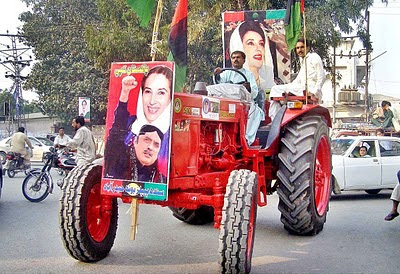 A key indicator of growing rural economy is the double digit increase in the sale of tractors. Millat Tractors Limited, the largest supplier of tractors in Pakistan, had record sales of 41,500 tractors in the calendar year 2010, an increase of nearly 11% over 37,537 tractors sold in 2009. Of these 41,500 tractors, a record 5000 tractors were sold in the month of Dec, 2010 alone, acording to The Nation newspaper. Millat sold 10,000 units under Benazir Tractor Scheme and 5,000 units under the Sindh government tractor scheme in the last fiscal year. Another 10,000 units were sold as part of the Punjab government scheme, 70 per cent of the units were sold, according to Dawn News.
Earlier, the sales of Fiat and Massey Ferguson tractors grew to 1,632 and 3,194 units in September 2010 from 537 and 3,100 in August 2010. The overall sales of these tractors rose to 13,931 during July-September 2010 as compared to 12,690 units in the same period of 2009, according to Dawn news.
Over 50 per cent of the motorcycles and 40-45 per cent of cars in Pakistan are purchased by people living in rural areas. Total car sales in July-September 2010(including Suzuki Bolan) rose by 12 per cent to 30,030 units as compared to 26,812 units in the same period of 2009, according to Pakistan Automotive Manufactureres Association PAMA). Furqan Punjani of Topline Securities said car sales are expected to reach 154,000 units by the end of June 2011.
In addition to rising demand for cars and tractors, there is also an upward trend in two-wheeler sales. The cumulative sales of motorcycles in July-September 2010 rose to 126,701 units from 105,862 units in the same period of 2009.
While it is good to see Pakistan's rural farm economy perk up, it is also important to recognize that the overall national economic outlook can not improve significantly unless the growing budget deficits and rising inflation are brought under control. And this will require the ruling feudal elite to pitch in by paying their fair share of income tax on their rising farm incomes. It is time for them to lead by example.
Related Links:
Haq's Musings
Pakistan's Exports and Remittances Rise to New Highs
Sugar Crisis in Pakistan
Pakistan's Rural Economic Survey
Pakistan's KSE Outperforms BRIC Exchanges in 2010
High Cost of Failure to Aid Flood Victims
Karachi Tops Mumbai in Stock Performance
India and Pakistan Contrasted in 2010
Pakistan's Decade 1999-2009
Musharraf's Economic Legacy
Copper, Gold Deposits Worth $500 Billion at Reko Diq, Pakistan
China's Trade and Investment in South Asia
India's Twin Deficits
Pakistan's Economy 2008-2010
A key indicator of growing rural economy is the double digit increase in the sale of tractors. Millat Tractors Limited, the largest supplier of tractors in Pakistan, had record sales of 41,500 tractors in the calendar year 2010, an increase of nearly 11% over 37,537 tractors sold in 2009. Of these 41,500 tractors, a record 5000 tractors were sold in the month of Dec, 2010 alone, acording to The Nation newspaper. Millat sold 10,000 units under Benazir Tractor Scheme and 5,000 units under the Sindh government tractor scheme in the last fiscal year. Another 10,000 units were sold as part of the Punjab government scheme, 70 per cent of the units were sold, according to Dawn News.
Earlier, the sales of Fiat and Massey Ferguson tractors grew to 1,632 and 3,194 units in September 2010 from 537 and 3,100 in August 2010. The overall sales of these tractors rose to 13,931 during July-September 2010 as compared to 12,690 units in the same period of 2009, according to Dawn news.
Over 50 per cent of the motorcycles and 40-45 per cent of cars in Pakistan are purchased by people living in rural areas. Total car sales in July-September 2010(including Suzuki Bolan) rose by 12 per cent to 30,030 units as compared to 26,812 units in the same period of 2009, according to Pakistan Automotive Manufactureres Association PAMA). Furqan Punjani of Topline Securities said car sales are expected to reach 154,000 units by the end of June 2011.
In addition to rising demand for cars and tractors, there is also an upward trend in two-wheeler sales. The cumulative sales of motorcycles in July-September 2010 rose to 126,701 units from 105,862 units in the same period of 2009.
While it is good to see Pakistan's rural farm economy perk up, it is also important to recognize that the overall national economic outlook can not improve significantly unless the growing budget deficits and rising inflation are brought under control. And this will require the ruling feudal elite to pitch in by paying their fair share of income tax on their rising farm incomes. It is time for them to lead by example.
Related Links:
Haq's Musings
Pakistan's Exports and Remittances Rise to New Highs
Sugar Crisis in Pakistan
Pakistan's Rural Economic Survey
Pakistan's KSE Outperforms BRIC Exchanges in 2010
High Cost of Failure to Aid Flood Victims
Karachi Tops Mumbai in Stock Performance
India and Pakistan Contrasted in 2010
Pakistan's Decade 1999-2009
Musharraf's Economic Legacy
Copper, Gold Deposits Worth $500 Billion at Reko Diq, Pakistan
China's Trade and Investment in South Asia
India's Twin Deficits
Pakistan's Economy 2008-2010
 A key indicator of growing rural economy is the double digit increase in the sale of tractors. Millat Tractors Limited, the largest supplier of tractors in Pakistan, had record sales of 41,500 tractors in the calendar year 2010, an increase of nearly 11% over 37,537 tractors sold in 2009. Of these 41,500 tractors, a record 5000 tractors were sold in the month of Dec, 2010 alone, acording to The Nation newspaper. Millat sold 10,000 units under Benazir Tractor Scheme and 5,000 units under the Sindh government tractor scheme in the last fiscal year. Another 10,000 units were sold as part of the Punjab government scheme, 70 per cent of the units were sold, according to Dawn News.
Earlier, the sales of Fiat and Massey Ferguson tractors grew to 1,632 and 3,194 units in September 2010 from 537 and 3,100 in August 2010. The overall sales of these tractors rose to 13,931 during July-September 2010 as compared to 12,690 units in the same period of 2009, according to Dawn news.
Over 50 per cent of the motorcycles and 40-45 per cent of cars in Pakistan are purchased by people living in rural areas. Total car sales in July-September 2010(including Suzuki Bolan) rose by 12 per cent to 30,030 units as compared to 26,812 units in the same period of 2009, according to Pakistan Automotive Manufactureres Association PAMA). Furqan Punjani of Topline Securities said car sales are expected to reach 154,000 units by the end of June 2011.
In addition to rising demand for cars and tractors, there is also an upward trend in two-wheeler sales. The cumulative sales of motorcycles in July-September 2010 rose to 126,701 units from 105,862 units in the same period of 2009.
While it is good to see Pakistan's rural farm economy perk up, it is also important to recognize that the overall national economic outlook can not improve significantly unless the growing budget deficits and rising inflation are brought under control. And this will require the ruling feudal elite to pitch in by paying their fair share of income tax on their rising farm incomes. It is time for them to lead by example.
Related Links:
Haq's Musings
Pakistan's Exports and Remittances Rise to New Highs
Sugar Crisis in Pakistan
Pakistan's Rural Economic Survey
Pakistan's KSE Outperforms BRIC Exchanges in 2010
High Cost of Failure to Aid Flood Victims
Karachi Tops Mumbai in Stock Performance
India and Pakistan Contrasted in 2010
Pakistan's Decade 1999-2009
Musharraf's Economic Legacy
Copper, Gold Deposits Worth $500 Billion at Reko Diq, Pakistan
China's Trade and Investment in South Asia
India's Twin Deficits
Pakistan's Economy 2008-2010
A key indicator of growing rural economy is the double digit increase in the sale of tractors. Millat Tractors Limited, the largest supplier of tractors in Pakistan, had record sales of 41,500 tractors in the calendar year 2010, an increase of nearly 11% over 37,537 tractors sold in 2009. Of these 41,500 tractors, a record 5000 tractors were sold in the month of Dec, 2010 alone, acording to The Nation newspaper. Millat sold 10,000 units under Benazir Tractor Scheme and 5,000 units under the Sindh government tractor scheme in the last fiscal year. Another 10,000 units were sold as part of the Punjab government scheme, 70 per cent of the units were sold, according to Dawn News.
Earlier, the sales of Fiat and Massey Ferguson tractors grew to 1,632 and 3,194 units in September 2010 from 537 and 3,100 in August 2010. The overall sales of these tractors rose to 13,931 during July-September 2010 as compared to 12,690 units in the same period of 2009, according to Dawn news.
Over 50 per cent of the motorcycles and 40-45 per cent of cars in Pakistan are purchased by people living in rural areas. Total car sales in July-September 2010(including Suzuki Bolan) rose by 12 per cent to 30,030 units as compared to 26,812 units in the same period of 2009, according to Pakistan Automotive Manufactureres Association PAMA). Furqan Punjani of Topline Securities said car sales are expected to reach 154,000 units by the end of June 2011.
In addition to rising demand for cars and tractors, there is also an upward trend in two-wheeler sales. The cumulative sales of motorcycles in July-September 2010 rose to 126,701 units from 105,862 units in the same period of 2009.
While it is good to see Pakistan's rural farm economy perk up, it is also important to recognize that the overall national economic outlook can not improve significantly unless the growing budget deficits and rising inflation are brought under control. And this will require the ruling feudal elite to pitch in by paying their fair share of income tax on their rising farm incomes. It is time for them to lead by example.
Related Links:
Haq's Musings
Pakistan's Exports and Remittances Rise to New Highs
Sugar Crisis in Pakistan
Pakistan's Rural Economic Survey
Pakistan's KSE Outperforms BRIC Exchanges in 2010
High Cost of Failure to Aid Flood Victims
Karachi Tops Mumbai in Stock Performance
India and Pakistan Contrasted in 2010
Pakistan's Decade 1999-2009
Musharraf's Economic Legacy
Copper, Gold Deposits Worth $500 Billion at Reko Diq, Pakistan
China's Trade and Investment in South Asia
India's Twin Deficits
Pakistan's Economy 2008-2010
Riaz Haq
FY2020-21: Tractors assembling witnesses 59% growth in 11 months
https://dailytimes.com.pk/791852/fy2020-21-tractors-assembling-witn...
Owing to incentives offered by the government under its Agriculture Fiscal Package to mitigate the harmful impacts of COVID-19 pandemic and mechanization of agriculture sector, local tractor production witnessed about 59.03 percent growth in 11 months of current fiscal year as compared the production of corresponding period of last year.
During the period from July-May, 2020-21, 45,432 tractors were locally assembled as compared the assembling of 28,568 tractors of same period of last year, according the provisional quantum indices of Large Scale Manufacturing Industries (LSMI) for May 2021. The provisional quantum indices of Large Scale Manufacturing Industries (LSMI) for May 2021 with base year 2005-06 have been developed on the basis of latest data supplied by the source agencies. On month on month basis, the local production of tractors registered about 15,31 percent increase as about 4,105 tractors were locally manufactured in May, 2021 as compared the production of 3,560 tractors of same month of last year, according the data.
It is worth mentioning here that the government had initiated Rs1.5 billion sales tax subsidy on locally-manufactured tractors under agriculture package announced to revive the economically important sector and approved withdrawal of 5 percent sales tax on locally-manufactured tractors for one year. The government in May, 2020 announced a fiscal package of over Rs1.2 trillion in the wake of COVID-19 pandemic. Economic Coordination Committee of the cabinet division approved the package proposals. Out of the package, Rs50 billion was earmarked for relief to agriculture sector that contributes 18.9 percent to GDP and absorbs 42.3 percent of labor force. The package also includes Rs6.861 billion for provision of financial relief in terms of markup subsidy on bank’s loans to farmers, besides announcing sales tax relief measures to promote mechanization in agriculture sector to enhance per-acre crop yield. Pakistan produces tractors with a variety of working capacities in technical collaboration with foreign manufacturers, including New Holland Tractors and Massey Ferguson.
Jul 17, 2021
Riaz Haq
Pakistan sugar production for 2023/24 is forecast to rise 250,000 tonnes to 7.1 million due to the recovery in sugarcane area harvested from the flood-damaged crop the year before.
http://www.ukrsugar.com/en/post/pakistan-sugar-production-is-foreca...
It is reported by USDA in its May report.
https://apps.fas.usda.gov/psdonline/circulars/sugar.pdf
Sugarcane production is forecast up 3 percent to 83.5 million tons due to the expected recovery in area. Favorable prices are encouraging farmers to maintain sugarcane area vis-à-vis planting other crops. Farmers’ preference toplant sugarcane is also due to the crop’s resiliency to weather hazards compared to alternative crops. Sugarcane is produced in three provinces, with Punjab accounting for 68 percent of total production, followed by Sindh with 24 percent, and Khyber Pakhtunkhwa (KPK) with 8 percent. The Bahawalpur division of Punjab and the Sukkur division of Sindh account for more than half of the total sugarcane area. Sugarcane is planted in two different seasons: spring planting runs from February to March and the fall season is from September to October. Punjab and Sindh farmers plant sugarcane in both seasons, while most cane in KPK is planted in spring. Yields per hectare are relatively low due to lack of high yielding varieties, water shortages, and uneven fertilizer distribution.
Pakistan has been one of the top eight sugar producers for the past 3 years and is forecast to be the seventh largest exporter in 2023/24. Sugar consumption is estimated up 150,000 tons to 6.3 million supported by population growth and higher supplies. Despite the rise in production, sugar exports are forecast down 200,000 tons to 800,000 as the government seeks to curb exports. Fearing domestic price increases, the government is expected to be reluctant to approve too many exports this year by monitoring the market situation on a fortnightly basis to decide on the timing and quantity of exports. Stocks are expected to be flat.
Jul 14, 2023
Riaz Haq
Pakistan's tractor fleet has more than doubled in twenty years, but the market powering that growth has barely changed shape.
The 7th Agricultural Census 2024 counted 986,998 tractors across the country, and just two brands, Massey Ferguson and Fiat, account for 863,322 of them. That is 87 percent of every tractor working Pakistani soil, a duopoly that has now survived six decades of farm mechanization.
Massey Ferguson is the undisputed leader with 519,653 tractors, more than half the national fleet. Its numbers have tripled since the 2004 machinery census, rising 202 percent from 171,943 units. Fiat, which includes Al Ghazi and locally branded New Holland Fiat models, stands second at 343,669 tractors, up 108 percent from 164,941 two decades ago.
Read More: https://propakistani.pk/2026/07/10/just-2-brands-dominate-nearly-90...
22 hours ago