PakAlumni Worldwide: The Global Social Network
Pakistani-American Kumail Nanjiani Stars in HBO Comedy "Silicon Valley"
“This guy’s a really good programmer, so that makes him arrogant, because of his skills in a very specific world. And then I take that arrogance and apply it to every other aspect of his life that he’s not good at. So I think that guy’s funny ’cause he’s arrogant — about everything, about how he thinks he is with the ladies. He’s not good with the ladies. You know, all that stuff. He thinks he’s cool. He’s not cool. He’s only good at programming.” Kumail Nanjiani on his role in HBO's "Silicon Valley"
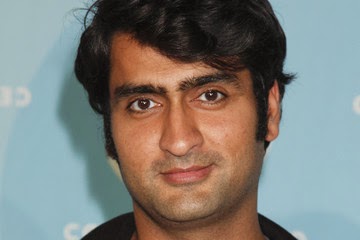
Kumail Nanjiani, born in Karachi, Pakistan, has found success as a stand-up comedian in the United States. After completing high school in Pakistan, he attended Grinnell College in Iowa where he graduated in 2001. His comedy has been featured on a number of popular television shows including the Late Show with David Letterman, Late Night with Jimmy Fallon, and Conan. He has written for and acted on "Michael & Michael Have Issues" and has appeared on The Colbert Report and Burning Love.
Kumail's latest work is HBO’s new comedy, “Silicon Valley”, a half hour live action series that takes a light-hearted look at the start-up culture of Silicon Valley. The show, which premieres on Sunday, April 6, is written and directed by Mike Judge, who was also behind “Beavis and Butt-head,” “Office Space” and “King of the Hill.” Kumail plays Dinesh Chugtai, an Islamabad-born Pakistani-American character, working as a lead engineer in a fictional start-up tech company called "The Pied Piper". The San Francisco Chronicle has praised it not only one of the best shows of the season, but the “best tech show yet” and “a Silicon Valley rarity: a start-up that’s a sure thing.” Here's an excerpt of San Francisco Chronicle's review of "Silicon Valley":
"“Silicon Valley” is full of quips and jabs that those familiar with the tech industry will find amusing, but it’s also broad enough to lure in average HBO watchers in the mood for a comedy. The show debuts on April 6 right after "Game of Thrones" on HBO."
Marvel Entertainment has recently introduced a new Ms. Marvel, a 16-year-old Pakistani-American superhero named Kamala Khan. Shahid Khan, a Pakistani-American businessman, became the first non-white owner of an NFL team two years ago. It's good to see Pakistani-Americans making their mark in sports and entertainment in addition to more traditional occupations like engineering and medicine.
Here's a video clip of Kumail Nanjiani's act:
Related Links:
Haq's Musings
Burka Avenger: Pakistani Female Superhero
Burka Avenger Videos on Vimeo Channel
UN Malala Day
Pakistan's Cowardly Politicians
Pakistani-American Ashar Aziz's Fireeye Goes Public
Pakistani-American Shahid Khan Richest South Asian in America
Two Pakistani-American Silicon Valley Techs Among Top 5 VC Deals
Pakistani-American's Game-Changing Vision
Minorities Are Majority in Silicon Valley
US Promoting Venture Capital & Private Equity in Pakistan
Pakistani-American Population Growth Second Fastest Among Asian-Americans
Edible Arrangements: Pakistani-American's Success Story
Pakistani-American Elected Mayor
Upwardly Mobile Pakistan
Kumail Nanjiani, born in Karachi, Pakistan, has found success as a stand-up comedian in the United States. After completing high school in Pakistan, he attended Grinnell College in Iowa where he graduated in 2001. His comedy has been featured on a number of popular television shows including the Late Show with David Letterman, Late Night with Jimmy Fallon, and Conan. He has written for and acted on "Michael & Michael Have Issues" and has appeared on The Colbert Report and Burning Love.
Kumail's latest work is HBO’s new comedy, “Silicon Valley”, a half hour live action series that takes a light-hearted look at the start-up culture of Silicon Valley. The show, which premieres on Sunday, April 6, is written and directed by Mike Judge, who was also behind “Beavis and Butt-head,” “Office Space” and “King of the Hill.” Kumail plays Dinesh Chugtai, an Islamabad-born Pakistani-American character, working as a lead engineer in a fictional start-up tech company called "The Pied Piper". The San Francisco Chronicle has praised it not only one of the best shows of the season, but the “best tech show yet” and “a Silicon Valley rarity: a start-up that’s a sure thing.” Here's an excerpt of San Francisco Chronicle's review of "Silicon Valley":
"“Silicon Valley” is full of quips and jabs that those familiar with the tech industry will find amusing, but it’s also broad enough to lure in average HBO watchers in the mood for a comedy. The show debuts on April 6 right after "Game of Thrones" on HBO."
Marvel Entertainment has recently introduced a new Ms. Marvel, a 16-year-old Pakistani-American superhero named Kamala Khan. Shahid Khan, a Pakistani-American businessman, became the first non-white owner of an NFL team two years ago. It's good to see Pakistani-Americans making their mark in sports and entertainment in addition to more traditional occupations like engineering and medicine.
Here's a video clip of Kumail Nanjiani's act:
Related Links:
Haq's Musings
Burka Avenger: Pakistani Female Superhero
Burka Avenger Videos on Vimeo Channel
UN Malala Day
Pakistan's Cowardly Politicians
Pakistani-American Ashar Aziz's Fireeye Goes Public
Pakistani-American Shahid Khan Richest South Asian in America
Two Pakistani-American Silicon Valley Techs Among Top 5 VC Deals
Pakistani-American's Game-Changing Vision
Minorities Are Majority in Silicon Valley
US Promoting Venture Capital & Private Equity in Pakistan
Pakistani-American Population Growth Second Fastest Among Asian-Americans
Edible Arrangements: Pakistani-American's Success Story
Pakistani-American Elected Mayor
Upwardly Mobile Pakistan
Riaz Haq
Here's an excerpt from an India West story on the HBO series "Silicon Valley":
Pakistani American standup comedian Kumail Nanjiani has a large role in the new show, as Dinesh, a snide, quick-witted Indian American computer whiz whose aplomb — and English skills — go straight out the window in one early episode when he comes face to face with a sassy hooker named Mochaccino that his roommate has hired for a party.
Muttering in Hindi, Dinesh shyly slinks away, later explaining that growing up in India, he never even spoke to a person of the opposite sex until the age of 17.
Because each character is so precisely created and impeccably performed — such as the blustering, pretentious Erlich (T.J. Miller), who loans out rooms in his mid-century Palo Alto home, dubs it a start-up incubator and calls it Hacker Hostel; and the borderline-Aspergers billionaire tech investor Peter Gregory (Christopher Evan Welch), whose rapid-fire speech and inability to look people in the eye is most unnerving — much of the humor in “Silicon Valley” can be appreciated by a universal audience. But it’s the little in-jokes — about useless apps, nerdy millionaires, the high cost of rent and the ever-shifting loyalties in the industry — that will have the greatest impact on viewers who are deeply familiar with this world. Repeat viewings are highly advised.
Judge is also known as the creator of “Beavis and Butt-Head” and “King of the Hill,” and his feature films include “Idiocracy,” “Extract” and “Beavis and Butt-Head Do America.”
If the first two episodes are any indication, “Silicon Valley” has a few plum roles for desi actors, if not many opportunities for other Asian actors. In the first two episodes, Sri Lankan actor Bernard White (see separate article) appears as a quasi-enlightened spiritual guru who is totally full of it; and Charan Prabhakar makes a strong impression as Javed, another techie who makes an obnoxious speech at a sadly deserted, but lavishly budgeted, company party. Aly Mawji plays a programmer bent on stealing lead character Richard’s (Thomas Middleditch) idea for a powerful compression algorithm destined to change the world.
http://www.indiawest.com/news/18022--silicon-valley-features-hot-st...
Apr 3, 2014
Riaz Haq
How young are the top tech geeks? Ages of #SiliconValley founders at founding of companies.
The data we collected confirms that 20-something founders are quite common among those who have built billion-dollar businesses.
The challenge with measuring age is that the data is relatively hard to find. Unless a founder has given his or her age in a magazine profile, or maintains a particularly public Facebook account, it’s hard to get age data without actually surveying entrepreneurs. But there is one clue to founder age that is often publicly available: the year they received an undergraduate degree, listed on LinkedIn. We decided to use this as a proxy for the age at which the founder was 22, under the assumption that this would provide age data that was accurate within a year or two. Unfortunately, LinkedIn does not include this data in its API, so we were limited by having to do manual research. We therefore picked a small but disproportionately influential dataset to examine: the founders of private, VC-backed companies valued at $1 billion or more.
The average age at founding in our dataset was just over 31, and the median was 30. Today, of course, these founders are quite a bit older, with an average age just under 39, and a median of 38.
http://blogs.hbr.org/2014/04/how-old-are-silicon-valleys-top-founde...
Apr 5, 2014
Riaz Haq
From Forbes 4/14/14 issue:
"Put flags in a world map and you will see Sequoia (Silicon Valley's Top Venture Capital Firm that funded Oracle, Cisco, Yahoo, Google and LinkedIn) connecting with entrepreneurs born in Ukraine, Ireland, Finland, Greece, India, Pakistan, Venezuela and a dozen other countries. (By contrast, Kauffman Foundation data (compiled by Vivek Wadhawa)show that barely a quarter of all U.S. startups have at least one immigrant cofounder.)"
http://www.forbes.com/sites/georgeanders/2014/03/26/inside-sequoia-...
I know at least 2 Sequoia funded #SiliconValley startups founded by #Pakistanis: Ashar Aziz's #Fireeye, Naveed Sherwani's #OpenSilicon
Apr 6, 2014