PakAlumni Worldwide: The Global Social Network
Can Pakistan Stand Up to India in Conventional War?
Newly-elected Prime Minister Narendra Modi government's rhetoric about "jaw-breaking" (munh tod) policy toward Pakistan is the latest manifestation of a disease described by Indian diplomat Sashi Tharoor as "India's Israel envy".
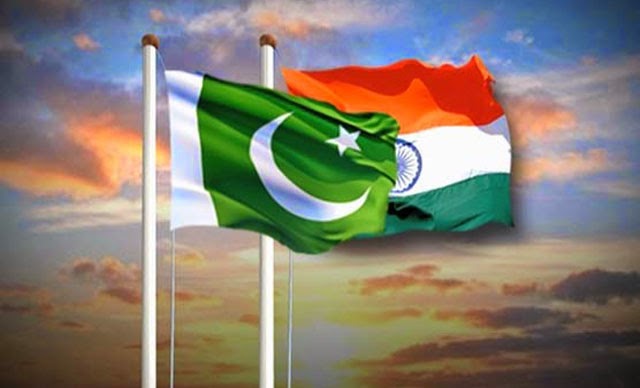
India's Israel Envy:
India's Israel envy is reinforced by the Hindu Nationalists over-estimating their country's strength while under-estimating Pakistan's. It's aided by India's western allies' belief that Pakistan can not fight a conventional war with india and its only option to defend itself would be to quickly escalate the conflict into a full scale nuclear war.
Indian MP Mani Shankar Aiyar has summed up India's war rhetoric against Pakistan in a recent Op Ed as follows:
(Indian Defense Minister) Arun Jaitley thumps his chest and proclaims that we have given the Pakis a "jaw-breaking reply" (munh tod jawab). Oh yeah? The Pakistanis are still there - with their jaw quite intact and a nuclear arsenal nestling in their pockets. (Indian Home Minister) Rajnath Singh adds that the Pakis had best understand that "a new era has dawned". How? Is retaliatory fire a BJP innovation? Or is it that we have we ceased being peace-loving and become a war-mongering nation? And (Indian Prime Minister Narendra) Modi thunders that his guns will do the talking (boli nahin, goli). Yes - and for how long?
India's Delusions:
Indians, particularly Hindu Nationalists, have become victims of their own hype as illustrated by Times of India's US correspondent who checked into the veracity claimed achievements of Indians in America and found such claims to be highly exaggerated: "On Monday, the Indian government itself consecrated the oft-circulated fiction as fact in Parliament, possibly laying itself open to a breach of privilege. By relaying to Rajya Sabha members (as reported in The Times of India) a host of unsubstantiated and inflated figures about Indian professionals in US, the government also made a laughing stock of itself." The Times of India's Chidanand Rajghatta ended up debunking all of the inflated claims about the number of Indian physicians, NASA scientists and Microsoft engineers in America.
Similarly, a US GAO investigation found that India's IT exports to the United States are exaggerated by as much as 20 times. The biggest source of discrepancy that GAO found had to do with India including temporary workers' salaries in the United States. India continuously and cumulatively adds all the earnings of its migrants to US in its software exports. If 50,000 Indians migrate on H1B visas each year, and they each earn $50,000 a year, that's a $2.5 billion addition to their exports each year. Cumulatively over 10 years, this would be $25 billion in exports year after year and growing.
Since the end of the Cold War, the West has been hyping India's economic growth to persuade the developing world that democracy and capitalism offer a superior alternative to rapid development through state guided capitalism under an authoritarian regime---a system that has worked well in Asia for countries like the Asian Tigers and China. This has further fooled Hindu Nationalists into accepting such hype as real. It ignores the basic fact that India is home to the world's largest population of poor, hungry and illiterates. It also discounts the reality that Indian kids rank near the bottom on international assessment tests like PISA and TIMSS due to the poor quality of education they receive. The hype has emboldened many Indians, including the BJP leadership, to push neighbors around.
Pakistan's Response:
Pakistan has so far not responded to the Indian rhetoric in kind. It might create an impression that Pakistan is weak and unable to respond to such threats with its conventional force. So let's examine the reality.
Ground War:
In the event of a ground war, Pakistan will most likely follow its "offensive defense" doctrine with its two strike corps pushing deep inside Indian territory. Though Indian military has significant numerical advantage, Pakistan's armor is as strong, if not stronger, than the Indian armor.
Before embarking on further offensive, gains shall be consolidated. Pakistan is also as strong, if not stronger, in terms of ballistic and cruise missiles inventory and capability, putting all of India within its range. These missiles are capable of carrying conventional and nuclear warheads.
 |
| India-Pakistan Firepower Comparison Source: GlobalFirepower.com |
In 1990 the Central Corps of Reserves was created to fight in the desert sectors, where enemy land offensives are expected. These dual capable formations trained for offensive and holding actions are fully mechanized.
The Pakistan Army has ten Corps including the newly formed Strategic Corps. The Army has twenty-six divisions (eight less than India). Two more divisions were raised as Corps reserves for V and XXXI Corps. The Army has two armored divisions, and ten independent armored brigades. Presently one hundred thousand troops are stationed on the Pak-Afghan border to fight terror.
The Special Service Group – SSG - comprises two airborne Brigades, i.e. six battalions. Pakistan Army has 360 helicopters, over two thousand heavy guns, and 3000 APC’s. Its main anti-tank weapons are Tow, Tow Mk II, Bakter Shiken and FGM 148 ATGM. The Army Air Defense Command has S.A- 7 Grail, General Dynamics FIM-92 Stinger, GD FIM Red Eye, and ANZA Mk-I, Mk-II, Mk-III and HQ 2 B surface to air missiles. Radar controlled Oerlikon is the standard Ack Ack weapon system.
The ballistic missile inventory of the Army is substantial. It comprises intermediate range Ghauri III and Shaheen III; medium range Ghauri I and II and Shaheen II, and short range tactical Hatf I- B, Abdali, Ghaznavi, Nasr, Shaheen I and M -11 missiles. All the ballistic missiles can carry nuclear warheads....some can carry multiple warheads. Nuclear and conventional weapon capable Babur Cruise missile is the new addition to Pakistan’s strategic weapon inventory. It has stealth features to evade radar to penetrate India's air air-space to hit targets. The number of ballistic missiles and warheads are almost the same as those of India. So there is a parity in nuclear weapons, which is a deterrent.
Tactical missile which can be tipped with miniaturized nuclear warhead is the latest addition to Pakistan's arsenal. It's a battlefield weapon designed to destroy enemy troop concentrations poised against Pakistan.
Air War:
Pakistan has about 900 aircraft compared to India's 1800, giving India 2:1 numerical advantage over Pakistan. India's biggest advantage is in transport aircraft (700 vs 230) while Pakistan has some numerical advantage in two areas: Airborne radars (9 vs 3) and attack helicopters (48 vs 20).
Pakistan Air Force has over 100 upgraded F-16s and 200 rebuilt Mirage- 3's (for night air defense) and Mirage-5's for the strike role. They can carry nuclear weapons. They have been upgraded with new weapon systems, radars, and avionics. Additionally, the PAF 150 F-7's including 55 latest F-7 PG’s. Manufacture of 150 JF 17 Thunder fighters (jointly designed) is underway at the Pakistan Aeronautical Complex Kamra. The JF-17 Thunder is a 4th generation fly by wire multi-role fighter aircraft. Eight are already in PAF service. An order has been placed with China for the purchase of 36 JF-10, a Mach 2.3 -5th generation multi-role fighter, comparable in performance to the Su-30 Mk-1 with the Indian Air Force.
In spite of Indian Air Force's numerical superiority since independence in 1947, Pakistan Air Force has performed well against it in several wars. The PAF pilots have always been among the best trained in the world.
Complimenting the Pakistan Air Force pilots, the legendary US Air Force pilot Chuck Yeager who broke the sound barrier, wrote in his biography "The Right Stuff": "This Air Force (the PAF), is second to none". He continued: "The (1971) air war lasted two weeks and the Pakistanis scored a
three-to-one kill ratio, knocking out 102 Russian-made Indian jets and losing thirty-four airplanes of their own. I'm certain about the figures because I went out several times a day in a chopper and counted the wrecks below." "They were really good, aggressive dogfighters and proficient in gunnery and air combat tactics. I was damned impressed. Those guys just lived and breathed flying. "
In 1965, Roy Meloni of the ABC reported: "Pakistan claims to have destroyed something like 1/3rd the Indian Air Force, and foreign observers, who are in a position to know say that Pakistani pilots have claimed even higher kills than this; but the Pakistani Air Force are being scrupulously honest in evaluating these claims. They are crediting Pakistan Air Force only those killings that can be checked from other sources."
Naval War:
Of the three branches of the military, India's advantage over Pakistan is the greatest in naval strength. Pakistan has just 84 sea-going vessels of various kinds versus India's 184.
Pakistan Navy can still inflict substantial damage on the Indian Navy. The Indian Navy has 17 submarines. Pakistan Navy has ten, some are brand new and equipped with AIP. Indian Navy has 28 war ships, Pakistan Navy has eleven.
As seen in the past wars, India will attempt a naval blockade of Pakistan. Here's how MIT's Christopher Clary discusses in his doctoral thesis the Indian Navy's ability to repeat a blockade of Pakistan again:
"Most analyses do not account adequately for how difficult it would be for the (Indian) navy to have a substantial impact in a short period of time. Establishing even a partial blockade takes time, and it takes even more time for that blockade to cause shortages on land that are noticeable. As the British strategist Julian Corbett noted in 1911, "it is almost impossible that a war can be decided by naval action alone. Unaided, naval pressure can only work by a process of exhaustion. Its effects must always be slow…. ". Meanwhile, over the last decade, Pakistan has increased its ability to resist a blockade. In addition to the main commercial port of Karachi, Pakistan has opened up new ports further west in Ormara and Gwadar and built road infrastructure to distribute goods from those ports to Pakistan's heartland. To close off these ports to neutral shipping could prove particularly difficult since Gwadar and the edge of Pakistani waters are very close to the Gulf of Oman, host to the international shipping lanes for vessels exiting the Persian Gulf. A loose blockade far from shore would minimize risks from Pakistan's land-based countermeasures but also increase risks of creating a political incident with neutral vessels."
Summary:
The probability of India prevailing over Pakistan in a conventional war now are very remote at best. Any advantage that India seeks over Pakistan would require it to pay a very heavy price in terms of massive destruction of India's industry, economy and infrastructure that would set India back many decades.
In the event that the India-Pakistan war spirals out of control and escalates into a full-scale nuclear confrontation, the entire region, including China, would suffer irreparable damage. Even a limited nuclear exchange would devastate food production around the world, according to International Physicians for the Prevention of Nuclear War, as reported in the media. It would set off a global famine that could kill two billion people and effectively end human civilization as we know it.
I hope that better sense will prevail in New Delhi and India's BJP government will desists from any military adventurism against Pakistan. The consequences of any miscalculation by Narendra Modi will be horrible, not just for both the countries, but the entire humanity.
Here's a video discussion on this and other current topics:
India-Pakistan Tensions; End of TUQ Dharna; Honors for Malala; Ebola Threat from WBT TV on Vimeo.
Here's an interview of former President Musharraf on an Indian TV channel:
Parvez Musharraf blasts Modi in an Indian Talk... by zemtvRelated Links:
Haq's Musings
India Teaching Young Students Akhand Bharat
Pakistan Army at the Gates of Delhi
India's War Myths
India-Pakistan Military Balance
Pakistan Army Capabilities
Modi's Pakistan Policy
India's Israel Envy
Can India Do a Lebanon in Pakistan?
Riaz Haq
Eradicating poverty in India requires every person having access to safe drinking water, sanitation, housing, nutrition, health and education. According to the MPI, out of its 1.2 billion-plus population, India is home to over 340 million destitute people and is the second poorest country in South Asia after war-torn Afghanistan. Some 640 million poor people live in India(40% of the world’s poor), mostly in rural areas, meaning an individual is deprived in one-third or more of the ten indicators mentioned above (malnutrition, child deaths, defecating in the open).
In South Asia, Afghanistan has the highest level of destitution at 38%. This is followed by India at 28.5%. Bangladesh and Pakistan have much lower levels. The study placed Afghanistan as the poorest country in South Asia, followed by India, Bangladesh, Pakistan and Nepal.
http://www.globalresearch.ca/the-global-multidimensional-poverty-in...
A total of 1.6 billion people are living in multidimensional poverty; more than 30% of the people living in the 108 countries analysed (compare that with a global figure of 1.2 billion in income poverty)
Of these 1.6 billion people, 52% live in South Asia, and 29% in Sub-Saharan Africa. Most MPI poor people – 71% – live in Middle Income Countries (I won’t try and compare this with regional income breakdowns, as the MPI doesn’t cover all countries yet)
http://oxfamblogs.org/fp2p/measuring-what-matters-the-latest-multid...
Oct 22, 2014
Riaz Haq
Pankaj Mishra in New York Times:
"Mr. Modi doesn’t seem to know that India’s reputation as a “golden bird” flourished during the long centuries when it was allegedly enslaved by Muslims. A range of esteemed scholars — from Sheldon Pollock to Jonardon Ganeri — have demonstrated beyond doubt that this period before British rule witnessed some of the greatest achievements in Indian philosophy, literature, music, painting and architecture. The psychic wounds Mr. Naipaul noticed among semi-Westernized upper-caste Hindus actually date to the Indian elite’s humiliating encounter with the geopolitical and cultural dominance first of Europe and then of America."
http://www.nytimes.com/2014/10/25/opinion/pankaj-mishra-nirandra-modis-idea-of-india.html
Oct 24, 2014
Riaz Haq
It has been evident for some time that India’s security policy in relation to China and Pakistan is in a serious state of disrepair. If security concerns of a country in the international sphere are deemed to be a sub-set of its external relations, then it is reasonably clear that our policy towards two of our most significant neighbours, one of which aspires to the status of an international superpower, leaves much to be desired.
More, things have got worse, not better, since the Modi regime was ushered in last May on a high note and with the loud proclamation that the incoming government was oriented to fix troubles with neighbours and launch into a period of peace and stability.
The unspoken part was that matters had worsened in the previous 10 years of the Congress-led government, that dialogue was sterile or absent in this time, and the prosecution of foreign affairs had lost steam; ergo, a fresh look by the new leader, made powerful by virtue of a full-fledged parliamentary majority, would yield India its rightful place and command respect from all, especially the neighbours.
On Friday, however, Union home minister Rajnath Singh, addressing the ITBP on its raising day, observed that it made India “hurt and angry” when Pakistan engaged in ceasefire violations and China intruded and made territorial claims on the Indian side. Clearly, a new era is not about to dawn.
That was apparent when Prime Minister Narendra Modi was engaging with visiting Chinese President Xi Jinping seated on a swing in Ahmedabad but Chinese troops were rolling into Indian territory. Now the home minister says we should solve all problems on the basis of talks alone, but inserts the rider that good relations can only be on the basis of “honour”.
Who can dispute that? But how come the government has not been able to establish where matters lie now and how they can be taken forward? Is the PM keeping all this close to his chest while the home minister labours in a state of innocence?
In the context of Pakistan, the Prime Minister announced that India had “shut Pakistan’s mouth”. Not particularly elegant coinage. But it is not even consistent with facts on the ground. Ceasefire violations have gone on intermittently and took place even on Diwali day. Meanwhile, the Pakistan Parliament has declared India the violator and urged the UN to step in. Is there a comprehensive effort to look at the overall picture and act? National security adviser Ajit Doval has reiterated the talks mantra but also spoke of India’s search for a “deterrence” to deal with Pakistan’s ceasefire violations. We are in the dark if there is a nuclear ring about this. The country must be taken into confidence.
http://www.asianage.com/editorial/policy-pakistan-and-china-india-d...
Oct 24, 2014
Riaz Haq
Villagers gather near an Indian Air Force Sukhoi Su-30MKI fighter jet that crashed near Pune on October 14. (PTI Photo)
Oct 24, 2014
Riaz Haq
Although the results of such exercises (Red Flag in Las Vegas, NV) are rarely made public, the USAF jumped the gun. Just as it leaked the results of Cope India 2004, in November 2008 a video surfaced of a US Air Force officer talking in a generally condescending manner about the IAF. In particular five things that Col Terence Fornof said stick out:
The IAF has problems with its Russian jet engines
Indian pilots were prone to fratricide – shooting down friendly aircraft
The IAF required 60-second intervals between takeoffs, compared with half that for other air forces
The American F-15 can defeat the Su-30MKI, the most advanced fighter in the Su-30 series
IAF not keen on 1 vs 1 dogfights with the USAF.
http://in.rbth.com/blogs/2014/03/10/dissecting_a_dogfight_sukhoi_vs...
Oct 25, 2014
Riaz Haq
From Indian Express:
Pakistan will launch a campaign internationally against the human rights “violations” by the Indian army in Kashmir, the country’s Adviser on Foreign Affairs said on Friday.
Giving a statement in the Senate, the Upper House of the Parliament, on the recent incidents of ceasefire violations, Sartaj Aziz said, “700,000 Indian troops are responsible for human rights violations in occupied Kashmir and Pakistan will launch a campaign to highlight these abuses at the international level.”
Radio Pakistan quoted the adviser as saying that the violations were a reflection of the “election manifesto” of Narendra Modi, who he claimed had said that his government would “get tough” on Pakistan.
Aziz has said that India carried out 224 ceasefire violations on the Line of Control (LoC) and Working Boundary this year and their intensity has been more than the previous violations.
He also said that Pakistan always tried to resolve the issue through dialogue but there was no positive response from the Indian side.
- See more at: http://indianexpress.com/article/india/india-others/pakistan-to-lau...
Oct 25, 2014
Riaz Haq
As India considers its threat environment, it must consider not just ballistic missiles, but also cruise missiles, such as those that might potentially be launched from Pakistan or China. These latter are far more difficult to detect and intercept than are ballistic missiles.
A cruise missile has been defined as a “weapon which automatically flies an essentially horizontal cruise flight profile for most of the duration of its flight between launch and its terminal trajectory to impact.” Land-attack cruise missiles further complicate the task of any defense system, since they can be terrain hugging and can also fly a circuitous trajectory.
In particular, Pakistan’s Babur and Raad cruise missiles represent a threat to India. Meanwhile, China’s cruise missile arsenal include the Seersucker, Silkworm, the ground launched DH-10 and the air-launched CJ-10, C-101 and HN series, to name a few. Some of China’s missiles are nuclear capable.
As it considers these weapons, one of the key questions that confronts New Delhi is whether it should opt solely for a cruise missile defense or also adopt a “deterrence by punishment” posture with the help of its own cruise missile arsenal. While a cruise missile defense could possibly intercept a subsonic cruise missile, it may be difficult to intercept supersonic cruise missiles and it is virtually impossible to intercept hypersonic cruise missiles. Although at present neither Pakistan nor China possess a hypersonic cruise missile, that could very well change. China already has supersonic cruise missiles such as the C-101 and C-301. Pakistan has also acquired the new CM-400 AKG, a supersonic cruise missile claimed to be hard to intercept because of its velocity.
For its part, India is currently working on a ballistic missile defense. India’s Defence Research and Development Organisation is developing a defense system with two layers, with Advanced Air Defence (AAD) as the first layer and the two-stage Prithvi Air Defence (PAD) as the second layer. However, neither PAD nor AAD would be able to intercept cruise missiles.
Using anti-air missiles of various ranges, it may still be possible to intercept supersonic anti-ship cruise missiles (although intercepting land-attack missiles remains a Herculean task). France, for instance, has been able to intercept supersonic anti-ship cruise missiles using its Principal Anti-Air Missile System. For it to replicate the feat, India would need an effective command, control, communication, intelligence, surveillance and reconnaissance system. Even with that, intercepting hypersonic cruise missiles would very likely remain unrealistic. Moreover, missiles with low radar signatures make the job of any air or missile defense system that much more difficult. Any surface-to-air missiles used would need to be highly sophisticated, with high-power large aperture radars, although even that might not be enough to intercept incoming threats. India could hope to defeat air-launched cruise missiles by destroying the aircraft that carry them. However, both Pakistan and China are developing stealth technology that could make it difficult for India to locate and destroy the aircraft before they fire.
http://thediplomat.com/2013/10/india-defeating-the-cruise-missile-t...
Oct 25, 2014
Riaz Haq
Excerpt From Op Ed by David Karl in The Diplomat: "3 Reasons Modi is Misguided on Pakistan"
In August, New Delhi abruptly cancelled foreign secretary-level talks on the grounds that the Pakistani ambassador had continued with the longstanding practice of meeting with Kashmiri separatists. This reaction may have been right in principle. But in practical terms, it amounted to a demand that Pakistan – which draws much of its national identity from the Kashmir conflict – make a significant diplomatic concession without receiving anything of importance in return. This was certainly no deal that any civilian government in Islamabad could accept as the price for merely beginning a conversation with Modi’s team, much less one that was then embroiled in a deep political crisis at home and uncertain of the military leadership’s allegiances.
------
Indeed, the Indian government is in danger of becoming captive to its hawkish rhetoric. Defense Minister Jaitley emphasizes that “Of course we can talk to Pakistan, but it is up to Pakistan to create an atmosphere for talks.” Given the turmoil inside Pakistan, it will be difficult to start any sort of meaningful dialogue with Islamabad as long as that condition is strictly insisted upon.
A third problem is even more fundamental. Mr. Modi appears to believe he can revitalize India’s great-power prospects without the trouble of reaching a basic accommodation with Pakistan. Yet New Delhi’s continuous ructions with Islamabad have constantly proven vexatious to its larger ambitions. They sap precious national resources (including the armed forces) and divert the attention of those leaders who prefer to look to larger arenas. They also create a paradox: India yearns for a place in the first ranks of world power and yet cannot establish much sway over its own neighbors. Despite the common civilizational and historical links that permeate South Asia, New Delhi has been unable to integrate the region in the same way that Beijing has economically stitched together the much more culturally diverse and geographically disperse East Asian area.
Ignoring Pakistan may well score short-term political points at home but it is a poor strategy for the longer-term items on Mr. Modi’s agenda.
Crafting the right blend of deterrence credibility and substantive engagement with rival states is a hard task for any government. But so far, the Modi government seems fixated one objective while paying little heed to the other.
http://thediplomat.com/2014/10/3-reasons-modi-is-misguided-on-pakis...
Oct 30, 2014
Riaz Haq
The Government of Pakistan has requested a possible sale of up to 36 F-16C/D Block 50/52 external link aircraft – a buy of 18 jets, with an option for another 18. The planes would be equipped with the APG-68(V)9 radars, which are the most modern F-16 radar except for the UAE’s F-16E/F Block 60 “Desert Falcons” and their AN/APG-80 AESA. The engine contract was less certain. Pakistan’s existing F-16s use the Pratt & Whitney F100 engine, but the new planes involved a competition between Pratt & Whitney’s F100-PW-229 external link or General Electric’s F110-GE-129 external link Increased Performance Engines (IPEs).
The total value, if all options are exercised, was estimated as high as $3 billion, which is in line with Pentagon releases that eventually peg the negotiated cost of 12 F-16Cs, 6 F-16Ds, and ancillary equipment at $1.4 billion. Pratt & Whitney kept their customer, and supplied the new jets with their F100-PW-229 EEP engine, making them all F-16 Block 52s. The package for Pakistan’s new F-16s included:
7 spare F100-PW-229 EEP or F110-GE-129 IPE engines (F100-PW-229 EEP selected)
7 spare APG-68(V)9 radar sets external link
36 Joint Helmet Mounted Cueing Systems (JHMCS)
36 AN/ARC-238 SINCGARS radios with HAVE QUICK I/II
36 Conformal Fuel Tanks (pairs) that fit along the aircraft’s sides to give them extra range
36 Link-16 Multifunctional Information Distribution System-Low Volume Terminals; see tactical uses of MIDS-LVT Link 16 systems
36 Global Positioning Systems (GPS) and Embedded GPS/Inertial Navigation Systems
36 APX-113 Advanced Identification Friend or Foe Systems
36 Advanced Integrated Defensive Electronic Warfare Suites: ALQ-211 AIDEW without Digital Radio Frequency Memory (picked); or AN/ALQ-184 Electronic Counter Measures pod without DRFM; or AN/ALQ-131 Electronic Counter Measures pod without DRFM; or AN/ALQ-187 Advanced Self-Protection Integrated Suites without DRFM; or AN/ALQ-178 Self-Protection Electronic Warfare Suites without DRFM.
1 Unit Level Trainer
Associated support equipment, software development/integration, modification kits, capability to employ a wide variety of munitions, spares and repair parts, flight test instrumentation, publications and technical documentation, CONUS-personnel training and training equipment, U.S. Government and contractor technical and logistics personnel services, and other related requirements to ensure full program supportability.
-------
To equip those new F-16s, the Government of Pakistan has requested a possible sale of:
500 AIM-120C5 Advanced Medium Range Air-to-Air Missiles (AMRAAM)
12 AMRAAM training missiles – these have seeker warheads but lack engines
200 AIM-9M-8/9 Sidewinder Short-Range Air-Air Missiles; they are the version before the fifth-generation AIM-9X.
240 LAU-129/A Launchers – these support AMRAAM or Sidewinder missiles.
500 Joint Direct Attack Munition (JDAM) Guidance Kits: GBU-31/38 Guided Bomb Unit (GBU) kits
1,600 Enhanced Paveway GBU-12 (500 lb.) and GBU-24s (2,000 lb.) with dual laser/GPS guidance
800 MK-82 500 pound General Purpose (GP) and MK-84 2,000 pound GP bombs
700 BLU-109 2,000 pound bunker-buster external link bombs with the FMU-143 Fuse
http://www.defenseindustrydaily.com/51b-proposed-in-sales-upgrades-...
Nov 4, 2014
Riaz Haq
The annual APEC summit is underway in Beijing. Perhaps the most notable absentee is India’s Prime Minister Narendra Modi, who received an unprecedented invitation in July from Chinese President Xi Jinping to attend the gathering. Despite growing to become the world’s third largest economy in PPP terms, India is not a member of APEC, and as a result would not normally attend the summit. But this year President Xi used his platform as the summit host to extend invitations to non-members India, Pakistan, and Mongolia. While Pakistan and Mongolia’s leaders made the trip to Beijing for APEC, Prime Minister Modi decided not to do so. It’s a missed opportunity for India’s economic diplomacy at a time it could use a boost.
http://blogs.cfr.org/asia/2014/11/10/indias-brinkmanship-at-wto-hur...
Nov 10, 2014
Riaz Haq
India and Pakistan have been at loggerheads for over half-a-century now, resulting in four wars, countless skirmishes, tenuous negotiations, occasional displays of trust and everything in between.
Despite the endless cycle of aggression and finger-pointing, there has been a fascinating change in how the average Pakistani has come to view India. Compared to 30-odd years ago, few Pakistani’s expect India to use a nuclear weapon—and more want the vexed Kashmir issue revolved without conflict.
But the distrust still persists.
These eight charts, with data from Gallup Pakistan, a Pakistani research organisation, capture the evolution.
The number of respondents Gallup Pakistan polled in 1979 and 1981 isn’t entirely clear but in its 2014 questionnaire on how the Kashmir issue should be resolved, the survey (PDF) took responses from 2514 men and women in rural and urban areas of all four provinces of Pakistan.
In a series of other polls conducted in 2014, Gallup Pakistan also surveyed how Pakistani’s feel about India’s new prime minister Narendra Modi—and his invitation to Pakistan’s prime minister, Nawaz Sharif, for attending his inauguration in May 2014.
While there may have been wide support for Sharif’s visit to India, Pakistanis remain clear that Kashmir is the biggest point of conflict between the two countries—but many also believe that Pakistan’s tactic of internationalising the issue isn’t going to make things better.
Yet, India remains the most negatively viewed country among Pakistanis.
The more things change, the more they remain the same.
http://qz.com/294620/eight-charts-that-show-how-pakistans-view-of-i...
Nov 11, 2014
Riaz Haq
Pakistan is in the process of retrofitting its 50 Chengdu/Pakistan Aeronautical Complex JF-17 fighters to an improved Block II configuration.
The new configuration features improved avionics and better software, and adds a fixed air-to-air refuelling probe, says Air Cdre Khalid Mahmood, chief executive of JF-17 sales and marketing.
Mahmood spoke to Flightglobal at the Pakistan booth at Airshow China in Zhuhai. He was part of a 20-strong delegation from Pakistan, which also brought a single JF-17 to appear in the static display.
Rex Features
Pakistan brought large contingents to the 2010 and 2012 shows, which included three JF-17s, transport aircraft and the nation’s display team. Mahmood scotched speculation that the pared-down presence reflects any change in Pakistan/China relations.He says the two countries still have an excellent working relationship, and notes that Pakistan sent a squadron of 18 JF-17s to a recent air combat exercise in western China.
Given the small size of the combat fighter, a fixed refuelling probe was found to be preferable to a retracting one. Pakistan uses the Ilyushin Il-78 to provide air-to-air refuelling for its fleet.
In December, Pakistan will begin taking delivery of 50 JF-17s configured in the Block II configuration. Beyond this, its air force has options to take its fleet of the type up to 150 or 200 aircraft. Additional improvements are foreseen in a planned Block III upgrade.
Mahmood adds that the air force is satisfied with the fighter's Klimov RD-93 engine. The powerplant can currently be operated for up to 800 flight hours between overhauls, but there is an effort under way to improve this.Mahmood reveals that the type has seen combat in western Pakistan, where it has employed both guided and unguided munitions.
http://www.flightglobal.com/news/articles/airshow-china-pakistan-ou...
Nov 12, 2014
Riaz Haq
From Business Insider:
Pakistan successfully tested an intermediate-range ballistic missile today with an impact point in the Persian Gulf. The newly tested version of the Shaheen-II ballistic missile, which is roughly equivalent to the US's Pershing II missiles, can carry either conventional or nuclear warheads according to ISPR, the Pakistani army's public relations arm.
The announcement seems to confirm expert analysis that the country is aiming to build long-range delivery systems for tactical nuclear weapons — smaller warheads built for use in a battlefield or active combat scenario, rather than for strikes on cities or infrastructure.
Addressing scientists, engineers, and military officers viewing the test site, lieutenant general Zubair Mahmood Hayat still reiterated Pakistan's stance that the goal of its strides in ballistic capability is deterrence — presumably against any rash military action by India, with which Pakistan has a number of outstanding territorial and security-related disputes.
Pakistani news media put the range of the Shaheen-II at 1,500 kilometers, though the Federation of American Scientists estimates it may be able to travel 2,000 kilometers or more depending on its payload. One Indian television news program included a map showing the several India's cities that fall within the missile's now-proven range.
The test is the latest development in a long-running arms race between Pakistan and its neighbor.
In 1999 Pakistan tested a shorter-ranged Shaheen missile that was also capable of carrying nuclear weapons. After that test, Pakistan's officials cited a concern for preserving "strategic balance in south Asia" — an objective that has India, Pakistan's larger, more populous, more powerful, and also nuclear-armed rival, squarely in mind.
The missile program has established that strategic balance with India, Arif Rafiq, a researcher at the Middle East Institute, told Business Insider in September.
"Since India and Pakistan tested nuclear weapons in 1998, there has been a greater level of restraint in terms of the behavior of both countries when it comes to war," Rafiq said. "But at the same time they also taken great measures to build up their nuclear arsenal and further develop or strengthen or diversify their launch capability."
While nuclear development continues, India and Pakistan have become the world's first and third largest arms importers, respectively.
http://www.businessinsider.com/pakistan-has-just-successfully-teste...
Nov 13, 2014
Riaz Haq
Russia to sell Mi-35 helicopters to Pakistan
ISLAMABAD - Russia will trade Mi-35 helicopters with Pakistan to strengthen its counterterrorism efforts. Talking to the State-run radio, Ambassador of the Russian Federation Alexey Dedov said the deal between Pakistan and Russia will help combat terrorism.
He said politically the deal has been approved, however, further negotiations on details of political-commercial contract are in progress.
The Ambassador also said that Russian Defence Minister Sergey Shoygu will soon visit Islamabad and his agenda of talks with Pakistani counterparts also includes the sale of defence equipments to Pakistan.
Regarding Shanghai Cooperation Organisation (SCO), Alexey Dedov said Russia is actively involved in the process of accession of Pakistan to the organisation as a full member. He hoped that at next Summit meeting, scheduled to take place in July next year in Russia, full member status will be awarded to Pakistan.
He said that documentary work in this regard has already been completed.
He said Russia intends to resolve Afghan conflict during its Chairmanship of SCO.
He expressed the hope to succeed in bringing sustainable peace in the region through concerted and collaborative efforts of Afghanistan and the countries of the region. Russia and Pakistan are already engaged on the matter and fruitful meetings have taken place recently in this regard, he said.
He said besides terrorism, drug trafficking which stems from Afghanistan is also an area of concern. Ambassador Dedov said Russia fully supports Chinese plan of developing Silk Route, which also includes China-Pakistan Economic Corridor.
He said that Russia is interested in various energy related projects including CASA-1000, development of Gwadar Liquefying Facility and construction of pipeline between Gwadar and Nawabshah.
The Russian Ambassador said Pak-Russia Intergovernmental Commission's meeting is scheduled to take place in Moscow on 26th of this month, which will give new impetus to our bilateral economic cooperation.
He said bilateral trade volume of the two countries does not coincide with the actual potential and plenty of room exists which needs to be tapped.
He said a Russian Parliamentary delegation is also ready to participate in Asian Parliamentary Assembly meeting in Lahore.
http://nation.com.pk/national/13-Nov-2014/russia-to-sell-mi-35-heli...
Nov 13, 2014
Riaz Haq
From IHS Jane's 360:
Russia has "politically approved" a deal for Moscow to sell a batch of Mil Mi-35 'Hind E' heavy attack helicopters to Pakistan, Russia's ambassador told Radio Pakistan, the state owned broadcaster, on 12 November.
Although Alexey Dedov did not reveal the number of platforms under discussion, a senior Pakistani government official confirmed to IHS Jane's that the purchase of up to 20 helicopters was under discussion. "This is a big breakthrough for Pakistan. Russia has decided to ignore India's pressure and proceed with this deal with Pakistan," said the official.
Pakistan has previously been discouraged from securing any major defence contracts with Russia due to objections from India, which is one of Moscow's most important arms customers.
"Times have changed. The Russians have realised that Pakistan genuinely needs this equipment for a very legitimate reason," said the Pakistani government official. Since June, the Pakistan Army has relied in part on Mil Mi-17 'Hip' helicopters in its military campaign against the Taliban in the north Waziristan region along the Afghan border.
COMMENT
Analysts said the Pakistan Army, which is the defence forces' main helicopter operator, has chosen the Mi-35 because of its satisfaction with Russian helicopters that it has used previously, notably the Mi-17. Pakistan first received Mi-17s in 1994; most recently the United States donated four reconditioned platforms in 2009.
"Our helicopter pilots are very comfortable with Russian helicopters. We have chosen the Mi-35 based on our prior experience with Russian helicopters, which has been very good" said retired Brigadier Farooq Hameed Khan, a former senior
Pakistan Army officer who trained as a helicopter pilot.
In recent years, Pakistani officials have become increasingly confident over prospects for future purchase of Russia's military hardware. For example, the JF-17 'Thunder' fighter, which is co-produced by the Pakistan Air Force and China's Chengdu Aviation Corporation, is powered by the Russian-manufactured RD-93 engine.
http://www.janes.com/article/45709/russia-pakistan-close-in-on-mi-3...
Nov 14, 2014
Riaz Haq
The Pakistan Air Force (PAF) has received into service 'a squadron' of Lockheed Martin F-16 fighter aircraft from the Royal Jordanian Air Force (RJAF), a senior PAF service official disclosed on 19 November.
Speaking under the Chatham House Rule at the IQPC Fighter Conference in London, the officer said that the F-16A/B fighters had recently arrived in Pakistan, and will be used to augment the PAF's existing F-16 fleet, which is heavily involved in counterinsurgency operations along the country's border area with Afghanistan.
"Recently a squadron of used F-16A/Bs have been procured from Jordan to take some of the load off our other F-16s, which are undertaking numerous tasks in the 'law enforcement' operations. The F-16s are supporting our ongoing law enforcement efforts on our western border. We are not using [attack] helicopters, but are using F-16s to stop the terrorists," he said.
The purchase of surplus RJAF F-16s was first mooted in February, with deliveries commencing in April. At that time, a PAF official confirmed to IHS Jane's that it was to receive 12 F-16A and 1 F-16B Block 15 aircraft to increase the size of its fast jet fleet. Although designated Block 15s, all of these aircraft have undergone mid-life upgrades, although details have not been released.
IHS Jane's understands that these former Jordanian aircraft have been assigned to 19 Squadron at PAF base Mushaf (Sarghoda).
When the deal for the surplus Jordanian aircraft was disclosed earlier in the year, the PAF stated that it had also approached at least two other countries for additional F-16s. The status of these discussions is unclear.
Prior to the Jordanian deal, the PAF fielded 12 F-16C and 6 F-16D Block 50/52 jets, and between 45 and 50 F-16A/B aircraft. These earlier aircraft have now all been upgraded to Block 52 standard by Turkish Aerospace Industries in Ankara.
http://www.janes.com/article/45976/pakistan-receives-a-squadron-of-...
Nov 20, 2014
Riaz Haq
Pakistan is continuing to develop tactical nuclear weapons for use on the battlefield against India, a senior U.S. intelligence official said this week.
In providing a worldwide threat assessment to the House Armed Services Committee on Tuesday, Marine Corps Lt. Gen. Vincent R. Stewart, the director of the Defense Intelligence Agency, discussed Pakistan’s expanding nuclear delivery systems.
“We anticipate that Pakistan will continue [its] development of new delivery systems, including cruise missiles and close-range ‘battlefield’ nuclear weapons to augment its existing ballistic missiles,” Stewart said during his opening statement, according to an official transcript.
Tactical nuclear weapons are low-yield, short-range nuclear missiles designed for use against opposing troops on the battlefield, rather than against enemy cities like strategic nuclear weapons. Both the U.S. and Soviet Union deployed them in Europe (among other places) during the Cold War, and Washington and Moscow continue to deploy them today. They are not covered in existing U.S.-Russian arms control treaties like New START.
In April 2011, Pakistan first tested the Hatf-9 (Nasr) missile, which it called a “Short Range Surface to Surface Multi Tube Ballistic Missile.” In the official statement announcing the test, Pakistan’s military said the Hatf-9 missile was nuclear-capable and had been developed to be used at “shorter ranges.”
“NASR, with a range of 60 km, carries nuclear warheads of appropriate yield with high accuracy, shoot and scoot attributes. This quick response system addresses the need to deter evolving threats,” the statement said. It added that the “test was a very important milestone in consolidating Pakistan’s strategic deterrence capability at all levels of the threat spectrum.”
Testing continued throughout 2012 and 2013, and Pakistan’s Strategic Forces are believed to have inducted the missile into service following an October 2013 test. Pakistan has continued periodic testing since that time, most recently in September of last year. However, it is unclear whether Pakistan is capable of building nuclear warheads small enough to use on the Hatf-9.
-------
Pakistan developed tactical nukes as a way to counter India’s conventional military superiority. In particular, Islamabad's tactical nuclear weapons were a response to India’s development of the so-called “Cold Start” military doctrine, which calls for using small and limited excursions into Pakistani territory to respond to Islamabad-sponsored terrorist attacks.
As one analyst explained “The idea is that smaller nuclear weapons, used on Pakistani soil, would stop invading Indian forces in their tracks.” Similarly, a Pakistani missile expert told local media outlets at the time of the first test: “This is a low-yield battlefield deterrent, capable of deterring and inflicting punishment on mechanized forces like armed brigades and divisions.”
As The National Interest has previously noted, Pakistan’s tactical nuclear weapons are one of the most dangerous nuclear threats facing the world today. That’s because fielding tactical nuclear weapons underscores Islamabad's willingness to use atomic weapons even to counter non-nuclear threats (unlike India, Islamabad does not maintain a no-first-use nuclear doctrine.) Moreover, in order to be effective, Pakistan’s tactical nuclear weapons would have to be kept in a more ready state in order to be usable on short notice. Furthermore, once deployed on the frontlines, the battlefield commanders would likely be granted the authority to use them, raising the danger of a rogue general sparking a nuclear armageddon. Finally, tactical nuclear weapons, especially when deployed, would be more susceptible to theft by any one of the countless terrorist groups that find safe haven in Pakistan.
http://nationalinterest.org/blog/the-buzz/pakistan-wants-battlefiel...
Feb 6, 2015
Riaz Haq
Pakistan's Air Force (PAF) Thursday stood up its unit of Chinese Karakorum Eagle AEW&C aircraft in a ceremony attended by the head of the PAF, Air Chief Marshal Tahir Rafiq Butt, and Prime Minister Nawaz Sharif.
Though the exact location of the ceremony was not given, it is believed to have been held at PAF Base Masroor in Karachi as the prime minister was known to have been in the city that day.
Brian Cloughley, an analyst and former Australian defense attache to Islamabad, said AEW&C "is very good news for the PAF – and for Pakistan" because it "will dramatically improve early warning capabilities which up until now have been comparatively rudimentary."
The ZDK-03 Karakorum Eagle is a dish-based AEW&C system mounted on a Shaanxi Y-8F600 aircraft. Though never confirmed, it has been speculated that the dish houses an AESA antenna.
Four were ordered in 2008 with the first delivered in 2010.
Air Commodore Syed Muhammad Ali, a spokesman for the Air Force, confirmed all Karakorum Eagle aircraft on order have now been delivered, but could not say if more would be ordered from China.
The aircraft join No.4 Squadron, which was first established in 1959 with Bristol Freighter transports and Grumman HU-16 Albatross amphibians. The amphibians were used for maritime reconnaissance, search and rescue, and casualty evacuation alongside Sikorsky H-19D helicopters. The HU-16s were retired in 1968 and the H-19Ds in 1969.
The unit was then "number-plated" until officially re-equipped with the Karakorum Eagle.
The four Karakorum Eagle AEW&C aircraft join the surviving three Saab Erieye AEW&C aircraft ordered in 2005 and delivered from 2009. One of the four Erieye aircraft was destroyed in a terrorist attack on Kamra Air Base in August 2012.
That the Air Force operates two types of AEW&C aircraft for the same mission has been much commented on.
Analyst Usman Shabbir of the Pakistan Military Consortium think tank says the Karakorum Eagle's mission is "[b]asically the same job as Erieye but based in southern sector.
"To cover all the length of Pakistan we needed additional AEW&C aircraft and ZDK-03 was the answer due to political and financial considerations," he said.
Former Air Commodore Kaiser Tufail says the PAF was not keen on their purchase.
"The [Karakorum] Eagle was purchased rather reluctantly, under pressure of [then President] Gen. Musharraf, as a political expedient [Chinese appeasement], and not because of any reasons of technical superiority," he said. "It would have been more cost effective to manage a single type than these two vastly different ones."
Though he now believes attitudes have changed.
"Having said that, the performance of the Eagle has turned out to be surprisingly good, which takes some sting out of the initial criticism," he said.
Tufail says an absence of news of the fourth aircraft being delivered may mean it is undergoing installation of Link 16 datalink equipment to enable it to communicate with all of the PAF's aircraft, particularly its F-16s, and not just the JF-17 Thunders.
To date the Erieye AEW&C aircraft have been able to communicate with the Western aircraft in service such as the F-16, and the Karakorum Eagle with the Chinese aircraft such as the Sino-Pak JF-17, and perhaps the F-7PG.
http://www.defensenews.com/story/defense/air-space/air-force/2015/0...
Mar 1, 2015
Riaz Haq
ISLAMABAD — Pakistan on Monday successfully test-fired a ballistic missile capable of carrying nuclear or conventional warheads far beyond the borders of its strategic rival India.
The Shaheen-III surface-to-surface missile splashed down in the Arabian Sea after flying 1,720 miles from its launching pad, the military said in a statement.
That’s more than double the maximum range required to hit a target anywhere in India but falls short of being able to reach Israel, located more than 2,100 miles away. Pakistan has said, however, that the strategic plans division of its military is technically capable of extending the reach of its Shaheen and Ghouri missiles programs beyond Monday’s test by adding solid or liquid-fuel engines.
Previously, Pakistan has restricted the range of its missile tests to about 900 miles, a distance that would allow it to target India but would not raise alarms in potentially threatened states like Israel, with which Pakistan has no diplomatic relations.
---
Pakistan’s government says its nuclear weapons program has been developed exclusively as a deterrent against India, with which it has fought two wars and four regionalized conflicts since the two countries gained independence from British colonial rule in 1947.
The commander of the Pakistani military’s strategic weapons division, Gen. Zubair Mahmood Hayat, said Monday’s test was conducted to validate various design and technical parameters of the Shaheen-III at maximum range.
He described the test as “a major step towards strengthening Pakistan’s deterrence capability,” an obvious allusion to India.
In December, India’s military conducted the first “user test” of its 2,500-mile-range Agni-IV, the first Indian ballistic missile capable of delivering nuclear or conventional warheads deep into Chinese territory. It is scheduled to be deployed in 2016 or 2017.
Scientists at India’s Defense Research and Development Organization on Jan. 31 carried out the first test-launch of the Agni-V, a 3,400-mile-range intercontinental ballistic missile capable of reaching all of China from a mobile platform. It, too, has been fast-tracked for deployment by India’s strategic forces command in the next one to two years.
India fought a 1962 border war with China, and the two countries’ troops frequently skirmish along their disputed Himalayan border. China is also Pakistan’s closest ally, creating the prospect of a two-front conflict for India and fueling India’s push for parity with China’s older, more advanced nuclear weapons program.
Pakistan’s ballistic test Monday came a week after the resumption of diplomatic engagement with India, which called off talks in August to protest Pakistani consultations with politicians from the part of disputed Kashmir administered by India.
“Missile tests are actually the norm when it comes to Indo-Pak talks,” said Harsh V. Pant, a professor at King’s College London. “Every time the two states decide to talk, there is a tendency to show off their military muscle.”
India and Pakistan border forces exchanged automatic weapons and mortar fire last year in a series of confrontations that left several dozen soldiers and farmers killed and forced the evacuation of rice-farming villages on both sides of the border.
By October, the Indian and Pakistani prime ministers were no longer on speaking terms, and it fell upon their common ally, the United States, to break the ice.
During his January trip to India, President Barrack Obama used his friendship with Prime Minister Nirender Modi to push for a resumption of talks with Pakistan. Both before and after his visit to India, Obama telephoned Nawaz Sharif, Pakistan’s prime minister, to inform on his discussions in New Delhi.
Modi subsequently telephoned Sharif in February to wish Pakistan luck at the ongoing world cup of cricket, a sport with fanatical followings in both countries. The call also set up a visit by India’s foreign secretary to Islamabad on March 3.
Read more here: http://www.mcclatchydc.com/2015/03/09/259107/pakistan-tests-nuclear...
Mar 9, 2015
Riaz Haq
Pakistan on Monday test-fired a ballistic missile that appears capable of carrying a nuclear warhead to every part of India, another escalation in Islamabad’s effort to keep pace with its neighboring rival’s formidable military advancements.
Pakistani military leaders said the Shaheen-III missile has a range of up to 1,700 miles, which could enable it to reach deep into the Middle East, including Israel.
After the missile was fired into the Arabian Sea on Monday, the head of the military unit that oversees Pakistan’s nuclear program congratulated scientists and engineers for “achieving yet another milestone of historic significance.”
The medium-range Shaheen-III is an updated version of the indigenously produced Shaheen-I and Shaheen-II, which had shorter ranges. “The test launch was aimed at validating various design and technical parameters of the weapon system at maximum range,” the military said in a statement.
Pakistani military leaders are trying to maintain a “credible deterrence” as arch-rival India rapidly invests in military hardware.
In recent years, India has moved toward the creation of a missile defense system and is upgrading its air force and submarine fleet. In 2012, India test-launched its first intercontinental ballistic missile, which it said has a range of more than 3,100 miles.
India’s growing defense budget is largely a result of its uneasy relationshipwith China. But Pakistan and India have fought three major wars since 1947. Analysts estimate that Pakistan and India possess about 100 nuclear warheads each, and nonproliferation experts say the Indian subcontinent remains a nuclear flash point.
Several Pakistani military analysts said the Shaheen-III has a range greater than that of any other Pakistani missile. The maximum range of the earlier versions of the Shaheen missile was about 1,500 miles, which meant it could not reach parts of India’s eastern frontier.
“Now, India doesn’t have its safe havens anymore,” said Shahid Latif, a retired commander of Pakistan’s air force. “It’s all a reaction to India, which has now gone even for tests of extra-regional missiles. . . . It sends a loud message: If you hurt us, we are going to hurt you back.”
Some analysts caution that the true range of the Shaheen-III could be less than what Pakistani military leaders claim. But Monday’s test could aggravate unease in parts of the Middle East, including Israel. Historically, there also has been some tension between Pakistan, which is overwhelmingly Sunni, and Shiite-dominated Iran.
Mansoor Ahmed, a strategic studies and nuclear expert at Quaid-i-Azam University in Islamabad, said, however, that Pakistan’s nuclear ambitionsare focused solely on India.
India has a no-first-use policy on nuclear weapons. But Pakistani leaders have repeatedly declined to adopt a similar stance, saying they might be forced to resort to nuclear weapons should India invade Pakistan with conventional forces. The Indian army is more than twice the size of Pakistan’s and has a vast advantage in weaponry such as tanks, aircraft and artillery pieces.
Ahmed said Pakistan’s military is not interested in a “tit-for-tat” arms race with India. Instead, he said, Pakistan hopes to improve “existing capabilities,” including new delivery systems for evading an Indian missile defense shield.
Ahmed said he suspects that Pakistani scientists and engineers are working to equip the Shaheen-III with multiple warheads, which would make the missiles harder to defend against. Pakistan is also seeking to advance its cruise missile technology. Ahmed said the Shaheen-III can be fired from mobile launchers, making the missiles easier to conceal and move around in the event of a nuclear exchange between India and Pakistan.
Jeffrey Lewis, a nuclear and nonproliferation scholar at the Middlebury Institute of International Studies at Monterey, said Pakistan has been working to make smaller, lighter nuclear warheads. A smaller warhead makes it far more likely that the Shaheen-III can really deliver a nuclear payload up to 1,700 miles.
“You would want to model it, but at first approximation, I would be surprised to learn [the range] would be widely off,” Lewis said.
The timing of Monday’s missile test caught some analysts by surprise. It occurred less than a week after India’s foreign secretary, Subrahmanyam Jaishankar, visited Islamabad to meet with Pakistani diplomats in a bid to improve bilateral relations.
Although Pakistani Prime Minister Nawaz Sharif has expressed interest in boosting ties with India, Pakistani military leaders are deeply skeptical of such efforts. And the testing of nuclear-capable missiles has, at times, appeared to serve as an outlet for the military to vent frustrations.
I
Mar 9, 2015
Riaz Haq
Retired #Pakistan pilot Sattar Alvi recalls how he shot down Capt Lutz flying a #Mirage in 1973 #Arab-#Israel war. http://tribune.com.pk/story/855837/50-years-on-memories-of-the-1973... …
They were closing in rapidly and there was no choice, but to turn and engage. No sooner had the leader ordered the turn, that the radio and radar signals were jammed, emitting unbearably shrilly noises. Just as I was turning to position myself during the turn, I got a glint of metal from behind and well below me. I simply could not ignore it and turned back to find two Mirages zooming up towards me from the valley beneath. By this time, my own formation had turned 180 degrees away flying at Mach 1.2 with no radio contact. ‘This was it’, I knew instinctively, and I was alone: Two Mirages against a single Mig-21. Instantly the fighter pilot’s training kicked in and all other thoughts left my mind. I proceeded to do what I had been trained to do.
A cardinal rule of air combat is knowing and using the limitations and strengths of your own and the enemy’s aircraft. A Mirage is good at high speeds and poor at slow speed combat. The Mirage leader made his high speed pass at me and as I forced him to overshoot he pulled up high above me. His wingman followed in the attack and I did the same with him; followed by a violent reversal and making the aircraft stand on its tail. The speed dropped to zero. The wingman should have followed his leader.
To my surprise he didn’t, and reversed getting into scissors with me at low speeds. That was suicidal and a Mirage should never do that against a Mig-21. But then, the game plan probably was for the wingman to keep me engaged while the leader turned around to sandwich and then shoot me. It was a good plan, but not easy to execute. The only difficulty in this plan was that the second Mirage had to keep me engaged long enough without becoming vulnerable himself. This is where things began to go wrong for the wingman because his leader took about 10 seconds longer than what was required.
The ‘Miraj’ effect
The wingman couldn’t just hang on with me and there was a star of David in my aiming sight after the second reversal. Seeing his dilemma and desperation to escape, the wingman attempted an exit with a steep high-speed dive. That in fact made my job easier and quicker. As soon as the distance increased and I heard the deep growl of the K-13, I fired. The missile takes one second to leave the rails and that was the longest second of my life. A second later there was a ball of fire where the wingman had been and I turned to face the leader charging towards me. We crossed but he had made a beeline for his home and thank God for that. I had only vapours remaining and no fuel. I hit the deck with supersonic speed.
Capt Lutz who was flying as the unfortunate wingman, was rescued by a helicopter and brought to the military hospital. He succumbed to his injuries later in the hospital before I could have a tete-a-tete with him. I have his flying coverall with me, presented to me as a war trophy by the Syrian air force commander-in-chief. I was awarded Wisam-e Faris and Wisam-e-Shujaat by the Syrian government, which are equivalent to Pakistani Hilal-e-Jurat and Sitara-e-Jurat.
Mar 22, 2015
Riaz Haq
Earlier this month, the United States approved a $952 million sale of helicopters, missiles, engines, targeting and positioning systems, and other equipment in response to a request made by Pakistan last year to help its efforts to counter domestic insurgents.\
“This proposed sale will contribute to the foreign policy and national security of the United States by helping to improve the security of a country vital to U.S. foreign policy and national security goals in South Asia,” reads the certification by the U.S. Defense Security Cooperation Agency (DSCA) notifying Congress of the possible sale on April 6.
Yet national security may just be a pretext used for the swift clearance of this deal.
According to Stockholm International Peace Research Institute, selling arms may once have been “a major foreign policy and security tool” for the U.S., but this practice has been replaced by the need to prop up the U.S. arms industry at a time when the country’s own military expenditures have dropped.
“To sell or not sell weapons depends only upon political and strategic imperatives,” said Dr. Pervez Hoodbhoy, a professor of physics at the Forman Christian College University in Lahore, who is also a national security analyst.
Speaking to MintPress News, he added that that all arms suppliers, including the U.S., use human rights as a “fig leaf.” As an example of this, he pointed to the United States’ massive arms sales to Saudi Arabia, “which supports extremist groups across the world and mistreats minorities badly.”
“Today, given that Pakistan is fighting some Taliban groups instead of supporting them as earlier, it has become politically expedient and financially profitable for the U.S. to sell to Pakistan as well,” Hoodbhoy concluded.
Likewise, Commodore Uday Bhaskar, the director of the independent Society for Policy Studies in New Delhi and former head of the government-funded Institute for Defence Studies and Analyses (IDSA) and the National Maritime Foundation, a non-governmental think tank, noted the sale should be tied to “stringent conditions” on Pakistan’s army’s compliance with terrorism and human rights frameworks.
In 2014, global defense trade increased for the sixth straight year to $64.4 billion, up from $56.8 billion, with the U.S. and Russia topping the list of arms exporters. Soon after the approval of its sale to Pakistan, the U.S also approved a potential $57 million sale of air-to-surface missiles to Egypt.
According to IHS, a global information company, there has been “unparalleled demand from the emerging economies for military aircraft” since the escalation of “regional tensions” in the Middle East and Asia Pacific.
IHS’s Global Defense Trade Report, released in March, lists the top defense exporters and importers in 2013 and 2014 and shows how these rankings have changed year-on-year:
India’s race for arms
The Indian defense budget has increased to $40 billion, compared to a mere $7 billion for the neighboring Pakistani military. “India is claiming to be worried but its weapons purchases far exceed Pakistan’s,” Hoodbhoy asserted.
Meanwhile, the Chinese defense budget stands at roughly $145 billion, nearly four times that of India. In fact, China is second only to the U.S. in triple-digit military spending.
http://www.mintpressnews.com/950m-pakistan-u-s-arms-deal-raises-eye...
Apr 16, 2015
Riaz Haq
Bulk of US$5.4 billion #American arms purchased by #Pakistan's own resources:Congress Report | Business Standard News:http://www.business-standard.com/article/news-ians/us-has-given-pak... …
Sales of F-16 combat aircraft and related equipment account for nearly half of these Foreign Military Sales agreements with Pakistan, according to a report by Congressional Research Service for lawmakers.
India has time and again opposed the sale of such equipment to Pakistan as it apprehends that Islamabad may eventually use them against India.
In dollar value terms, the bulk of purchases have been made with Pakistani national funds, although US grants have eclipsed these in recent years, CRS said.
Congress, it noted, has appropriated about $3.6 billion in Foreign Military Financing (FMF) for Pakistan since 2001, more than two-thirds of which has been disbursed.
These funds are used to purchase US military equipment for longer-term modernization efforts. Pakistan also has been granted US defence supplies as Excess Defence Articles (EDA).
In April 2015, the State Department approved a possible $952 million FMS deal with Pakistan for 15 AH-1Z Viper attack helicopters and 1,000 Hellfire II missiles, along with helicopter engines, avionics, training, and support.
Under Coalition Support Funds (in the Pentagon budget), Pakistan received 26 Bell 412EP utility helicopters, along with related parts and maintenance, valued at $235 million.
For counterinsurgency operations, the US has provided 4 Mi-17 multirole helicopters (another 6 were provided temporarily at no cost), 4 King Air 350 surveillance aircraft, 450 vehicles for the Frontier Corps and 20 Buffalo explosives detection and disposal vehicles, the CRS report said.
Through International Military Education and Training and other programs, the US has funded and provided training for more than 2,000 Pakistani military officers, report noted,
Major post-2001 defence supplies provided, or soon to be provided, under FMF include:
. eight P-3C Orion maritime patrol aircraft and their refurbishment (valued at $474 million, four delivered, three of which were destroyed in a 2011 attack by Islamist militants);
. at least 5,750 military radio sets ($212 million);
. 2,007 TOW anti-armor missiles ($186 million);
. six AN/TPS-77 surveillance radars ($100 million);
. six C-130E Hercules transport aircraft and their refurbishment ($76 million);
. the Perry-class missile frigate USS McInerney, via special EDA authorization ($65 million for refurbishment; now the PNS Alamgir);
. 20 AH-1F Cobra attack helicopters via EDA ($48 million for refurbishment, 12 delivered); and
. 15 Scan Eagle reconnaissance unmanned aerial vehicles ($30 million). Supplies paid for with a mix of Pakistani national funds and FMF include:
. up to 60 Mid-Life Update kits for F-16A/B combat aircraft (valued at $891 million, with $477 million of this in FMF; Pakistan has purchased
45 such kits, with all upgrades completed to date); and
. 115 M-109 self-propelled howitzers ($87 million, with $53 million in FMF). Notable items paid or to be paid for entirely with Pakistani national funds include:
. 18 new F-16C/D Block 52 Fighting Falcon combat aircraft (valued at $1.43 billion);
. F-16 armaments including 500 AMRAAM air-to-air missiles; 1,450 2,000-pound bombs; 500 JDAM Tail Kits for gravity bombs; and 1,600 Enhanced Paveway laser-guided kits, also for gravity bombs ($629 million);
. 100 Harpoon anti-ship missiles ($298 million);
. 500 Sidewinder air-to-air missiles ($95 million); and
. seven Phalanx Close-In Weapons System naval guns ($80 million). Major articles transferred via EDA include:
. 14 F-16A/B Fighting Falcon combat aircraft;
. 59 T-37 Tweet military trainer jets; and
. 374 M113 armoured personnel carriers.
http://www.business-standard.com/article/news-ians/us-has-given-pak...
May 6, 2015
Riaz Haq
The U.S. Congressional Research Service reports that Pakistan has signed $5.4 billion in Foreign Military Sales contracts from fiscal 2001 to fiscal 2014.
Procurement of F-16 aircraft and related equipment account for more than half of the sum.
"Major U.S. arms sales and grants to Pakistan since 2001 have included numerous items useful for counter-terrorism and counter-insurgency operations, along with a number of "big ticket" platforms more suited to conventional warfare," the service said in its report. "In dollar value terms, the bulk of purchases have been made with Pakistani national funds, although U.S. grants have eclipsed these in recent years."
CSR said Congress has appropriated about $3.6 billion in Foreign Military Financing, or FMF, for Pakistan since 2001 and more than two-thirds of that has been disbursed. Pakistan also has been given U.S. defense supplies as Excess Defense Articles and training was provided for the use of those articles.
Excess Defense Articles are systems no longer needed by the U.S. Armed Forces. They are offered at a reduced cost or no-cost basis to eligible foreign recipients on an "as is, where is" basis. Refurbishment, however, is the financial responsibility of recipients.
Major post-2001 defense supplies procured, or being procured by Pakistan through the Foreign Military Sales program, are eight P-3C Orion maritime patrol aircraft and their refurbishment (four were delivered but three of them were subsequently destroyed in a 2011 terrorist attack); at least 5,750 military radio sets; 2,007 TOW anti-armor missiles; six AN/TPS-77 surveillance radars; six C-130E Hercules transport aircraft and their refurbishment; a Perry-class missile frigate; 20 refurbished AH-1F Cobra attack helicopters, of which 12 have been delivered; and 15 Scan Eagle reconnaissance unmanned aerial vehicles.
Items procured with a mix of Pakistani national funds and U.S. FMF include, 45 Mid-Life Update kits for F-16A/B combat aircraft AND 115 M-109 self-propelled howitzers, CSR said.
"Notable items paid or to be paid for entirely with Pakistani national funds include 18 new F-16C/D Block 52 Fighting Falcon combat aircraft (valued at $1.43 billion); F-16 armaments including 500 AMRAAM air-to-air missiles; 1,450 2,000-pound bombs; 500 JDAM Tail Kits for gravity bombs; and 1,600 Enhanced Paveway laser-guided kits for gravity bombs; 100 Harpoon anti-ship missiles; 500 Sidewinder air-to-air missiles; and seven Phalanx Close-In Weapons System naval guns."
A new $952 million FMS deal to provide Pakistan for 15 AH-1Z Viper attack helicopters, missiles and other items was approved by the State Department last month.
http://www.upi.com/Business_News/Security-Industry/2015/05/08/Repor...
May 8, 2015
Riaz Haq
#India’s Military Cannot Fight Wars Lasting Longer than 20 Days | Severe ammunition shortages. #Pakistan #China
http://thediplomat.com/2015/05/indias-military-cannot-fight-wars-la... …
Last week, the Comptroller and Auditor General (CAG) of India published a report outlining a massive ammunition shortage facing the Indian military. Currently, India has only enough supplies for 20 days of intense fighting.
“Stocking of ammunition even at ‘minimum acceptable risk level’ was not ensured,” the report said, according to the Hindustan Times. The report found that, as of March 2013, India’s stockpiles were below “minimum acceptable risk level” for “125 out of a total of 170 types of ammunition.”
The across-the-board requirement for the Indian Army is to have enough reserves for at least 40 days of high-intensity combat. However, the auditors found that the supplies for around 50 percent of ammunition types would barely last for even ten days of war.
This report will not come as a surprise to military analysts. The Indian Army has been confronted by a critical ammunition shortage for at least 16 years. For example, during the 70-day long Kargil War in 1999, India had to purchase much needed artillery shells from Israel at exorbitant prices.
Already last year, the Times of India revealed that the Indian military could not last for much longer than 20 days of intense fighting and reported critical shortages, including in tank and air defense ammunition, anti-tank guided missiles, specialized machine-gun magazines, grenades, and mine fuses.
The article also noted that “urgent steps” were being taken by the government to address this problem and to accelerate the slow buildup of the war wastage reserves (WWR), which should reach 100 percent by 2019.
“The WWR, incidentally, should be sufficient for 30 days of ‘intense’ and 30 days of ‘normal’ fighting. With three days of ‘normal’ equal to one of ‘intense’, the WWR should consequently be adequate for 40 days of ‘intense’ fighting,” the Times of India states.
However, drawn-out arms procurement processes and the underperformance of state-owned ammunition suppliers has led to no obvious improvements in the situation, as evident by the newly released CAG report. One of the consequences is that India still has to rely heavily on arms imports.
For example, India’s Defense and Research Organization (DRDO) failed to produce ammunition for its fleet of T-90 tanks (see: “Breakdown: What’s Happening with India’s Tank Force”). “The ammunition produced in India was not compatible with the fire-control system of the tanks, thus these have to be modified,” according to a military analyst.
Consequently, the Indian military decided to purchase around 66,000 anti-tank shells from Russia in early 2014. However, Moscow suddenly hiked up the price for the purchase by 20 percent. New Delhi had no choice and the Indian Ministry of Defense had to reluctantly agree to the price increase.
May 15, 2015
Riaz Haq
Yes, #India Mirage landing on Yamuna Expressway is a big thing but #Pakistan did it much before via @firstpost
http://www.firstpost.com/world/yes-mirage-landing-on-yamuna-express... …
Highway strips are strategic assets for a nation which double up as auxiliary bases in war times. Many European countries have used this tactic for decades, particularly Germany, Sweden, Finland and Poland. Countries like China, Taiwan, Singapore and Australia too have done so many times before.
But what should bring a reality check for the Indians is the fact that Pakistan has done it twice before – first in 2000 and then again in 2010.
The first time Pakistan achieved the feat was way back in the year 2000 when Pakistan Air Force (PAF) used the M2 motorway (Islamabad-Lahore) as a runway on two occasions. For those who have an appetite for technical details, Pakistan’s M-1 Motorway (Peshawar-Islamabad) and the M-2 Motorway (Islamabad-Lahore) each include two emergency runway sections of 2,700 m (9,000 ft) length each. The four emergency runway sections become operational by removing removable concrete medians using forklifts.
PAF used the M2 motorway as a runway for the first time in 2000 when it landed an F-7P fighter, a Super Mushak trainer and a C-130. PAF did it again in 2010 by using a runway section on the M2 motorway on 2 April 2010 to land, refuel and take-off two jet fighters, a Mirage III and an F-7P, during its Highmark 2010 exercise.
India has finally woken up to the need to have many road runways. The Agra-Lucknow expressway is the first Indian road runway.
There are many prerequisites for having road runways. For example, there should be a smooth road at least three kilometers long. Moreover, the road segment has to be straight, leveled, located on non-undulating ground without slope and must not have electricity poles, masts, or mobile phone towers.
For a country like India, whose worst security nightmare is having to fight a two-pronged war with Pakistan and China, road runways are crucial. This underlines the importance of expressways – the highest class of roads which are six-or-eight-lanes controlled-access highways.
As of now, India boasts of 23 expressways totaling a length of 1324 kms, but the truth is that all of these so-called “expressways” are misnomers.
If one goes by the strict definition of “expressways”, India has under 1000 kms of such network; and barely a couple of hundred kms network if one goes by the international parameters.
In other words, the more international-class expressways India has, the more Indian strategic interests are secure.
The moral of the story: expressways are not only lifelines for transportation but also key assets for national security.
May 22, 2015