PakAlumni Worldwide: The Global Social Network
Can Pakistan Stand Up to India in Conventional War?
Newly-elected Prime Minister Narendra Modi government's rhetoric about "jaw-breaking" (munh tod) policy toward Pakistan is the latest manifestation of a disease described by Indian diplomat Sashi Tharoor as "India's Israel envy".
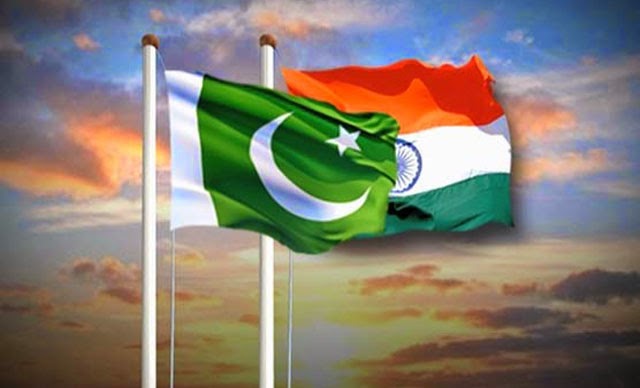
India's Israel Envy:
India's Israel envy is reinforced by the Hindu Nationalists over-estimating their country's strength while under-estimating Pakistan's. It's aided by India's western allies' belief that Pakistan can not fight a conventional war with india and its only option to defend itself would be to quickly escalate the conflict into a full scale nuclear war.
Indian MP Mani Shankar Aiyar has summed up India's war rhetoric against Pakistan in a recent Op Ed as follows:
(Indian Defense Minister) Arun Jaitley thumps his chest and proclaims that we have given the Pakis a "jaw-breaking reply" (munh tod jawab). Oh yeah? The Pakistanis are still there - with their jaw quite intact and a nuclear arsenal nestling in their pockets. (Indian Home Minister) Rajnath Singh adds that the Pakis had best understand that "a new era has dawned". How? Is retaliatory fire a BJP innovation? Or is it that we have we ceased being peace-loving and become a war-mongering nation? And (Indian Prime Minister Narendra) Modi thunders that his guns will do the talking (boli nahin, goli). Yes - and for how long?
India's Delusions:
Indians, particularly Hindu Nationalists, have become victims of their own hype as illustrated by Times of India's US correspondent who checked into the veracity claimed achievements of Indians in America and found such claims to be highly exaggerated: "On Monday, the Indian government itself consecrated the oft-circulated fiction as fact in Parliament, possibly laying itself open to a breach of privilege. By relaying to Rajya Sabha members (as reported in The Times of India) a host of unsubstantiated and inflated figures about Indian professionals in US, the government also made a laughing stock of itself." The Times of India's Chidanand Rajghatta ended up debunking all of the inflated claims about the number of Indian physicians, NASA scientists and Microsoft engineers in America.
Similarly, a US GAO investigation found that India's IT exports to the United States are exaggerated by as much as 20 times. The biggest source of discrepancy that GAO found had to do with India including temporary workers' salaries in the United States. India continuously and cumulatively adds all the earnings of its migrants to US in its software exports. If 50,000 Indians migrate on H1B visas each year, and they each earn $50,000 a year, that's a $2.5 billion addition to their exports each year. Cumulatively over 10 years, this would be $25 billion in exports year after year and growing.
Since the end of the Cold War, the West has been hyping India's economic growth to persuade the developing world that democracy and capitalism offer a superior alternative to rapid development through state guided capitalism under an authoritarian regime---a system that has worked well in Asia for countries like the Asian Tigers and China. This has further fooled Hindu Nationalists into accepting such hype as real. It ignores the basic fact that India is home to the world's largest population of poor, hungry and illiterates. It also discounts the reality that Indian kids rank near the bottom on international assessment tests like PISA and TIMSS due to the poor quality of education they receive. The hype has emboldened many Indians, including the BJP leadership, to push neighbors around.
Pakistan's Response:
Pakistan has so far not responded to the Indian rhetoric in kind. It might create an impression that Pakistan is weak and unable to respond to such threats with its conventional force. So let's examine the reality.
Ground War:
In the event of a ground war, Pakistan will most likely follow its "offensive defense" doctrine with its two strike corps pushing deep inside Indian territory. Though Indian military has significant numerical advantage, Pakistan's armor is as strong, if not stronger, than the Indian armor.
Before embarking on further offensive, gains shall be consolidated. Pakistan is also as strong, if not stronger, in terms of ballistic and cruise missiles inventory and capability, putting all of India within its range. These missiles are capable of carrying conventional and nuclear warheads.
 |
| India-Pakistan Firepower Comparison Source: GlobalFirepower.com |
In 1990 the Central Corps of Reserves was created to fight in the desert sectors, where enemy land offensives are expected. These dual capable formations trained for offensive and holding actions are fully mechanized.
The Pakistan Army has ten Corps including the newly formed Strategic Corps. The Army has twenty-six divisions (eight less than India). Two more divisions were raised as Corps reserves for V and XXXI Corps. The Army has two armored divisions, and ten independent armored brigades. Presently one hundred thousand troops are stationed on the Pak-Afghan border to fight terror.
The Special Service Group – SSG - comprises two airborne Brigades, i.e. six battalions. Pakistan Army has 360 helicopters, over two thousand heavy guns, and 3000 APC’s. Its main anti-tank weapons are Tow, Tow Mk II, Bakter Shiken and FGM 148 ATGM. The Army Air Defense Command has S.A- 7 Grail, General Dynamics FIM-92 Stinger, GD FIM Red Eye, and ANZA Mk-I, Mk-II, Mk-III and HQ 2 B surface to air missiles. Radar controlled Oerlikon is the standard Ack Ack weapon system.
The ballistic missile inventory of the Army is substantial. It comprises intermediate range Ghauri III and Shaheen III; medium range Ghauri I and II and Shaheen II, and short range tactical Hatf I- B, Abdali, Ghaznavi, Nasr, Shaheen I and M -11 missiles. All the ballistic missiles can carry nuclear warheads....some can carry multiple warheads. Nuclear and conventional weapon capable Babur Cruise missile is the new addition to Pakistan’s strategic weapon inventory. It has stealth features to evade radar to penetrate India's air air-space to hit targets. The number of ballistic missiles and warheads are almost the same as those of India. So there is a parity in nuclear weapons, which is a deterrent.
Tactical missile which can be tipped with miniaturized nuclear warhead is the latest addition to Pakistan's arsenal. It's a battlefield weapon designed to destroy enemy troop concentrations poised against Pakistan.
Air War:
Pakistan has about 900 aircraft compared to India's 1800, giving India 2:1 numerical advantage over Pakistan. India's biggest advantage is in transport aircraft (700 vs 230) while Pakistan has some numerical advantage in two areas: Airborne radars (9 vs 3) and attack helicopters (48 vs 20).
Pakistan Air Force has over 100 upgraded F-16s and 200 rebuilt Mirage- 3's (for night air defense) and Mirage-5's for the strike role. They can carry nuclear weapons. They have been upgraded with new weapon systems, radars, and avionics. Additionally, the PAF 150 F-7's including 55 latest F-7 PG’s. Manufacture of 150 JF 17 Thunder fighters (jointly designed) is underway at the Pakistan Aeronautical Complex Kamra. The JF-17 Thunder is a 4th generation fly by wire multi-role fighter aircraft. Eight are already in PAF service. An order has been placed with China for the purchase of 36 JF-10, a Mach 2.3 -5th generation multi-role fighter, comparable in performance to the Su-30 Mk-1 with the Indian Air Force.
In spite of Indian Air Force's numerical superiority since independence in 1947, Pakistan Air Force has performed well against it in several wars. The PAF pilots have always been among the best trained in the world.
Complimenting the Pakistan Air Force pilots, the legendary US Air Force pilot Chuck Yeager who broke the sound barrier, wrote in his biography "The Right Stuff": "This Air Force (the PAF), is second to none". He continued: "The (1971) air war lasted two weeks and the Pakistanis scored a
three-to-one kill ratio, knocking out 102 Russian-made Indian jets and losing thirty-four airplanes of their own. I'm certain about the figures because I went out several times a day in a chopper and counted the wrecks below." "They were really good, aggressive dogfighters and proficient in gunnery and air combat tactics. I was damned impressed. Those guys just lived and breathed flying. "
In 1965, Roy Meloni of the ABC reported: "Pakistan claims to have destroyed something like 1/3rd the Indian Air Force, and foreign observers, who are in a position to know say that Pakistani pilots have claimed even higher kills than this; but the Pakistani Air Force are being scrupulously honest in evaluating these claims. They are crediting Pakistan Air Force only those killings that can be checked from other sources."
Naval War:
Of the three branches of the military, India's advantage over Pakistan is the greatest in naval strength. Pakistan has just 84 sea-going vessels of various kinds versus India's 184.
Pakistan Navy can still inflict substantial damage on the Indian Navy. The Indian Navy has 17 submarines. Pakistan Navy has ten, some are brand new and equipped with AIP. Indian Navy has 28 war ships, Pakistan Navy has eleven.
As seen in the past wars, India will attempt a naval blockade of Pakistan. Here's how MIT's Christopher Clary discusses in his doctoral thesis the Indian Navy's ability to repeat a blockade of Pakistan again:
"Most analyses do not account adequately for how difficult it would be for the (Indian) navy to have a substantial impact in a short period of time. Establishing even a partial blockade takes time, and it takes even more time for that blockade to cause shortages on land that are noticeable. As the British strategist Julian Corbett noted in 1911, "it is almost impossible that a war can be decided by naval action alone. Unaided, naval pressure can only work by a process of exhaustion. Its effects must always be slow…. ". Meanwhile, over the last decade, Pakistan has increased its ability to resist a blockade. In addition to the main commercial port of Karachi, Pakistan has opened up new ports further west in Ormara and Gwadar and built road infrastructure to distribute goods from those ports to Pakistan's heartland. To close off these ports to neutral shipping could prove particularly difficult since Gwadar and the edge of Pakistani waters are very close to the Gulf of Oman, host to the international shipping lanes for vessels exiting the Persian Gulf. A loose blockade far from shore would minimize risks from Pakistan's land-based countermeasures but also increase risks of creating a political incident with neutral vessels."
Summary:
The probability of India prevailing over Pakistan in a conventional war now are very remote at best. Any advantage that India seeks over Pakistan would require it to pay a very heavy price in terms of massive destruction of India's industry, economy and infrastructure that would set India back many decades.
In the event that the India-Pakistan war spirals out of control and escalates into a full-scale nuclear confrontation, the entire region, including China, would suffer irreparable damage. Even a limited nuclear exchange would devastate food production around the world, according to International Physicians for the Prevention of Nuclear War, as reported in the media. It would set off a global famine that could kill two billion people and effectively end human civilization as we know it.
I hope that better sense will prevail in New Delhi and India's BJP government will desists from any military adventurism against Pakistan. The consequences of any miscalculation by Narendra Modi will be horrible, not just for both the countries, but the entire humanity.
Here's a video discussion on this and other current topics:
India-Pakistan Tensions; End of TUQ Dharna; Honors for Malala; Ebola Threat from WBT TV on Vimeo.
Here's an interview of former President Musharraf on an Indian TV channel:
Parvez Musharraf blasts Modi in an Indian Talk... by zemtvRelated Links:
Haq's Musings
India Teaching Young Students Akhand Bharat
Pakistan Army at the Gates of Delhi
India's War Myths
India-Pakistan Military Balance
Pakistan Army Capabilities
Modi's Pakistan Policy
India's Israel Envy
Can India Do a Lebanon in Pakistan?
Riaz Haq
“Our travel advice to #Modi is to send his soldiers to invade #Pakistan with their bodybags, they’ll need them" http://wpo.st/nJLL0
An Indian military operation along its eastern border with Burma has Pakistani leaders rattled, resulting in threats of swift retaliation should India ever try similar maneuvers along its western border with Pakistan.
The Pakistani statements — which include provocative reminders that India is not the only subcontinent power with nuclear arms — are once again exposing the deep-rooted suspicions and lingering potential for conflict between the long-standing rivals despite groundbreaking outreach to ease tensions.
It has been worse. The two countries have fought three major wars since 1947, engaged in a nuclear arms race in the 1980s and clashed in the 1990s.
----------
Both the Indian army and Burma’s government have denied that Indian troops crossed the border. In a newspaper interview, however, India’s information minister, Rajyavardhan Rathore, said Indian forces had pushed deep into Burma. He called the operation a “message” to countries such as Pakistan that it will not hesitate to pursue threats outside of its borders.
“We will strike when we want to,” Rathore, a retired army officer, told the Indian Express newspaper.
The reaction from Pakistani leaders has been swift and severe — touching off a wildfire of social media comments on both sides of the border.
In a statement issued late Wednesday, Pakistani Interior Minister Chaudhry Nisar Ali Khan warned Indian Prime Minister Narendra Modi to think twice before threatening Pakistan. “Those who are contemplating any kind of adventure in Pakistan must know that they will get a bloody face in the process,” Khan said. “Those who have evil designs against us – listen carefully, Pakistan is not” Burma.
Pakistan’s defense minister, Khawaja Asif, even brought up the possibility of nuclear war should India ever launch a similar incursion into Pakistan. He urged the international community to intervene, telling Geo News the latest tension could prove a “harbinger of disaster” for South Asia.
[Floods link the countries in disaster]
Pakistan’s army chief, Raheel Sharif, chaired a meeting of his top commanders on Wednesday to discuss Pakistan’s worsening relationship with India. Over the past month, Pakistani leaders have repeatedly accused India’s intelligence agency, the Research and Analysis Wing (RAW), of sponsoring several recent terrorist attacks in Pakistan.
--------
Meanwhile, social media on both sides reflected support of their leaders and militaries. Indians showed support for Modi through the Twitter hashtag of #56inchrocks, a reference to a past claim by Modi about his chest size. (Modi’s longtime tailor later said Modi has a 44-inch chest.)
In Pakistan, the most popular Twitter hashtag is #atankWadiIndia, which is a slur that refers to India as being a terrorist.
“Our travel advice to Modi is to send his soldiers to invade Pakistan with their bodybags, they’ll need them, and we don’t have any,” the group @defencepk, which tracks the Pakistani military, tweeted to its 69,000 followers.
http://www.washingtonpost.com/world/asia_pacific/old-rifts-between-...
Jun 11, 2015
Riaz Haq
#India Air Force's 86th Aircraft Crashes since 2007. #IAF losing one aircraft every month. http://www.ndtv.com/india-news/air-force-loses-one-aircraft-a-month... … via @ndtv
NEW DELHI: A Jaguar fighter - a twin-engine, single seater strike aircraft of Anglo-French origin - of the Indian Air Force crashed this morning near Allahabad in Uttar Pradesh.
It was the 86th crash since 2007 -- on an average, the Indian Air Force (IAF) has lost about one aircraft every month for the past eight years.
RELATED
Opinion: Making India An Education Hub: What the Government Needs to Do
Rafale Deal: French Defence Minister Jean-Yves Le Drian to Visit India Again
2016 Jaguar XJ Revealed
The Parliamentary Committee of Defence which looked into the high rate of crashes, has found that as many as 34 crashes happened due to technical defects. Another 30 were because of the pilot error. Some were a combination of both.
Errors in services led to four crashes and the Bangalore-based Hindustan Aeronautics Limited (HAL) - the unit that manufactures aircraft in India - was found to be responsible for at least two crashes.
Regarding human error by the crew, the Committee said some of the crashes were because units weren't using "latest updated maps" but "using old vintage maps". Also, it observed that there was a "requirement of enroute weather and destination to all aircrew".
On the maintenance side, among other recommendations, the committee said there was a need for "additional checks" on aviation fuel, oil and gases to stave off adulteration.
It has also asked for checks at HAL to arrest the premature failure of compressor and turbine blades of aero engine. The servicing schedules of the aircraft need to be revised, the committee said.
Taking the "senior leadership" of the IAF and the Ministry of Defence to task, the Committee observed that it was "baffled to find" that accidents have been consistent over the last decade despite repeated inquiries.
"There is either lacuna in training that is being imparted to our pilots and support officials or the systems installed are technically ill-equipped," the committee said. In either case, "the onus lies on the senior level management".
Jun 17, 2015
Riaz Haq
Today's #India-#Pakistan Armed Tensions - Will New U.S. Military and Nuclear Aid to #Modi Inflame Them? http://onforb.es/1BsnpQD
The Obama Administration cooperates with India in large measure from hope for collaboration with India to contain China’s military buildup and aggressive moves. Punit Saurabh just published a persuasive report, India and U.S. Grow Closer Against a Backdrop of An Expansionist China. President Obama has gone twice to India, and forged a strong tie with Modi. Those ties expand at the level of the Secretary of Defense, Ashton Carter, and further down at the level of the procurement undersecretary, Frank Kendall.
But that does not mean Pakistan will look on the India-U.S. cooperation as benign. On the contrary, something of an opposing set of alliances is shaping up. A little-mentioned aspect of this has been what Saurabh calls “China’s overt and covert support to the Pakistani defense buildup, aimed at India through supply of submarines, JF-17 fighters, and strategic inroads in sensitive parts of Kashmir. In other words, China is helping Pakistani on sea, air, and land, just as the U.S. helps India.
So, what is the U.S. providing for the Indian military that may add to these tensions? The single most interesting item: the Pentagon has publicly set up a collaboration group to help India build its next aircraft carrier, implementing it this month. India has kept open the option that this could be a nuclear-propelled aircraft carrier.
India is said to be particularly interested in the Pentagon’s method of launching planes, from these carriers Specifically, the next generation “Electromagnetic Aircraft Launch System” (EMALS) will be used on the new Ford-class U.S. carriers. India wants that and may get it. And, it wants to build the aircraft carrier itself, at least in part. In light of the U.S. sharing advanced technology, the other part might get built in the Newport News Shipbuilding yard. That would mean a lot of lucrative business for Huntington Ingalls, already a major beneficiary of defense appropriations, and very well connected — the kind of step that tilts advanced U.S. arms making and selling toward India.
As for nuclear, India seeks, and is getting, cooperation on building nuclear reactors for civilian energy generation. That would mean a lot of lucrative business for Westinghouse and General Electric.
Of course, the United States has strong ties with Pakistan, too. In fact, today there is some extra good will, as the United States fights the Afghan Taliban and Pakistan has taken up arms vigorously against the Pakistani Taliban. The U.S. tries its best not to seem to be tilting toward India in the subcontinent powers’ tense rivalry.
Still, the cooperation agreements between Obama and Modi pledged to come together “to disrupt entities such as Lashkar-e-Tayyiba, Jaish-e-Mohammed . . .and the Haqqani Network.” Of course, those entities work with Pakistan’s powerful intelligence service, ISI. Lashkar-e-Tayyiba was behind the Mumbai terror attack. The Haqqani Network is one of our major enemies in Afghanistan. A joint list like that by Obama and Modi aligns them against Pakistani support for violent Islamic terror groups.
None of this is to say that the United States can stop working with India against China. That must go ahead. But it has the potential to antagonize Pakistan. And that agitates the potentially scariest confrontation in the world.
http://www.forbes.com/sites/charlestiefer/2015/06/19/todays-india-p...
Jun 19, 2015
Riaz Haq
#Fishermen Caught Up in #India - #Pakistan’s Maritime Border Dispute – The Numbers. #SirCreek #Fishing http://on.wsj.com/1ImVU7S via @WSJ
Sir Creek, a narrow estuary that divides India and Pakistan in the Arabian Sea, has been part of a long-simmering maritime boundary dispute between the two nations for decades. Hundreds of thousands of fishermen from the two countries have found themselves caught in the middle. Many of them have been arrested or imprisoned after inadvertently crossing the perceived boundary in pursuit of ribbon fish, pomfret and prawns.
Here’s a look into the numbers related to the Sir Creek dispute and the fishermen held by the maritime authorities of Pakistan and India from the area.
382
The number of fishermen in Indian and Pakistani jails for illegally crossing the disputed border at sea. Among them, 355 Indian fishermen are in Pakistani jails and 27 Pakistani fishermen are in Indian jails, according to Pakistan’s Foreign Ministry. India’s Foreign Ministry declined to comment.
60 miles
The length of the Sir Creek tidal channel, situated in the marshy land of the Rann of Kutch, which lies on the border between the Indian state of Gujarat and the Pakistani state of Sindh.
Between 8 to 9 miles
The width of Sir Creek, according to experts. India claims the border lies at the middle of the navigable channel of the creek. Pakistan claims the whole creek and says its border extends from the Indian coast. As the waterway is 8 miles to 9 miles wide where it opens into the sea, the line effectively determines sovereignty over hundreds of square miles of prime fishing waters and potential oil-and-gas reserves.
1989
When talks to resolve the Sir Creek border dispute between Indian and Pakistan began–they have been taking place on and off since then. The most-recent round of talks to address the issue of the river and the demarcation of the maritime border was held in 2012.
About 6 miles
The distance from each country into the creek that both sides have agreed is off limits to fishing until the maritime boundary dispute is settled. Still, fishermen sometimes cross unintentionally over the perceived boundary citing lack of global-positioning devices in their boats or the knowledge to operate them.
http://blogs.wsj.com/briefly/2015/08/02/fishermen-caught-up-in-indi...
Aug 2, 2015
Riaz Haq
NY Times Editorial: #India has more to lose in war with #Pakistan. #Modi #Kashmir http://nyti.ms/1E4j2wE
More than 50 years after India and Pakistan were created in the partition of the British colonial empire, the disputed region of Kashmir remains a dangerous flash point. Cross-border violence has surged in recent months, raising new fears that the attacks could spiral out of control and set off another war between the two nuclear-armed adversaries.
In the last week alone, India and Pakistan have traded heavy gunfire and mortars almost daily across the Line of Control, which divides Kashmir into regions controlled by each side. Many civilians have been killed or wounded in the violence, including eight killed and 14 wounded on Sunday, according to officials.
Each side blames the other. Experts say Pakistan has been testing Prime Minister Narendra Modi, who, in a break with his predecessor, has vowed not to ignore attacks by Pakistan-backed militants on Indian targets. On July 27, gunmen dressed in military fatigues attacked an Indian police station near the border with Pakistan and at least nine people were killed.
The incident came after Mr. Modi met Pakistan’s prime minister, Nawaz Sharif, during a regional meeting in Russia. Pakistan’s army, which draws its power from a constant state of tension with India, has often interfered when political leaders have tried to improve relations between the two countries.
Mr. Modi’s wish to strike back is understandable after many years of Indian restraint. But India, which is considerably stronger and more successful than Pakistan, has the most to lose if another war erupts. Mr. Modi recently became the first Indian prime minister in 34 years to visit the United Arab Emirates, which had been one of Pakistan’s biggest supporters but now sees the value in closer ties with India. In a joint statement, India and the emirates condemned the use of religion to justify terrorism and agreed to cooperate in counterterrorism operations.
In a sign of heightened concern over Kashmir, the United States and the United Nations secretary general, Ban Ki-moon, have urged India and Pakistan to exercise restraint and solve their differences through dialogue. They will have a chance to heed that advice when top Indian and Pakistani national security advisers meet later this month.
Aug 19, 2015
Riaz Haq
Indian analyst Krishna Kant explains how India's Hindu Nationalist BJP party has unwittingly helped Pakistan by going nuclear:
1. India’s hands and feet are, however, tied behind its back, thanks to nuclear tests by the previous NDA government headed by Atal Bihari Vajpayee. The blasts burnished the macho image of the Bharatiya Janta Party but also allowed Pakistan to go nuclear, forever limiting India’s geostrategic options in the region.
2. History suggests that the threat of a nuclear attack is enough to deter powers from entering into a direct conflict with aggressors. This explains why United States is trying to contain North Korea rather than confront it for it cannot afford a nuclear missile attack on South Korea, Japan or worse on its own Western seaboard.
3. We face a similar situation on our western borders. The threat of a nuclear attack has forced us to raise our tolerance level towards Pakistan military transgressions, both on the border and inside the country. Just count the number and severity of cross-border terrorist attack that India has suffered since the 1999 nuclear tests.
4. After going nuclear, Pakistan’s defence spending decelerated and its share in GDP is expected to be decline to around 2.5% in the current fiscal year, slightly ahead of India’s 2%. This is releasing resources for Pakistan to invest in productive sectors such as infrastructure and social services, something they couldn’t do when they were competing with India to maintain parity in conventional weapons.
5. In this environment, a hard talk by (India's NSA) Mr (Ajit) Doval (India should stop punching “below its weight” and “punch proportionately” instead) followed by a high-decibel drama by the government on the National Security Advisor’s talk between the two countries seems nothing more than a show for the gallery. The audience may be applauding right now, but claps may turn to boos as the public realises the inconsistencies in the script and the pain it inflicts on the hero.
http://wap.business-standard.com/article/opinion/why-one-shouldn-t-...
Sep 24, 2015
Riaz Haq
Pakistan Air Force has sent a follow-on foreign military sale contract to Lockheed Martin to produce and upgrade Sniper Advanced Targeting Pods (ATP) for its F-16 fleet.
The contract includes the upgrade of Pakistan’s existing 22 Sniper ATPs as well as the production of 15 new Sniper ATPs.
Read: F-35 fighter loses dogfight to 1970s F-16 jet
Delivery will begin late in 2015 to satisfy Pakistan’s urgent operational needs. Upgrades will also begin in late 2015 and they will increase compatibility with the aircraft and enable enhanced features.
“Sniper ATP has supported the Pakistan Air Force’s mission since 2010,” said Rich Lovette, Sniper international programme director at Lockheed Martin Missiles and Fire Control. “Additional Sniper ATPs and upgrades will give the Pakistan Air Force a more robust precision targetting capability to support the nation’s security requirements.”
Read: Air Force: Pakistan, Turkey sign MoU for training pilots
Sniper ATP enables pilots to have high-resolution imagery for precision targetting, surveillance and reconnaissance missions. It also detects, identifies, automatically tracks and laser designates small tactical targets at long ranges. Apart from that, it also enables the use of all laser and GPS-guided weapons against various fixed and moving targets.
Further, Sniper ATP can be operated on multiple platforms, including US Air Force and multi-national F-15, F-16, F-18, A-10, B-1 and B-52 aircraft.
http://tribune.com.pk/story/921256/lockheed-martin-to-upgrade-pakis...
Oct 24, 2015
Riaz Haq
The Obama administration is preparing to sell eight F-16 fighter jets to Pakistan in an attempt to bolster the two countries' relationship despite Washington's reservations about Pakistan's growing nuclear arsenal, said a report published on The New York Times (NYT) website.
The aircraft sales, which the United States (US) Congress could block, would be a symbolic step given Pakistan's current large fleet of fighter jets.
According to the NYT report, the Congress was notified just days ago about the proposed sale of the additional fighters although it is not clear if the White House plans to announce the sale of the aircraft during Prime Minister Nawaz Sharif's ongoing visit to Washington.
Know more: Nawaz arrives in US on four-day visit
The new fighter jets would add to Pakistan’s sizable force of fighter jets which includes more than 70 F-16s and dozens of French and Chinese attack aircraft, the report said.
Earlier in April, the US State Department approved Pakistan’s request for a billion dollars worth of military hardware and equipment, identifying Pakistan as a country of vital importance for US foreign policy and national interests.
In May this year, the US handed over to Pakistan over 14 combat aircraft, 59 military trainer jets and 374 armoured personnel carriers, Dawn newspaper had reported. The weapons supplied to Pakistan were earlier used by American forces in Afghanistan and Iraq.
The NYT report says that many in the US Congress are concerned that the F-16 jets are more useful to Pakistan in its long confrontation with India than for counterterrorism operations.
It is not certain whether the Congress will approve the deal. According to NYT, the Congress and the US State Department are already in a standoff over an effort to sell used Navy cutter vessels to Pakistan earlier this year.
In March, the US House Committee on Foreign Affairs put a hold on about $150 million in foreign military financing. The committee said the cutters were not essential to fighting militants, NYT quoted American officials as saying.
The decision of the sale of fighter jets comes ahead of Thursday's meeting between President Barack Obama and Prime Minister Nawaz Sharif.
Obama is expected to press Nawaz on the Taliban, nuclear safety and a range of other issues when the troubled allies meet at the White House.
Despite efforts to smooth divisions behind handshakes, smiles and items of agreement, long-standing security concerns are likely to dominate the Oval Office discussions.
Take a look: PAF wants to buy Chinese stealth aircraft: minister
Islamabad's alleged ties with the Afghan Taliban, its alleged support for groups opposed to India and the US and its rapidly growing nuclear arsenal are seen by Washington as security headaches.
http://www.dawn.com/news/1214815
Oct 24, 2015
Riaz Haq
A General who led the Indian Army on ground in the Kargil conflict, has broken his 11-year silence to say that he believes India actually lost the war in strategic terms.
In an exclusive interview to NDTV, Lieutenant-General Kishan Pal, who was then the head of the Srinagar-based 15 Corps, says India has failed to consolidate its tactical gains.
Asked for his assessment of the conflict 11 years later, Gen Pal told NDTV: "Well for 11 years I did not speak at all...I did not speak because I was never convinced about this war, whether we really won it...We did gain some tactical victories, we regained the territories we lost, we lost 587 precious lives. I consider this loss of war because whatever we gained from the war has not been consolidated, either politically or diplomatically. It has not been consolidated militarily."
Gen Pal was recently in a controversy involving the battle performance report of one of his juniors, Brigadier Devinder Singh.
Speaking to NDTV, the then Army chief General VP Mailk refused to get into the debate but said there was little doubt who won that war. (Watch: Kargil war ended on our terms: Gen VP Malik)
http://www.ndtv.com/india-news/not-convinced-we-won-kargil-lt-gen-k...
https://www.dailymotion.com/video/x2qjunw_kargil-war-victory-of-pak...
Nov 27, 2015
Riaz Haq
#PAF Chief: "Pakistan to get 5th generation fighter jets within 5 yrs" Stealth, Avionics, Air Frame, Integration https://shar.es/1cDr38
Pakistan will acquire the fifth generation multi-role fighter aircraft from the international market but, for the time being, it will devote its full attention on its state-of-the-art JF-17 Thunder to make it the most effective of its generation.
It has been revealed by Chief of the Air Staff (CAS) Air Chief Marshal Sohail Aman while talking exclusively with The News here on Wednesday evening. He said that Pakistan wouldn’t lag behind the countries of the region in obtaining the fifth generation planes and it has opened negotiations with the US manufacturers for exploring options of buying single engine multirole F-35 viewed as the plane of the next decade.
At least three other options are under consideration. The Pakistan Air Force (PAF) could be equipped with aircraft of fifth generation within five years. Air Chief Marshal Sohail Aman said that Indians were buying 126 French Rafale calling them as fifth generation planes but after discussion of years and hitches, they had decided to buy 36 planes at the end of the day and still the deal was in troubled waters.
“I am not prepared to acknowledge Rafale as a plane of the fifth generation since its features are confined to the fourth generation’s planes,” the CAS maintained.
He said that Indian Air Force (IAF), despite having a numerical edge, doesn’t have superiority over Pakistan since Pakistan has planned its air strength in a way where no aggression could work against it. The PAF’s devotion and skill is second to none and for the reason it is graded one of the best air powers of the world, he said.
“We will never let the nation down in any eventuality or test. People have faith in their armed forces and they are very rightly doing so,” he added. He disclosed that Thunder JF-17 was being sold to four countries without disclosing the buyers and number of the planes. He said that it has become difficult to supply all the ordered aircraft within the stipulated time-frame but we will fulfill our obligations.
Dec 3, 2015
Riaz Haq
#US approves sale of eight Lockheed F-16 fighter jets to #Pakistan: #Pentagon http://reut.rs/241rkPu via @Reuters
The U.S. government said on Friday it had approved the sale to Pakistan of up to eight F-16 fighter jets built by Lockheed Martin Corp, radar and other equipment in a deal valued at $699 million.
The Pentagon's Defense Security Cooperation Agency, which oversees foreign arms sales, said it had notified lawmakers about the possible deal.
The agency said the F-16s would allow Pakistan's Air Force to operate in all-weather environments and at night, while improving its self-defense capability and bolstering its ability to conduct counter-insurgency and counter terrorism operations.
Lawmakers now have 30 days to block the sale, although such action is rare since deals are well-vetted before any formal notification.
Senator Bob Corker, chairman of the Senate Foreign Relations Committee, notified the Obama administration that he would not approve using U.S. funds to pay for the planes through the foreign military financing (FMF) program. That means Pakistan must fund the purchase itself, instead of relying on U.S. funds to cover about 46 percent of the cost.
Given the funds it has available, Pakistan may only be able to buy four of the F-16 Block 52 models, and the associated radar and electronic warfare equipment, said one U.S. source familiar with the situation.
Corker told Secretary of State John Kerry in a letter that he was concerned about Pakistan's ties to the Haqqani network, a militant group that U.S. officials have said is behind bombings and attacks in Afghanistan.
"I may reconsider my blanket hold on U.S. FMF assistance should the Pakistanis make progress on addressing my significant concerns about their support for the Haqqani network, but for now, if they wish to purchase this military equipment, they will do so without a subsidy from the American taxpayer," he wrote.
One U.S. official said the administration was convinced that F-16s were the right platform to support Pakistan’s counter terrorism and counterinsurgency operations.
"These operations reduce the ability of militants to use Pakistani territory as a safe haven for terrorism and a base of support for the insurgency in Afghanistan, which is in the national interests of both Pakistan and the United States, and in the interest of the region more broadly," the official said.
Lockheed referred questions about the deal to the U.S. government.
Feb 12, 2016
Riaz Haq
Feb 23, 2016
Riaz Haq
#SIPRI: #India world's top arms importer #China 2nd #Australia 3rd #Pakistan 4th. Top exporters: #US, #Russia, China http://www.thehindu.com/news/national/india-retains-worlds-largest-... …
China, the third largest arms exporter and importer, sold most of its weapons to Pakistan, Bangladesh and Myanmar, says according to the Stockholm International Peace Research Institute report on global arms purchases.
India remains the world’s largest weapons importer over a five-year period according to latest report of the Stockholm International Peace Research Institute (SIPRI) on global arms purchases released on Monday. The report also says that China sold most of its weapons to India’s neighbours.
India accounted for 14 per cent of total imports between 2011 and 2015. China ranks second with 4.7 per cent, Australia (3.6 per cent), Pakistan (3.3 per cent), Vietnam (2.9 per cent) and South Korea (2.6 per cent) the report titled “Trends in international arms transfers-2015” said.
However on an annual basis India ceded its top spot to Saudi Arabia in 2015 which is reflective of the turmoil in the West Asia.
While Pakistan remains the main recipient of Chinese weapons accounting for 35 per cent, a growing trend for India to watch out for is that Pakistan is followed by Bangladesh and Myanmar, accounting for 20 and 16 per cent respectively, all three being neighbours of India.
India merely extended its top run from 2006-2010 period. The top five exporters in the period were U.S., Russia, China, France and Germany.
The report noted that a major reason for the high level of Indian imports is because India’s arms industry has so far largely failed to produce competitive indigenously designed weapons.
While Russia maintains a strong lead as the top supplier, purchases from U.S. are sharply increasing.
While the government has embarked on an ambitious Make in India drive to increase domestic manufacturing it is yet to bring in any meaningful technology build up in the country.
Chinese exports on the rise
Interestingly, China figures at third place as an exporter and importer.
China which has emerged as the world’s third largest arms exporter after U.S. and Russia has increased its exports of major arms by 88 per cent between 2006-2010 and 2011-2015 and concurrently China’s global share of arms exports rose from 3.6 to 5.9 per cent.
“China supplied major arms to 37 states in 2011-15, but the majority of these exports (75 per cent) were to states in Asia and Oceania,” the report said. Major arms include big platforms like aircraft, tanks and so on.
Chinese exports of major arms to states in Asia and Oceania in 2011-15 were 139 per cent higher than in 2006-10, the report added. This is likely to cross path with India’s own increased forays in the Indian Ocean region with emphasis on military diplomacy and capacity building.
Feb 23, 2016
Riaz Haq
F-16 Fightrer Jets Dispatched to #Pakistan (and $700 Million Dispatched to #Lockheed Martin?) -- The Motley Fool http://www.fool.com/investing/general/2016/02/26/f-16s-dispatched-p... …
Few people realize it, but Pakistan currently boasts one of the most powerful air forces in the Middle East, including hundreds of Chinese F-7 fighter jets and French Mirages combined -- and nearly four dozen early model Lockheed F-16s (the most popular fighter jet on the planet). But as recently revealed in a notification to Congress by the U.S. Defense Security Cooperation Agency (DSCA), the Pakistani air force is about to tip more heavily toward the F-16, thanks to an impending sale of eight new F-16 "Block 52" Falcons.
As revealed in the notification, Pakistan has asked Congress to approve the sale of two new F-16C fighters and six F-16Ds. Each aircraft will be powered by United Technologies' (NYSE:UTX) F100-PW-229 turbofan engine. Including the cost of a set of helmet-mounted cueing systems for the pilots, this portion of the sale comes to $564.7 million in value -- about $70.6 million per fighter jet.
The remaining 20% of the deal's value, according to DSCA, is made up of non-"Major Defense Equipment" not subject to the federal government's notification requirements. Comprising radar systems and defensive electronic warfare (EW) equipment for the planes, plus "spare and repair parts, support and test equipment, publications and technical documentation, personnel training and training equipment, U.S. Government and contractor engineering, technical and logistics support services," this portion of the sale comes to $134 million in value.
Who gets the loot?
Curiously, although Lockheed Martin is providing the planes that are both the core of this arms deal and also the most expensive equipment, Lockheed will not necessarily be named primary contractor. DSCA says, "Contractors have not been selected to support this proposed sale."
With Northrop Grumman (NYSE:NOC) building the radar, Harris Corporation (NYSE:HRS) the EW equipment, and United Technologies the engines, it seems it's at least possible the Pentagon will ultimately run the contract through one of these three -- and leave Lockheed Martin the role of subcontractor!
What it means to investors
Even if the Pentagon does choose a company other than Lockheed to handle the sale, however, this deal promises to be very good for Lockheed. The reason is contained in a single line buried within DSCA's notification, noting that "this sale will... support transition training for pilots new to the Block-52."
The implication of this statement seems to be that the sale of eight new-model F-16s to Pakistan may be only a prelude to a larger deal to upgrade Pakistan's 46 older F-16s with more advanced models. Given that such a sale could rise into the billion-dollar-plus range, we'll be watching developments here closely.
Feb 26, 2016
Riaz Haq
Ahead of PM #Modi's #Israel visit, #India's arms purchase deals worth $3 billion from Jewish state http://toi.in/xPsTqa via @timesofindia
head of Prime Minister Narendra Modi's first visit to Tel Aviv later this year, the Cabinet Committee on Security (CCS) has begun to clear a slew of defence deals with Israel. The deals, some of which have been pending for long, are together worth well over $3 billion.
Defence ministry sources on Tuesday said while the deals for Spice-2000 bombs and laser-designation pods have already been cleared by the CCS, the ones for acquisition of two more Phalcon AWACS (airborne warning and control systems), four more aerostat radars and the medium-range surface-to-air missile system (MR-SAM) for the Army are now on the anvil.
TOI had last month reported that most of these deals had reached the final stages of approvals, while the negotiations for the initial Rs 3,200 crore contract for 321 Israeli "Spike" anti-tank guided missile (ATGM) systems and 8,356 missiles were also making some headway after being stalled for months.
Both the 164 laser-designation pods (Litening-4) and 250 advanced "Spice" precision stand-off bombs are meant to arm IAF fighter jets like Sukhoi-30MKIs and Jaguars for greater lethality and accuracy.
The around Rs 10,000 crore joint development of the MR-SAM for the Army, in turn, will follow the similar ongoing DRDO-Israeli Aerospace Industries projects worth around Rs 13,000 crore for the Navy and IAF. The IAF-Navy variants have an interception range of 70-km, while the one for the Army will be 50-km.
The acquisition of two additional AWACS for over $1 billion, in turn, will be a follow-on order to the three such "force-multipliers" already inducted by the IAF under a tripartite $1.1 billion agreement inked by India, Israel and Russia in 2004.
The AWACS are basically Israeli early-warning radar suites mounted on Russian IL-76 transport aircraft. With a 400-km range and 360-degree coverage, they are "eyes in the sky" capable of detecting incoming fighters, cruise missiles and drones much before ground-based radars.
Similarly, the four new aerostat radars - sensors mounted on blimp-like large balloons tethered to the ground - will follow the two such EL/M-2083 radars inducted by the IAF under a $145 million deal in 2004-2005.
Mar 1, 2016
Riaz Haq
#India is second most ignorant nation of the world after #Mexico: Survey http://dnai.in/d3Yc via @dna
India has the "dubious honour" of being the second most ignorant nation in the world after Mexico, according to a survey which posed questions on issues like inequality, non-religious population, female employment and internet access.
The survey conducted by Ipsos MORI, a London-based market research firm, polled 25,000 people from 33 countries and found that while people "over-estimate what we worry about", a lot of major issues are underestimated.
Mexico and India receive the dubious honour of being the most inaccurate in their perceptions on these issues, while South Koreans are the most accurate, followed by the Irish," the survey said.
The rankings of the nations were based on the "Index of Ignorance" which was determined by questions about wealth that the top 1 % own, obesity, non-religious population, immigration, living with parents, female employment, rural living and internet access.
Most Indians "underestimate" how much of their country's wealth is concentrated in the hands of the top 1%, the survey said, adding that the top 1% actually own an "incredible" 70 % of all wealth.
The survey also found that most Indians "hugely overestimate" the proportions of non-religious people in the country to be 33% when the true figure is under 1 %.
While Israel significantly underestimates the proportion of female employment (by 29 % points), people in countries like India, Mexico, South Africa and Chile all think of more women in work than really are, it said.
India fell in the list of nations which overestimate representation by women in politics.
Countries like Columbia, Russia, India and Brazil all think there is better female representation than there really is, the survey said.
However, the Indian population seriously underestimates the rural population of the country and thinks more people have internet access than in reality.
In India the average guess among online respondents for internet access is 60 per cent - an overestimation of the true picture of 41 percentage points, the survey added.
Mar 15, 2016
Riaz Haq
#Israel Air Force #IAF to participate in #American #Flagstar air-to-air combat drill with #Pakistan #PAF, #UAE AF
http://www.haaretz.com/israel-news/.premium-1.734899
The Israel Air Force is set to take part in a large-scale aerial exercise in the United States later this month. According to reports, teams from the Pakistani and United Arab Emirates air forces will also be taking part in the Red Flag air-to-air combat exercise in Nevada.
Israel will be sending land and air crews, as well as F-16 fighter jets, to the exercise, which is one of the biggest in the world. Haaretz asked the IDF spokesman to comment on the Israeli military’s policy on training with teams from Pakistan and the U.A.E. – countries Israel has no diplomatic relations with – but received no response.
The IAF has been preparing for the exercise over recent months, including the long-distance flight from Israel to the Nellis Air Force Base in southern Nevada. Flying the F-16s to the United States will require several fueling stops along the way, as well as midair refueling.
The IAF also participated in last year’s exercise, which simulates aerial combat fighting. The participating teams are put in a “blue” team and a “red” team, and these hold dogfights with one another.
Teams from the United States, Israel, Singapore and Jordan took part in last year’s exercise. At the time, it was reported in foreign media outlets that Israeli aircraft even refueled Jordanian jets en route to the United States for the exercise.
An IAF officer who took part in last year’s exercise called it “the biggest and best simulation of war in the world.”
The teams that took part in the exercise practiced intercepting aircraft, attacking targets, rescuing pilots and flying under the threat of anti-aircraft missiles.
The Nellis Air Force Base website didn’t disclose which air forces will be participating in the upcoming exercise. However, aerial enthusiast websites reported that teams from Spain and the U.A.E. will be taking part. Spain’s Ministry of Defense reported that the Spanish Air Force sent teams to the exercise last weekend. Pakistani media outlets also reported that Pakistani F-16s were en route to the United States.
The Aviationist, a website devoted to reports on military aviation, stated that Pakistani F-16s landed in Portugal 10 days ago, on their way to the exercise.
Aug 3, 2016
Riaz Haq
Israel and Pakistan Take Part in Joint Aerial Combat Exercise in U.S.
read more: http://www.haaretz.com/israel-news/.premium-1.736991
--------------
In recent days photographers in the area, near Las Vegas, have filmed Israeli, Spanish and Pakistani aircraft in advance of the joint exercise. In addition, a transport plane belonging to the United Arab Emirates was also photographed, indicating that, as reported, that country’s air force will also participate in the exercise.
The Israeli plane that will be used in the exercise is the F-16I (the “Sufa,” or Storm). In footage from Nevada one can see that IAF jets belonging to three different Sufa squadrons were sent to the United States. Air and ground crews will also participate.
The Red Flag exercise is scheduled to end on August 26.
------
“The Red Flag is the biggest and best simulation of war in the world,” one IAF officer said at the end of the 2015 exercise.
All of the squadrons participating are assigned to “red” and “blue” forces. They practice intercepting other aircraft, attacking targets, rescuing pilots and engaging in aerial activity under the ostensible threat of ground-to-air missiles.
Haaretz received no response when questioning Israel Defense Forces sources two weeks ago about the possible participation of Pakistan and the UAR in Red Flag.
At the time the IDF Spokesman's Office said only that, “The air force trains regularly in Israel and abroad in order to maintain operational fitness for various operational plans. The Red Flag exercise involves unique and high-quality training. When the IAF was invited to participate, it accepted the invitation.”
read more: http://www.haaretz.com/israel-news/.premium-1.736991
Aug 15, 2016
Riaz Haq
NELLIS AIR FORCE BASE, Nev. (AFNS) -- Pakistan Air Force F-16C/D aircraft traveled more than 7,700 miles to participate in Red Flag 16-4 here from Aug. 15-26.
The training allowed the Pakistan and U.S. air forces to continue building and strengthening their relationship. It also provided them the chance to improve integration, further training and enhance the readiness of air operations.
“The F-16 has been the lynchpin in accomplishing our mutual desired objectives,” said Pakistan Air Vice Marshal Syed Noman Ali, the deputy chief of air staff. “At the strategic level it has been extremely valuable. On the capability enhancement and objective achievement on the ground, this aircraft has been the most useful.”
Pakistan brought a unique set of skills to the exercise, from their willingness to collaborate to their motivation to get the most out of the training scenarios.
“For me, it is absolutely phenomenal to have a partner who is willing to do that and looks at this as truly an opportunity to not only get better as a force within the Pakistan Air Force but also how to better integrate with everyone else,” said Maj. Gen. Rick B. Mattson, the chief of the Office of the Defense Representative, Pakistan. “That has been a major focus for the team that has been here and I have already heard about ways they are able to integrate better through technology and we will try to work on that part.”
Not only have the Pakistan pilots been impressive but also their maintenance team as well.
“I have a lot of experience in the Middle East and this is a very unique capability that they have,” Mattson said. “When you go through the maintenance facility, bays, it’s all Pakistan enlisted working on these aircrafts.”
Integration has been a major focus for Red Flag 16-4 and the Pakistan Air Force has played a key role in helping achieve that goal.
“When you have a force that is that professional and is dedicated to training and working together as a coalition you are going to get better as a group and I think that has been the biggest lesson from this,” Mattson said.
The exercise has helped both air forces learn each other’s strengths and utilizing those strengths in real-world situations.
“Whenever we’ve been together with the U.S. in terms of an exercise or other engagements it has been amazing, productive and mutually rewarding experience on both sides,” Ali said. “Whether its actual strategies that have been going on in the region or it has been exercises that train for certain events, I would expect this type of relationship to grow stronger in the future.”
http://www.af.mil/News/ArticleDisplay/tabid/223/Article/931965/f-16...
Aug 31, 2016
Riaz Haq
#India needs cool heads after #Kashmir attack but #Modi is a prisoner of his own bluster. #Pakistan #UriAttacks
http://www.bbc.com/news/world-asia-india-37405064
the crucial - and more serious - question is whether India has the capability and intelligence to carry out targeted strikes or wage a limited war inside Pakistani territory.
Most experts say that successive governments don't appear to have built these capabilities. There is media chatter on why the air force should carry out surgical air strikes inside Pakistan, but many experts believe it would not be easy as Pakistan has robust air defence systems. There are even doubts whether India has built capabilities for unconventional deterrence.
The problem with Mr Modi's government, according to defence analyst Ajai Shukla, is that it has "escalated the rhetoric [against Pakistan] but has not created military capabilities and planning structure to respond in a more forceful manner [against terror attacks] than the previous government".
Now the government appears to have become a prisoner of its own bluster. "The danger of being trapped in your own rhetoric is that you can be forced into an aggressive response and then be ill-quipped to handle the escalation," says Mr Shukla.
So is India's tradition of so-called "strategic restraint" against Pakistan the only answer?
For one, the jury is out whether the policy has worked or not. There are no easy answers.
Pratap Bhanu Mehta of Delhi's leading Centre for Policy Research think tank says strategic restraint has served India quite well. "Pakistan will be isolated, except for China, and we should call for financial sanctions," he says. Also, he believes Sunday's attack will put Pakistan on the spot and let the pressure off Kashmir at the UN General Assembly meeting this week.
"We have actually boxed ourselves into a bit of corner by our public discourse, where the clamour to do something reckless is now great. Otherwise we are winning the long-term battle," says Professor Mehta.
Cold logic
Others like C Christine Fair, defence expert and author of Fight to the End, a scholarly account of Pakistan's army, differ. "If the objective is to deter Pakistan to stop pursuing terror against India it hasn't served the purpose. Does the international community feel any more compelled to take India's side because of its strategic response? Not really," she says.
Others feel that "strategic restraint" masks a morbidly cold logic that India, a country of more than a billion people with one of the largest standing armies in the world, can absorb the deaths of soldiers in terror attacks without any major political upheaval. "India is growing economically, Pakistan is not. So we can sacrifice a couple of hundred people in attacks, without risking a war. That's what the thinking behind strategic restraint is, which nobody really talks about," says an expert.
Sep 19, 2016
Riaz Haq
In a report to be unveiled on March 28, Ashley Tellis, senior associate at the Carnegie Endowment for International Peace specialising in international security, defence, and Asian strategic issues said that air dominance was vital for India if it were to have deterrence stability in southern Asia and for preserving the strategic balance in the wider Indo-Pacific region.
Mr. Tellis’ report, “Troubles, they come in Battalions: The Manifest Travails of the Indian Air Force,” is a sharp analysis of the current state of the IAF’s preparedness to face down threats from potentially troublesome neighbours and it finds the country’s aerial fighting force to be inadequate on a number of parameters.
For example, the report notes that as of early 2016, the IAF was weaker than the numbers suggested, and “At nominally 36.5 squadrons, it is well short of its sanctioned strength, and many of its frontline aircraft are obsolete.”
On the other hand China and Pakistan have apparently fielded close to 750 advanced air defence or multirole fighters against the IAF’s 450-odd equivalents, and by 2025, China may well be in a position to deploy anywhere between 300 and 400 sophisticated air craft against India, in addition to likely 100 to 200 advanced fighters by Pakistan.
With India facing this regional threat matrix Mr. Tellis argues that the IAF’s desire for 42–45 squadrons by 2027, which is the equivalent of around 750-800 aircraft, was “compelling,” yet the likelihood of reaching this goal was “poor.”
The main barriers to embarking on a successful acquisition and modernisation drive, according to the Carnegie report is the fact that the IAF is “stymied by serious constraints on India’s defence budget, the impediments imposed by the acquisition process, the meagre achievements of the country’s domestic development organisations, the weaknesses of the higher defence management system, and India’s inability to reconcile the need for self-sufficiency in defence production with the necessity of maintaining technological superiority over rivals.”
Earlier this month The Hindu noted (Embracing America’s war machines) that a rare offer to produce F-16 fighters on Indian soil may be forthcoming from the aircraft’s producer, Lockheed Martin, and that there were several risks but many advantages to considering this option as the IAF presses on with its expansion.
If the IAF chose to avoid this approach it may have to continue relying on the Sukhoi and MiG platforms and the expected incoming 36 Rafale aircraft, and then cover any shortfall in capability with the indigenous Tejas.
While this approach may make sense from a cost perspective in that India could save money for a theoretical future purchase of the F-35 instead, a stealth-capable, fifth generation fighter, it may also slow India’s progress in building up its force posture in the manner envisioned by the Medium Multi-Role Combat Aircraft (MMRCA) tender, under which another 90 advanced fighters are still required.
In the context of the Tejas, the Su-30MKI acquisitions and the PAK-FA co-development programmes, however, the Carnegie report is clear in identifying technical shortcomings, and it notes that “All three tiers of the IAF are currently in trouble.”
Specifically the Tejas Mark 1 was handicapped by significant technological deficiencies; the prospects for expanding the MMRCA component to compensate for the Tejas’s shortcomings are unclear; and the IAF’s reluctance to proceed fully with the PAK-FA program could undermine its fifth generation fighter ambitions, the report argues.
http://www.thehindu.com/news/national/indian-air-force-facing-capac...
http://carnegieendowment.org/2016/03/28/troubles-they-come-in-batta...
Sep 21, 2016
Riaz Haq
From Economist Magazine:
...there are serious chinks in India’s armour. Much of its weaponry is, in fact, outdated or ill maintained. “Our air defence is in a shocking state,” says Ajai Shukla, a commentator on military affairs. “What’s in place is mostly 1970s vintage, and it may take ten years to install the fancy new gear.” On paper, India’s air force is the world’s fourth largest, with around 2,000 aircraft in service. But an internal report seen in 2014 by IHS Jane’s, a defence publication, revealed that only 60% were typically fit to fly. A report earlier this year by a government accounting agency estimated that the “serviceability” of the 45 MiG 29K jets that are the pride of the Indian navy’s air arm ranged between 16% and 38%. They were intended to fly from the carrier currently under construction, which was ordered more than 15 years ago and was meant to have been launched in 2010. According to the government’s auditors the ship, after some 1,150 modifications, now looks unlikely to sail before 2023.
Such delays are far from unusual. India’s army, for instance, has been seeking a new standard assault rifle since 1982; torn between demands for local production and the temptation of fancy imports, and between doctrines calling for heavier firepower or more versatility, it has flip-flopped ever since. India’s air force has spent 16 years perusing fighter aircraft to replace ageing Soviet-era models. By demanding over-ambitious specifications, bargain prices, hard-to-meet local-content quotas and so on, it has left foreign manufacturers “banging heads against the wall”, in the words of one Indian military analyst. Four years ago France appeared to have clinched a deal to sell 126 of its Rafale fighters. The order has since been whittled to 36, but is at least about to be finalised.
India’s military is also scandal-prone. Corruption has been a problem in the past, and observers rightly wonder how guerrillas manage to penetrate heavily guarded bases repeatedly. Lately the Indian public has been treated to legal battles between generals over promotions, loud disputes over pay and orders for officers to lose weight. In July a military transport plane vanished into the Bay of Bengal with 29 people aboard; no trace of it has been found. In August an Australian newspaper leaked extensive technical details of India’s new French submarines.
The deeper problem with India’s military is structural. The three services are each reasonably competent, say security experts; the trouble is that they function as separate fiefdoms. “No service talks to the others, and the civilians in the Ministry of Defence don’t talk to them,” says Mr Shukla. Bizarrely, there are no military men inside the ministry at all. Like India’s other ministries, defence is run by rotating civil servants and political appointees more focused on ballot boxes than ballistics. “They seem to think a general practitioner can perform surgery,” says Abhijit Iyer-Mitra, who has worked as a consultant for the ministry. Despite their growing brawn, India’s armed forces still lack a brain.
http://www.economist.com/news/asia/21707562-india-wise-speak-softly...
Sep 23, 2016
Riaz Haq
Indian Rafale Deal And Future Of PAF
https://voemag.wordpress.com/2016/09/25/indian-rafale-deal-and-futu...
India and France finally inked the Rafale deal of more than 8 billion dollars. French Dassault Aviation will provide 36 Rafale MMRCAs to Indian Air Force. The first aircraft will be delivered after 3 years and all 36 systems will be delivered within a time of 3 years after it. Rafale is no doubt a proven 4.5th generation aircraft which will enhance the capabilities of Indian Air Force but in my humble opinion, the delivery time is so late that it will not create much effect against Pakistan. Our own JF-17 Thunder will introduce its Block 3 within a year or two and its specifications will be enough to counter any 4.5th Generation aircraft.
As expected, JF-17 Thunder Block 3 will be upgraded to an AESA radar with additional IRST features. Its payload and range will also be enhanced due to which it will offer a deterrent against Rafales in Indian colours. Moreover, Thunder will be a more mature platform after 6 years as Rafale will be in a process of integration. Pakistan should invest more into JF-17 Thunder project as it is the destiny of PAF. It can fulfill our defense needs till year 2050. Thunder will be evolved into a much better platform in the coming years as it will be matured.
Current Pakistani Air Force is having almost 80 F-16s in its inventory and these F-16s serves as our mainline fighter. Nearly 100 JF-17s already joined PAF in different squadrons and it will ultimately achieve the desired number of 250 very soon insha’Allah. These 2 aircrafts are categorized in 4th generation fighters due to which their specifications serves the needs of modern times. Apart from these 2 different platforms, PAF also has 3rd generation old Mirages and F-7s which are near to retirement and they will be replaced by upcoming batches of JF-17 Thunder.
My focus is on the comparison of JF-17 Thunder with the future inductions of our adversary. Indians planned to acquire 136 Rafales from France but ended up signing a deal for the purchase of mere 36 systems. First Rafale will arrive India in 2019 and last one from this deal will be delivered after the 3 years of first deliveries if everything goes well for both countries. I am comparing a 4th generation lightweight fighter aircraft of PAF with a 4.5th generation medium-weight fighter aircraft of Indian Air Force but with a reason. The block 3 of JF-17 will have some advance features as discussed above. It will be able to challenge any modern 4.5th generation aircraft and still our Block-52+ and Thunder Block-II are potent to bring down 4.5th generation jets because they are in the hands of PAF professionals. Our Air Force already proved their mettle in international exercises by beating advanced EF-2000s of different Air Forces with their earlier generation F-16s. Technology surely matters but the man behind gun also matters and matters most.
Pakistan formally started JF-17 Thunder project in 1999 with 50:50 shares of both China and Pakistan. The aircraft flew within a record time and took its maiden flight in 2003. Pakistan Air Force is reaping the fruits of the seeds which they planted about 18 years ago. JF-17 Thunder is serving as a major force multiplier for all tri-services of Pakistan. Its 100 units which are produced till now are a strong deterrent against costly aircrafts of our enemy which it purchased in billions of dollars where our homegrown jet is in our budget and we have total control over it. It is evolving and will have the capacity to adjust according to the changing threat spectrum. Its future blocks will be able to protect Pakistani skies against all kinds of medium and heavy-weight 4th, 4.5th and 5th generation jets.
Sep 25, 2016
Riaz Haq
#India leads global #defense growth with $56.5 billion budget in 2018 to be #3 (after #US, #China ) #Modi https://www.ft.com/content/8404e57a-bfa1-11e6-9bca-2b93a6856354?ftc... … via @FT
● $38.17bn: Indian defence spending in 2010
● $64.07bn: Indian defence spending (projected) in 2020
● $1.6tn: global defence spending in 2016
Source: Jane’s
India’s drive to modernise its military has helped it to oust Russia from the world’s top five spenders on defence this year, while the country is set to push Britain from the number three spot by 2018.
----------
India this year surpassed Russia and Saudi Arabia to become the fourth biggest defence budget, spending $50.7bn against Russia’s $48.5bn and the UK’s $53.8bn. After three years of budgetary constraints, Jane’s is forecasting that Indian spending will surpass Britain’s, rising from $38bn in 2010 to a forecast $64bn in 2020, against expectations of $55bn for the UK.
Meanwhile, China’s defence spending continues to accelerate and the Jane’s analysts predict the shift from territorial protection to power projection, along with rising tensions around the South China Sea, could prompt faster budget growth in the Asia-Pacific region. Between 2011 and 2015, states surrounding the South China Sea spent $166bn on defence equipment. Between 2016 and 2020, that will rise to $250bn, the review states.
China’s defence budget will have doubled within 10 years from $123bn in 2010 to $233bn in 2020, the report predicts. In 2016, China spent $191.7bn. By 2020, China will be spending more than the whole of western Europe and by 2025, more than all states in the Asia-Pacific region combined.
Dec 11, 2016
Riaz Haq
#US approves deal to sell night vision equipment to #Pakistan for use in attack helicopters https://www.geo.tv/latest/124863-US-approves-deal-to-sell-night-vis... …
The US department of Defence has approved a $284.6 million contract for the sale of night vision equipment to Pakistan.
The contract has been awarded to a firm Lockheed Martin to produce infra-red target sight systems for US Navy and Pakistan, the Pentagon announced in a press release.
A Pentagon press release describes the system as a large-aperture mid-wave forward-looking infrared sensor with a laser designator/rangefinder turret. It provides the capability to identify and laser-designate targets at maximum weapon range, significantly enhancing platform survivability and lethality.
The technology will be used in AH-1Z Cobra attack helicopters which are used for combat in mountainous terrains. The US Navy Seals use these helicopters.
Pakistan will pay about 12 percent of the total cost through an arrangement with the US. The target system will be handed over to Pakistan in 2022.
Earlier, this year Lockheed Martin received a smaller contract of $14m for Pakistan.
Relations between the US and Pakistan have been rocky after the Abottabad raid. In may the US department of State refused to supply eight F-16 aircraft to Pakistan.
Dec 24, 2016
Riaz Haq
Comparison of India and Pakistan artillery
Total Strength of Indian towed artillery – 4150
Of which
Heavy Artillery – 480
Medium Artillery – 1270
Light Artillery – 2400
Total strength of Pakistani Towed Artillery – 3278
Of which
Heavy Artillery – 422
Medium Artillery – 1243
Light Artillery – 1613
Total Indian Towed Artllery strength stands at 4150 vs Pakistan’s 3278, on paper that is, in reality however, India’s fleet of S-23 180mm and D-30 122mm are retired or are currently in the process of being retired as state run OFB no longer manufactures the required Ammunition used in these guns. Actual Strength of Indian towed artillery is 3500 vs Pakistan’s 3278, this doesn’t look like a great scenario for a nation which wants to maintain a conventional firepower superiority against its main regional rival. Pakistan can bring the full might of its 3,278 strong artillery force while India will have to divide artillery between the Chinese and Pakistani borders to prevent any misadventure by either power.
Heavy Artillery
While India’s heavy guns, 203 mm, are out of action Pakistan fields a few dozen of 203mm gun as POF manufactures the required ammunition that are used in these guns.
On the 155mm front Indian army has failed to achieve a significant edge over its Pakistani counterpart.
India posses a total of 380 155mm guns compared to 394 155mm Guns of Pakistan. What’s interesting is that India originally acquired a grand total of 410 155 FH77/B guns from Swedish defense giant Bofors along with adequate tech transfer, but only 200 of them survive. The reason why India lost more than half of the FH77/B 155mm fleet was due to cannibalization of a large number of guns in order to obtain critical spare parts to run the remaining fleet. This clearly points out the inability of state run OFB to indigenize the Bofors gun and how Nehru-Gandhi corruption damaged India’s defense preparedness. The 155mm M-46 fleet, upgraded by Soltam-OFB, has stood the test of the time and is one of the most reliable artillery guns in India’s arsenal.
Pakistan will continue to enjoy a numerical advantage over India as far the 155mm class of artilery is considered as the Induction of homegrown “Dhanush” gun is slow and other major artillery programs are well behind schedule while Pakistan based Heavy Industries Taxila (HIT) produces 30+ MKEK Panter 155mm guns a year with technology transfer from Turkey.
Medium Artillery
India has always maintained an edge against Pakistan in the medium artillery department, but as of today the Indian army has decommissioned all of it’s 122mm guns, In light of this development Indian army has fallen far behind against Pakistani counterpart in the Medium Artils department. As of today India has about 720 M46 130mm medium guns left in service, whereas Pakistan’s 130mm M46 clones and 122 mm variants stand at a staggering 1,243 guns, 523 guns more than India.
Pakistan will continue to expand its lead over India in Medium Artilery as the remaining M46 130mm guns are converted to 155mm standard and there are no plan to induct new guns in the Medium artillery segment.
at the top levels of government &the ministry of defense and incompetent defense ministers are some of the reasons why Indian Artils are in such a bad shape. New Delhi needs to move fast as half of the medium artillery has been retired, and more than half of the Bofors 155mm fleet has been cannibalized in search of spare parts, both the Army and the Government need to expedite the process of acquiring new Artillery . Success story of the 105mm light Artillery has already set the precedence for Indian Army to follow local production of artillery system to be replicated in the 155mm category.
http://www.thefrustratedindian.com/2017/01/india-pakistan-artillery...
http://www.pof.gov.pk/products/Artillery_Ammunition/
http://www.globalsecurity.org/military/world/china/a100.htm
Source: http://defence.pk/threads/india-vs-pakistan-artillery-comparison.47...
Jan 27, 2017
Riaz Haq
Pakistan inducts advanced Chinese missile defence system
http://defensenews-alert.blogspot.com/2017/03/pakistan-inducts-adva...
Pakistan has inducted an advanced Chinese made LY-80 Surface to Air missile defence system to secure its airspace from any sort of misadventure, a statement from the ISPR said.
Chief of Army Staff Gen Qamar Bajwa, who was the chief guest on the occasion, said the defence system would enhance our capabilities to defend the motherland.
The LY-80 is a Chinese-made ground-to-air defence missile system. This is a land based version of the HQ-16 system used in ships (and fired from VLS (Vertical Launch System) containers. The HQ-16A is based on a joint development of the Russian Buk-M1 (SA-11 ‘Gadfly’) and Ural/Buk-2M (SA-17 ‘Grizzly’) Surface-to-Air Missile (SAM) systems, for use from mobile ground vehicles and later from ships.
The missile is able to engage aerial targets at high altitude; the mid-range LY-80 is also able to intercept very low-flying targets at a distance of up to about 40 kilometres, filling the gap between the HQ-7 short-range SAM and the HQ-9 long-range SAM systems.
In May 2016, Pentagon had released a report China was considering to establish additional naval logistics hubs in countries with which it has a long-standing friendly relationship and similar strategic interests, “such as Pakistan”
The report pointed out that Pakistan remains China’s “primary customer” for conventional weapons and China engages in both arms sales and defence industrial cooperation with Pakistan.
“We have noticed an increase in capability and force posture by the Chinese military in areas close to the border with India,” Deputy Assistant Secretary of Defence for East Asia Abraham M Denmark told reporters after submitting the report to Congress.
“It is difficult to say how much of this is driven by internal considerations to maintain internal stability, and how much of it is an external consideration,” he added.
The Pentagon report also shed light on tensions between China and India as a cause of concern. “Tensions remain along disputed portions of the Sino-Indian border, where both sides patrol with armed forces,” it warned.
Mar 16, 2017
Riaz Haq
Why #India can’t defeat #Pakistan or #China in a war? http://blogs.timesofindia.indiatimes.com/Arrackistan/why-india-cant... … via @TOIOpinion
To provoke a somnolent establishment into action, your message has to be blunt. There cannot be a more blunt warning to India’s political leadership and defence establishment than what Pravin Sawhney and Ghazala Wahab have delivered in their admirable and unsparing book Dragon On Our Doorstep: Managing China Through Military Power (Published by Aleph, Pages 458, Price Rs 799). Let alone China, India cannot even win a war against Pakistan. Yes, you read that right.
------
Dragon On Our Doorstep could be a little misleading title since the authors are not only discussing the China threat but India’s defence strategy. In full play is Pakistan, Kashmir and the red menace, the greatest threat India is facing, as former Prime Minister Manmohan Singh put it. Sawhney and Wahab say that in terms of threat, Pakistan is China and China is Pakistan, pointing out especially the ‘inter-operability’ that both military forces have achieved.
So despite the strongman Narendra Modi at the helm, why can’t India defeat Pakistan in a war? Sawhney and Wahab make a critical distinction to win their argument. Pakistan has built military power, India a military force. And they explain: “Military force involves the mere collection of war-withal, that is, building up of troops and war-waging material; military power is about optimal utilization of military force. It entails an understanding of the adversaries and the quantum of threat from each, the nature of warfare, domains of war, how it would be fought, and structural military reforms at various levels to meet these challenges.”
-------
What else makes Indian defence forces vulnerable? Since the defence forces are outside the government, they have little interaction with the political leadership in peacetime and little say in the acquisition of conventional weapons. The defence services have little knowledge and understanding of their own nuclear weapons and Pakistan’s nuclear redlines. As India does not have an efficient indigenous defence industry, war supplies are not assured. All these, for an average reader, sound pretty scary.
---------
The authors also examine India’s foreign policy in relation to China and Pakistan and criticise Modi for his failure in not rising as a statesman prime minister to transform India into a leading power. Modi’s foreign policy, the authors say, is more optics than substance.
They say that ‘Act East, Think West’ policy is hampered by the perennial failures in strategic thinking and a lack of appreciation for military power. They pick on India’s foreign aid policy and say that if our neighbours are neither deferential nor deterrent there is something amiss. Sawhaney and Wahab argue that aid is seldom given to fulfill the needs of the recipient. It is given to meet the requirements- strategic in the case of nations- of the giver. And if the requirements are not met, you increase the aid or diversify it. They also say that India is the only country in the world where foreign policy with nations having disputed borders- China and Pakistan- is made with regard to military advice. All these criticisms should rile the defence establishment and the bureaucrats who have straitjacketed India’s foreign policy.
Mar 22, 2017
Riaz Haq
#Pakistan government orders additional AW139 medium-lift #helicopters for medevac, search-and-rescue http://upi.com/6508210t via @upi
Leonardo of Italy reports that Pakistan has signed a new order for additional AgustaWestland AW139 twin-engine helicopters.
The aircraft will be used for utility, search-and-rescue, and emergency medical operations.
The exact number of the medium-lift helicopters to be delivered beginning next year and the value of the contract was not disclosed.
AgustaWestland, maker of the helicopter, is now part of Leonardo
"The contract is a further step towards the completion of fleet renewal programs spread over several batches plus logistic support and training," the company said in a press release. "This event is a major achievement for Leonardo expanding the already successful presence of the AW139 model in the country.
"A fast growing fleet of AW139s is already in service in Pakistan, with several units operated by the Pakistan Government for relief and transport duties."
Mar 28, 2017
Riaz Haq
For all the chest-thumping, India cannot win a war against Pakistan
https://qz.com/990579/for-all-the-chest-thumping-india-cannot-win-a...
For all the xenophobic war mongering touted in every medium, India cannot “win” a war against Pakistan and the sooner we appreciate this politico-military reality, the more coherent and serious we will sound to our adversaries and the world community. The demands for a “once and for all” resolution of Kashmir/Pakistan emanating from several quarters, which surprisingly includes some veterans—equating India’s non-retaliation with impotence—perhaps don’t factor the larger picture and the stark truth of modern military warfare.
----Sure we have more soldiers, tanks, aircraft, and ships than Pakistan, but banking on mere numbers is misleading and irrelevant in military strategy. Pakistan has successfully locked down over 30% of our army in internal counter insurgency roles that not only sucks in combat troops from their primary roles for prolonged periods, but also alienates the local population in the valley.
The major reason for the Pakistani Op Gibraltar’s failure in 1965 was the overwhelming loyalty of Kashmiri locals towards India. Disguised Pakistani troops who had infiltrated into the valley to incite rebellions were caught by the locals and promptly handed over to the Indian security forces. Fifty years later, sentiment in the valley is very different. And this “turning move” has been achieved by Pakistan with a ridiculously low investment of merely a few hundred terrorists and psychological operations.
Another substantial part of our army is locked down in the North East insurgency and we are still trying to build adequate force levels against our much stronger adversary all along our border with China. India’s Chinese front is in a tenuous state because of decades of neglect and the massive infrastructure China has built to be able to mobilise several divisions in a matter of hours into that theatre.
Most worryingly, Pakistan and China have achieved military interoperability, which is the capability of their two armies to execute joint missions against a common target. Decades of mutual cooperation, technology transfer, training, equipment sales, and of course a common enemy, have welded our two adversaries into a formidable joint force. Pakistan’s accelerated achievements in nuclear technology, missile delivery systems, logistic supply chain of equipment, and spares as well as new-age technologies such as cyber and drone warfare are all the result of cooperation between the two countries.
In contrast, India has not even been able to integrate its three services, what to speak of assimilation with political leadership, industry, academia and indigenous defence capabilities. As Praveen Sahwney points out in his book “The Dragon on our doorsteps,” India has primarily focused on developing its military arsenal whereas Pakistan and China have been developing war waging capabilities, which is a synthesis of many strengths other than just military force.
Secondly, Pakistan has leveraged its geopolitical position far more strategically than India has been able to. India has traditionally relied on moral high ground to achieve global consensus and support. In the aftermath of the Cold War, the world’s largest democracy, wedged in between a communist adversary and a rapidly radicalising Islamic nation got global mindshare and sympathy. Though none of that translated into meaningful benefits for India per se, our foreign policy continues to have the hangover of “doing the right thing.”
Jul 7, 2017
Riaz Haq
Here's an except from "Army and Nation" by Steven Wilkinson:
Overall, though, it seems likely, given important studies by various experts on Indian military, that the civil-military constraints that have helped prevent a coup have hurt military effectiveness and preparedness in at least three important ways: (1) the weakening of the army before the 1962 China war; (2) the problems caused for defense coordination and preparation by unwieldy defense bureaucracy, duplication of functions among different branches and lack of sharing of information across branches and (3) the general downgrading of pay and perks since independence which has left the army with huge shortage of officers that affected the force's discipline capabilities (Cohen and Dasgupta 2010; Menon 2009; Mukherjee 2011).
The February 2000 Kargil Review Committee, for instance, pointed out that India's strategy of developing and controlling nuclear weapons outside of the army while it may make sense from the perspective of civil-military relations, "puts the Indian Army at a disadvantage vis-a-vis its Pakistani counterpart. While the former was in the dark about India's nuclear capability, the latter as the custodian of Pakistani nuclear weaponry as fully aware of its own capability. Three former Indian Army Chiefs of Staff expressed unhappiness about this asymmetric situation" (Menon 2009, 114-115, 117)
https://books.google.com/books?id=B-qaBQAAQBAJ&pg=PA28&lpg=...
Jul 7, 2017
Riaz Haq
Stephen Cohen on Indian military:
http://www.thehindu.com/opinion/interview/%E2%80%98India-is-India-c...
The larger conclusion I have about the Indian military is that India has traded operational efficiency for political control over the armed forces. The Indian military may not be that efficient but they never question civilian authority. The problem is that on the civilian side they do not have the competence to run the military. Ironically, in Pakistan it is the opposite. The military does not have the competence to run a country. So if you were to combine India and Pakistan, you have a great country, with military efficiency and also civilian control.
-----------
India is still divided as to what the real threat is. If you talk to most Indian politicians and strategists, it is Pakistan because it resonates domestically. Yet, Prime Minister Modi has made some efforts to normalise relations with Pakistan. Pakistanis themselves have their own agenda, they think they cannot be pushed around, they are afraid of becoming West Bangladesh, a vassal state. The Indians are conducting a cautious policy towards Pakistan.
Indians don’t want to get militarily entangled with China. For the Indians, the Chinese can offer regional economic integration, tie the region together, and in a sense restore the Mughal Empire or British Raj by economic integration. Yet India needs to offer Pakistan assurances that Pakistan won’t be overwhelmed by Indian economic power. It has become a geo-economic competition, not a geo-military competition. That’s the upside of nuclear weapons. Many Americans, as all Indians know, are obsessed with nuclear weapons, especially other countries’ nuclear weapons. But nuclear weapons don’t bring peace, so the military status quo is frozen. This means that the competition between major powers will run through other channels and this could be economics. Modi knows he is way behind China. He simply has to develop the Indian economy. That is why I don’t think there will be conflict between India and its neighbours in the foreseeable future. Modi understands better than anybody else that India needs a calm and normal environment to grow economically. And if there is a conflict and especially if India initiates it, which is always a possibility, the investors will run away in large numbers. In that sense, the outside and Indian fears about Modi are exaggerated. I would hope that he will figure out how to offer Pakistanis some regional integration on terms that the Pakistanis will accept.
But Pakistan has deep problems of its own, there is no doubt about it. Having Pakistan as a neighbour is not a happy thing. America has trouble with Pakistan and Pakistani policies, and we are thousands of miles away.
--------------------------
I thought that one of the best books written on Kashmir was the book Sisir Gupta had written, and he says that Pakistan is not the only country to be blamed for problems in Kashmir. He wrote it as a Congress Party member, and it is a very honest book.
India made a lot of mistakes in Kashmir. So I don’t think that Kashmir should be the focus of American diplomacy or Indian diplomacy or anybody’s diplomacy. There are much easier problems to solve. Ironically, Afghanistan is an easier problem. I have always been in favour of a regional condominium for Afghanistan — that is, the Americans, Iranians, Indians and Pakistanis. Get them to agree on a set of ground rules like the U.S. does with Russia on Austria because the Afghans cannot manage their various problems. But it should not be a place where big powers meddle. Foreign powers could cooperate with each other. The U.S. could cooperate with Iran, India could cooperate with Pakistan. In a sense those odd couples have to be reconciled to deal with in a limited way on Afghanistan. I have argued this for a long time. Put it this way, both India and Pakistan inherited the British Raj and the obligations of the British Raj on Afghanistan.
Jul 10, 2017
Riaz Haq
THE EXPRESS TRIBUNE > PAKISTAN
Can India destroy Pakistan’s nuclear arsenal?
By Naveed Ahmad Published: October 12, 2017
https://tribune.com.pk/story/1529367/can-india-destroy-pakistans-nu...
“As far as IAF is concerned, it has the ability to locate, fix and strike and that is not only for tactical nuclear weapons but also for other targets across the border,” he (IAF Chief) had said during the annual Air Force Day press conference on IAF response to Pakistan’s store of tactical nuclear weapons.
The Indian air chief is not the only one to hurl such warnings and publicly acknowledge the existence of Cold Start doctrine (CSD). On January 4, India’s Chief of Army Staff Bipin Rawat made a similar hawkish claim.
------------
Despite throwing B-52s Tomahawk cruise missiles, the US could merely hit Scud storage areas and factories. Over 2,000 sorties and missile attacks failed to take out Iraq’s Scud mobile launchers. Thus, the tall claim of locating, fixing and destroy is trashed as nothing more than a shallow brag. India’s dream of ‘Great Nasr Hunt’ has quite many chinks to remedy.
-------------------
One of the key impediments for India is obsolete but large military hardware while Pakistan is much smaller but more recent and constantly updated.
From its tanks, armoured vehicles to artillery as munitions, everything is to be replaced. The soldier morale has been hit hard by draconian powers with officers to sack them as well as a feeling of being ignored when it comes to basic needs such food (ration) and health. For an offensive operation of the scale, being crowed the Indian military Cold Start doctrine pre-requisites magical mix of 30% cutting military hardware, 40% existing technology and 30% obsolete munitions. Its war stamina from supplies and logistical perspective is less than two weeks, 10 days to quote exactly from Indian estimates.
At the operational level too, India lacks 1.5 to 1 numerical superiority. Its divisions deployed along the Pakistani border are predominantly infantry with limited offensive capacity. Islamabad has been investing rightly in its mechanised infantry which gives its army sharp teeth to bite. Though BrahMos cruise missile range has been extended to 600 kilometres after joining Missile Technology Control Regime (MTCR), it is yet to be properly integrated into the force structure.
Oct 12, 2017
Riaz Haq
What Good Are the Indian Navy's Aircraft Carriers Against Pakistan?
Just how useful will India’s carriers be in a potential future war with Pakistan?
By Robert Farley
December 12, 2017
https://thediplomat.com/2017/12/what-good-are-the-indian-navys-airc...
The Indian Navy is devoting enormous resources to the development of an effective, multi-ship carrier force. It remains unclear, however, precisely how the Indian Navy would use that force in the event of a rekindled war with Pakistan. A recent Naval War College Review article by Ben Wan Beng Ho sheds some light on the problems that India’s carrier force might have in taking the fight to Pakistan. Long story short, India’s carriers would face enormous risks in undertaking offensive operations, with very uncertain benefits.
Ho argues that the need for self-defense, combined with limited deck space, make it very difficult for INS Vikrant and INS Vikramaditya, either separately or in tandem, to threaten Pakistani land installations. Pakistan’s A2/AD network, including submarines, aircraft, and surface ships, poses a credible threat to the carriers, making their use in offensive operations very risky. Conceivably, Pakistan could even attack Indian carriers with tactical nuclear weapons, if the war developed in that direction. The Indian carriers would struggle to execute a close blockade of Pakistani ports, destroy the Pakistani surface fleet, or do much damage to Pakistani military targets on land.
Ho suggests that the carrier fleet would be better employed as a decisive late-war weapon, after Indian Air Force assets had worn down Pakistani defenses. This would have the benefit of enabling India to bring its entire carrier force to bear. Ho also argues that the carriers could play a productive role in sea lines of communication (SLOC) protection, which might also allow them to threaten Pakistani lines of communication.
Ho details the problems associated with small-deck carriers, especially the limited number of aircraft to share offensive and defensive missions. The need for self-protection is not entirely problematic; Indian carriers will undoubtedly receive a great deal of attention from potential opponents, drawing resources away from other military operations. Other Indian naval forces could either use this misdirection to conduct offensive operations, or could rely on the defensive umbrella provided by the carriers.
But some core problems remain. Indian naval strategy envisions three operational carrier battle groups undertaking more or less the same tasks. But Indian naval procurement has produced a plan to acquire three carriers with radically different capabilities, meaning that the actual utility of the carrier battle group in crisis conditions will depend upon which carrier is operational at a given time.
We also have no clear idea regarding the reliability of the two existing ships. Vikramaditya is an old Russian hull that underwent controversial late-life transformation into a STOBAR carrier; Vikrant is a purpose-built STOBAR carrier, but will be the largest warship ever constructed in India, with all of the potential reliability issues that this entails. The two ships are similar but not identical, meaning that maintenance and flight procedures will vary in potentially consequential ways. This makes sharing aircraft and pilots a dicey proposition.
Moreover, as Ho notes, the reports we have regarding readiness in the naval aviation program are not great. The MiG-29K has been a carrier aircraft for less than a decade, and has never been subjected to a demanding, up tempo set of combat operations. Anecdotes from the Russian experience do not suggest optimism.
While Vikrant and Vikramaditya will provide important opportunities for learning, the Indian Navy may need to wait for the commissioning of INS Vishal, projected in the 2030s, to have a real offensive capability against Pakistan. By that time, however, the lethality of Pakistan’s A2/AD umbrella may have significantly increased.
Dec 13, 2017
Riaz Haq
Pakistan Tests An Indigenously Developed Anti-Ship Cruise Missile
Pakistan introduces the Harbah, a cruise missile with anti-ship and land-attack roles.
https://thediplomat.com/2018/01/pakistan-tests-an-indigenously-deve...
By Ankit Panda
January 08, 2018
Last week, the Pakistani Navy carried out the first-ever test launch of its Harbah anti-ship and land-attack cruise missile (LACM/ASCM). The test was carried out in the North Arabian Sea on January 3, according to a press release from Pakistan’s Inter-Services Public Relations (ISPR).
“The successful live weapon firing has once again demonstrated the credible fire power of Pakistan Navy and the impeccable level of indigenization in high tech weaponry achieved by Pakistan’s defence industry,” ISPR noted in a statement. “The missile accurately hit its target signifying the impressive capabilities of Harbah Naval Weapon System.”
The Harbah is thought to be derived from Pakistan’s Babur family of cruise missiles. Pakistan has tested multiple Babur variants, beginning with the ground-launched Babur-I to the submarine-launched Babur-III, which was first tested last January. Though ISPR made no comment on the missile’s payload capabilities, its origin in the Babur family would suggest that it could be converted for both conventional and nuclear payload delivery.
According to Pakistani media reports, Pakistan’s Ministry of Defense Production had planned to develop a missile system for the PNS Himmat by October 2018. According to the Ministry’s 2014-2015 yearbook, the Directorate General of Munitions Production (DGMP) had been tasked with “the indigenous (sic) developing of ship-borne system with Land Attack Missile [LACM] and Anti ship Missile” by that date.
The missile was launched from an Azmat-class fast attack craft, PNS Himmat. PNS Himmat was commissioned into the Pakistan Navy last summer after extensive sea trials. Along with PNS Himmat, PNS Azmat and PNS Deshat are likely to also operate the Harbah ASCM once the system is declared operational.
Pakistan’s test-firing of the Harbah came shortly after U.S. President Donald Trump threatened to end U.S. military aid to the country in a tweet. While U.S. aid does not go toward Pakistan’s indigenous strategic weapons research and development, the ISPR statement noted that Pakistan’s chief of naval staff, Admiral Zafar Mahmood Abbasi, said that Pakistan needed to “reduce reliance on foreign countries” and “emphasized the need to capitalize on indigenous defense capabilities.”
Jan 8, 2018
Riaz Haq
#India's #defense budget (US$52.5) breaks into world's top 5: #UK report. #Modi
https://economictimes.indiatimes.com/news/defence/indias-defence-bu...
India's defence budget broke into the world's top five, beating the UK for the first time, a new report by a London-based global think-tank has said, signalling a key shift in the military balance between the two countries.
India overtook the UK as the fifth-largest defence spender in the world in 2017 at $52.5 billion, up from $51.1 billion in 2016, according to the 'Military Balance 2018' report by the International Institute for Strategic Studies (IISS).
In contrast, the UK's defence budget fell from $52.5 billion in 2016 to $50.7 billion last year.
"This represents a key shift in the military balance between India and the UK, with India allocating more capabilities to develop its regional resources than the UK in a global context," said IISS Senior Fellow for South Asia, Rahul Roy-Chaudhury.
The report notes that while India continues to modernise its military capabilities, China " with the world's second-largest ..
Read more at:
//economictimes.indiatimes.com/articleshow/62929343.cms?utm_source=contentofinterest&utm_medium=text&utm_campaign=cppst
Feb 15, 2018
Riaz Haq
#McMaster of War: #American #tanks were several generations ahead of T-72s of his #Iraqi opponents. #Abrams have depleted uranium armor... and carry anti-tank munitions tipped with depleted uranium penetrators with significantly longer range. #Trump
https://www.lrb.co.uk/blog/2018/02/19/dave-lindorff/mcmaster-of-war/
A number of military experts – including the defense secretary, James Mattis – have warned that a US war against North Korea would be hard, incredibly destructive and bloody, with civilian casualties in the millions, and could go badly for US forces. But Lt. Gen. Herbert Raymond McMaster, President Trump’s national security adviser, is apparently insistent that ‘a military strike be considered as a serious option’.
One of Gen. McMaster’s claims to fame is a Silver Star he was awarded for a tank ‘battle’ he led in the desert during the so-called Gulf War of 1991. As a young captain leading a troop with nine new Abrams M1A1 battle tanks, McMaster destroyed 28 Iraqi tanks in 23 minutes without losing any of his own or suffering any casualties.
McMaster’s exploit (later embellished with a name, the ‘Battle of 73 Easting’) was little more than a case of his having dramatically better equipment. His tanks were several generations ahead of the antique Russian-built T-72s of his Iraqi opponents. They were protected by depleted uranium armour – a dense metal virtually impenetrable by conventional tank shells, anti-tank rockets and RPGs – and carried anti-tank munitions tipped with depleted uranium penetrators, which can punch through steel armour as if it were cardboard. They then ignite a tank’s interior, exploding any ordnance inside and incinerating the crew. The Abrams main cannon also has a significantly longer range than the tanks McMaster was confronting, meaning he and his men were able to pick off the Iraqi tanks while the shells fired back at them all fell short.
McMaster also fought in the Iraq War of the following decade. In 2005, running counter-insurgency operations in Tal Afar, a northern city of 200,000 people, McMaster ordered up a massive ground assault and aerial bombardment that levelled 60 per cent of the buildings in the old city centre. His experiences in Iraq raise concerns that Trump’s national security adviser may misperceive war as a one-sided affair in which an invincible US, with its super-powerful war machine, can smash its enemies with impunity.
I spoke to Lawrence Wilkerson, a retired army colonel who was chief of staff to Colin Powell when he was George W. Bush’s secretary of state. ‘McMaster knows very little about the [Korean] peninsula, period,’ he told me. ‘Thus far, his comments and – I must assume – his counsel to the NSC and its head, Trump, reflects that ignorance.’ Asked whether McMaster may be underestimating the risks of attacking North Korea, Wilkerson said: ‘That could be said of almost any US flag officer and reinforced with any who had combat experience in Iraq in 1990-91 or 2003.’
Feb 20, 2018
Riaz Haq
Indian Military Modernization
and Conventional Deterrence in
South Asia
WALTER C. LADWIG III
Department of War Studies, King’s College London, UK
http://www.walterladwig.com/Articles/Conventional%20Deterrence%20in...
ABSTRACT In recent years, headline grabbing increases in the Indian defense
budget have raised concerns that India’s on-going military modernization
threatens to upset the delicate conventional military balance vis-à-vis Pakistan.
Such an eventuality is taken as justification for Islamabad’s pursuit of tacticalnuclear
weapons and other actions that have worrisome implications for strategic
stability on the subcontinent. This article examines the prospects for Pakistan’s
conventional deterrence in the near to medium term, and concludes that it is
much better than the pessimists allege. A host of factors, including terrain, the
favorable deployment of Pakistani forces, and a lack of strategic surprise in the
most likely conflict scenarios, will mitigate whatever advantages India may be
gaining through military modernization. Despite a growing technological edge in
some areas, Indian policymakers cannot be confident that even a limited resort to
military force would achieve a rapid result, which is an essential pre-condition for
deterrence failure.
Some Indian analysts have argued
that the significant amount of money Pakistan is spending on its own
military modernization program – assisted by China and the United
States – is actually eroding India’s ‘slender conventional edge.’
----------
this vein, several retired Indian generals have recently argued that their
military lacks conventional superiority over Pakistan as well as the
ability to achieve a quick and decisive result against its neighbor.20
Despite the dramatic increases in defense spending, Indian analysts
contend that the military — in particular the Army — faces numerous
capability shortfalls that would hinder military operations against
Pakistan. The large number of obsolete tanks, armored vehicles, and
artillery pieces, not to mention critical shortages of ammunition and
air-defense assets, raise serious questions whether India can undertake
large-scale military operations at all, let alone whether ongoing
defense modernization really is sharply shifting the conventional
balance in its favor.21 In this vein, Arun Sahgal and Vinod Anand
have damningly written that India’s military modernization is primarily
designed to address the obsolescence of existing platforms ‘rather
than part of a well thought out force transformation strategy that
takes into account the changing nature of war.’
Feb 25, 2018
Riaz Haq
Pakistan’s (Non-Nuclear) Plan to Counter ‘Cold Start’
Tactical nuclear weapons get most of the attention, but Islamabad is also building up conventional capabilities.
By Meenakshi Sood
March 25, 2017
https://thediplomat.com/2017/03/pakistans-non-nuclear-plan-to-count...
While Pakistan’s nuclear response to CSD (Cold Start Doctrine) has dominated the narrative, it is the conventional response that was devised first. In the last few years of General Musharraf’s presidency, especially between 2004 and 2007, India and Pakistan were engaged in backchannel negotiations and came tantalizingly close to finding a solution to the Kashmir issue. Then the 2007 Lawyers’ Movement forced Musharraf out of power and a new leadership took charge. With General Kayani as the new chief of army staff, the threat from India came back into focus, and so did the perceived risk of CSD. Given India’s military capability and its declared Cold Start Doctrine, Kayani believed that Pakistan could not afford to let its guard down as the country prepared according to “adversaries’ capabilities, not intentions.” He went on to give his assessment of the timeline by which India would be able to operationalize CSD — two years for partial implementation and five years for full — betraying the urgency he attached to a counter-response.
Between 2009 and 2013, the Pakistan Army conducted military exercises codenamed Azm-e-Nau to formalize and operationalize a conventional response to CSD. At its conclusion, Pakistan adopted a “new concept of war fighting” (NCWF) that aims to improve mobilization time of troops and enhance inter-services coordination, especially between the Army and the Pakistan Air Force (PAF). To this end, Pakistan Air Force’s aerial exercise High Mark was conducted alongside Azm-e-Nau III in 2010, which saw the participation of over 20,000 troops from all services in areas of southern Punjab, Sialkot, and Sindh along Pakistan’s eastern border with India. The 2010 exercises were the largest conducted by the Army since 1989. PAF’s exercise High Mark, conducted every five years, synchronizes the Air Force’s response with Army maneuvers, covering a vast area from Skardu in the north to the Arabian Sea in the south. As per military sources, with the implementation of the NCFW, the Pakistan Army will be able to mobilize even faster than India. This should worry India as CSD’s raison d’etre lies in the short reaction time it requires to launch an offensive. If Pakistan is indeed able to mount a counter-offensive even before India fires the first shot, literally and figuratively, it blunts the effectiveness of the Indian military doctrine.
Feb 25, 2018
Riaz Haq
Pakistan’s new war strategy
It is an overstatement — or perhaps a relative truth that Indian military forces are far superior to Pakistan’s
Muhammad Ali BaigMuhammad Ali Baig
FEBRUARY 26, 2018
https://dailytimes.com.pk/207360/pakistans-new-war-strategy/
What is Pakistan’s New Concept of War Fighting (NCWF)? Why and how is it a conventional response to Indian Cold Start Doctrine (CSD)? The conventional doctrinal destabilisation caused by India in 2004 in the form of CSD had to meet a response in the form of NCWF of Pakistan. With former Pakistan Army Chief General Mirza Aslam Beg’s Zarb-e-Momin military exercise conducted in 1989 – Pakistan started to adopt an offensive-defensive mode of security and presented a credible response towards Indian military’s Operation Brasstacks. Similarly, in response to Indian Cold Start Doctrine – Pakistan envisaged New Concept of War Fighting.
It is an overstatement or perhaps a relative truth that Indian Military Forces are far more superior to that of Pakistan. Both militaries share a common history and military culture due to their shared foundations in the British Indian Military traditions, nevertheless, while keeping in view many aspects of state, national and latent power – Indian Military Forces have an advantage over Pakistan. However, the four limited wars and countless border skirmishes between the two raise serious questions over the perceived and rhetorical superiority of the Indian Armed Forces in relation to Pakistan Armed Forces. A British scholar Walter Ladwig argued that Indian conventional military superiority is exaggerated since now the Indian edge over Pakistan is declining in terms of numbers, equipment, technology and training. It can be averred that now with NCWF – the doctrinal advantage is also equalised.
Pakistan while keeping in view the threat stemming from Indian Cold Start Doctrine – started to prepare its counter. In 2004 India moved away from Sundarji Doctrine and formulated Cold Start Doctrine which is a dangerous military instrument primarily due to its philosophical and theoretical foundations in German Blitzkrieg of the Second World War. Nevertheless, Indian Armed Forces especially the Indian Army used it to ward off the criticism it had to face at the backdrop of Indo-Pak military standoff and the failed Operation Parakramin 2001-02. Consequently, in 2007 former Pakistan Army Chief Gen. Kayani believed that CSD would require five years to operationalise fully and for that matter Pakistan Armed Forces conducted four Azm-e-Nau joint military exercises from 2009 to 2013. General Kayani famously said that ‘we plan on adversary’s capabilities, not intentions’. Azm-e-Naumilitary exercises were principally aimed to achieve synergy among the various branches of forces so that combined arms would strive for one objective with complete coordination and synchronisation along with enhanced mobility and speed. At the end of these exercises in 2013 – Pakistan Armed Forces formalised a doctrine named as New Concept of War Fighting (NCWF). The National Defence University, Islamabad played a vital role in the creation of NCWF since the majority of the simulated war gaming was conducted there.
Feb 25, 2018
Riaz Haq
Defeat is an Orphan: How Pakistan Lost the Great South Asian War (Book Review)
Adnan Qaiser - March 8, 2018
https://www.globalvillagespace.com/defeat-is-an-orphan-how-pakistan...
...Myra MacDonald’s scholarship, Defeat is an Orphan: How Pakistan Lost the Great South Asian War, records events shaping-up in India and Pakistan between 1998 and 2016. The author bestows lavish praises, levels blind accusations, makes flawed conclusions and renders erroneous judgements in favour of “a rising world power” (India) against what she calls a “near-failing state” (Pakistan) (27).
However, she cannot be faulted. Having been Reuter’s correspondent for nearly thirty years with specialization in South Asian politics and security – most probably based out of New Delhi – Ms. MacDonald’s India-bent justifiably pervades and parades. Never mind, it brings her otherwise great research effort into disrepute.
---
Dedicating her first chapter to Indo-Pakistan nuclear issues, Ms. MacDonald claims the nuclear weapons “accelerated [Pakistan’s] downfall [as it gave the country] a false sense of inviolability [to] unleash militant forces that it could no longer fully control” (27). Endorsing the claim of Pakistan as “insufficiently imagined” by Salman Rushdie, the disgraced author of The Satanic Verses in the Muslim world, Ms. MacDonald believes “Opposition to India bind[s] Pakistan together” (30, 170).
----
Discussing events leading to Indo-Pakistan nuclear tests of May 1998, the author justifies India’s “nuclear restraint,” but conveniently forgets it was Indian leaders’ threatening and provocative statements that had forced Pakistan to carry-out its own nuclear tests. However, she considers Pakistan to have “lock[ed] itself inside a house on fire … by making itself impregnable” (44).
In chapter two, Ms. MacDonald expediently overlooks India’s clandestine takeover of Siachen Glacier beyond bilaterally accepted point NJ9842 in April 1984 and denounces Pakistan’s Kargil operation, which was carried-out in the similar fashion in 1999. Despite turning out as a “strategic disaster” (57) due to Pakistan’s civil-military discord and geopolitical pressures, the operation was a “brilliant tactical” manoeuvre which gave India a bloody nose (51). Disregarding India’s territorial quest in the region and Pakistan’s right to avail any unguarded opportunity offered by its archrival, the author is out giving India brownie points: “India was simply too complacent. Poor intelligence and its expectation of peace after the nuclear tests had lulled [India] into a false sense of security” (55).
-------------------
In chapter seven, the author dissects the ten-month long India-Pakistan military standoff of 2001-2002, as India thought “it was time for a war to end all wars” (133). Ms. MacDonald believes India came out victorious as it achieved its objective “to defeat cross-border infiltration/terrorism without conflict [and] to contain the national mood of ‘teach[ing] Pakistan a lesson’ through international pressure” (134). However, Operation Parakram (valour) turned out to be a disaster for the Indian Army with high casualty-rate without engaging in war. India’s army chief, General V.K. Singh admitted: “We seemed to be at war with ourselves” (140).
The author, significantly points out that neither India had the political will nor military wherewithal to “destroy and degrade Pakistan’s war fighting capabilities.” She concludes “The Indian Army was not in a position to deal a decisive blow against Pakistan. Vajpayee’s best option was to use angry rhetoric to force the international community to squeeze more concessions from Pakistan” (135-137, 144). However, the author notes, the event led Pakistan to “expand its nuclear arsenal further … reinforce[ing] its belief that it was an insecure state that could be protected only by military force, including nuclear weapons and jihadist proxies” (149).
Mar 8, 2018
Riaz Haq
Except of Myra McDonald's "Defeat is an Orphan" on the failure of India's Operation Parakram in 2001-2002 against Pakistan:
Mar 8, 2018
Riaz Haq
The Pakistan Navy (PN) has released one of the first images of its Zarb land-based anti-ship cruise missile (ASCM) system (also known as the Zarb Weapon System) being test-launched.
http://www.janes.com/article/79542/pakistan-navy-releases-images-of...
In the April issue of its Navy News magazine, the PN published a photograph of the Zarb ASCM being fired from an 8×8 transport-erector-launcher (TEL) vehicle at the Jinnah Naval Base in Ormara, Balochistan Province, as part of the recently conducted naval exercise ‘Sealion III’.
The missile, which was fired by the PN’s Naval Missile Regiment under the Naval Strategic Force Command, successfully hit its intended target, said the publication without providing further details about the test or the system.
Other than the colour scheme, the missile shown in the images appears to be a Chinese C-602, which is the export variant of the domestic YJ-62. The C-602 is a medium-range anti-ship/land-attack missile, which has a stated maximum range of 280 km and is armed with a 300 kg high-explosive semi-armour-piercing (SAP) warhead.
The TEL vehicle used to fire the Zarb ASCM features three container launch units (CLUs) and is also almost identical to that used by the YJ-62 mobile coastal defence system operated by China’s People’s Liberation Army.
The TEL vehicle has a main front cab, a separate rear command cab, a power-generation system, and an elevating launch platform holding the three CLUs.
Although arranged differently and of a different coloration, the CLUs also appear to be exactly the same as those used by the Chinese Navy’s Luyang II (Type 052C)-class destroyers.
May 21, 2018
Riaz Haq
Commander ordered capture of Point 5353 in Kargil war
By Praveen Swami
http://www.thehindu.com/2004/06/30/stories/2004063006391100.htm
NEW DELHI, JUNE 29 . Indian soldiers had attempted to capture Point 5353, a strategically-important peak in the Dras sector, in the first days of the Kargil war. New evidence that such an assault took place blows apart contradictory claims by the former Defence Minister, George Fernandes, and top military officials that the feature does not lie on the Indian side of the Line of Control.
An investigation by The Hindu has gained access to orders issued to Major Navneet Mehra of the 16 Grenadiers Regiment, ordering him to lead an assault on Point 5353, so named for its altitude in metres. It is the highest feature in the Dras sector, and allows the Pakistani troops to observe National Highway 1A, as well as an alternative Dras-Kargil route that is now under construction.
Major Mehra's men were asked to evict the Pakistani intruders on Point 5353 by 6 a.m. on May 18, 1999. The officer's plan was to set up three fire bases along the base of the peak to support the infantry assault by two groups.
Although backed by some artillery, both groups faced a difficult climb, under direct fire from both the Pakistani positions on Point 5353 and Point 5165.
However, Major Mehra's despatches note, his commanding officer, Col. Pushpinder Oberoi, gave specific orders "to go for it at any cost." Col. Oberoi's troops failed to execute his instructions. Ill-equipped for the extreme cold, and not properly acclimatised to the altitude, the troops withdrew after suffering 13 casualties. The attack was finally called off at 3 a.m. on May 19, 1999.
After news broke that the Pakistani troops occupied Point 5353, the Indian Army denied that the peak had ever been held by India, or, indeed, was on its side of the LoC. A press release issued on August 11, 2000, asserted that the "point was never under our control either before or after Operation Vijay in Kargil." Mr. Fernandes seemed to disagree. Asked about the status of Point 5353 at a subsequent press conference, he insisted that "every inch of the land is under our control."
Mr. Fernandes' subsequent statements added to the confusion. Speaking to an audience in Mumbai, he said "Point 5353 is the point over which the LoC goes. Fact is, our troops had never occupied that."
However, on January 1, 2001, the Press Information Bureau issued a photograph of Mr. Fernandes standing on what it claimed was Point 5353. Later, the PIB was forced to sack a junior staffer for "an administrative error."
War-time media reports, based on Army briefings, suggest that further efforts to take the peak were made from July 21, 1999, well after the fighting had officially ended. While these efforts were unsuccessful, the available evidence suggests that then-56 Brigade Commander Amar Aul responded by occupying two heights on the Pakistani side of the LoC, 4875 and 4251.
sSubsequently, the local commanders hammered out a deal, where both agreed to leave points 5353, 5240, 4251 and 4875 unoccupied.
Towards October-end, for reasons still not clear, the 16 Grenadiers were ordered to take Point 5240 and the 1-3 Gurkha Rifles Point 5353. While the 16 Grenadiers' attack proceeded as planned, despite bad weather, the 1-3 Gurkha Rifles, for reasons still not clear, never made their way up to Point 5353. When the Pakistani troops detected the Indian presence on 5240, they promptly reoccupied Point 5353.
May 31, 2018
Riaz Haq
PAKISTAN AIR FORCE INAUGURATES NEW AIR BASE – PAF BHOLARI
https://quwa.org/2017/12/25/pakistan-air-force-inaugurates-new-air-...
On December 25, the Pakistan Air Force (PAF) formally inaugurated its newly built main operating base (MOB), PAF Bholari.
In his inauguration speech, the PAF’s Chief of Air Staff (CAS) Air Chief Marshal (ACM) Sohail Aman stated that the new base would enable the PAF to support the Pakistan Army “more efficiently.” The CAS added that PAF Bholari will also “augment and supplement” the Pakistan Navy’s operations.
Located in Thatta District in Sindh, northeast of Karachi, construction of PAF Bholari began in December 2015. At that time, the current CAS of the PAF had implied that PAF Bholari’s focus would be on the “conventional threat” – i.e. the PAF’s traditional focus on India.
Notes & Comments:
The PAF’s Southern Air Command (SAC) hosts a comprehensive suite of assets for air defence, strike and maritime operations. In recent years, SAC has seen the introduction of a JF-17 Thunder multi-role fighter squadron (i.e. No. 2 Squadron at Masroor Air Base in Karachi) and the ZDK03-based Karakoram Eagle airborne early warning and control (AEW&C) aircraft. PAF Shahbaz in Jacobabad, Sindh also hosts the No. 5 Squadron’s F-16C/D Block-52+ squadron. The PAF’s MBDA Excoet anti-ship missile (AShM)-configured Mirage 5PA continue to operate from Masroor along with the No. 2’s C-802 AShM-armed JF-17.
In line with the CAS’ statements from PAF Bholari’s inauguration, the new MOB is located within reach of the Pakistan Army’s expected combat theatres in southeast Sindh. Likewise, PAF Bholari is within 150 km of Karachi and Pakistan’s littoral waters. Currently, Pakistan has a number of options for how to set-up Bholari, which can include assigning current and forthcoming JF-17 squadrons, the ZDK03 and/or Erieye AEW&C and – considering maritime operations are a factor – in-flight refueling tankers. During the inaugurating ceremony of the MOB the PAF held a flypast with four F-16s from the No. 19 Squadron, which operates the F-16A/B Block-15ADFs (Air Defence Fighter) acquired from Jordan. It is currently unclear if these will permanently operate from Bholari.
--------------------
India building new frontline airbase near border with Pakistan
http://www.janes.com/article/81678/india-building-new-frontline-air...
The Indian Air Force (IAF) has begun constructing a ‘forward’ airbase in the western Indian state of Gujarat to counter a similar facility located across the border in Pakistan’s Sindh Province.
Official sources told Jane’s that India’s Cabinet Committee on Security (CCS) headed by Prime Minister Narendra Modi had “quietly” approved the construction of the base at Deesa in March for an estimated INR40 billion (USD581 million).
The move followed the inauguration in December 2017 of the Pakistan Air Force’s (PAF’s) main operating base (MOB) at Bholari, which is located some 420 km northwest of Deesa and about 145 km northeast of the Pakistani port city of Karachi.
Jul 11, 2018
Riaz Haq
Dr. Riffat Husain's review of Moeed Yusuf's Brokering Peace in Nuclear Environments: US Crisis Management in South Asia"
"nuclear weapons in the hands of non-western leaders are necessarily a bad thing as these leaders cannot be trusted to resist the temptation of nuclear use in situations of armed conflict. Indeed, South Asia is presented as a paradigm case where the nuclear taboo is most likely to be broken.""
https://tribune.com.pk/story/1800932/1-book-review-brokering-peace-...
------------------
Rakesh Sood's review of Moeed Yousuf's "Brokering Peace"
"Neither India nor Pakistan possess the kind of monitoring and surveillance capabilities that the U.S. can position in the region. This puts it in a unique position to manipulate outcomes by selective sharing and dissemination of information. Nuclear capabilities take time to mature."
https://www.thehindu.com/books/books-reviews/brokering-peace-in-nuc...
Sep 13, 2018
Riaz Haq
#Russia and #India 'set to sign $5 billion S-400 missile deal'. President Putin to oversee the sale of air #defense systems during his visit to India this week, #Kremlin official says. @AJENews http://aje.io/w8let
ussia and India are set to sign a deal worth more than $5bn on the delivery of Russian S-400 missile systems to New Delhi, according to the Kremlin.
Russian President Vladimir Putin will oversee the agreement during his trip to India this week, top Kremlin aide Yuri Ushakov said on Tuesday.
"The president is leaving for India on October 4," Ushakov told reporters.
"The key feature of this visit will be the signing of the agreement to deliver S-400 air defence systems," he said. "The value of the contract will be more than $5bn."
Moscow has been negotiating to sell the S-400 long-range surface-to-air missiles to India for months.
The sale has irked the United States, India's defence partner, which has wanted to wean India off Russian technology.
The US has imposed sanctions on Russia for its annexation of the Ukrainian peninsula of Crimea, which means any country that engages in defence or intelligence sharing with Russia could also be subject to sanctions.
A senior Pentagon official said in August that sanctions against India would come under consideration if its purchase goes through.
India has signalled it will ask Washington for a special waiver from sanctions, though a US official last week said there is no guarantee it would do so.
The S-400 missile system is a state-of-the-art weapons platform with a maximum range of 400km, considered one of the best defence systems in existence.
The acquisition of the S-400 system would be the latest in a long series of Indian defence purchases, as the country has previously bought combat planes, ships and submarines from Russia.
India is not the only country buying the air defence systems from Russia.
Other countries such as China, Turkey, Saudi Arabia and Qatar have all bought or are planning to buy the anti-aircraft missile weapon.
US military officials and politicians have also expressed concerns over Turkey's intention to buy the Russian missile system.
In June, Saudi Arabia said it would consider "all necessary measures" if Qatar closes the deal with Russia.
Despite these threats, Russia has said the supply of the missiles to Qatar will continue, with Qatar's Foreign Minister Mohammed bin Abdulrahman Al Thani saying acquiring the system is a "sovereign" decision.
Meanwhile, Russia's defence minister said on Tuesday that the delivery of a modern S-300 system to bolster Syria's air defence has been completed.
Russia announced last month that it would provide the S-300s a week after it blamed Israel for the accidental shooting down of its aircraft.
However, the Kremlin said the installation of S-300 was aimed at increasing safety of Russian military and "not directed at any third country".
Oct 2, 2018
Riaz Haq
#Pakistan to maintain strategic balance with #India, says NCA (Nuclear Command Authority) Adviser. Pakistan already possesses “cost-effective solutions” to counter India’s #BMD in the shape of #MIRV capability and four categories of cruise #missiles. https://www.dawn.com/news/1444087
Adviser to the National Command Authority (NCA) retired Lt Gen Khalid Kidwai on Tuesday said Pakistan would not follow India’s suit in developing a defence system against ballistic missiles because it found little value in such systems, but would continue to seek to redress the imbalances caused by Indian moves.
“Pakistan remains unfazed and as before, we have adequate response options which will disallow any disturbance of the strategic balance or strategic stability. That fundamental policy will prevail,” Gen Kidwai told a conference on ‘Nuclear Deterrence and Strategic Stability in South Asia’ hosted by the Strategic Vision Institute (SVI).
He was speaking in the context of India-Russia deal for S-400 missile systems. India had been working on the development of a multi-layer ballistic missile defence system for over a decade now. Besides the S-400 deal, India has large-scale cooperation with Israel for BMD development.
“Much hype has been created around this particular technology induction and some have gone to the extent of calling it a game changer for South Asia,” he said, adding that this was wrong.
“The history of our strategic force development clearly indicates that Pakistan has never allowed this (strategic) balance to be disturbed to our disadvantage; we have always found effective solutions to redress induced imbalances from time to time,” Gen Kidwai said.
He said Pakistan had already possessed “cost-effective solutions” to take care of India’s BMD in the shape of MIRV capability and four categories of cruise missiles. He said India’s BMD only had symbolic value and “Pakistan’s answer [to it] is available today”.
The NCA adviser said Pakistan had long ago taken “conscious decision” of not developing an anti-ballistic missile system because of reasons that remain valid even today.
He maintained that Pakistan’s response to India’s nuclear-powered ballistic missile submarine INS Arihant too could be found in Full Spectrum Deterrence which implied possession of a full array of strategic, tactical and operational weapons, having appropriate weapons yield, coverage and numbers, and liberty to choose targets.
SVI president Dr Zafar Iqbal Cheema said India was looking for space for fighting a limited war with Pakistan, whereas the latter was trying to deprive the former of that opportunity by coming up with responses like tactical deterrence. “This is our contribution to peace,” he added.
India, he regretted, was pushing the region into an arms race that would have long-lasting consequences.
Nov 7, 2018
Riaz Haq
#India's #Aircraft Carriers: A Giant Waste of Time Against #Pakistan? Why not less-expensive warships, and more of them, equipped with long-range #missiles? #indiannavy https://nationalinterest.org/blog/buzz/indias-aircraft-carriers-gia...
by Robert Beckhusen
https://nationalinterest.org/blog/buzz/indias-aircraft-carriers-gia...
Most likely, India would attempt to enforce a blockade of Pakistan and use its carriers to strike land-based targets. But Pakistan has several means to attack Indian carriers — with near-undetectable submarines and anti-ship missiles — which must also operate relatively far from India itself in the western and northern Arabian Sea. China does not have a similar disadvantage, as the PLAN would likely keep its carriers close and within the “first island chain” including Taiwan, closer to shore where supporting aircraft and ground-based missile launchers can help out.
Thus, Indian carriers would be relatively vulnerable and only one of them will have aircraft capable of launching with standard ordnance and fuel. And that is after Vishal sets sail in the next decade.
To directly threaten Pakistan, the small-deck carriers will have to maneuver nearer to shore — and thereby closer to “anti-access / area denial” weapons which could sink them. And even with a third carrier, the threat of land-based Pakistani aircraft will force the Indian Navy to dedicate a large proportion of its own air wings to defense — perhaps half of its available fighters, according to 2017 paper by Ben Wan Beng Ho for the Naval War College Review.
“Therefore, it is doubtful that any attack force launched from an Indian carrier would pack a significant punch,” Ho writes. “With aircraft available for strike duties barely numbering into the double digits, the Indian carrier simply cannot deliver a substantial ‘pulse’ of combat power against its adversary.”
Essentially, this makes Indian carriers’ self-defeating, with the flattops existing primarily to defend themselves from attack rather than taking the fight to their enemy. Carriers are also expensive symbols of national prestige, and it is unlikely the Indian Navy will want to risk losing one, two or all three. Under the circumstances, India’s investment in carriers makes more sense symbolically, and primarily as a way of keeping shipyards busy and shipyard workers employed.
However, this is not to entirely rule out a carrier-centric naval strategy. Ho notes that Indian carriers could be useful when operating far out at sea and in the western Arabian Sea, effectively as escort ships for commercial shipping and to harass Pakistani trade. Nevertheless, this strategy comes with a similar set of problems.
“In any attempt to impose sea control in the northern Arabian Sea and to interdict Pakistani seaborne commerce by enforcing a blockade of major Pakistani maritime nodes, Indian carrier forces would have to devote a portion of their already meager airpower to attacking Pakistani vessels, thereby exacerbating the conundrum alluded to earlier,” Ho added. “What is more, Pakistani ships are likely to operate relatively close to their nation’s coast, to be protected by Islamabad’s considerable access-denial barrier.”
Another possibility is India massing its carriers in the later stages of a war after the Army and Air Force pummel and degrade the Pakistani military.
But this raises the question as to whether India strictly needs carriers at all if it cannot use them during the decisive periods of a conflict — as opposed to, say, less-expensive warships, and more of them, equipped with long-range missiles.
Dec 24, 2018