PakAlumni Worldwide: The Global Social Network
The Global Social Network
Development Boom in Thar Brings Hope For Pakistan's Least Developed Region
New roads, an airport and a water reservoir in Tharparkar are opening up Pakistan's least developed region. Jobs are being created, drought-resistant nutritious trees and crops being planted and fish farms being established for the benefit of the the people of Thar. New water pond is attracting migratory birds that feed on fish.
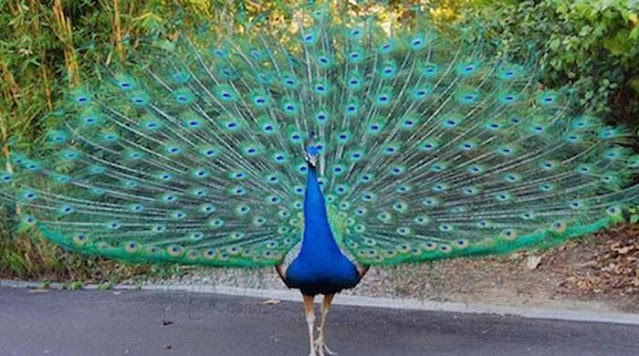 |
| Tharparkar Peacock |
Underground Water:
Fortunately for the people of Thar, Sindh Engro Coal Mining Company has discovered significant amount of underground water, the most precious commodity in drought-hit Tharparkar region of Pakistan. Syed Abul Fazal Rizvi, Chief Executive Officer (CEO) of SECMC and Thar Foundation was quoted by Business Recorder as saying, “While carrying out hydrogeological studies for Thar coal project, we found out abundant water reserves of groundwater at the depth of 450 plus feet in the whole of the desert region." The available water in Thar has the potential to irrigate thousands of acres of land by applying modern watering methods such as drip and sprinkler systems, he added.
Rizvi said in collaboration with Pakistan Agriculture Research Council (PARC) and Institute of Sustainable Halophyte Utilization of Karachi University, Thar Foundation has produced commercially viable amounts of Apple Ber, guava, dates, Rhodes Grass (for livestock feed), Castor (cooking) Oil, Cluster Bean (guar), and vegetables. Utilizing the underground saline water, the foundation has piloted a 40-acre plot of land to grow fruits, vegetables, and local grass species and established Sindh’s largest private sector nursery which nurtures 500,000 saplings at a time. It has also set up a 68-acre Green Park which has grown local species of trees that comprises Neem, Babur, Roheero, Kandi, Moringa, and other species.
Gorano Pond has begun to attract a lot of migratory birds that feed on fish. Some species, the report said, have even started nesting on the partly submerged tree tops, according to the Turkish Andolu News Agency.
 |
| Tharparkar Peacock: Courtesy Emmanuel Guddu via Gulf News |
Moringa Trees Fight Malnutrition:
Aga Khan University and Sindh Agriculture University are jointly promoting Moringa tree planting in Pakistan's Thar desert to fight malnutrition, according to multiple media reports. Moringa has gained popularity as superfood in the West in recent years. People of drought-stricken Tharparkar have been suffering from malnutrition and disease in the middle of a long-running drought in the region. Sindh Agriculture University, Tando Jam, and the Aga Khan University will plant 40,000 moringa tree seedlings in Matiari, a rural district in central Sindh, in an effort to improve the health of malnourished mothers, children and adolescents in the area. The moringa tree plantation campaign has been funded by the Prince Sadruddin Aga Khan Fund for the Environment, a $10 million fund dedicated to practical solutions to environmental problems.
Moringa tree packs 92 essential nutrients, 46 antioxidants, 36 anti-inflammatories and 18 amino acids which help your body heal and build muscle. Native to South Asia, the hardy and drought-resistant Moringa tree can contribute to everything from better vision and stronger immune system to healthier bones and skin. Moringa has 25 times more iron than spinach, 17 times more calcium than milk, 15 times more potassium than bananas and nine times more protein than yoghurt, according to Dr. Shahzad Basra of the University of Agriculture in Faisalabad, Pakistan. “It also has seven times more vitamin C compared to oranges, over 10 times more vitamin A compared to carrots and three times more vitamin E compared to almonds", he added. No wonder the powder made from Moringa leaves is sold as superfood in the West. Global market for Moringa products is estimated at $5 billion and growing at 8% CAGR.
Fish Production For Protein:
Dewatering operation of the deep aquifers underneath the coal deposits has discovered large amounts of water which has been removed and pumped into a lake called Gorano Pond. This has opened up organic fish farming in the region.
When SECMC launched its Female Dump Truck Driver Program near the town of Islamkot in Thar, Kiran Sadhwani, a female engineer, visited several villages to motivate women to apply for the job and empower themselves, according to Express Tribune newspaper. “Not all women who are working as dumper drivers are poor or in dire need of money. It is just that they want to work and earn a living for themselves and improve the lives of their families,” she told the paper. SEMC is hiring 30 women truck drivers for its Thar projects, according to Dawn newspaper.
Thar Drought
China-Pakistan Economic Corridor
Abundant, Cheap Coal Electricity For Pakistan
Pakistan Health Indicators
Pakistan Sees Robust Growth in Consumption of Energy, Cement and Steel
Moringa Tree to Fight Malnutrition in Sindh
Pakistan's Social Sector Indicators
CPEC Transforming Least Developed Parts of Pakistan
China-Pakistan Economic Corridor FDI
Mobile Broadband Subscriptions and Smartphone Sales
Pakistan in MSCI Emerging Market Index
Views: 979
-
Comment by Riaz Haq on August 19, 2022 at 8:51am
-
Social welfare programs are a critical and challenging subject for developing countries such as Pakistan. Constrained by limited funds, reach and effective management, the Government is caught between a rock and a hard place when it comes to deciding where and how to deploy its resources, especially in times of crisis.
In these scenarios, individual and corporate philanthropy takes on particular importance. Pakistan may not be a wealthy country, but its people are rich at heart. In an article in Stanford Social Innovation Review, it was postulated that Pakistani’s contribute more than one percent of the annual GDP to charity, pushing it into the ranks of far wealthier countries like the United Kingdom (1.3 percent GDP to charity) and Canada (1.2 percent of GDP). A study conducted by Pakistan Centre for Philanthropy shows that around 98 percent of Pakistanis give in some form or another, around PKR 240 billion (more than $2 billion) annually to charity.
https://dailynewspk.com/csr-how-organisations-should-respond-to-cov...
-
-
IMF program in Pakistan undermines renewable energy roll-out - Bretton Woods Project
https://www.brettonwoodsproject.org/2022/04/imf-programme-in-pakist...
The unprecedented rise in solar photovoltaic (PV) installations in Pakistan’s off-grid and weak grid regions in recent years has been a windfall for vulnerable communities. Buoyed by the GOP’s decision to waive taxes on solar products in 2014, the growth reflects solar’s suitability for powering tube wells, water pumps and purification systems for drinking water and irrigation in remote and water-stressed areas. The primary beneficiaries of this boom have been poor farming communities – especially women – who have historically struggled with access to electricity and water. Solar technology, however, is still a largely import-based market, and growth is likely to be slowed with users unable to meet higher prices.
-
-
Road projects: Sindh prepares projects under PSDP
https://tribune.com.pk/story/2341897/sindh-prepares-projects-under-...
Road sector schemes of over Rs85 billion were discussed and cleared in the meeting for the next federal PSDP. They included construction of the 189km Coastal Highway from Keti Bunder to Ali Bunder and building of the road to connect Shaheed Benazirabad, Sanghar to Matiari district.
Other projects included dualisation of the 31km track from Tando Allahyar to Tando Adam Road, construction of a 150km road from Rahri (Sukkur) to Guddu Barrage via Khanpur Mahar, Jarwar, Mirpur Mathelo and Mohammadpur. Also part of the proposed projects was the construction of a 135km additional carriageway of Mehran Highway (Nawabshah-raniput) and a 40km road from Thatta to Jhimpir.
There was also the construction of a 203km road from Sanghar to Salehpat via Mudh Jamraho up to Rahri Road and the 45km additional carriageway of road from Naudero to Lakhi.
-
-
LONGi receives CSR award from Pakistan’s National Forum for Environment and Health
https://www.pv-tech.org/industry-updates/longi-receives-csr-award-f...
LONGi has announced that it has received a CSR award from the Pakistani National Forum for Environment and Health (NFEH) and the CSR Club for its outstanding contribution to the country’s environmental status.
Established in June 1999, the NFEH is affiliated with the United Nations Environmental Program (UNEP) and its activities are supported by the Pakistani government’s Ministry for Climate Change.
Ali Majid, LONGi General Manager for Pakistan, received the award on behalf of the company, commenting: “We are delighted to receive this award from the NFEH and CSR Club. As a global leader in solar technology, we believe it is our responsibility to create a sustainable future for generations to come. We are committed to developing innovative solutions that reduce carbon emissions and promote sustainable energy consumption and we will continue to work towards a greener future.”
-
-
Pakistan corporate philanthropy sees ‘landmark growth’ amid economic turmoil
https://www.alliancemagazine.org/blog/pakistan-corporate-philanthro...
Pakistan’s corporate philanthropy has achieved ‘landmark growth’ despite a turbulent economy, according to new figures released by the Pakistan Centre for Philanthropy.
In 2023, businesses allocated a combined 25.4 billion Pakistani rupees ($90 million) for philanthropic causes.
Public listed companies had the largest share of corporate philanthropy, providing 18.23 billion Pakistani rupees ($64 million).
Separately, publicly owned company not listed on a stock exchange contributed 3.28 billion rupees ($1.1 million). Private companies donated 3.93 billion rupees ($1.4 million).
Pakistan’s glass and ceramics businesses contributed over 7 per cent of their total profits, the highest share of any sector.
The top 100 companies listed on Pakistan’s stock exchange gave 15.24 billion rupees ($54 million), while the top 30 companies contributed PKR 8.80 billion ($3.1 million), which Pakistan Centre for Philanthropy says has set ‘a benchmark for charitable giving and aligning with national development goals.’
Pakistan’s Minister for Finance & Revenue Muhammad Aurangzeb, in an address made to business leaders, said the corporate philanthropy was helping to advance the country’s socio-economic development, given a volatile and shaky economic environment.
Economy powered by loans and corruption
A new report published by the International Monetary Fund in November has warned that corruption in Pakistan is behind an economic crisis driven by ‘state capture’ – where public policy is manipulated to benefit a narrow circle of political and business elites.
The 186-page report, requested by Pakistan’s government, says corruption is ‘persistent and corrosive’, eroding public trust and undermining economic stability.
Improved accountability could improve the country’s gross domestic product (GDP), currently at $410 billion.
Pakistani philanthropy has been hit hard by economic turmoil, with persistent cutbacks and staff laid off from charitable projects.
Almost every government – both military or civilian – has turned to International Monetary Fund bailouts 25 times since 1958, giving it the accolade of being one of the fund’s most frequent borrowers.
-
-
Tree planting campaigns in Tharparkar are .Major Initiatives and Organizations
- Thar Foundation & IUCN Pakistan: Collaborative projects have driven over a million tree plantations, established Pakistan's first desert-region Flora Conservation Station at Thar Coal Block II, and promoted saline agriculture and biodiversity. According to Dawn, “Over the past few years, it has become home to one of Pakistan's most ambitious community-driven biodiversity conservation efforts, led by Thar Foundation and IUCN Pakistan.”
- SECMC & Thar Million Tree Nursery: The Sindh Engro Coal Mining Company developed a massive nursery and used the dense Miyawaki forest technique across 100 acres in Thar Block-2.
- Local & Government Drives: Local authorities, including Additional Deputy Commissioner-I Hashim Masood, have led meetings reviewing monsoon tree-planting targets and survival rates across the district. Community groups like the Participatory Village Development Programme (PVDP) with their "Cool the Earth" initiative and the Young Social Reformers (YSR) continue local drives in areas like Mithi.
-
-
How Thar Foundation and IUCN Pakistan are turning Thar into a model of sustainability - Branded Content - DAWN.COM
https://www.dawn.com/news/1952158
A 2022 IUCN study found that these trees have already absorbed over 123,000 tonnes of carbon. With a survival rate of 72 per cent, the forest stands as a living symbol of endurance and renewal.
“This project is special because it reflects the resilience of Thar’s people. When nurtured well, just like these trees, they thrive and turn what once seemed impossible into reality,” said Amir, reflecting on the programme’s success.
To sustain this green cover, drip irrigation and saline water utilisation techniques have been deployed, showing how technology and indigenous knowledge can come together to transform life in the desert.
An agricultural revolution against all odds
Frequent drought cycles in Thar create a domino effect for communities that depend on rainwater for growing fodder and crops. To counter this, Thar Foundation and IUCN have introduced saline agriculture, an innovative method of cultivating salt-tolerant crops that offers new hope and livelihoods to local farmers.
“We had no idea that crops could grow using saline water,” said 33-year-old farmer Manzoor Das. “The SECMC and Thar Foundation teams guided us and encouraged us to try it. Now we are seeing real results.”
With technical support, Manzoor began cultivating ladyfinger and tomatoes, both of which now thrive on his land and meet his family’s food needs. Encouraged by this success, he expanded to groundnuts and nutrient-rich fodder crops like Rhodes and King grass, ensuring feed for his livestock throughout the year.
Adding to his achievements, Manzoor also planted apple ber (jujube) trees on one acre of land. “The trees have grown well,” he said proudly. “This year, they will bear fruit for the first time.”
Across Thar, more than 165 acres of once-barren land have been transformed into productive farmland through modern irrigation systems and crop trials. Farmers are now cultivating apple ber, sesbania grass and other drought-resistant species.
For farmers like Manzoor, who had never experienced a steady income from agriculture, this means self-reliance and dignity. The saline agriculture project has tested over ten crop species, proving that Thar’s communities can grow food, earn livelihoods and conserve biodiversity at the same time.
Conserving biodiversity for future generations
Biodiversity loss is often invisible until it is too late. In Thar, however, some of the most visible guardians of nature are its birds, particularly vultures. When vulture populations collapsed across South Asia due to toxic veterinary drugs, Thar became one of their last remaining safe havens.
In 2018, Thar Foundation and IUCN launched a vulture conservation project to protect nesting sites and raise awareness among nearby communities. Through extensive engagement, they identified and safeguarded 250 nests, installed artificial nesting platforms and involved 15,000 residents across 48 villages. More than 2,000 young people were trained on the ecological importance of vultures.
Thanks to these sustained efforts, Thar is now recognised as a Vulture Safe Zone, with its vulture population recovering and making it a rare conservation success story in Pakistan.
The IUCN-SECMC partnership continues to build on over four years of work, including a comprehensive ecological baseline survey of Tharparkar’s flora and fauna. The survey documented 149 plant species, including two globally threatened trees, the Indian Bdellium and Desert Teak. Many of these native species provide essential ecosystem services that sustain both wildlife and local livelihoods.
“The Thar flora includes some of the most unique and threatened plant species in the world, including those listed on the IUCN Red List,” said Mahmood Akhtar Cheema, Country Representative, IUCN Pakistan. “The collaboration between IUCN and Thar Foundation is not only contributing to local ecological resilience but also advancing global biodiversity goals.”
Comment
- ‹ Previous
- 1
- 2
- 3
- 4
- Next ›
Twitter Feed
Live Traffic Feed
Sponsored Links
South Asia Investor Review
Investor Information Blog
Haq's Musings
Riaz Haq's Current Affairs Blog
Please Bookmark This Page!
Blog Posts
Nepal Tragedy Raises Fears of Massive Glacier Melt in Pakistani Mountains
Northern Pakistan is home to over 13,000 glaciers which pose a risk of catastrophic flash floods similar to the recent flash floods in Nepal. Pakistani officials have warned that shifts in glacier behavior are increasing the risk of glacial lake outburst floods (GLOF), particularly in Gilgit-Baltistan and Khyber Pakhtunkhwa, where communities face growing exposure to sudden flooding and landslides. …
ContinueAI on Wheels: My Experience With Tesla Full Self Drive (FSD)

Posted by Riaz Haq on August 24, 2026 at 5:00pm — 2 Comments
© 2026 Created by Riaz Haq.
Powered by


You need to be a member of PakAlumni Worldwide: The Global Social Network to add comments!
Join PakAlumni Worldwide: The Global Social Network