PakAlumni Worldwide: The Global Social Network
The Global Social Network
Can Pakistan Stand Up to India in Conventional War?
Newly-elected Prime Minister Narendra Modi government's rhetoric about "jaw-breaking" (munh tod) policy toward Pakistan is the latest manifestation of a disease described by Indian diplomat Sashi Tharoor as "India's Israel envy".
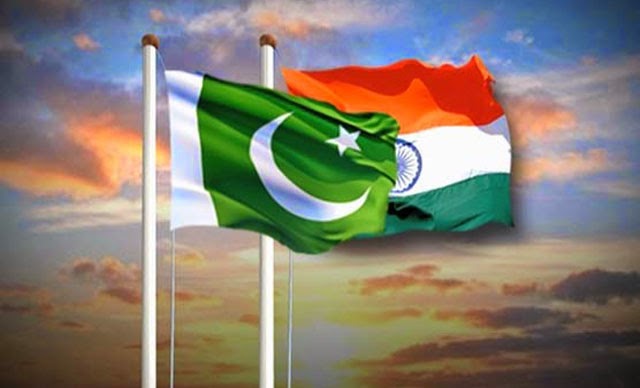
India's Israel Envy:
India's Israel envy is reinforced by the Hindu Nationalists over-estimating their country's strength while under-estimating Pakistan's. It's aided by India's western allies' belief that Pakistan can not fight a conventional war with india and its only option to defend itself would be to quickly escalate the conflict into a full scale nuclear war.
Indian MP Mani Shankar Aiyar has summed up India's war rhetoric against Pakistan in a recent Op Ed as follows:
(Indian Defense Minister) Arun Jaitley thumps his chest and proclaims that we have given the Pakis a "jaw-breaking reply" (munh tod jawab). Oh yeah? The Pakistanis are still there - with their jaw quite intact and a nuclear arsenal nestling in their pockets. (Indian Home Minister) Rajnath Singh adds that the Pakis had best understand that "a new era has dawned". How? Is retaliatory fire a BJP innovation? Or is it that we have we ceased being peace-loving and become a war-mongering nation? And (Indian Prime Minister Narendra) Modi thunders that his guns will do the talking (boli nahin, goli). Yes - and for how long?
India's Delusions:
Indians, particularly Hindu Nationalists, have become victims of their own hype as illustrated by Times of India's US correspondent who checked into the veracity claimed achievements of Indians in America and found such claims to be highly exaggerated: "On Monday, the Indian government itself consecrated the oft-circulated fiction as fact in Parliament, possibly laying itself open to a breach of privilege. By relaying to Rajya Sabha members (as reported in The Times of India) a host of unsubstantiated and inflated figures about Indian professionals in US, the government also made a laughing stock of itself." The Times of India's Chidanand Rajghatta ended up debunking all of the inflated claims about the number of Indian physicians, NASA scientists and Microsoft engineers in America.
Similarly, a US GAO investigation found that India's IT exports to the United States are exaggerated by as much as 20 times. The biggest source of discrepancy that GAO found had to do with India including temporary workers' salaries in the United States. India continuously and cumulatively adds all the earnings of its migrants to US in its software exports. If 50,000 Indians migrate on H1B visas each year, and they each earn $50,000 a year, that's a $2.5 billion addition to their exports each year. Cumulatively over 10 years, this would be $25 billion in exports year after year and growing.
Since the end of the Cold War, the West has been hyping India's economic growth to persuade the developing world that democracy and capitalism offer a superior alternative to rapid development through state guided capitalism under an authoritarian regime---a system that has worked well in Asia for countries like the Asian Tigers and China. This has further fooled Hindu Nationalists into accepting such hype as real. It ignores the basic fact that India is home to the world's largest population of poor, hungry and illiterates. It also discounts the reality that Indian kids rank near the bottom on international assessment tests like PISA and TIMSS due to the poor quality of education they receive. The hype has emboldened many Indians, including the BJP leadership, to push neighbors around.
Pakistan's Response:
Pakistan has so far not responded to the Indian rhetoric in kind. It might create an impression that Pakistan is weak and unable to respond to such threats with its conventional force. So let's examine the reality.
Ground War:
In the event of a ground war, Pakistan will most likely follow its "offensive defense" doctrine with its two strike corps pushing deep inside Indian territory. Though Indian military has significant numerical advantage, Pakistan's armor is as strong, if not stronger, than the Indian armor.
Before embarking on further offensive, gains shall be consolidated. Pakistan is also as strong, if not stronger, in terms of ballistic and cruise missiles inventory and capability, putting all of India within its range. These missiles are capable of carrying conventional and nuclear warheads.
 |
| India-Pakistan Firepower Comparison Source: GlobalFirepower.com |
In 1990 the Central Corps of Reserves was created to fight in the desert sectors, where enemy land offensives are expected. These dual capable formations trained for offensive and holding actions are fully mechanized.
The Pakistan Army has ten Corps including the newly formed Strategic Corps. The Army has twenty-six divisions (eight less than India). Two more divisions were raised as Corps reserves for V and XXXI Corps. The Army has two armored divisions, and ten independent armored brigades. Presently one hundred thousand troops are stationed on the Pak-Afghan border to fight terror.
The Special Service Group – SSG - comprises two airborne Brigades, i.e. six battalions. Pakistan Army has 360 helicopters, over two thousand heavy guns, and 3000 APC’s. Its main anti-tank weapons are Tow, Tow Mk II, Bakter Shiken and FGM 148 ATGM. The Army Air Defense Command has S.A- 7 Grail, General Dynamics FIM-92 Stinger, GD FIM Red Eye, and ANZA Mk-I, Mk-II, Mk-III and HQ 2 B surface to air missiles. Radar controlled Oerlikon is the standard Ack Ack weapon system.
The ballistic missile inventory of the Army is substantial. It comprises intermediate range Ghauri III and Shaheen III; medium range Ghauri I and II and Shaheen II, and short range tactical Hatf I- B, Abdali, Ghaznavi, Nasr, Shaheen I and M -11 missiles. All the ballistic missiles can carry nuclear warheads....some can carry multiple warheads. Nuclear and conventional weapon capable Babur Cruise missile is the new addition to Pakistan’s strategic weapon inventory. It has stealth features to evade radar to penetrate India's air air-space to hit targets. The number of ballistic missiles and warheads are almost the same as those of India. So there is a parity in nuclear weapons, which is a deterrent.
Tactical missile which can be tipped with miniaturized nuclear warhead is the latest addition to Pakistan's arsenal. It's a battlefield weapon designed to destroy enemy troop concentrations poised against Pakistan.
Air War:
Pakistan has about 900 aircraft compared to India's 1800, giving India 2:1 numerical advantage over Pakistan. India's biggest advantage is in transport aircraft (700 vs 230) while Pakistan has some numerical advantage in two areas: Airborne radars (9 vs 3) and attack helicopters (48 vs 20).
Pakistan Air Force has over 100 upgraded F-16s and 200 rebuilt Mirage- 3's (for night air defense) and Mirage-5's for the strike role. They can carry nuclear weapons. They have been upgraded with new weapon systems, radars, and avionics. Additionally, the PAF 150 F-7's including 55 latest F-7 PG’s. Manufacture of 150 JF 17 Thunder fighters (jointly designed) is underway at the Pakistan Aeronautical Complex Kamra. The JF-17 Thunder is a 4th generation fly by wire multi-role fighter aircraft. Eight are already in PAF service. An order has been placed with China for the purchase of 36 JF-10, a Mach 2.3 -5th generation multi-role fighter, comparable in performance to the Su-30 Mk-1 with the Indian Air Force.
In spite of Indian Air Force's numerical superiority since independence in 1947, Pakistan Air Force has performed well against it in several wars. The PAF pilots have always been among the best trained in the world.
Complimenting the Pakistan Air Force pilots, the legendary US Air Force pilot Chuck Yeager who broke the sound barrier, wrote in his biography "The Right Stuff": "This Air Force (the PAF), is second to none". He continued: "The (1971) air war lasted two weeks and the Pakistanis scored a
three-to-one kill ratio, knocking out 102 Russian-made Indian jets and losing thirty-four airplanes of their own. I'm certain about the figures because I went out several times a day in a chopper and counted the wrecks below." "They were really good, aggressive dogfighters and proficient in gunnery and air combat tactics. I was damned impressed. Those guys just lived and breathed flying. "
In 1965, Roy Meloni of the ABC reported: "Pakistan claims to have destroyed something like 1/3rd the Indian Air Force, and foreign observers, who are in a position to know say that Pakistani pilots have claimed even higher kills than this; but the Pakistani Air Force are being scrupulously honest in evaluating these claims. They are crediting Pakistan Air Force only those killings that can be checked from other sources."
Naval War:
Of the three branches of the military, India's advantage over Pakistan is the greatest in naval strength. Pakistan has just 84 sea-going vessels of various kinds versus India's 184.
Pakistan Navy can still inflict substantial damage on the Indian Navy. The Indian Navy has 17 submarines. Pakistan Navy has ten, some are brand new and equipped with AIP. Indian Navy has 28 war ships, Pakistan Navy has eleven.
As seen in the past wars, India will attempt a naval blockade of Pakistan. Here's how MIT's Christopher Clary discusses in his doctoral thesis the Indian Navy's ability to repeat a blockade of Pakistan again:
"Most analyses do not account adequately for how difficult it would be for the (Indian) navy to have a substantial impact in a short period of time. Establishing even a partial blockade takes time, and it takes even more time for that blockade to cause shortages on land that are noticeable. As the British strategist Julian Corbett noted in 1911, "it is almost impossible that a war can be decided by naval action alone. Unaided, naval pressure can only work by a process of exhaustion. Its effects must always be slow…. ". Meanwhile, over the last decade, Pakistan has increased its ability to resist a blockade. In addition to the main commercial port of Karachi, Pakistan has opened up new ports further west in Ormara and Gwadar and built road infrastructure to distribute goods from those ports to Pakistan's heartland. To close off these ports to neutral shipping could prove particularly difficult since Gwadar and the edge of Pakistani waters are very close to the Gulf of Oman, host to the international shipping lanes for vessels exiting the Persian Gulf. A loose blockade far from shore would minimize risks from Pakistan's land-based countermeasures but also increase risks of creating a political incident with neutral vessels."
Summary:
The probability of India prevailing over Pakistan in a conventional war now are very remote at best. Any advantage that India seeks over Pakistan would require it to pay a very heavy price in terms of massive destruction of India's industry, economy and infrastructure that would set India back many decades.
In the event that the India-Pakistan war spirals out of control and escalates into a full-scale nuclear confrontation, the entire region, including China, would suffer irreparable damage. Even a limited nuclear exchange would devastate food production around the world, according to International Physicians for the Prevention of Nuclear War, as reported in the media. It would set off a global famine that could kill two billion people and effectively end human civilization as we know it.
I hope that better sense will prevail in New Delhi and India's BJP government will desists from any military adventurism against Pakistan. The consequences of any miscalculation by Narendra Modi will be horrible, not just for both the countries, but the entire humanity.
Here's a video discussion on this and other current topics:
India-Pakistan Tensions; End of TUQ Dharna; Honors for Malala; Ebol... from WBT TV on Vimeo.
Here's an interview of former President Musharraf on an Indian TV channel:
Parvez Musharraf blasts Modi in an Indian Talk... by zemtvRelated Links:
Haq's Musings
India Teaching Young Students Akhand Bharat
Pakistan Army at the Gates of Delhi
India's War Myths
India-Pakistan Military Balance
Pakistan Army Capabilities
Modi's Pakistan Policy
India's Israel Envy
Can India Do a Lebanon in Pakistan?
Views: 4003
-
Comment by Riaz Haq 4 hours ago
-
Subhan Javed 786
@SubhanJaved911
Jinnah Naval Base (JNB) in Ormara, Balochistan 🇵🇰 is fully operational after 26 years ...
Established in June 2000 by J.V of Turkish, Belgium and local firms, it is undergoing Phase II expansion and strategic modernization worth 90 billion Rs (330 million $) to serve as the Pakistan Navy's surface fleet and submarine hub.
Naval village 🏡 with state of the art residential complex, spread over 600 acres for thousands of sailors and marines is practically complete now along with following ;
100 bed hospital Darman Jah✔
Bahria model school/college ✔
132 KV electricity grid ✔
Basol dam for 3 million gallons daily water supply ✔
CSD, Moque, Park, tourist resorts, desalination plant ✔
Makran highway upgraded ✔
P.N Cadet College Ormara ✔
It can accomodate 8 warships and 4 submarines along with ;
Coastal defence battery ✅
Army Air Defence 360° ✅
Army rocket forces com ✅
Missile/ammo. storage ✅
VLF/air,surface radars ✅
POL/naval air station ♻️
Dredging main channel ♻️
Floating dock and MRO ♻️
Fully integrated into PAF-PN network centric warfare by placing electronic warfare and fighter + maritime patrol assets nearby.
Due to marine pollution, congestion and closeness with indian 🇮🇳 border of Karachi complex, Ormara fishing town of 10k population was selected 350 km by road westward !
Pakistan coast guard, maritime security agency and frontier corps have also set up their camps to keep BLA 🔫 under check and protect Baloch civilians who are serving en mass and enjoying fruits of development.
Local govt high school and college 🏤 for boys and girls is supported by Pak navy + rural health centre is provided with staff. Education/medical in cantt areas is free for Baloch people throughout makran.
Comment
- ‹ Previous
- 1
- …
- 12
- 13
- 14
- Next ›
Twitter Feed
Live Traffic Feed
Sponsored Links
South Asia Investor Review
Investor Information Blog
Haq's Musings
Riaz Haq's Current Affairs Blog
Please Bookmark This Page!
Blog Posts
Can Pakistan's Small Nuclear Arsenal Survive India's First Strike?
Possession of nuclear weapons is considered "the ultimate deterrent" by eminent international geopolitical analysts like Professor John Mearsheimer of Chicago University. However, it appears that Mearsheimer has also raised questions about the survivability of a small land-based nuclear arsenal in the event of a first strike by a nuclear-armed adversary. Is this likely to tempt India to launch first strike against Pakistan's nuclear assets?…
ContinuePosted by Riaz Haq on November 13, 2026 at 5:00pm — 3 Comments
How Significant is Pakistan's Fa'az Air-to-Air Missile Flight Test?
Pakistan's recent successful flight test of Fa'az, its indigenous air-to-air missile, has garnered significant international attention. What is its significance? First, it is a major breakthrough for its national defense industry, elevating Pakistan into an elite, relatively small group of nations possessing the complex engineering expertise required to build weapons capable of hunting fighter jets. Second, it enhances the country's self-reliance and makes it less vulnerable…
ContinuePosted by Riaz Haq on November 6, 2026 at 10:30am — 5 Comments
© 2026 Created by Riaz Haq.
Powered by


You need to be a member of PakAlumni Worldwide: The Global Social Network to add comments!
Join PakAlumni Worldwide: The Global Social Network