PakAlumni Worldwide: The Global Social Network
The Global Social Network
Can Pakistan Stand Up to India in Conventional War?
Newly-elected Prime Minister Narendra Modi government's rhetoric about "jaw-breaking" (munh tod) policy toward Pakistan is the latest manifestation of a disease described by Indian diplomat Sashi Tharoor as "India's Israel envy".
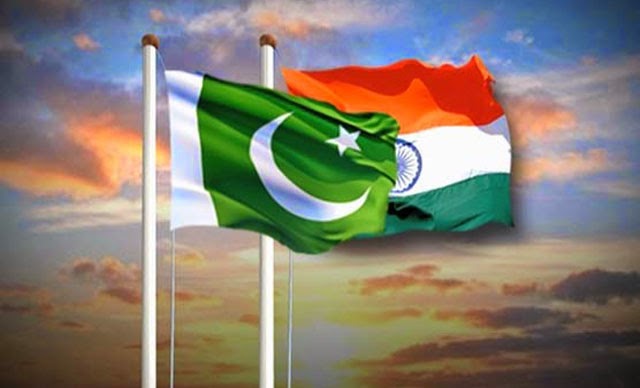
India's Israel Envy:
India's Israel envy is reinforced by the Hindu Nationalists over-estimating their country's strength while under-estimating Pakistan's. It's aided by India's western allies' belief that Pakistan can not fight a conventional war with india and its only option to defend itself would be to quickly escalate the conflict into a full scale nuclear war.
Indian MP Mani Shankar Aiyar has summed up India's war rhetoric against Pakistan in a recent Op Ed as follows:
(Indian Defense Minister) Arun Jaitley thumps his chest and proclaims that we have given the Pakis a "jaw-breaking reply" (munh tod jawab). Oh yeah? The Pakistanis are still there - with their jaw quite intact and a nuclear arsenal nestling in their pockets. (Indian Home Minister) Rajnath Singh adds that the Pakis had best understand that "a new era has dawned". How? Is retaliatory fire a BJP innovation? Or is it that we have we ceased being peace-loving and become a war-mongering nation? And (Indian Prime Minister Narendra) Modi thunders that his guns will do the talking (boli nahin, goli). Yes - and for how long?
India's Delusions:
Indians, particularly Hindu Nationalists, have become victims of their own hype as illustrated by Times of India's US correspondent who checked into the veracity claimed achievements of Indians in America and found such claims to be highly exaggerated: "On Monday, the Indian government itself consecrated the oft-circulated fiction as fact in Parliament, possibly laying itself open to a breach of privilege. By relaying to Rajya Sabha members (as reported in The Times of India) a host of unsubstantiated and inflated figures about Indian professionals in US, the government also made a laughing stock of itself." The Times of India's Chidanand Rajghatta ended up debunking all of the inflated claims about the number of Indian physicians, NASA scientists and Microsoft engineers in America.
Similarly, a US GAO investigation found that India's IT exports to the United States are exaggerated by as much as 20 times. The biggest source of discrepancy that GAO found had to do with India including temporary workers' salaries in the United States. India continuously and cumulatively adds all the earnings of its migrants to US in its software exports. If 50,000 Indians migrate on H1B visas each year, and they each earn $50,000 a year, that's a $2.5 billion addition to their exports each year. Cumulatively over 10 years, this would be $25 billion in exports year after year and growing.
Since the end of the Cold War, the West has been hyping India's economic growth to persuade the developing world that democracy and capitalism offer a superior alternative to rapid development through state guided capitalism under an authoritarian regime---a system that has worked well in Asia for countries like the Asian Tigers and China. This has further fooled Hindu Nationalists into accepting such hype as real. It ignores the basic fact that India is home to the world's largest population of poor, hungry and illiterates. It also discounts the reality that Indian kids rank near the bottom on international assessment tests like PISA and TIMSS due to the poor quality of education they receive. The hype has emboldened many Indians, including the BJP leadership, to push neighbors around.
Pakistan's Response:
Pakistan has so far not responded to the Indian rhetoric in kind. It might create an impression that Pakistan is weak and unable to respond to such threats with its conventional force. So let's examine the reality.
Ground War:
In the event of a ground war, Pakistan will most likely follow its "offensive defense" doctrine with its two strike corps pushing deep inside Indian territory. Though Indian military has significant numerical advantage, Pakistan's armor is as strong, if not stronger, than the Indian armor.
Before embarking on further offensive, gains shall be consolidated. Pakistan is also as strong, if not stronger, in terms of ballistic and cruise missiles inventory and capability, putting all of India within its range. These missiles are capable of carrying conventional and nuclear warheads.
 |
| India-Pakistan Firepower Comparison Source: GlobalFirepower.com |
In 1990 the Central Corps of Reserves was created to fight in the desert sectors, where enemy land offensives are expected. These dual capable formations trained for offensive and holding actions are fully mechanized.
The Pakistan Army has ten Corps including the newly formed Strategic Corps. The Army has twenty-six divisions (eight less than India). Two more divisions were raised as Corps reserves for V and XXXI Corps. The Army has two armored divisions, and ten independent armored brigades. Presently one hundred thousand troops are stationed on the Pak-Afghan border to fight terror.
The Special Service Group – SSG - comprises two airborne Brigades, i.e. six battalions. Pakistan Army has 360 helicopters, over two thousand heavy guns, and 3000 APC’s. Its main anti-tank weapons are Tow, Tow Mk II, Bakter Shiken and FGM 148 ATGM. The Army Air Defense Command has S.A- 7 Grail, General Dynamics FIM-92 Stinger, GD FIM Red Eye, and ANZA Mk-I, Mk-II, Mk-III and HQ 2 B surface to air missiles. Radar controlled Oerlikon is the standard Ack Ack weapon system.
The ballistic missile inventory of the Army is substantial. It comprises intermediate range Ghauri III and Shaheen III; medium range Ghauri I and II and Shaheen II, and short range tactical Hatf I- B, Abdali, Ghaznavi, Nasr, Shaheen I and M -11 missiles. All the ballistic missiles can carry nuclear warheads....some can carry multiple warheads. Nuclear and conventional weapon capable Babur Cruise missile is the new addition to Pakistan’s strategic weapon inventory. It has stealth features to evade radar to penetrate India's air air-space to hit targets. The number of ballistic missiles and warheads are almost the same as those of India. So there is a parity in nuclear weapons, which is a deterrent.
Tactical missile which can be tipped with miniaturized nuclear warhead is the latest addition to Pakistan's arsenal. It's a battlefield weapon designed to destroy enemy troop concentrations poised against Pakistan.
Air War:
Pakistan has about 900 aircraft compared to India's 1800, giving India 2:1 numerical advantage over Pakistan. India's biggest advantage is in transport aircraft (700 vs 230) while Pakistan has some numerical advantage in two areas: Airborne radars (9 vs 3) and attack helicopters (48 vs 20).
Pakistan Air Force has over 100 upgraded F-16s and 200 rebuilt Mirage- 3's (for night air defense) and Mirage-5's for the strike role. They can carry nuclear weapons. They have been upgraded with new weapon systems, radars, and avionics. Additionally, the PAF 150 F-7's including 55 latest F-7 PG’s. Manufacture of 150 JF 17 Thunder fighters (jointly designed) is underway at the Pakistan Aeronautical Complex Kamra. The JF-17 Thunder is a 4th generation fly by wire multi-role fighter aircraft. Eight are already in PAF service. An order has been placed with China for the purchase of 36 JF-10, a Mach 2.3 -5th generation multi-role fighter, comparable in performance to the Su-30 Mk-1 with the Indian Air Force.
In spite of Indian Air Force's numerical superiority since independence in 1947, Pakistan Air Force has performed well against it in several wars. The PAF pilots have always been among the best trained in the world.
Complimenting the Pakistan Air Force pilots, the legendary US Air Force pilot Chuck Yeager who broke the sound barrier, wrote in his biography "The Right Stuff": "This Air Force (the PAF), is second to none". He continued: "The (1971) air war lasted two weeks and the Pakistanis scored a
three-to-one kill ratio, knocking out 102 Russian-made Indian jets and losing thirty-four airplanes of their own. I'm certain about the figures because I went out several times a day in a chopper and counted the wrecks below." "They were really good, aggressive dogfighters and proficient in gunnery and air combat tactics. I was damned impressed. Those guys just lived and breathed flying. "
In 1965, Roy Meloni of the ABC reported: "Pakistan claims to have destroyed something like 1/3rd the Indian Air Force, and foreign observers, who are in a position to know say that Pakistani pilots have claimed even higher kills than this; but the Pakistani Air Force are being scrupulously honest in evaluating these claims. They are crediting Pakistan Air Force only those killings that can be checked from other sources."
Naval War:
Of the three branches of the military, India's advantage over Pakistan is the greatest in naval strength. Pakistan has just 84 sea-going vessels of various kinds versus India's 184.
Pakistan Navy can still inflict substantial damage on the Indian Navy. The Indian Navy has 17 submarines. Pakistan Navy has ten, some are brand new and equipped with AIP. Indian Navy has 28 war ships, Pakistan Navy has eleven.
As seen in the past wars, India will attempt a naval blockade of Pakistan. Here's how MIT's Christopher Clary discusses in his doctoral thesis the Indian Navy's ability to repeat a blockade of Pakistan again:
"Most analyses do not account adequately for how difficult it would be for the (Indian) navy to have a substantial impact in a short period of time. Establishing even a partial blockade takes time, and it takes even more time for that blockade to cause shortages on land that are noticeable. As the British strategist Julian Corbett noted in 1911, "it is almost impossible that a war can be decided by naval action alone. Unaided, naval pressure can only work by a process of exhaustion. Its effects must always be slow…. ". Meanwhile, over the last decade, Pakistan has increased its ability to resist a blockade. In addition to the main commercial port of Karachi, Pakistan has opened up new ports further west in Ormara and Gwadar and built road infrastructure to distribute goods from those ports to Pakistan's heartland. To close off these ports to neutral shipping could prove particularly difficult since Gwadar and the edge of Pakistani waters are very close to the Gulf of Oman, host to the international shipping lanes for vessels exiting the Persian Gulf. A loose blockade far from shore would minimize risks from Pakistan's land-based countermeasures but also increase risks of creating a political incident with neutral vessels."
Summary:
The probability of India prevailing over Pakistan in a conventional war now are very remote at best. Any advantage that India seeks over Pakistan would require it to pay a very heavy price in terms of massive destruction of India's industry, economy and infrastructure that would set India back many decades.
In the event that the India-Pakistan war spirals out of control and escalates into a full-scale nuclear confrontation, the entire region, including China, would suffer irreparable damage. Even a limited nuclear exchange would devastate food production around the world, according to International Physicians for the Prevention of Nuclear War, as reported in the media. It would set off a global famine that could kill two billion people and effectively end human civilization as we know it.
I hope that better sense will prevail in New Delhi and India's BJP government will desists from any military adventurism against Pakistan. The consequences of any miscalculation by Narendra Modi will be horrible, not just for both the countries, but the entire humanity.
Here's a video discussion on this and other current topics:
India-Pakistan Tensions; End of TUQ Dharna; Honors for Malala; Ebol... from WBT TV on Vimeo.
Here's an interview of former President Musharraf on an Indian TV channel:
Parvez Musharraf blasts Modi in an Indian Talk... by zemtvRelated Links:
Haq's Musings
India Teaching Young Students Akhand Bharat
Pakistan Army at the Gates of Delhi
India's War Myths
India-Pakistan Military Balance
Pakistan Army Capabilities
Modi's Pakistan Policy
India's Israel Envy
Can India Do a Lebanon in Pakistan?
Views: 3858
-
Comment by Riaz Haq on November 10, 2025 at 9:42am
-
Tactical Tipu
@Tactical_Tipu
Admiral Arun is very much right that India's Naval ASW backed by P-8 Poseidon will be a major player.
But fortunately enough for Pakistan Navy, Pakistan Air Force enjoys complete air superiority and these ASW platforms could not be protected by any fighter of the Indian Air Force.
https://x.com/Tactical_Tipu/status/1987796790339653902?s=20
-------------------------
Adm. Arun Prakash
@arunp2810
PN pursuit of Sea Denial strategy via acquisition of 8xYuan/Hangor class diesel subs will be countered by IN’s advanced ship/air ASW force. Of concern is this: by 2028 PN will field 11 subs equipped with air independent propulsion while we will have none! A 2022 backgrounder
https://x.com/arunp2810/status/1987470351329346043?s=20
----------------
Sushant Singh
@SushantSin
Confirmation from Pakistan’s top naval official that Chinese submarines will soon arrive in the South Asian country suggests India’s dominance of the Indian Ocean could be tested and that Beijing has overcome a major technical hurdle
https://x.com/SushantSin/status/1987366830508319002?s=20
-
-
AI Overview
Pakistan is developing indigenous Unmanned Underwater Vehicles (UUVs), such as the recently unveiled Israr UUV by Beyond Koncept, for missions like reconnaissance, surveillance, and mine countermeasures. These UUVs are part of a broader effort to enhance the Pakistan Navy's maritime capabilities and strategic self-sufficiency. The country has also made significant advancements in other unmanned systems, particularly its Unmanned Combat Aerial Vehicles (UCAVs) and other aerial drones.
Key developments in UUVs
Israr UUV: Unveiled in November 2025 by the Pakistani company Beyond Koncept at PIMEC 2025 and X.
Modular design: The Israr UUV is designed to be modular, allowing for the integration of different payloads and sensors for various missions.
Mission roles: It is intended for a range of naval operations, including intelligence
--------------
Pakistan Revealed New Naval Drones. Does it Signal a New Shift?
https://quwa.org/pakistan-navy-news/pakistani-companies-drive-naval...
At the 2025 Pakistan International Maritime Expo and Conference (PIMEC 2025), Pakistani defence industry firms showcased the unmanned aerial system (UAS), unmanned surface vehicle (USV) and autonomous underwater vehicle (AUV) designs they are currently developing.
These included the Stingray Technologies USV, as well as the Beyond Koncept “Muhassir” USV and “Israr” AUV. While marketed by seemingly private companies, each of these platforms appears to be in development at one of the National Engineering and Scientific Commission’s (NESCOM) entities.
NESCOM is the leading state-owned defence research, development, and production entity, with an ecosystem of subsidiaries specializing in different domains. One can see many NESCOM solutions in the product catalogues of Stingray Technologies and Beyond Koncept, thus revealing their actual nature as commercial arms of their respective NESCOM bureaus.
Global Industrial and Defence Solutions (GIDS), which generally works as the sales and marketing hub of NESCOM, also revealed a maritime variant of its forthcoming Shahpar III UAS. Interestingly, the concept videos of the maritime variant showcase a redesigned front fuselage alongside a series of specialized equipment, including sonobuoys, Eghraaq lightweight torpedoes, a synthetic aperture radar (SAR), and electronic and communications intelligence (ELINT/COMINT) suites.
Overall, the fact that no less than four different unmanned platforms are in development specifically for maritime purposes – i.e., three combat-capable USVs, at least one unmanned underwater vehicle (UUV)/AUV, and medium-altitude long-endurance (MALE) UAS – highlights how much more emphasis the Pakistan Navy (PN) is placing on uncrewed systems for its long-term procurement roadmap.
In July, the PN leadership stated that it will pursue uncrewed systems for its surface, sub-surface, and airborne requirements – each of these concepts serves as proof of Naval Headquarters’ (NHQ) seriousness in the matter.
-
-
On 03 January, Pakistan’s Inter Services Public Relations (ISPR) announced that the Pakistan Air Force (PAF) test-fired the Taimoor air-launched cruise missile (ALCM).
https://quwa.org/pakistan-air-force-news/600km-low-altitude-flight-...
According to the ISPR, the Taimoor ALCM “is capable of engaging enemy land and sea targets with high precision at a range of 600 kilometres, carrying a conventional warhead.” In addition, the ISPR highlighted the Taimoor ALCM’s ability to fly at “very low altitudes” to circumvent enemy air defence systems.
Video footage released by the ISPR showed that the Taimoor ALCM was launched from a PAF Mirage 3 ROSE (Retrofit of Strike Element) aircraft, which had been the primary carrier of the PAF’s ALCMs (i.e., the Ra’ad) and stand-off weapon (SOW) systems (i.e., H-2 and H-4) until the mid-to-late-2010s.
Background on the Taimoor ALCM
The Taimoor ALCM is the conventional-use variant of the Ra’ad-II, developed by the National Engineering and Scientific Commission (NESCOM) and unveiled in 2017. Initially, the Taimoor was positioned primarily for the export market by Global Defence and Industrial Solutions (GIDS), the sales and marketing wing of NESCOM. However, in recent years, Pakistan has been working towards re-leveraging its cruise missiles, which had been limited to the strategic (i.e., nuclear) deployment role for conventional warfighting.
Like the Ra’ad-II, the Taimoor ALCM has a range of 600 km (capped to 280-290 km for export purposes) and features the same low-observable (LO) airframe. It has a length of 4.38 m, wingspan of 3.20 m, and a total weight of 1,100 kg to 1,200 kg. The Taimoor has a cruise speed of Mach 0.7 to Mach 0.8, and can be launched at altitudes ranging from 610 m to 7,620 m (i.e., 2,000 ft to 25,000 ft).
In effect, the Taimoor and Ra’ad-II are the same missile, but given different designations to demarcate their conventional and nuclear deployment roles, respectively.
This recent test was significant in its own right as it validated a new capability not previously seen in the Ra’ad-series, i.e., terminal-stage guidance through the new imaging infrared (IIR) seeker.
This IIR seeker is likely the same one GIDS had shown across different NESCOM solutions at the 2024 International Defence Exhibition and Seminar (IDEAS 2024), from the Taimoor and Harbah cruise missiles to the in-development Rasoob 250 and AZB-81LR. Thus, this test was crucial, as it not only validated a current capability but also a key subsystem that will integrate with future solutions.
Pakistan’s Conventional Capability Push
The PAF’s induction of the Taimoor ALCM (i.e., re-leveraging the strategic Ra’ad/-II for the conventional role) reflects the Pakistani military’s wider push to spread guided strike capabilities beyond the traditional confines of strategic or nuclear deployment.
Historically, Pakistan’s guided munitions ecosystem skewed in two ways: First, it treated precision strike as a specialized mission area – e.g., anti-ship warfare (AShW) and selective attacks aimed at high-value targets (HVT). Second, the lack of industrial-scale production capacity meant that NESCOM’s solutions – e.g., the Ra’ad/II, Babur, etc – could only be built in small numbers. The constraint in missile output then meant that cruise missiles and ballistic missiles were, by default, treated as strategic deterrence assets, not high-tempo conventional warfighting systems.
-
-
@IndiasWorld_mag
#LongRead | “Over fifty years later, it can be argued that the Pakistan Navy’s submarines and anti-ship missiles are the key factors that make compellence for the Indian Navy a questionable pursuit.”
While the Indian Navy retains conventional superiority over the Pakistan Navy in both fleet strength and technology, it falls short in fundamental ways to actualise its stated compellence strategy at the tactical level in a future high-escalation ladder conflict scenario.
Can India’s naval superiority translate into sustained compellence?
Read our new article by @auro508 here:
https://x.com/indiasworld_mag/status/2098312151777907121?s=61&t...
———-
Following Operation Sindoor, the Indian Navy transitioned its naval strategy from simple deterrence to active compellence against Pakistan. This strategic shift involved aggressive forward deployments and force expansions, though constraints such as Pakistan's growing submarine fleet continue to influence operational limits. Read the full analysis by Araudra Singh at India's World. [1, 2, 3, 4]
https://indiasworld.in/long-read-assessing-indian-navys-compellence...
———-
The former Chief of Naval Staff (CNS) Admiral Dinesh Tripathi was recently engaged in a slew of interviews, focusing on Operation Sindoor, Pakistan, Indian Navy’s (IN) submarine capability and its future combat posture. Similar to his comments days after Operation Sindoor, the CNS reiterated IN’s domination of Pakistan Navy (PN) during the conflict, while stating that “the forward deployment of a Carrier Battle Group and our aggressive operational posture in the Northern Arabian Sea forced the Pakistan Navy to remain confined to their ports or close to the Makran coast”. On future force posture, he added that the IN remained on course to become a 200-plus ship force by 2035 and had “significantly expanded maritime surveillance networks, underwater
-
-
Habibullah Khan
@Huk06
India has a real Hangor problem now. Concurrently 5 advanced submarines will always be in the ocean submerged and undetectable. All of them with nuclear weapons.
Again as everything Pakistan does all of these are connected to multi domain operations web Pakistan has built. Allowing them to feed off of superior targeting data.
The cost of sea denial because of these sophisticated submarines on both operational and cost front just went up exponentially for India. Basically in any conflict these subs will keep India guessing because of their longer submerged times of 3 weeks. And with Pakistan’s tactical nuclear capability and willingness to strike first with them, most conflicts with India will not go that long. 3 weeks means they can easily pop up in the Bay of Bengal. No Indian deep water port is safe from them.
We spend very little compared to India. But because Indian military strategy and procurement is dominated by kickback driven politicians, it is fragmented, lacks efficacy and is less than the sum of its parts. Pakistan’s is focused on kill chains, integrated multi domain operations and is data driven so is always more than the sum of its parts.
https://x.com/Huk06/status/2104156123280601593?s=20
--------------
Pak's new Chinese Hangor submarine test-fires missile, India's sub plans still hang fire
https://www.newindianexpress.com/india/2026/Sep/27/paks-new-chinese...
NEW DELHI: Even as India's long-delayed P-75(I) project for six new-generation submarines continues to hang fire, Pakistan on Sunday announced that its newly inducted Chinese-built AIP submarine had successfully test-fired an anti-ship cruise missile in the North Arabian Sea.
The Pakistani military's media wing ISPR said PNS/M Hangor "accurately engaged" a long-range target during the firing, witnessed by Pakistan Navy chief Admiral Naveed Ashraf. It did not identify the missile, specify its range or say when the test was conducted.
Sources in the Indian defence establishment, however, said the missile was the Chinese YJ-18, assessed to be derived from the Russian Klub family, with a claimed strike range of up to 540 km in some variants.
The test comes just 12 days after a Pakistani naval vessel and an Indian warship collided in the North Arabian Sea on September 15. India had lodged a strong protest, holding that PNS Hunain approached the Indian warship at high speed and manoeuvred in an unsafe manner. Islamabad had disputed the Indian account. The Indian warship continued with its mission, while PNS Hunain had to return to port.
The real concern for the Indian Navy, however, is the platform itself.
-
-
Current Submarine Fleet Overview
- Hangor-class (Type 039A/041 Yuan-class derivative):
- Status: 1 commissioned (PNS/M Hangor, inducted in April 2026), with 7 more on order (4 built in China, 4 built locally at Karachi Shipyard) as part of a $5 billion program expected to be completed by 2028.
- Features: Equipped with Air-Independent Propulsion (AIP) for extended underwater endurance, advanced sensors, torpedoes, and anti-ship cruise missiles (which conducted a live-fire strike in September 2026). [1, 2, 3, 4, 5]
- Agosta-90B class (Khalid class):
- Status: 3 active units (PNS Khalid, PNS Saad, PNS Hamza).
- Features: French-designed diesel-electric attack submarines featuring modern combat and AIP or upgraded systems.
- Agosta-70 class (Hashmat class):
- Status: 2 active units (PNS Hashmat, PNS Hurmat).
- Features: Legacy French-built diesel-electric attack submarines. [1]
- Cosmos class (Mini-submarines):
- Status: 3 active MG110/Cosmos-class midget/mini-submarines used for specialized shallow-water and special operations. [1]
Fleet Expansion & Roadmap- Once all 8 Hangor-class submarines are completed and commissioned by 2028, Pakistan's active major submarine strength will scale up significantly to 13 primary combat submarines (alongside mini-submarines), strengthening its sea-denial and minimum credible deterrence posture in the Arabian Sea.[1]
- Hangor-class (Type 039A/041 Yuan-class derivative):
-
-
Pakistan’s Eight Hangor Submarines Could Strain India’s Navy, Former Admiral Warns
Former Indian vice admiral Sanjay Mahindru warns that Pakistan’s planned eight-boat Hangor fleet could force India to devote more ships, aircraft and sensors to tracking concealed threats.
https://defencesecurityasia.com/en/pakistan-hangor-submarines-india...
India’s Delayed Submarine Replacement Magnifies the Hangor Window
Pakistan’s first Hangor entered service eleven years after the 2015 order, while India’s Project 75I programme for six air-independent propulsion submarines remained unsigned by mid-2026, illustrating how acquisition tempo can alter regional risk before fleet totals decisively change.
Project 75I has spent roughly two decades in planning and negotiation, with German Type 214-derived proposals widely discussed, but even a near-term contract would likely place the first completed Indian submarine around 2032–2033 under optimistic industrial and testing assumptions.
Meanwhile, several Sindhughosh-class Kilo and Shishumar-class HDW submarines are approaching retirement, creating a late-2020s readiness window in which hull availability, refit schedules, and crew pipelines may matter more than nominal Indian fleet strength displayed on paper
India’s six Kalvari-class Scorpène submarines provide modern conventional capability, but they entered service without air-independent propulsion, while plans to integrate an indigenous AIP plug during future refits remain subject to engineering validation, schedule risk, and availability costs.
This mismatch explains Mahindru’s “lost decade” description because submarine construction cannot be accelerated instantly; specialised steel, pressure-hull fabrication, combat-system integration, sea trials, certification, crew training, and dockyard capacity impose long lead times after political approval.Explore History
Simply ordering more boats would therefore leave an immediate surveillance deficit, whereas investments in seabed sensors, unmanned underwater vehicles, deployable arrays, maritime patrol aviation, and networked processing could improve detection coverage before new Indian submarines become operational.
India must also protect anti-submarine warfare availability by maintaining P-8I mission systems, stocking sonobuoys and lightweight torpedoes, expanding MH-60R support, and ensuring surface combatants possess reliable towed-array sonars, trained operators, and sufficient operational flying hours.
Force posture becomes central because sensors concentrated near major bases may leave patrol gaps elsewhere, while widely dispersed systems require secure communications, common acoustic libraries, automated correlation, and command arrangements capable of converting detections into timely operational decisions.ASW technology training
Pakistan faces parallel constraints, including Chinese CHD620 diesel-engine reliability after German export restrictions blocked planned MTU engines, local construction delays, infrastructure expansion, crew generation, and the challenge of sustaining high readiness across eleven eventual AIP-equipped submarines.
The undersea balance will consequently depend less upon ceremonial commissioning totals than deployable boats, trained crews, maintenance throughput, weapon readiness, sensor integration, and each navy’s ability to regenerate patrols after failures, losses, or prolonged wartime operations.
(CLICK HERE): India’s 200-Warship Surge Targets China as Pakistan’s Hangor Submarines Reshape the Indian Ocean
Underwater Domain Awareness Will Decide Whether Hangor Changes the Balance
Mahindru’s proposed remedy places underwater domain awareness above platform-for-platform competition because a submarine that can be continuously detected becomes containable, whereas an unlocated boat can influence fleet behaviour, harbour activity, and political decision-making without firing a weapon.Submarine fleet analysis
-
-
The Caravan
@thecaravanindia
Archives | The Pakistan prime minister claimed that the PAF had destroyed three Rafale jets during Operation Sindoor. Modi had touted the purchase of these jets as a gamechanger, lamenting his inability to use them in 2019 due to delays in procurement.
Meant to be a demonstration of Modi's resolve and the military's technological prowess, the operation and its aftermath complicated India's security environment.
Operation Sindoor and the delusion of deterrence. Read
@SushantSin
's essay:
https://caravanmagazine.in/conflict/operation-sindoor-delusion-dete... #rafale #OperationSindoor
https://x.com/thecaravanindia/status/2108169286175117714?s=20
---------------
The Caravan
@thecaravanindia
#Balakot | The Indian Air Force, it can now be clearly said seven years after the fact, missed its designated targets, lost a fighter jet in an aerial skirmish, shot down its own helicopter, had another near-miss friendly fire incident over Rajasthan and was put on the backfoot because of the capture of its fighter pilot.
How the Modi government drew political mileage out of a military failure. Read our March 2025 cover story by
@SushantSin
:
https://caravanmagazine.in/security/balakot-failure-modi-victory
https://x.com/thecaravanindia/status/2108131917501723107?s=20
Comment
- ‹ Previous
- 1
- …
- 11
- 12
- 13
- Next ›
Twitter Feed
Live Traffic Feed
Sponsored Links
South Asia Investor Review
Investor Information Blog
Haq's Musings
Riaz Haq's Current Affairs Blog
Please Bookmark This Page!
Blog Posts
AI Revolution in Pakistan: Multiple AI Apps Launched for Farmers
With the expansion of the internet access in rural areas, several local language AI applications have recently been launched for downloads by farmers in Pakistan. These apps help with crop planning, soil sensing, personalized fertilizer recommendations, disease diagnoses, weather forecasts and market prices. A couple of these have been downloaded by half a million or more farmers in the country. Some of these apps use open source large language models (LLMs) like…
ContinuePosted by Riaz Haq on October 14, 2026 at 1:00pm — 2 Comments
Tata's Boardroom Crisis: Will it Impact Philanthropy in India?
India's Tata Group is going through a major boardroom crisis. Noel Tata, the Chairman of the Tata holding company, has been removed from the Tata Group's board by N. Chandrasekaran, chairman of Tata Sons. Noel Tata has declared the decision illegal, a stance the board disputes. The crisis has been precipitated by a 2022 decision by India’s central bank to order the company to seek a stock market listing for Tata Sons, to comply with new rules governing systemically important…
Continue
© 2026 Created by Riaz Haq.
Powered by


You need to be a member of PakAlumni Worldwide: The Global Social Network to add comments!
Join PakAlumni Worldwide: The Global Social Network