PakAlumni Worldwide: The Global Social Network
The Global Social Network
Pakistan's Blue Economy: Vast Offshore Resources in Exclusive Economic Zone
Pakistan has a 1,000 kilometers long coastline on the Arabian Sea with maritime sovereignty over 200 nautical miles deep Exclusive Economic Zone (EEZ) and 150 nautical miles of Continental Shelf. This adds 290,000 square kilometers of sea or about 36% of the country's land area open for tapping vast resources in it.
Pakistan's "Blue Economy" in this extended economic zone includes seafood and energy resources as well as international trade connectivity with the rest of the world. It offers opportunities for water sports, recreation and tourism in the coastal areas of Pakistan. One sign of the recognition of Pakistan's blue economy is the ongoing three-day International Maritime Conference organized on the theme of ‘Global Geopolitics in Transition: Rethinking Maritime Dynamics in the Indian Ocean Region’ under the auspices of National Institute of Maritime Affairs.
Offshore Energy Resources:
A Pakistan Basin Study conducted in 2009 found that the country has six onshore and two offshore basins; offshore basins being the Indus basin and the Makran basin in the Arabian Sea.
|
Top 3 Offshore Drilling Sites in Asia-Pacific. Source: Bloomberg |

The Indus offshore basin is a rift basin that geologists say developed after the separation of the Indian Plate from Africa in the late Jurassic period. It is believed to be the second largest submarine fan system in the world after the Bay of Bengal with high probability of hydrocarbon discoveries.
The Makran Offshore basin is separated from the Indus Offshore basin by Murray ridge, according to Syed Mustafa Amjad's report in Dawn. It is an oceanic and continental crust subduction zone with deepwater trenches and volcanic activity. The basin consists of oceanic crust and periodic emergence of temporary mud islands along the coast suggesting strong evidence of large hydrocarbon deposits.
American energy giant Exxon-Mobil has joined the offshore oil and gas exploration efforts started by Oil and Gas Development Corporation (OGDC), Pakistan Petroleum Limited (PPL) and Italian energy giant ENI, according to media reports.
Each company has 25% stake in the joint venture under an agreement signed at the Prime Minister’s Secretariat in May 2018 among ExxonMobil, Government Holdings Private Limited (GHPL), PPL, ENI and OGDC.
Exxon-Mobile's entry in Pakistan brings deep offshore drilling technology, its long experience and financial resources to the country. It is expected to accelerate exploration and more discoveries.
CPEC and Trade:
Pakistan has built Gwadar as its third major deep sea port after Karachi and Port Qasim. Gwadar port's planned capacity when it is completed will be 300 to 400 million tons of cargo annually. It is comparable to the capacity of all of India's ports combined annual capacity of 500 million tons of cargo today. It is far larger than the 10-12 million tons cargo handling capacity planned for Chabahar.
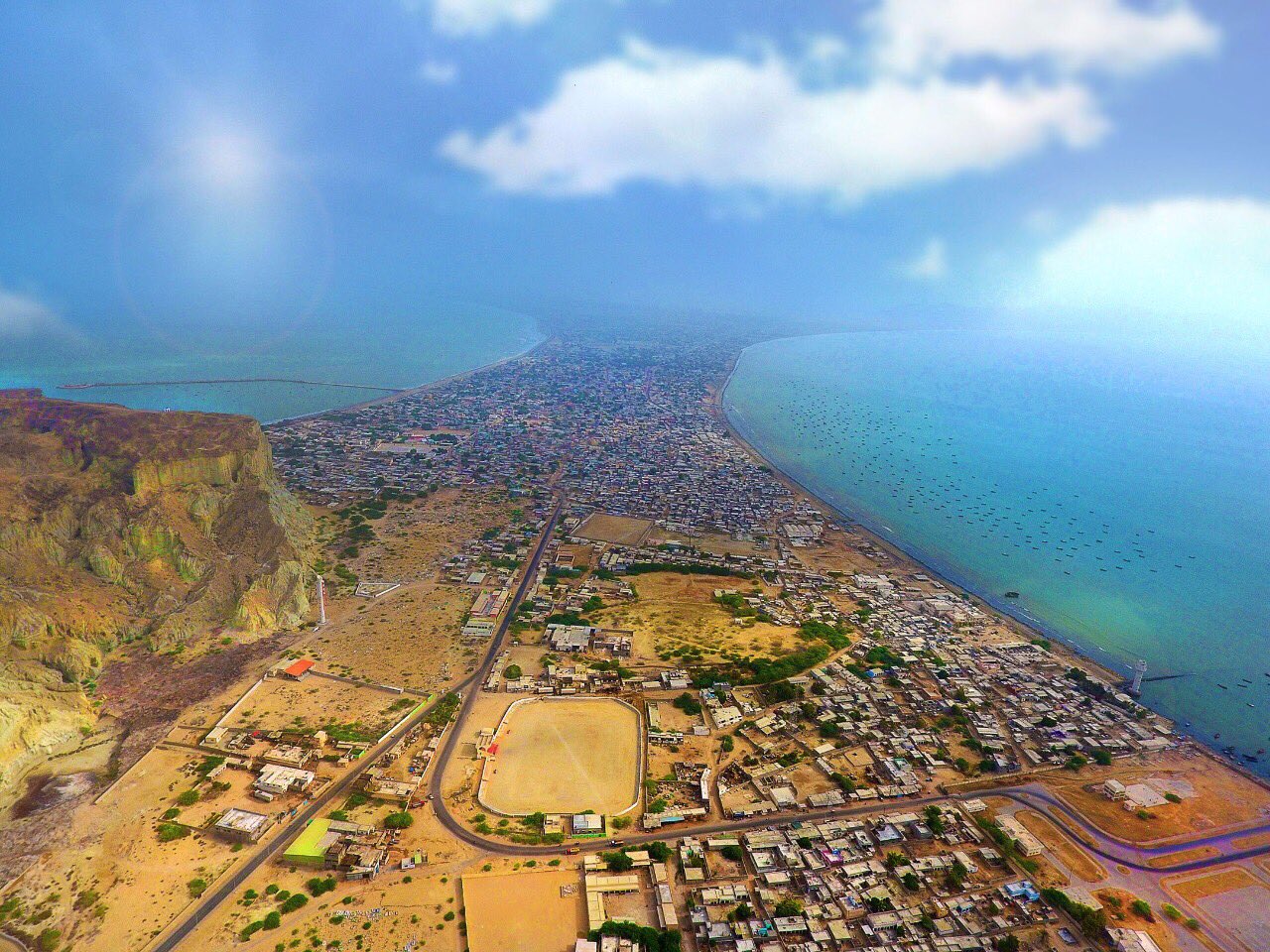
"We believe Gwadar is following in the footsteps of Shenzhen which represented a historic population rise, from a population of 30,000 in 1980 to 11 million people in 2017. Gwadar is poised to see massive population growth due to incoming industries, and we expect this to be one of the most strategic cities in South Asia." Hao-Yeh Chang, China Pak Investments Corporation
To put Gwadar's scale in perspective, let's compare it with the largest US port of Long Beach which handles 80 million tons of cargo, about a quarter of what Gwadar will handle upon completion of the project. Gawadar port will be capable of handling the world's largest container ships and massive oil tankers.
Gawadar port is being built in Pakistan by the Chinese as part of the ambitious $46 billion China-Pakistan Economic Corridor (CPEC) that will eventually serve as Hong Kong West for growing Chinese trade with the Middle East and Europe. CPEC will also enable Pakistan to bypass Afghanistan to trade with Central Asia through China across China's borders with Tajikistan, Kyrgyzstan and Kazakhstan.
The volume of Gwadar property searches surged 14-fold on Pakistan’s largest real estate database, Zameen.com, between 2014 and 2016, up from a prior rate of a few hundred a month. “It’s like a gold rush,” said Chief Executive Zeeshan Ali Khan to an Express Tribune newspaper reporter. “Anyone who is interested in real estate, be it an investor or a developer, is eyeing Gwadar.”
Chinese private investment company China Pak Investment Corporation has recently announced it is acquiring 3.6 million square foot International Port City project in Gwadar. It plans to develop a $150 million gated community to handle the influx of 500,000 Chinese professionals expected in Gwadar by 2022.
Seafood Industry:
Pakistan’s fishing industry is very small relative to its vast potential. Pakistani fishermen own small fishing boats and their catch is very limited. The industry contributes only 0.4% of the country's $315 billion GDP. However, the nation's seafood exports are growing, In fiscal year 2017-18, seafood exports increased 27.94% to 198,420 tons, earning $451.026 million.
Pakistani finishing industry is in need of major modernization to make it more productive. China’s infrastructure investments in Pakistan are opening up the local fisheries sector on the Arabian Sea, with a major Chinese power station builder completing a fishing port as a “gift” to local people, according to a report in SeafoodSource. State-owned China State Power Investment Corp., which is building several power plants in Pakistan, said a new fishing port in Lasbela region on the Arabian Sea would aid the economy and increase the efficiency of the local fishing community in Baluchistan Province (of which Lasbela is part), says the report.
Summary:
Pakistan is beginning to focus on tapping vast resources in its 290,000 square kilometers of sea or about 36% of the country's land area. Fishing industry is being modernized with Chinese help and Exxon has begun exploring offshore oil and gas reserves. Gwadar has been built as the third deep sea port and a major new metropolis is being built t hat could one day rival Chinese city of Shenzhen.
Related Links:
US EIA Estimates of Oil and Gas in Pakistan
Exxon Exploring Offshore Oil and Gas in Pakistan
Views: 1839
-
Comment by Riaz Haq on July 21, 2025 at 9:48am
-
Pakistan invests $10.5m in aquaculture park as part of blue economy drive Pakistan is investing $10.5m in a Karachi aquaculture park to boost seafood exports and develop its blue economy...
https://www.undercurrentnews.com/2025/07/21/pakistan-invests-10-5m-...
Pakistan is investing PKR 3 billion ($10.5 million) to build a 120-acre aquaculture park in Karachi, on the country's southern coast, to boost seafood exports and promote sustainable marine resource use, reports Arab News...
------------
Pakistan plans to build $10.5 million aquaculture park to promote seafood exports
https://www.arabnews.com/node/2608657/pakistan
The development comes amid government efforts for sustainable use of ocean resources for economic growth
Pakistan’s fish and fish preparation exports reached $465.4 million in the last fiscal year that ended in June
KARACHI: Pakistan is planning to build Rs3 billion ($10.5 million) aquaculture park in the southern port city of Karachi, Maritime Affairs Minister Junaid Anwar Chaudhry announced on Saturday, amid efforts to strengthen the country’s blue economy.
According to the World Bank, the blue economy is defined as sustainable use of ocean resources for economic growth, improving livelihoods and creating jobs, while preserving the ocean ecosystem health.
Pakistan has been pushing to modernize its port infrastructure and expand its role in regional trade by improving cargo handling, digitalizing port operations and encouraging public-private partnerships.
Speaking at a meeting to review progress on blue economy, Chaudhry said this new aquaculture park will be built on 120 acres and directed the Qur'angi Fish Harbor Authority to submit its report within 10 days.
“Pakistani coastal waters are very suitable for aquaculture,” he said in a statement shared by the maritime affairs ministry. “The project will be built under a public-private partnership and the park will boost seafood exports.
Pakistan’s fish and fish preparation exports reached $465.4 million in the outgoing fiscal year that ended in June, according to official data. The exports were up 13.4 percent from $410.3 million in the previous year.
Authorities are currently trying to enhance the potential of Pakistan’s fisheries, logistics and marine services while reducing environmental harm.
“Investment in aquaculture and port infrastructure is essential for national development,” Chaudhry told representatives of Gwadar Port, Qur'angi Fish Harbor, Marine Fisheries and Balochistan Chambers of Commerce and Industry at the meeting.
“The same aquaculture model will be implemented in Balochistan as well.”
In May, the Pakistani government announced the creation of a new Maritime Chamber of Commerce and Industry (MCCI), saying it would serve as a specialized platform for uniting stakeholders from across the maritime spectrum to pursue greener policies and long-term economic resilience.
“This chamber will not only support investment and innovation in the maritime sector but also prioritize sustainability at ports, promote green technologies and foster carbon reduction strategies,” Chaudhry said at the time.
-
-
Pakistan seafood exports set volume record in 2024-25 fiscal year but fall short of value targets | SeafoodSource
https://www.seafoodsource.com/news/supply-trade/pakistan-seafood-ex...
Pakistan’s seafood exports set a record by volume in the 2024-25 fiscal year but still fell short of hitting the sector’s long-held value goals.
The South Asian country sent 216,350 metric tons (MT)of fishery products abroad during the period, which ended in June 2025. That total marked an 8.3 percent jump from the nearly 200,000 MT sent abroad in fiscal year 2023-2024 and was largely attributed to the efforts of local fishermen and processors, who expanded their export capacities despite persistent global trade challenges, according to the Pakistan Fisheries Exporters Association (PFEA).
Exports by value rose 13.4 percent in the period to USD 465 million (EUR 399 million); though that total spiked year over year, it still fell short of the sector’s long-held goal of USD 500 million (EUR 428 million).
According to Muhammad Moazzam Khan, the former director-general of Pakistan’s Marine Fisheries Department, the country’s government has announced several measures to help the industry hit that goal, including supporting cluster-based shrimp-farming projects, establishing technical cooperation with Iran regarding shrimp hatchery development, applying on-board freezing technologies to reduce post-harvest losses, and more.
However, structural and regulatory restraints make that goal a tough mark to hit.
One large restraint is that demand has been weak in key Asian markets, particularly China, amid continued trade disruptions spurred by the U.S.’s constantly shifting tariff policies, according to PFEA Senior Vice Chairman Saeed Fareed...
-
-
Trump Truth Social Posts On X
@TrumpTruthOnX
We are very busy in the White House today working on Trade Deals. I have spoken to the Leaders of many Countries, all of whom want to make the United States “extremely happy.” I will be meeting with the South Korean Trade Delegation this afternoon. South Korea is right now at a 25% Tariff, but they have an offer to buy down those Tariffs. I will be interested in hearing what that offer is.
We have just concluded a Deal with the Country of Pakistan, whereby Pakistan and the United States will work together on developing their massive Oil Reserves. We are in the process of choosing the Oil Company that will lead this Partnership. Who knows, maybe they’ll be selling Oil to India some day!
Likewise, other Countries are making offers for a Tariff reduction. All of this will help reduce our Trade Deficit in a very major way. A full report will be released at the appropriate time. Thank you for your attention to this matter. MAKE AMERICA GREAT AGAIN!
https://x.com/TrumpTruthOnX/status/1950654905804279830
------------
Trump Says Pakistan Deal Done, South Korea Is Close
https://www.wsj.com/livecoverage/fed-meeting-interest-rate-decision...
The U.S. and Pakistan have concluded a trade pact, President Trump said Wednesday, adding that a deal could be close with South Korea.
Trump said on Truth Social that the U.S. has “concluded a Deal with the Country of Pakistan, whereby Pakistan and the United States will work together on developing their massive Oil Reserves,” and is in the process of choosing a company to lead the partnership.
Trump also said he would meet with a South Korean delegation on Wednesday afternoon, who would bring an offer to “buy down” the 25% tariffs Trump has threatened to impose Aug. 1. Trump has previously pressed others to commit funds to build infrastructure and energy projects in the U.S., including the European Union and Japan.
Trump provided no further detail, but said "a full report" would be released "at the appropriate time."
-
-
Adeel Afzal
@AdeelAfzal06
Pakistan secures 4-year US approval to export seafood under NOAA’s Marine Mammal Protection Act. FY25 seafood exports already up 11.4% to $489m; compliance could lift earnings toward $600m.
A key boost for sustainable fisheries and global market access. 🐟🇵🇰https://x.com/AdeelAfzal06/status/1961768830914494489
-------------
China tariffs pave way for high seafood exports to US
Pakistan can tap full potential as Washington extends authorisation by 4 yearshttps://tribune.com.pk/story/2564228/china-tariffs-pave-way-for-hig...
China has lost the entire seafood market in the US following higher duties, market sources said, adding that Beijing was expected to shift its seafood market to Pakistan for exports to the US. Federal Minister for Maritime Affairs Muhammad Junaid Anwar Chaudhry announced on Saturday that Pakistan has received authorisation that gave extension for the export of fish and fish-related products to the United States by another four years.
In a statement, the minister said that the decision reflects international recognition of the quality of Pakistan's seafood and would create long-term stability for the sector. "The extension is expected to bolster our position in the global seafood market by securing access to one of the world's largest seafood importers," he said. The federal minister explained that the United States National Oceanic and Atmospheric Administration (NOAA) has classified all Pakistani fisheries on its List of Foreign Fisheries as "comparable" under the Marine Mammal Protection Act (MMPA).
"This classification confirms that Pakistan's fisheries meet US standards for protecting marine mammals from incidental mortality and serious injury during fishing operations," he said.
The MMPA requires fisheries to minimise marine mammal by-catch, adopt conservation practices and take sustainable measures that also support healthier marine ecosystems.
-
-
Pakistan $100 billion maritime plan
https://www.arabnews.com/node/2621610/pakistan
KARACHI: Pakistan is implementing a $100 billion maritime development plan aimed at expanding its national shipping fleet, building new ship repair and recycling facilities, overhauling fisheries and upgrading maritime education, Maritime Affairs Minister Muhammad Junaid Anwar Chaudhry said on Thursday.
Pakistan has a 1,046-km coastline along a major global trade route, but its maritime economy has remained underdeveloped for decades, with limited commercial fleet capacity, outdated port infrastructure and declining seafood exports. Successive governments have identified the blue economy as a potential driver of growth, energy security and climate resilience, but investment and execution have lagged.
“Under the Prime Minister’s guidance, the Ministry of Maritime Affairs is implementing the ‘Maritime @100’ vision, a $100 billion blue economy plan by 2047,” Chaudhry said at the closing ceremony of the flagship Pakistan International Maritime Exhibition and Conference (PIMEC) in Karachi.
“The sea is our next frontier for trade, prosperity, energy, food and climate resilience,” he said. “Pakistan’s future lies in the sea.”
As part of the plan, Pakistan’s first Green Ship Repair and Recycling Yard will be established at Port Qasim, one of the country’s main commercial ports near Karachi that already hosts major steel and industrial facilities. The project will be developed as part of an integrated “Sea to Steel Maritime Industrial Complex” designed to support the revival of Pakistan Steel Mills, the state-owned steelmaker that has remained largely non-operational for years.
Chaudhry said the Pakistan National Shipping Corporation (PNSC) fleet has increased from 10 to 12 ships, with three more expected within two months. Tenders for 12 additional vessels are underway, with the fleet targeted to reach 30 ships by 2026 and 60 within three years.
He said Pakistan had also granted its first private ferry operator license, opening sea routes for passenger movement and coastal trade.
On Gaddani, one of the world’s largest ship-breaking yards long criticized for unsafe conditions and environmental pollution, the minister said a Rs12 billion ($43 million) modernization program is underway to meet Hong Kong Convention safety and environmental standards, shifting toward cleaner and more regulated recycling capacity.
Chaudhry said the National Fisheries and Aquaculture Policy 2025–2035 has been finalized, targeting a doubling of seafood exports within one year through upgraded cold-chain logistics, traceability certification and deep-sea fishing capacity.
A Maritime Education Endowment Fund has also been created, and the Pakistan Marine Academy will be upgraded into a Maritime University to train seafarers, marine engineers, technologists and ocean science specialists.
The minister said the government’s century-long maritime strategy, termed “Maritime Century (2047–2147),” envisions developing new deep-sea ports, AI-enabled shipbuilding and recycling complexes, “Made-in-Pakistan” vessels and 100 percent green and digital ports with multimodal connectivity.
By 2047, Pakistan aimed to emerge as a global blue economy hub driving sustainable growth across the North Arabian Sea and Indian Ocean, the minister concluded.
-
-
Türkiye Delivers Second MILGEM Corvette to Pakistan Navy
https://caspianpost.com/regions/turkiye-delivers-second-milgem-corv...
Turkish President Recep Tayyip Erdoğan has announced that the second of four MILGEM corvettes were handed over to Pakistan under a 2018 defense contract.
Erdoğan noted that under the agreement, the first two corvettes were to be built at the Istanbul Naval Shipyard, The Caspian Post reports via Turkish media.
“The first ship, PNS Babur, was delivered to Pakistan on May 24, 2024. Today we hand over PNS Hayber, which has successfully completed all trials. The third and fourth corvettes will be built at the Pakistani shipyard in Karachi. PNS Bedir is planned for June 2026, and PNS Tarik in Q1 2027,” Erdoğan said.
The contract was awarded in 2018 to the Turkish state defense company STM (Savunma Teknolojileri Mühendislik ve Ticaret), which is tasked with delivering four MILGEM-class corvettes to the Pakistan Navy. The contract signing ceremony took place the same day in Rawalpindi.
-
-
Boat builders keep Pakistan's fishing heritage afloat
Karachi (AFP) – The rhythmic hammering of nails and the whine of saws echo around a coastal Karachi neighbourhood, where small figures of men work atop massive wooden fishing hulls that loom beneath a pale summer sky.
https://www.france24.com/en/live-news/20260901-boat-builders-keep-p...
Ibrahim Hyderi, a maritime town on the outskirts of the port city believed to date back centuries, is renowned for the construction of traditional fishing boats.
"This is the area that gave birth to Karachi, and that provided Karachi with its fishing sector," said Mehran Ali Shah of the Pakistan Fisherfolk Forum, which advocates for the local community.
Despite the rise of industrial shipbuilding, such practices -- where handcrafted vessels are assembled timber by timber -- have stood their ground.
Boat-builder Muhammad Asif, 22, learnt the craft from his father as a teenager, and is now proud that he can work on his own.
"I was drawn to this work, so I work at it with great dedication," Asif tells AFP as sawdust coats his face and sun-bleached hair.
"It has always been my passion, that is why I chose this line of work."
Asif, like other workers, starts at 7:00 am every day and heads home for dinner around 7:00 pm, only putting down his tools during a two-hour lunch break.
He earns up to 2,500 Pakistani rupees ($9) a day, working six days a week.
The workers brave the elements all year round, including the sweltering heat and humidity of summers and the soaking rains of the monsoon seasons.
The process begins with a fisherman selecting a boat design. A master craftsman drafts a template and the workers take it from there, drawing on their years of experience to painstakingly build the vessel.
The carpenters choose from different types of timber, such as local eucalyptus wood, or African teak for resilience against seawater.
The heavy blocks of wood are carefully cut using well-worn vertical and other saws, following hand-drawn pencil markings.
The boats are then assembled from the ground up, block by block and nail by nail, with the workers clambering up on rickety ladders as the hulls rise higher.
The time-consuming process means even a small boat measuring just several metres long could take up to three months to construct and cost one million Pakistani rupees ($3,600), Asif says.
Across the yard, the completed boats are given splashes of colour by painter Muhammad Ismail.
The weather-beaten 38-year-old, his hands and nails tinged with blue, is painting petals on the hull of a vessel -- one of many he has worked on over a decade.
"Most of our fishermen prefer floral designs rather than fish," he tells AFP, adding that he experiences "great satisfaction" when an owner appreciates his artwork.
"Some people ask me to create a design according to my own ideas, while others tell me exactly what they want."
At a nearby harbour, fisherman Qadir Bux sits in a small boat owned by his family for at least two decades as he mends fishing nets. The fisherman hopes to give the wooden vessel a facelift soon.
"It's like looking after something very precious, or even like caring for our own child," he says.
-
-
Pakistan’s Blue Economy: Turning Maritime Potential Into Economic Power - OpEd - Eurasia Review
https://www.eurasiareview.com/03102026-pakistans-blue-economy-turni...
The essay says Pakistan’s Blue Economy—shipping, fisheries, aquaculture, ports, tourism, offshore energy, and shipbuilding—is about 1% of GDP despite a roughly 1,000 km coastline, with a Planning Ministry URAAN report claiming targeted work could add about $4 billion by 2030.
Recent milestones cited: Port Qasim’s May 2026 discharge of about 210,250 cubic metres of LNG from the Al Kharaitiyat; Karachi Port Trust throughput above 2.65 million TEU in FY2025–26; Gwadar’s first bunkering in July 2026, 2,500 tonnes of very-low-sulphur fuel oil to the ENUGU.
Gwadar under CPEC still needs cargo, rail and road links, and a local industrial base; the author wants cold chains, ship repair, and coastal jobs, and says success is foreign exchange and employment, not berth counts.
For decades, Pakistan’s economic outlook has been shaped primarily by agriculture, industry, remittances and conventional trade. Yet beyond its coastline lies another economic frontier that remains significantly underdeveloped: the Blue Economy. Encompassing shipping, fisheries, aquaculture, port services, coastal tourism, offshore energy and shipbuilding, the maritime sector offers Pakistan an opportunity to diversify its economy, generate foreign exchange and strengthen its position in regional trade. The challenge is no longer simply recognising this potential, but developing the policies and infrastructure required to realise it.
The scale of the opportunity is considerable. Pakistan’s maritime domain includes an approximately 1,000-kilometre coastline and an extensive exclusive economic zone. Its location along the Arabian Sea provides access to major international shipping routes connecting the Gulf, South Asia, East Africa and wider global markets. The Ministry of Planning’s Blue Economy under URAAN Pakistan report identifies the sector as an important avenue for economic transformation, estimating that targeted interventions could generate an additional $4 billion in economic impact by 2030. Yet the report places the maritime sector’s present contribution at only around one per cent of GDP.
This gap between potential and performance makes the Blue Economy an economic policy priority. Pakistan’s three principal commercial ports—Karachi, Port Qasim and Gwadar—provide the foundation for a broader maritime ecosystem. Their significance, however, should not be measured solely by the volume of cargo handled. Modern ports generate value through warehousing, freight forwarding, ship repair, marine insurance, bunkering, logistics, processing and transshipment. Expanding these services would allow Pakistan to earn revenue from maritime activity beyond the handling of its own imports and exports.
Recent developments demonstrate that Pakistan’s ports are building operational capabilities. In May 2026, Port Qasim received the Al Kharaitiyat, a Q-Flex liquefied natural gas carrier that discharged approximately 210,250 cubic metres of LNG—the largest LNG cargo handled in Pakistan at the time. The operation demonstrated the importance of specialised terminals, navigational management and coordination among port and energy-sector stakeholders.
Karachi Port Trust also reported record container throughput exceeding 2.65 million twenty-foot equivalent units during fiscal year 2025–26. Meanwhile, Gwadar achieved a significant milestone in July 2026 by completing its first commercial marine-bunkering operation, supplying 2,500 metric tonnes of very-low-sulphur fuel oil to the LNG carrier ENUGU. These developments indicate an expansion of services that could help Pakistan attract more shipping business and generate additional maritime revenue.
-
-
Pakistan’s Blue Economy: Turning Maritime Potential Into Economic Power - OpEd - Eurasia Review
https://www.eurasiareview.com/03102026-pakistans-blue-economy-turni...
Gwadar’s importance lies in its potential to connect port infrastructure with industrial development and regional commerce under the China-Pakistan Economic Corridor. Nevertheless, geographical advantage does not automatically translate into commercial success. Shipping companies consider reliability, cargo volumes, turnaround times, hinterland connectivity, security, operating costs and the availability of regular services when selecting ports. Gwadar’s long-term viability will therefore depend on building a sustained commercial ecosystem, including road and rail connections, logistics facilities, industrial activity and opportunities for local businesses.
The same strategic approach must extend beyond ports. Pakistan’s fisheries sector requires modern vessels, cold-chain infrastructure, hygienic processing, sustainable harvesting and improved access to international markets. Aquaculture could diversify seafood production and support coastal employment. Shipbuilding and ship repair could reduce dependence on foreign maritime services, while coastal tourism could generate income for communities in Sindh and Balochistan. Offshore renewable energy and marine-related technology also warrant systematic assessment, supported by environmental safeguards and commercially credible feasibility studies.
Realising these opportunities requires institutional coordination and predictable investment policies. Fragmented responsibilities, outdated facilities, limited private-sector participation and inadequate technical skills can prevent maritime assets from generating their full economic value. A coherent national strategy should establish measurable targets for exports, investment, employment, port efficiency and local value addition. Equally important are environmental protection, responsible fisheries management and meaningful participation by coastal communities, whose livelihoods depend directly on marine ecosystems.
Pakistan should therefore view the Blue Economy as more than a port-development programme. It is an opportunity to connect maritime infrastructure with manufacturing, exports, energy, technology and employment. Recent achievements at Karachi, Port Qasim and Gwadar provide a foundation, but their wider economic impact will depend on the services, industries and trade networks built around them.
The sea offers Pakistan access to global markets; converting that access into prosperity requires sustained planning and execution. The real measure of success will not be how many ships a port can accommodate, but how much productive economic activity, foreign exchange and employment the maritime sector can generate for the country.
Comment
- ‹ Previous
- 1
- …
- 5
- 6
- 7
- Next ›
Twitter Feed
Live Traffic Feed
Sponsored Links
South Asia Investor Review
Investor Information Blog
Haq's Musings
Riaz Haq's Current Affairs Blog
Please Bookmark This Page!
Blog Posts
Can Pakistan's Small Nuclear Arsenal Survive India's First Strike?
Possession of nuclear weapons is considered "the ultimate deterrent" by eminent international geopolitical analysts like Professor John Mearsheimer of Chicago University. However, it appears that Mearsheimer has also raised questions about the survivability of a small land-based nuclear arsenal in the event of a first strike by a nuclear-armed adversary. Is this likely to tempt India to launch first strike against Pakistan's nuclear assets?…
ContinuePosted by Riaz Haq on November 13, 2026 at 5:00pm
How Significant is Pakistan's Fa'az Air-to-Air Missile Flight Test?
Pakistan's recent successful flight test of Fa'az, its indigenous air-to-air missile, has garnered significant international attention. What is its significance? First, it is a major breakthrough for its national defense industry, elevating Pakistan into an elite, relatively small group of nations possessing the complex engineering expertise required to build weapons capable of hunting fighter jets. Second, it enhances the country's self-reliance and makes it less vulnerable…
ContinuePosted by Riaz Haq on November 6, 2026 at 10:30am — 5 Comments
© 2026 Created by Riaz Haq.
Powered by


You need to be a member of PakAlumni Worldwide: The Global Social Network to add comments!
Join PakAlumni Worldwide: The Global Social Network